Bartlettina
Botanical name
Bartlettina sordida
Family
Asteraceae (daisy)
Also known as
Eupatorium sordidum, Neobartlettina sordidum
Where is it originally from?
Mexico
What does it look like?
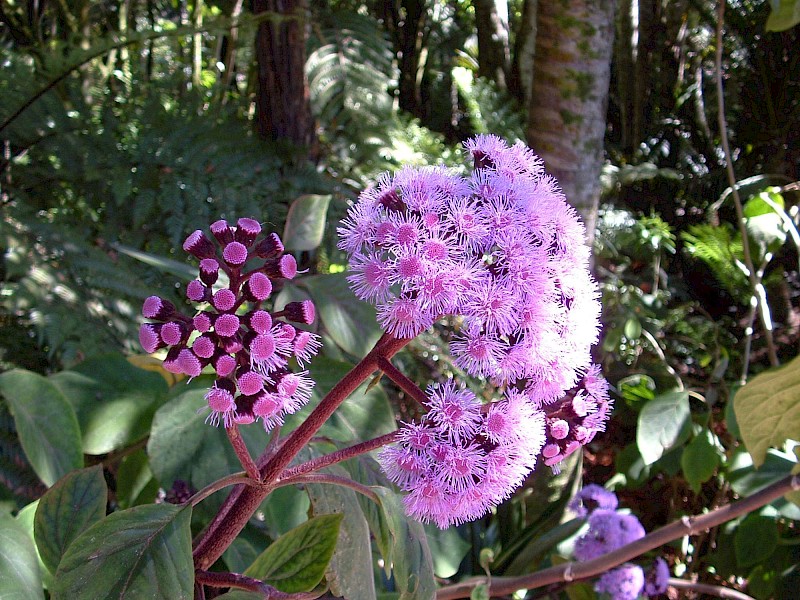
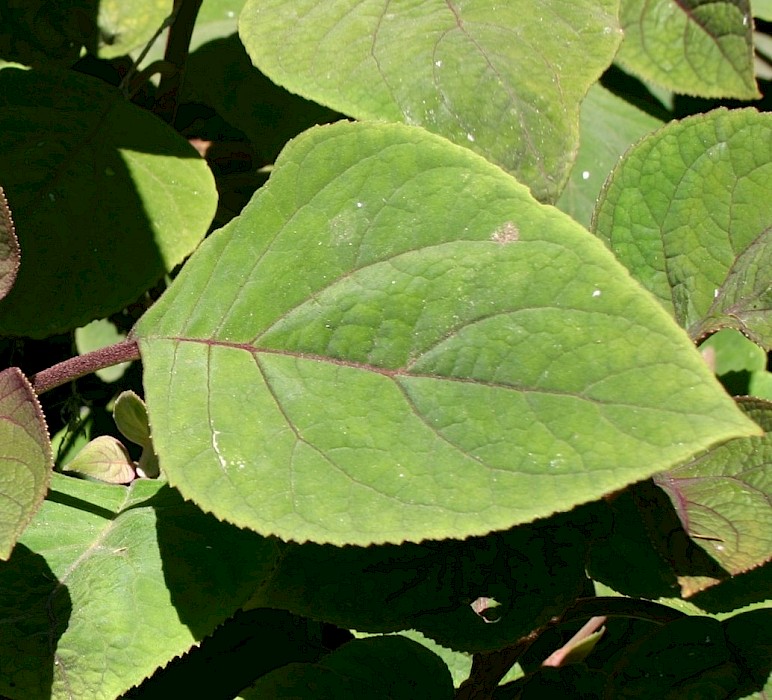
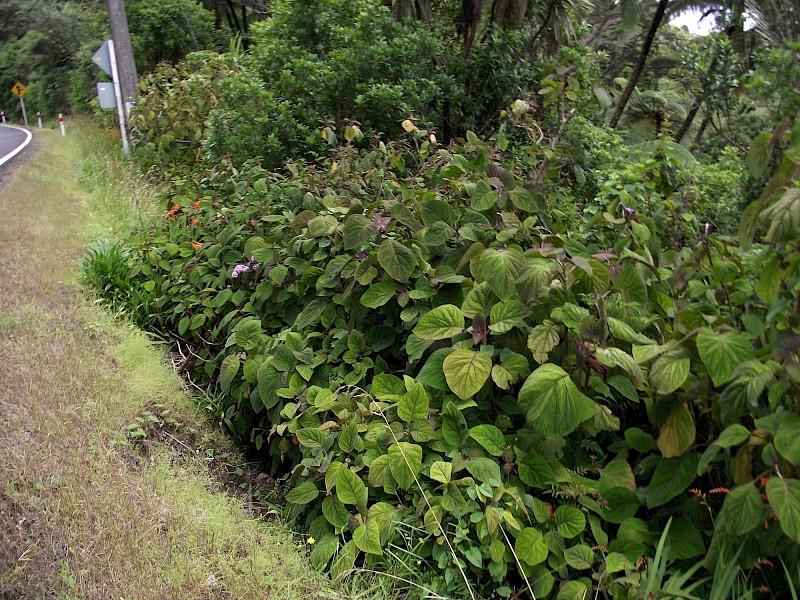
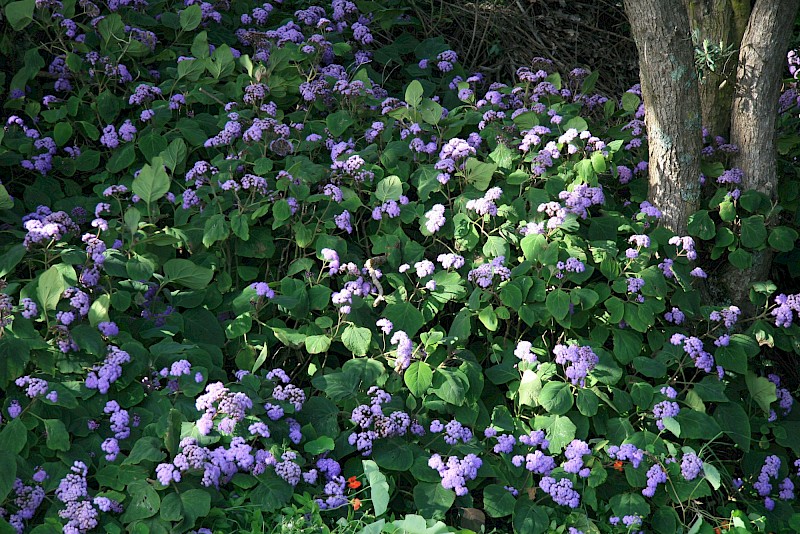
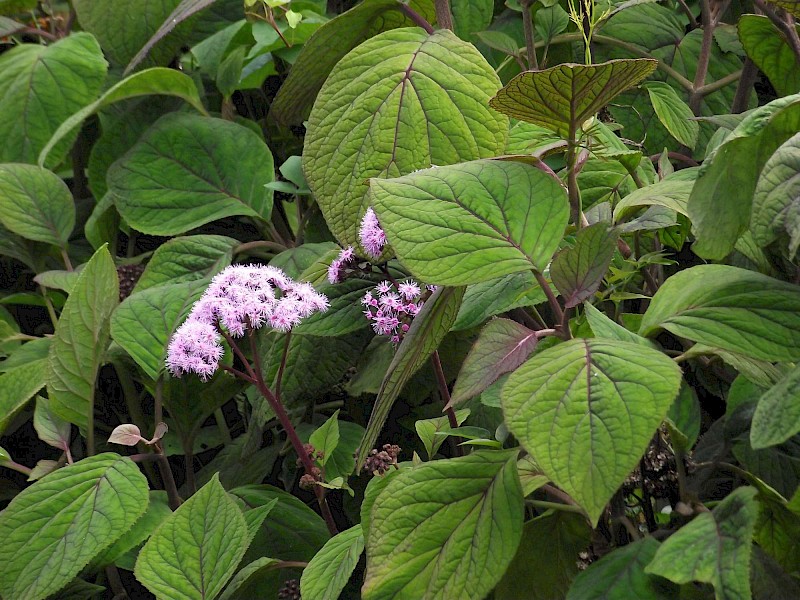
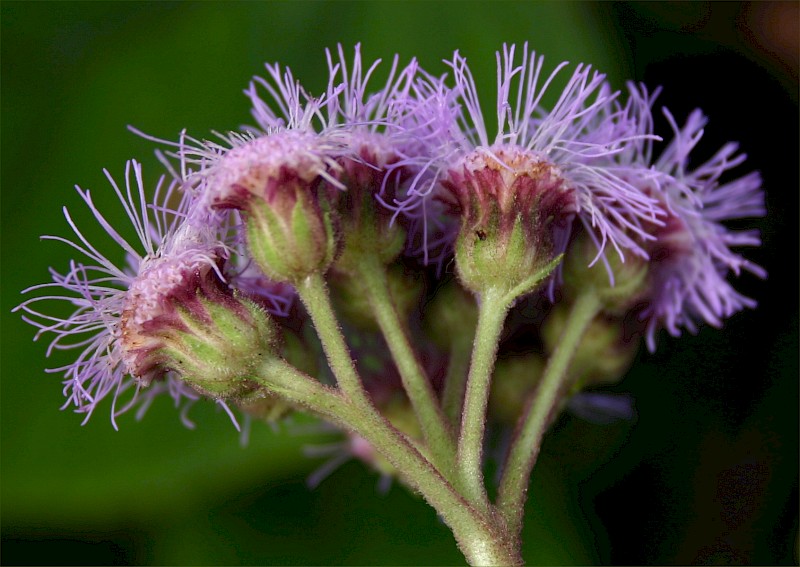
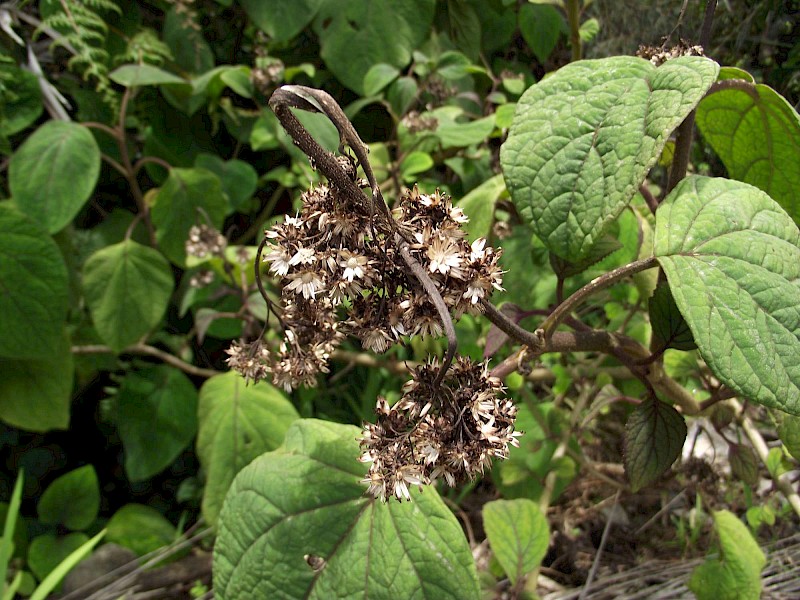
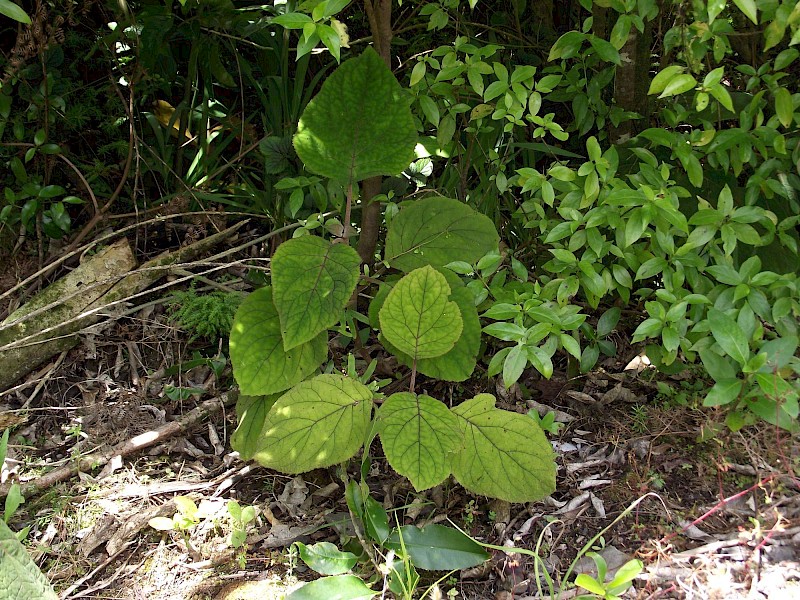
Erect shrub (<2 m), woody at base, with stems covered in reddish-purple striped down. Densely-hairy leaves (11-25 x 8-25 cm) are opposite. Fluffy, purplish-pink flowers (Nov-Jan) are followed by tiny, husky seeds.
Are there any similar species?
Plectranthus grandis, P. ecklonii, and Roldana petasitis are all similar.
Why is it weedy?
Produces many well dispersed seeds, is partially shade tolerant and prefers dampish sites but can tolerate some drought once established.
How does it spread?
Wind spreads the seeds. Gardens, dumped vegetation and contaminated soil are all sources of new infestations.
What damage does it do?
Limited damage as it occupies forest edges, inhibiting regeneration.
Which habitats is it likely to invade?
Lowland forest margins, regenerating and disturbed bush, especially in warmer areas.
What can I do to get rid of it?
1. Physical removal - Hand pull small plants, or dig out entire plant including roots (all year round): Dispose of at a refuse transfer station, burn, or bury deeply.
2. Cut and paste (all year round) - Cut the stem/trunk as close to the ground as possible and cover the entire stump with herbicide as soon as possible after cutting. Apply either glyphosate gel (120g/L strength) or metsulfuron gel (10g/l strength) to the entire cut stem.
3. Foliar spray (Seedlings only) - Apply Glyphosate (360 g/L active ingredient) herbicide (20ml/L) plus organosilicone penetrant (2ml/L) to cover entire plant Note: Non selective. Avoid overspray onto desirable plants.
CAUTION: When using any herbicide or pesticide, PLEASE READ THE LABEL THOROUGHLY to ensure that all instructions and directions for the purchase, use and storage of the product, are followed and adhered to.
What can I do to stop it coming back?
Resprouts after slashing. Easy to manage. Seedlings do not compete aggressively for space. Replant bared areas to prevent seedlings.
Images