Bell heather
Botanical name
Erica cinerea
Family
Ericaceae (heath)
Also known as
bell heather
Where is it originally from?
Western Europe
What does it look like?
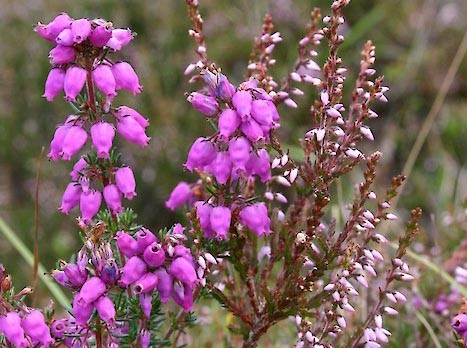
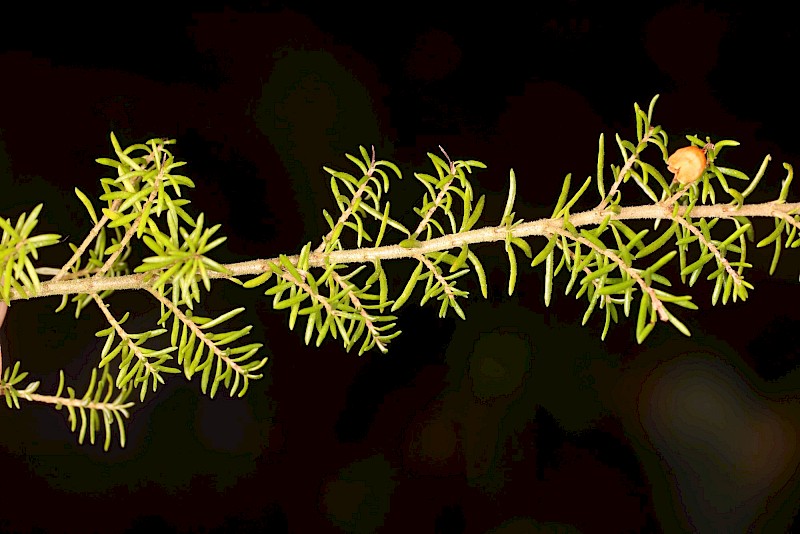
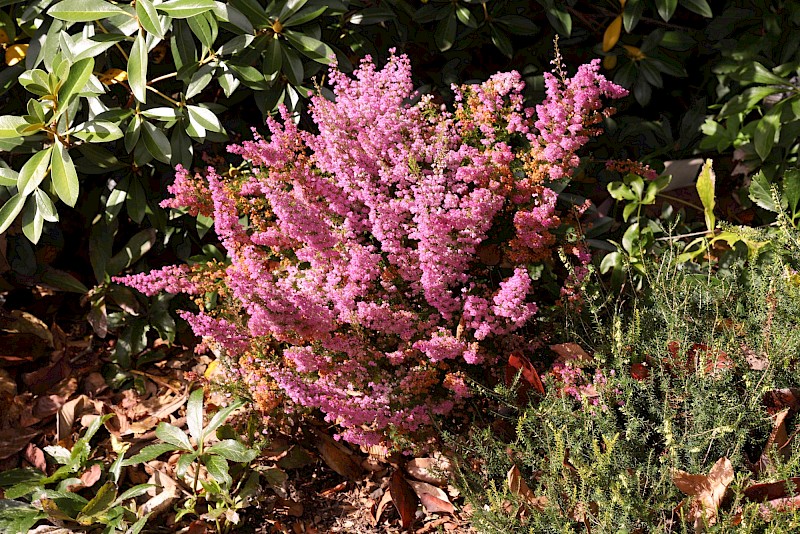
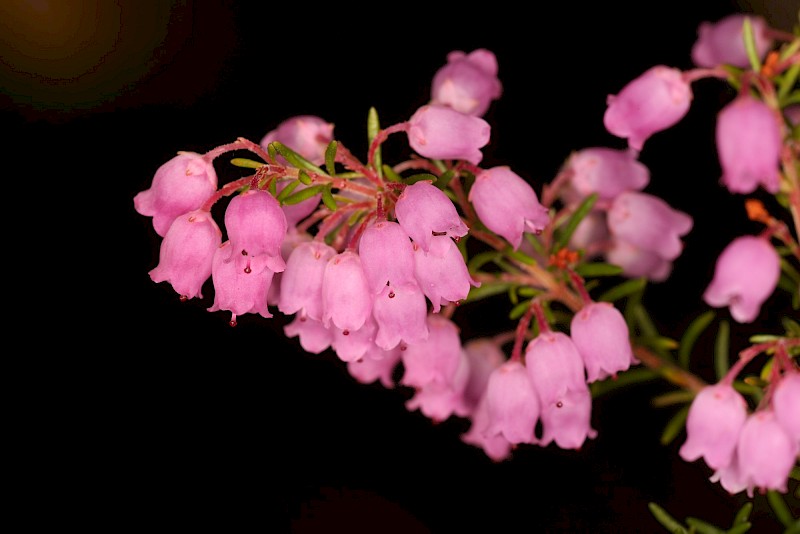
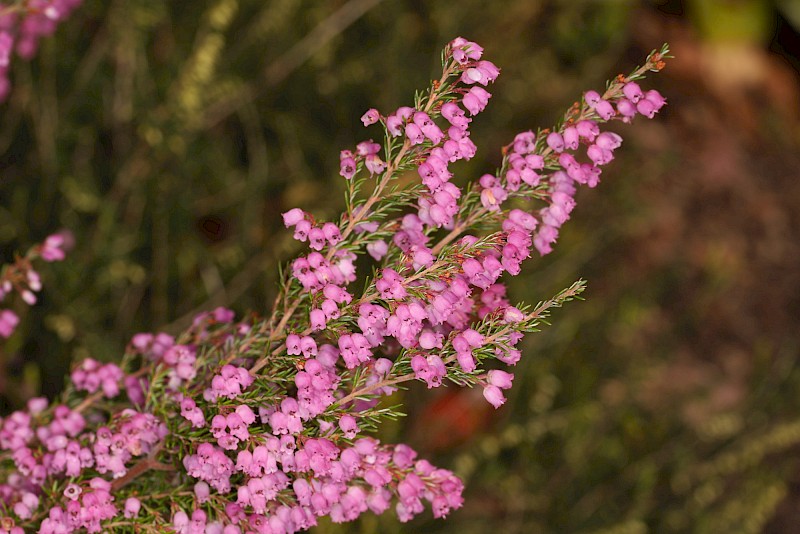
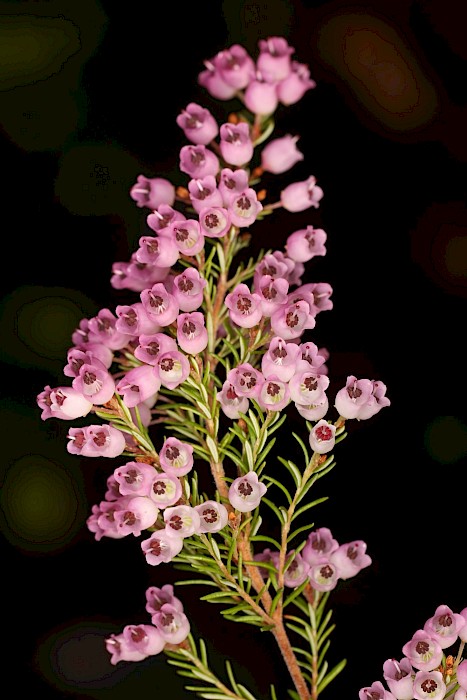
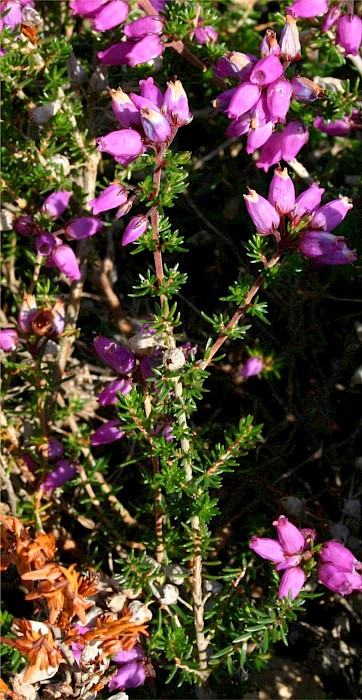
Long-lived, low growing (<30 cm), bushy shrub with small needle-like leaves arranged in groups of three around stems. Bell-shaped, mostly purple (sometimes pink or white) flowers (6 mm long, Dec-Feb) produce large amounts of seed in mature plants.
Are there any similar species?
Calluna vulgaris
Why is it weedy?
Forms dense mats, suckers and seeds profusely, and is faster growing than its subalpine competitors. Tolerates cold, high to low rainfall, semi-shade, and poor soils, but is intolerant of heavy shade.
How does it spread?
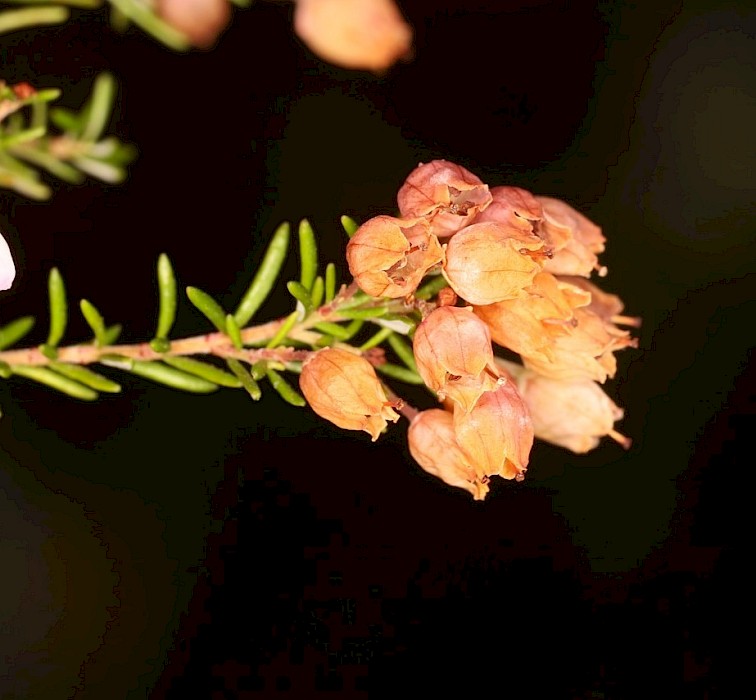
Mature plants produce large amounts of seeds that are viable for a long time (30-40 years). Seed spread via gravity, wind, animals, ornamental trade.
What damage does it do?
Adversely impacts environmental values of rocky outcrops, low stature shrub land and tussock communities in the hill and high country by competing with native species such as flax and snow tussock. Loss of production from pastoral agriculture is also a possibility if left uncontrolled in the hill and high country. Has allelopathic properties, especially affecting grasses, and may cause patches of bare soil as a result that are vulnerable to further weed invasion or erosion.
Which habitats is it likely to invade?
Grows on hillsides, cliffs, dry slopes, sea cliffs heaths, rocky ground, woods, frequently disturbed sites and tussock grassland. Can tolerate acidic, waterlogged soils, has slight salt tolerance and frost resistant. Primary coloniser of sites after burning, and slow decaying litter can affect frequency and/or intensity of fire risk on dry sites.
What can I do to get rid of it?
1. Physical removal - Hand pull small plants, or dig out entire plant including roots (all year round)
2. Cut and paste - Cut the stem/trunk as close to the ground as possible and cover the entire stump with herbicide as soon as possible after cutting. Apply a gel/mixture of glyphosate gel (120g/L strength) + metsulfuron (10g/l strength), Or picloram gel (43 g/l) to the entire cut stem.
4. Foliar spray (all year round) - knapsack or gun and hose for larger infestations. Apply glyphosate (360 g/L active ingredient) herbicide (20ml/L) plus organosilicone penetrant (2ml/L) to cover entire plant Note: Non selective. Avoid overspray onto desirable plants OR apply triclopyr herbicide (600g/L active ingredient) at 6ml/L plus organosilicone penetrant (1ml/L) to thoroughly wet all parts of plant OR apply picloram/triclopyr herbicide (picloram 100g/l and triclopyr 300g/l active ingredient) at 6ml/L plus organosilicone penetrant (1ml/L) to thoroughly wet all parts of plant.
Note: triclopyr and picloram herbicides are ‘grass friendly’ but overspray will kill other (desirable) broadleaf plants. Picloram has residual activity in the soil which may leach through soil and kill other plants. Do not use under and around other (desirable) broadleaf plants.
CAUTION: When using any herbicide or pesticide, PLEASE READ THE LABEL THOROUGHLY to ensure that all instructions and directions for the purchase, use and storage of the product, are followed and adhered to.
What can I do to stop it coming back?
Maintain an annual control programme to prevent further seeding.
Images