Green daphne laurel
Botanical name
Daphne laureola
Family
Thymelaeaceae (daphne)
Also known as
Daphne, spurge laurel, daphne spurge, daphne-laurel, laurel-leaved daphne, olive-spurge, wood laurel, copse laurel
Where is it originally from?
South West Europe, North Africa
What does it look like?
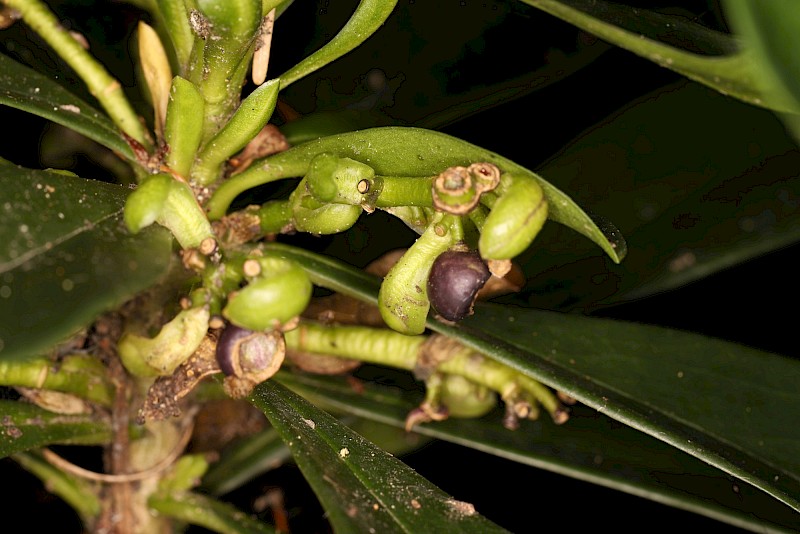
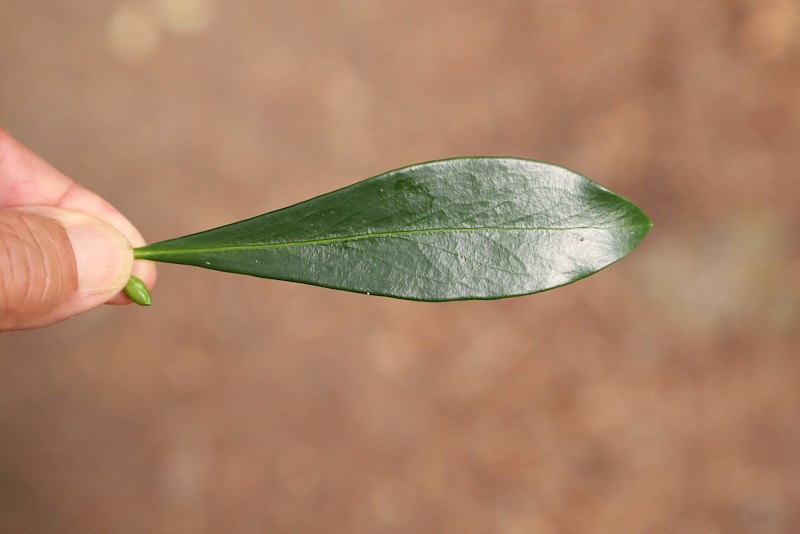
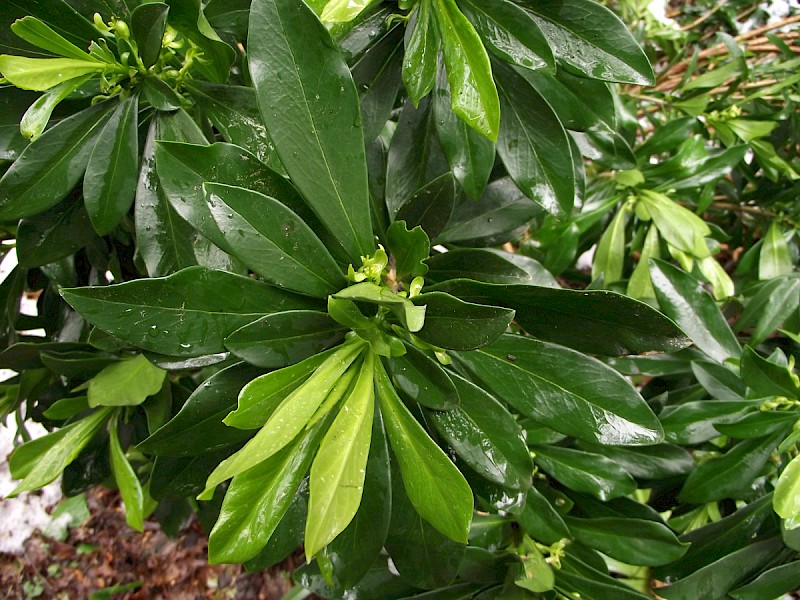
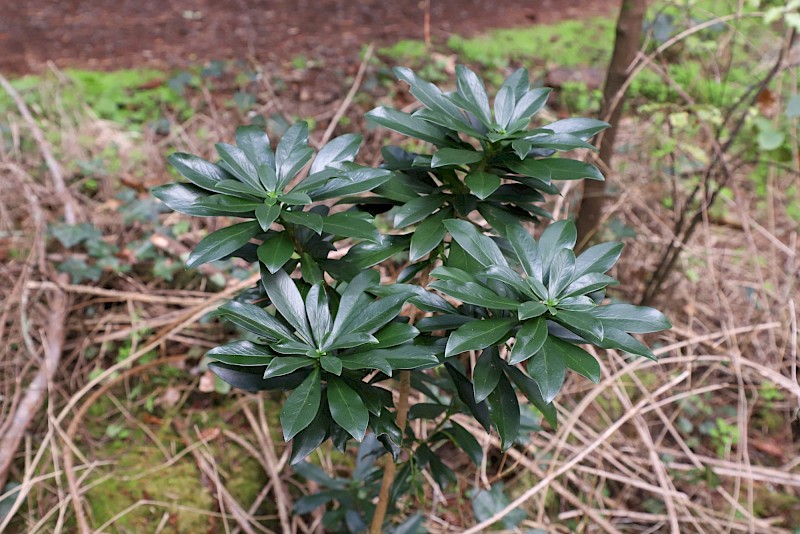
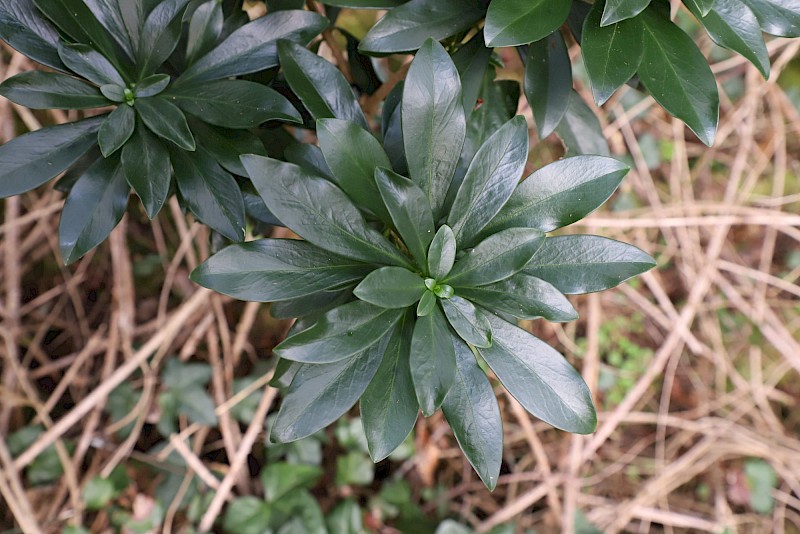
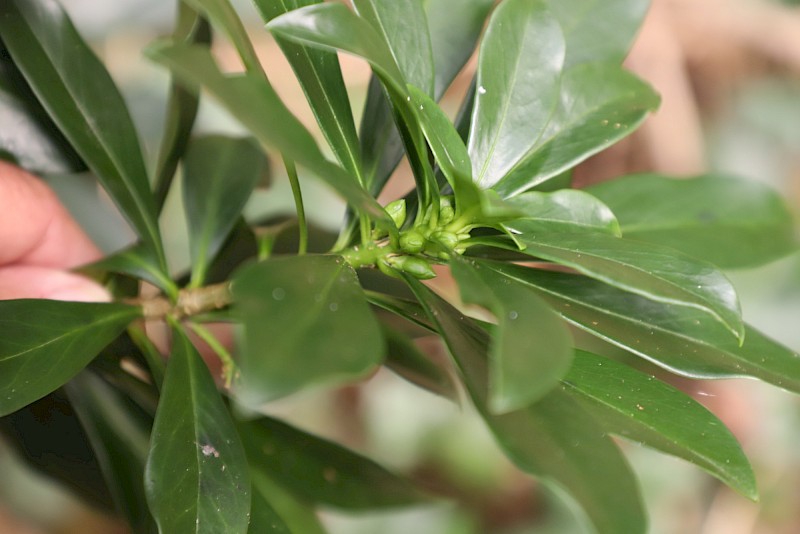
Glossy, evergreen shrub (<0.5-1.5 m tall) with flexible branches that can droop to the ground and take root, and bark that is smooth and green when young, maturing to light grey. Leaves (5-12 cm) that are dark glossy green above and lighter green below become broader at the tip (15-35 mm) and are spirally arranged near the ends of branches. Fragrant, pale green, tubular flowers (9 mm long) are held in clusters of 5-10 near the tips of branches in spring, and are followed by single-seeded fleshy fruit (8-13 mm long) that turns bluish-black when ripe.
Are there any similar species?
Daphne odora is winter-flowering with purple blooms that are white inside and orange fruit. D. mezereum is deciduous with purple flowers and red fruit. D. x burkwoodii is also deciduous with pink flowers.
Why is it weedy?
Fast growth, maturity and spread rate allows it to occupy a large area, and it is difficult to control. Tolerates very low light levels, and berries, bark and sap are poisonous.
How does it spread?
Seed is dispersed by birds and rodents, and vegetative spread is through suckering and layering.
What damage does it do?
Forms dense patches that block sunlight and compete with native shrubs, herbs, ferns and seedlings for water and nutrients.
Which habitats is it likely to invade?
Forests, forest margins, shrublands, coastal zones.
What can I do to get rid of it?
1. Physical removal - Dig out isolated plants and seedlings (all year round): ensure all root system is removed and disposed of at a refuse transfer station. Bark and sap is poisonous, wear gloves and eye protection when handling this plant material.
2. Cut and paste - Cut the stem/trunk as close to the ground and cover the entire stump with herbicide as soon as possible after cutting. Apply either glyphosate gel (120g/L strength) OR picloram gel (43g/L strength).
3. Foliar spray - Apply Glyphosate (360 g/L active ingredient) herbicide (20ml/L) plus organosilicone penetrant (2ml/L) to cover entire plant Note: Non selective. Avoid overspray onto desirable plants OR apply triclopyr herbicide (600g/L active ingredient) at 6ml/L plus penetrant 1ml/L to thoroughly wet all parts of plant. Note: Tricolopyr herbicide is ‘grass friendly’ but overspray will kill other (desirable) broadleaf plants.
CAUTION: When using any herbicide or pesticide, PLEASE READ THE LABEL THOROUGHLY to ensure that all instructions and directions for the purchase, use and storage of the product, are followed and adhered to.
Images