Italian jasmine
Botanical name
Chrysojasminum humile
Family
Oleaceae (olive)
Also known as
Jasminum humile
What does it look like?
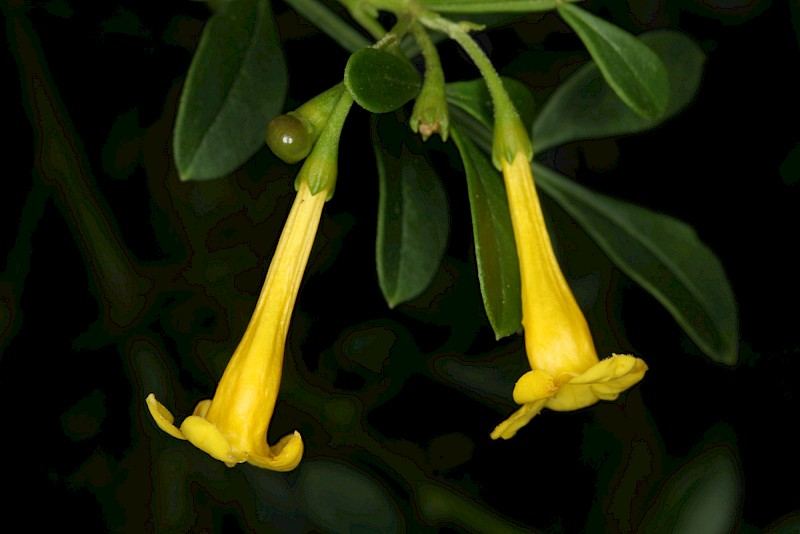
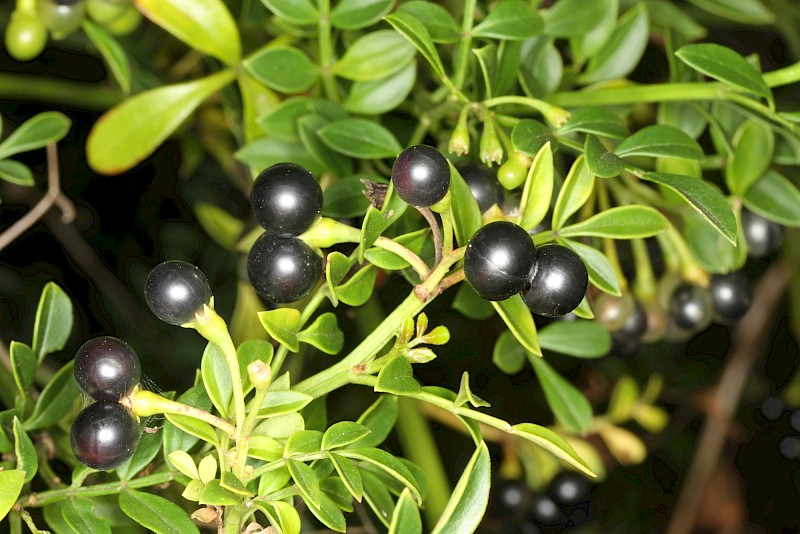
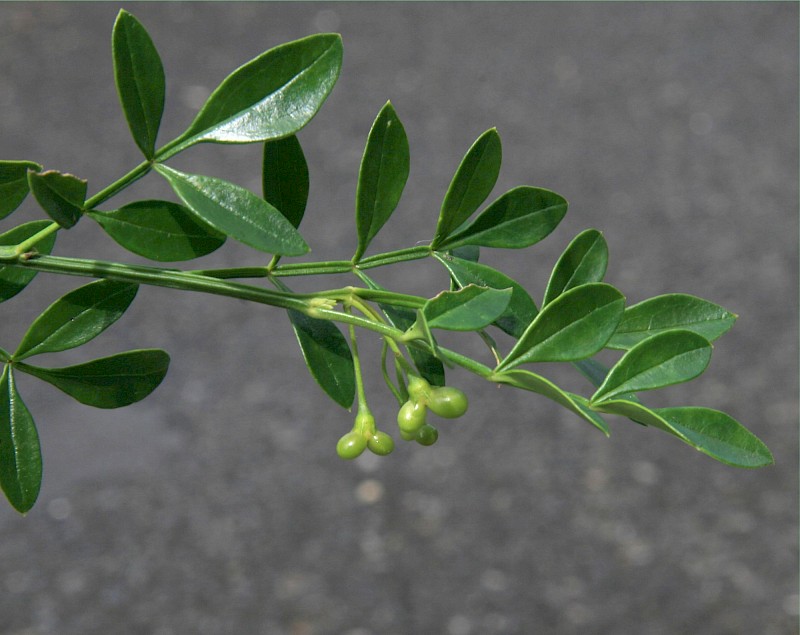
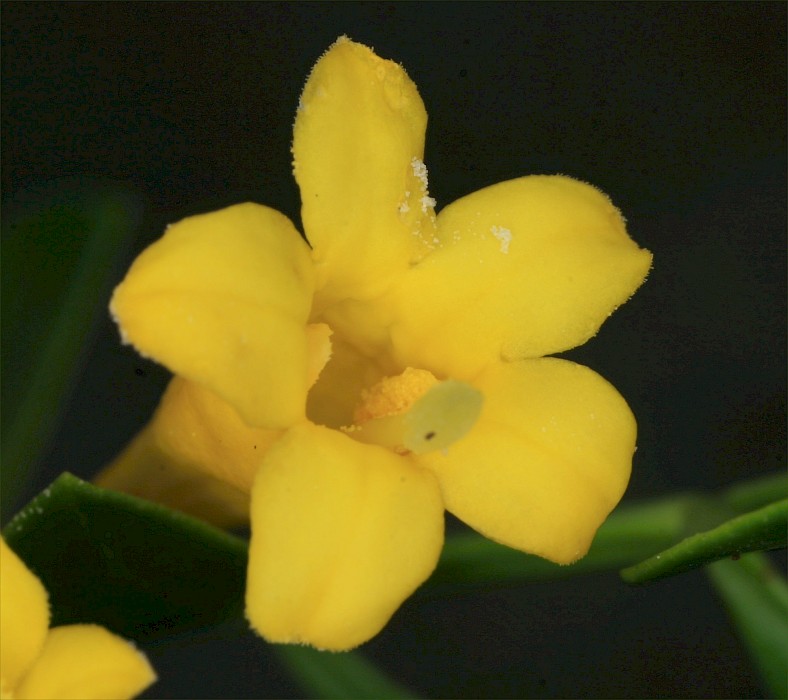
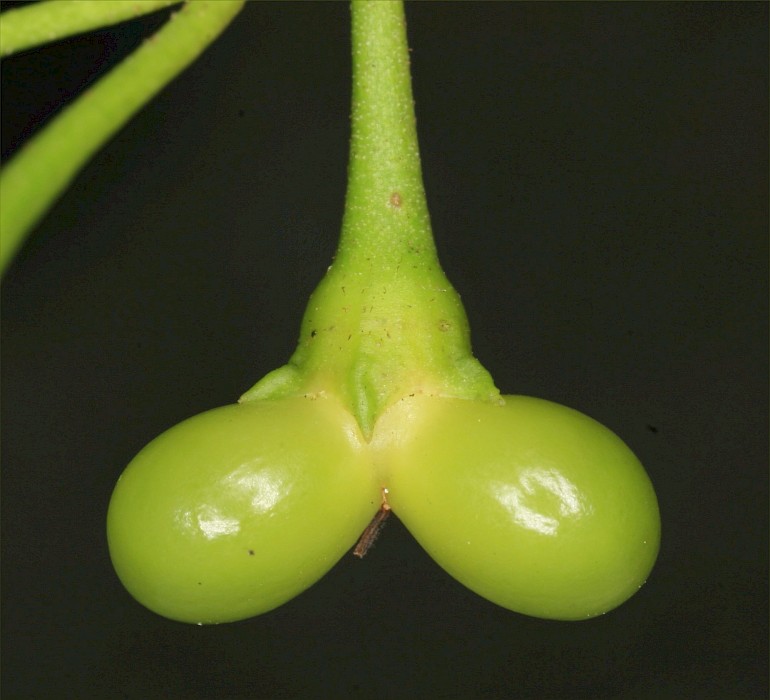
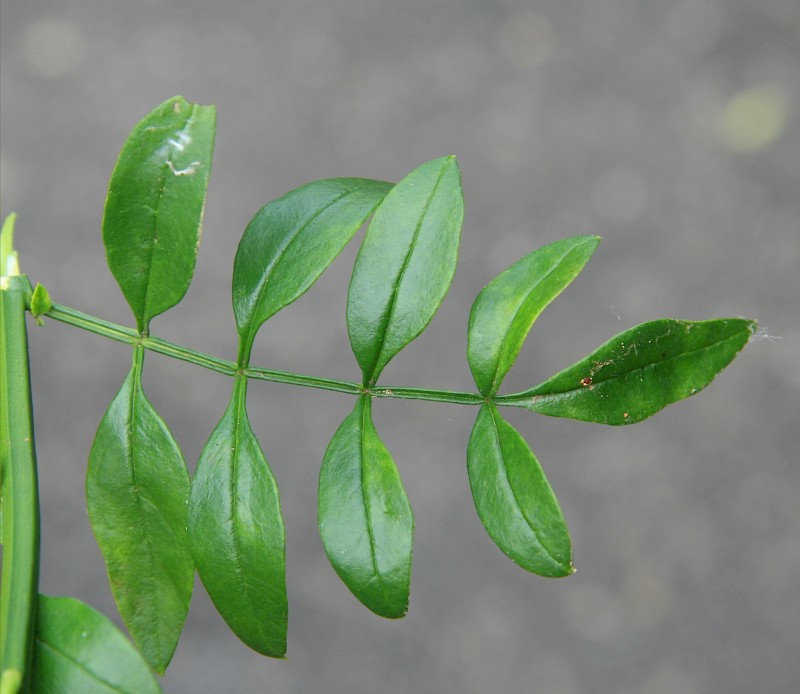
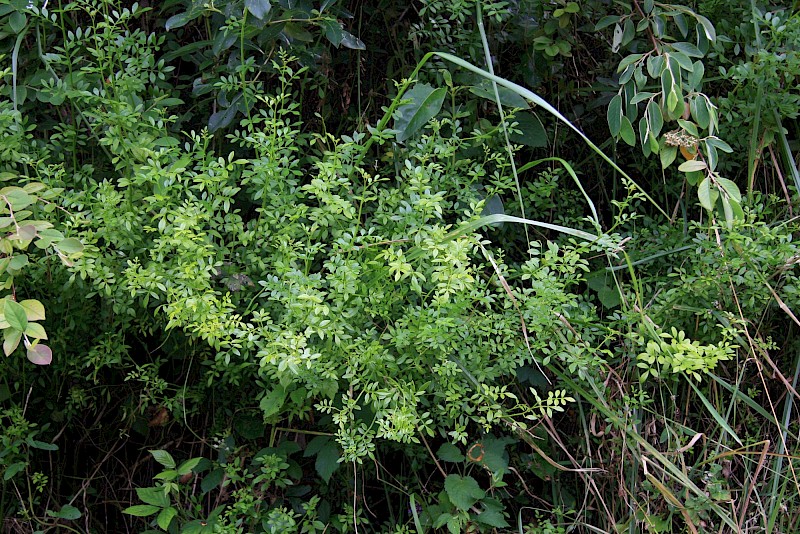
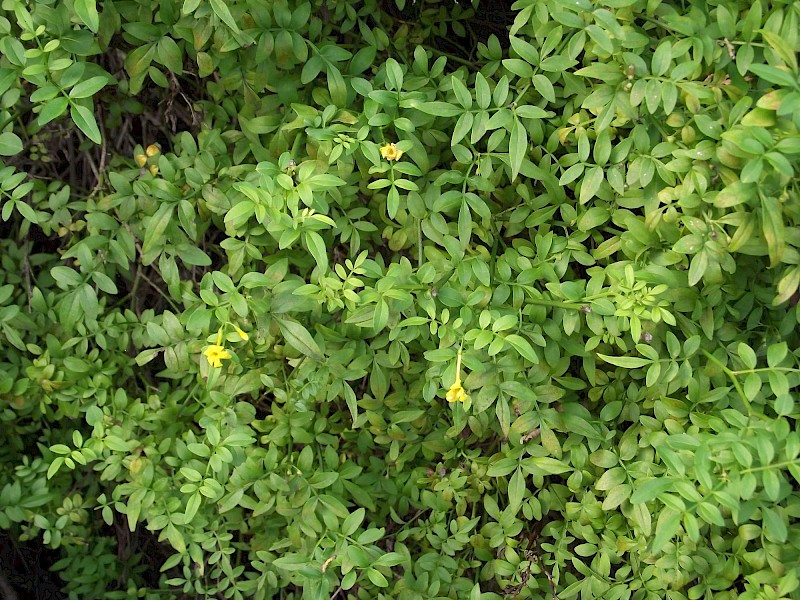
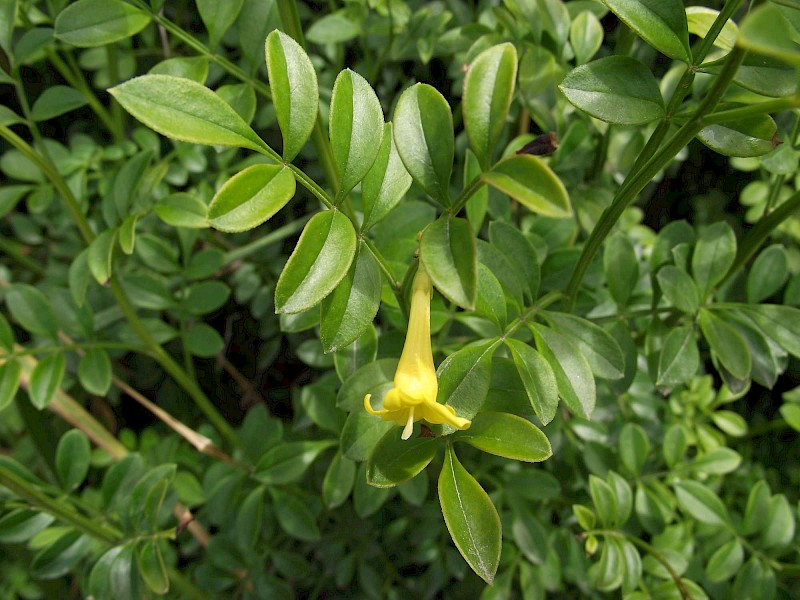
Evergreen, erect or sub-erect (occasionally scrambling), almost hairless, non-woody shrub (<2.5 m tall) with strongly angled stems. Leaves are arranged alternately up the stems, divided into 3-7 stalkless leaflets and a terminal leaflet (<5 x 2 cm). Clusters of 3-10 tubular yellow flowers (15-20 mm long) appear from July to April, followed by glossy black berries (6-8 mm diameter) with a small amount of black pulp.
Are there any similar species?
Jasminum mesnyi, primrose jasmine (J. primulinum), and J. nudiflorum.
Why is it weedy?
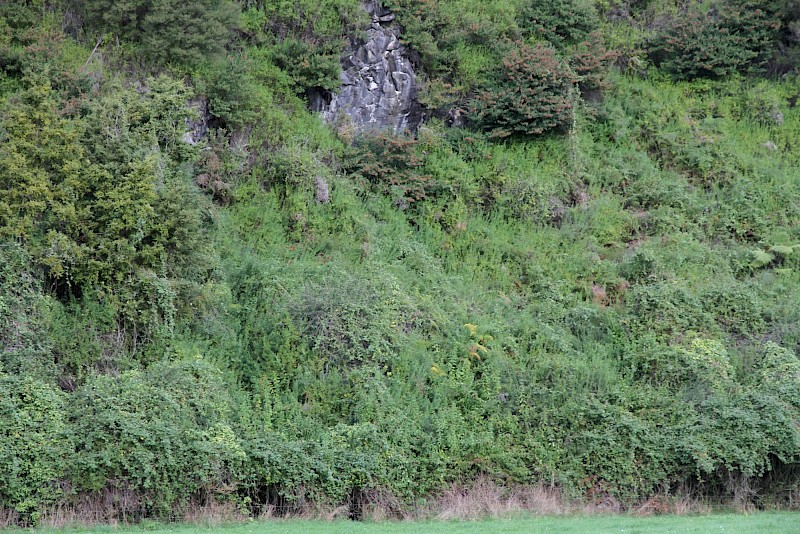
Moderate to fast growth rate, scrambling habit, and stems that take root when they make contact with soil allows it to form dense bushes. Tolerates wind, salt, differing soil types, and damage. It is extremely hard to kill.
How does it spread?
Birds spread the seed, while stem fragments are spread by dumping of garden waste.
What damage does it do?
Competes for space and nutrients, scrambles over shrubs and groundcovers, and prevents native species establishing.
Which habitats is it likely to invade?
Open forest and margins, coastline, shrublands, limestone hills, and barren sites.
What can I do to get rid of it?
1. Physical removal - Pull or dig out then burn or dispose of at refuse transfer station.
2. Cut and paste (all year round) - Cut the stem/trunk as close to the ground as possible and cover the entire stump with herbicide as soon as possible after cutting. Apply metsulfuron gel (10g/l strength) to the entire cut stem.
3. Foliar spray - Apply herbicide using a hand held sprayer/knapsack to plants <1m tall or gun and hose for larger infestations. Apply metsulfuron herbicide (600g/kg active ingredient at 5g/10L knapsack or 20g/100L gun and hose) plus organosilicone penetrant (3ml/L) Note: Metsulfuron overspray will kill other (desirable) broadleaf plants and has residual activity in the soil which aids in killing below ground parts. Do not use over or near water bodies or wetlands and use only as directed on label.
CAUTION: When using any herbicide or pesticide, PLEASE READ THE LABEL THOROUGHLY to ensure that all instructions and directions for the purchase, use and storage of the product, are followed and adhered to.
What can I do to stop it coming back?
Stumps resprout and cut stems take root. Not shade-tolerant so plant bared sites to minimise regrowth where possible.
Images