Khasia berry
Botanical name
Cotoneaster simonsii
Family
Rosaceae (rose)
Also known as
Where is it originally from?
China and Himalayas
What does it look like?
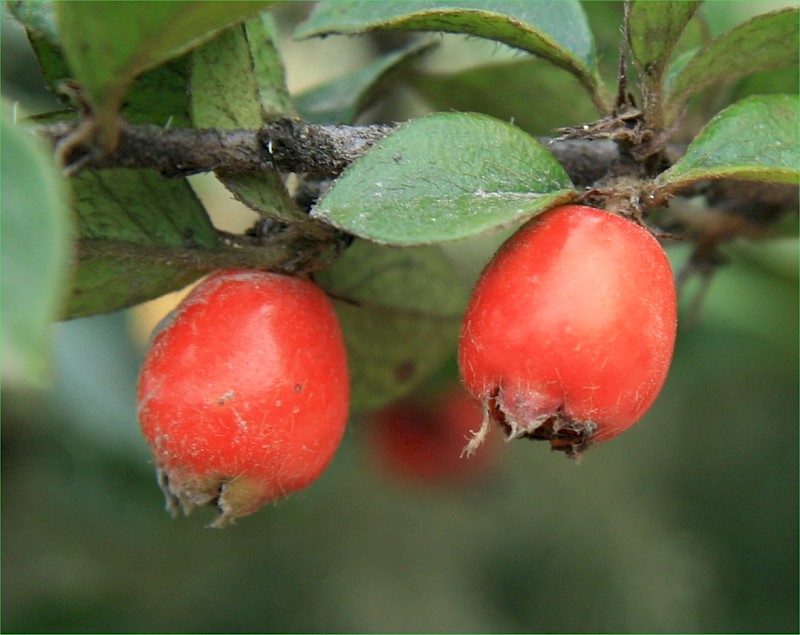
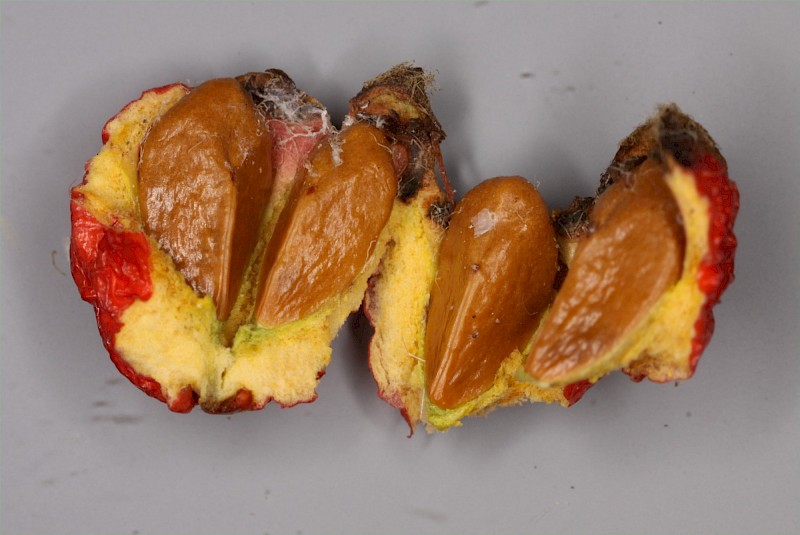
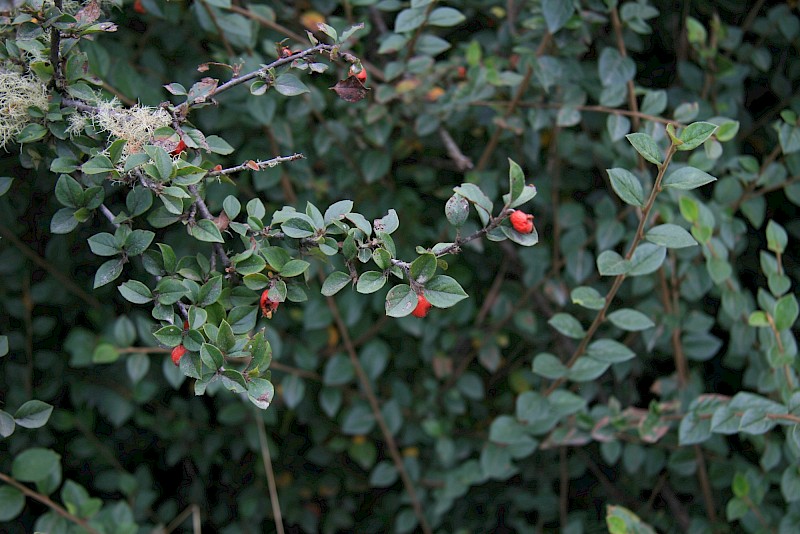
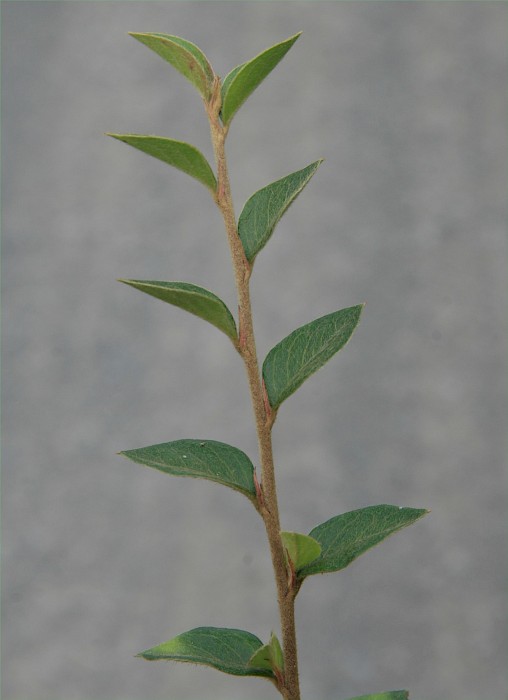
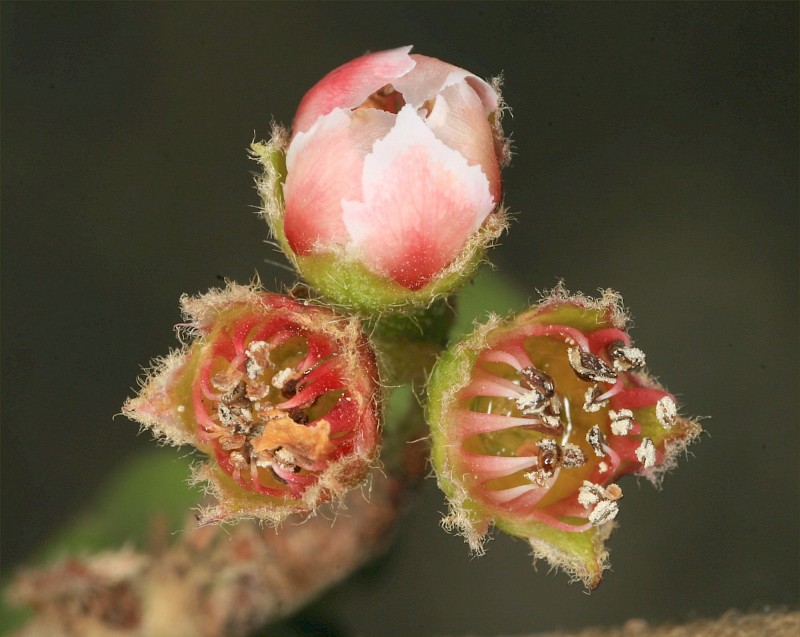
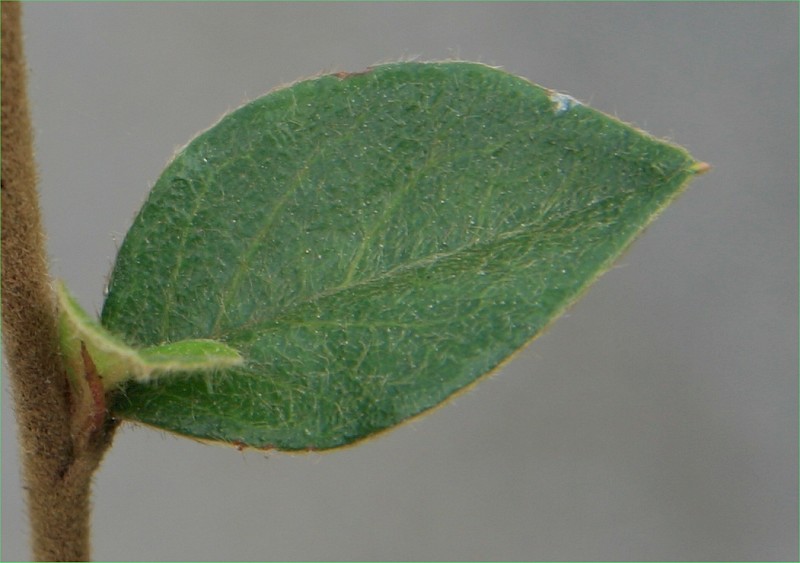
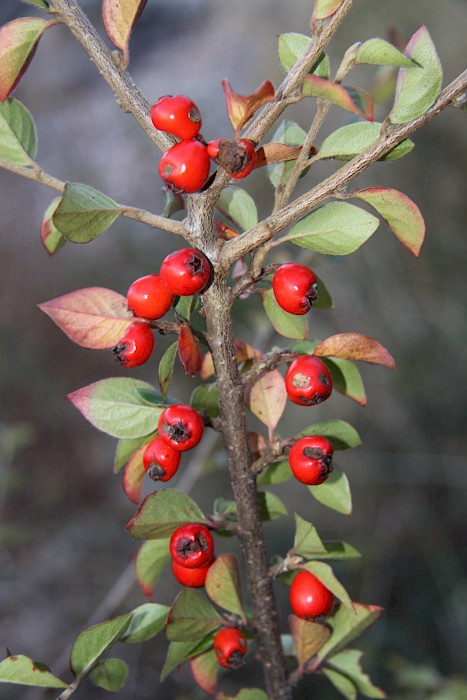
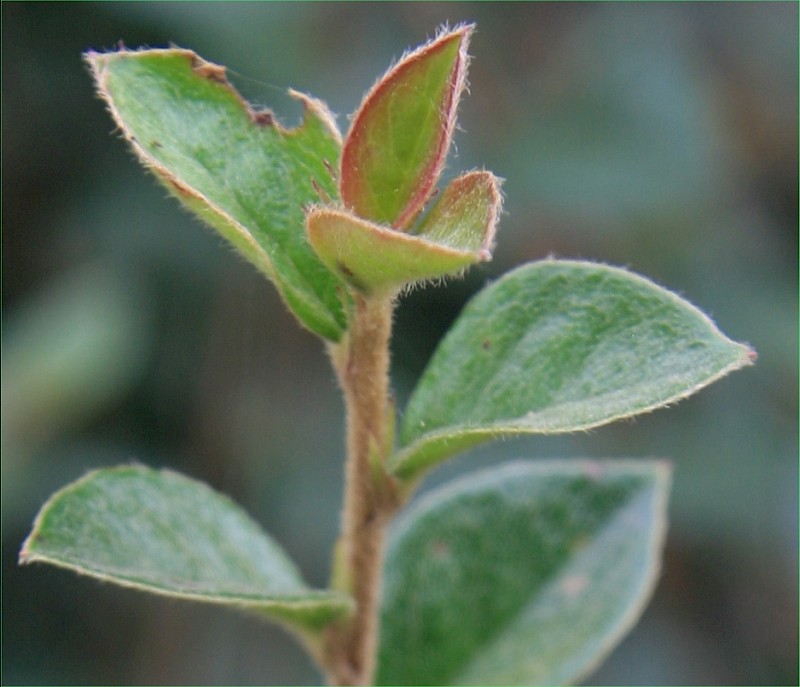
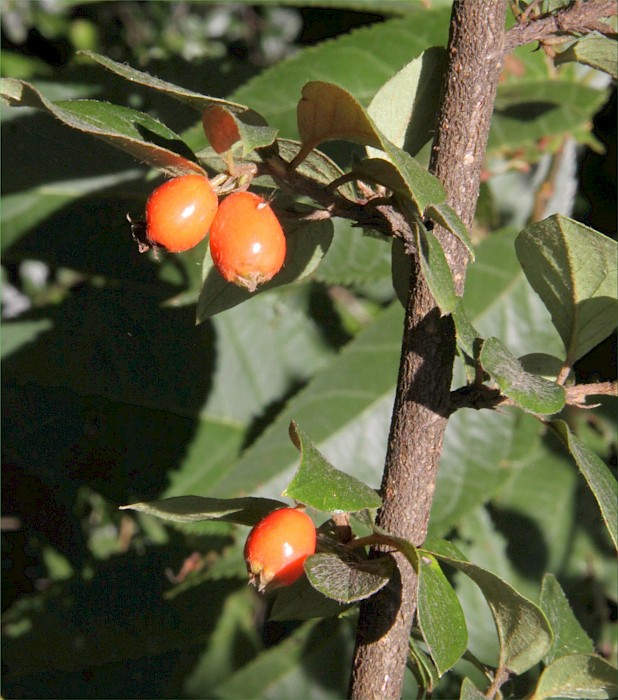
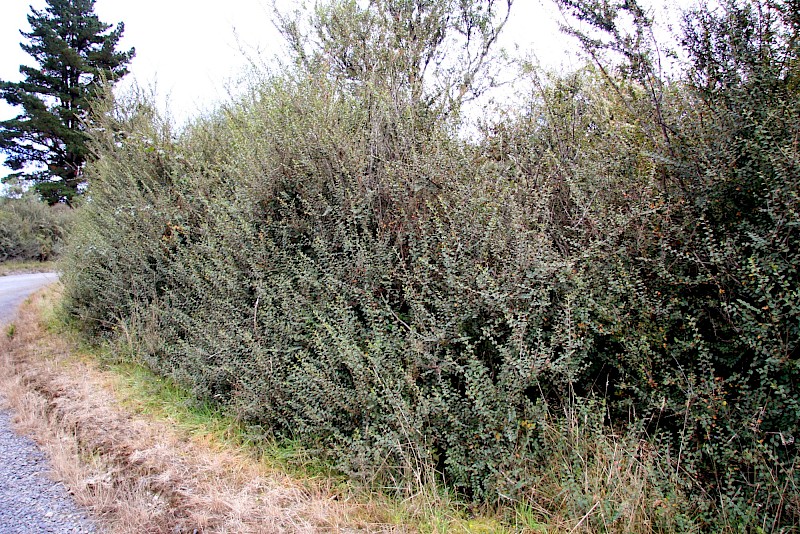
Deciduous or semi-evergreen shrub (<4 m) with stems that are erect or slightly arching, covered with dense brown downy hairs when young, are hairless brownish-grey with mature, and often covered in sooty mould. Shiny pale-green leaves (13-25 x 7-15 mm) crowded or bunched along stems have thin hairs on top when young but are hairless when mature. Clusters of 1-4 small whitish to pale pink flowers (Nov-Dec) are followed by shiny orange-red or scarlet berries (5-10 mm long).
Are there any similar species?
Cotoneaster glaucophyllus, C. franchetii, and C. divaricatus are similar.
Why is it weedy?
Produces highly viable seeds, matures quickly, long-lived, forms dense stands and outcompetes native shrub species in a wide range of habitats. Very tolerant of damp and drought, cold, range of soils, and semi-shade tolerant.
How does it spread?
Birds distribute seeds widely from hedges, roadsides, gardens, and wasteland.
What damage does it do?
Forms understorey in open forest and invades margins. Overtops and replaces shrub species, and prevents the establishment of native plant seedlings.
Which habitats is it likely to invade?
Dry cool forest and shrubland up to 900 m, forest margins, dry rangeland, bluffs, rocky sites, slips, and riverbeds, potentially most cold dry open sites in New Zealand.
What can I do to get rid of it?
Plan to control whole areas to minimise reseeding by birds.
1. Physical removal - Hand pull small plants, or dig out entire plant including roots (all year round): Dispose of at a refuse transfer station, burn, or bury deeply.
2. Cut and paste (all year round) - Cut the stem/trunk as close to the ground as possible and cover the entire stump with herbicide as soon as possible after cutting. Apply either metsulfuron gel (10g/l strength) or picloram gel (43g/l strength) to the entire cut stem.
3. Basal spray stems up to 20cm diametre with X-Tree Basal. Ensure the base is thoroughly covered at ground level.
4. Foliar spray - Apply metsulfuron herbicide (600g/kg active ingredient) (Knapsack 0.5g/L, or Gun and hose 20-35g/100L) plus organosilicone penetrant (3ml/L) to thoroughly wet all parts of plant. Note: Metsulfuron overspray will kill other (desirable) broadleaf plants and has residual activity in the soil which aids in killing below ground parts OR apply triclopyr herbicide (600g/L active ingredient) at 6ml/L plus penetrant 1ml/L to thoroughly wet all parts of plant. Triclopyr herbicide is ‘grass friendly’ but overspray will kill other (desirable) broadleaf plants.
CAUTION: When using any herbicide or pesticide, PLEASE READ THE LABEL THOROUGHLY to ensure that all instructions and directions for the purchase, use and storage of the product, are followed and adhered to.
What can I do to stop it coming back?
Stumps resprout, often even after swabbing. Replant bared areas with dense groundcover or shrubs to prevent seedling regrowth.
Images