Oxylobium
Botanical name
Callistachys lanceolata
Family
Fabaceae (pea)
Also known as
Oxylobium lanceolatum, O. callistachys, O. ellipticum, O. retusum, Callistachys lanceolata
Where is it originally from?
West Australia
What does it look like?
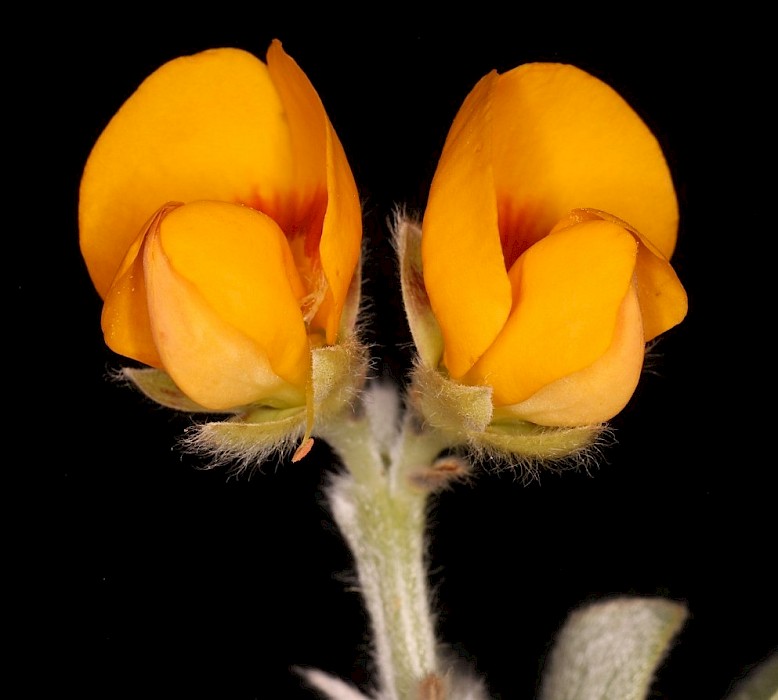
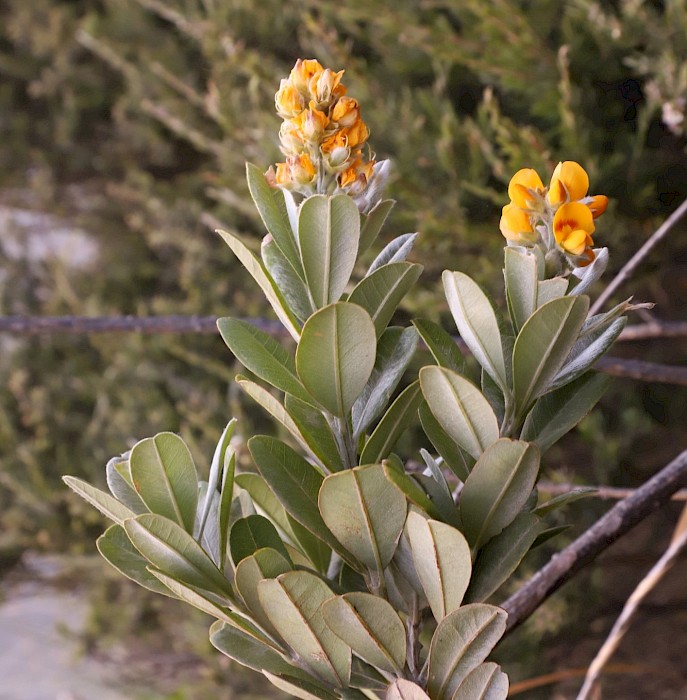
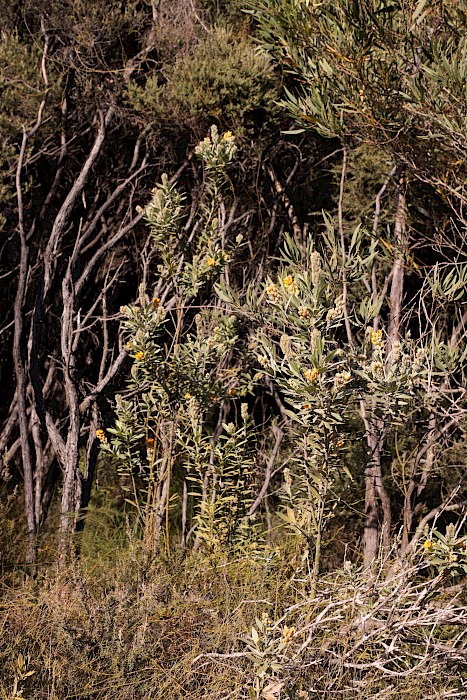
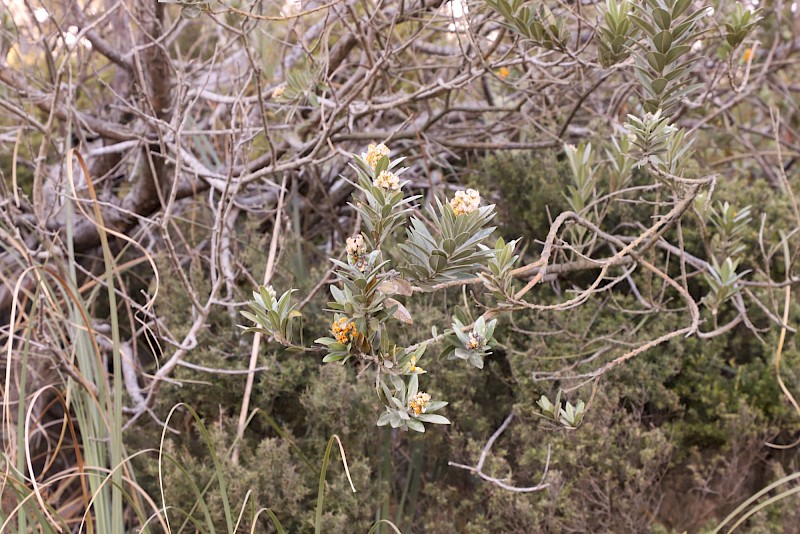
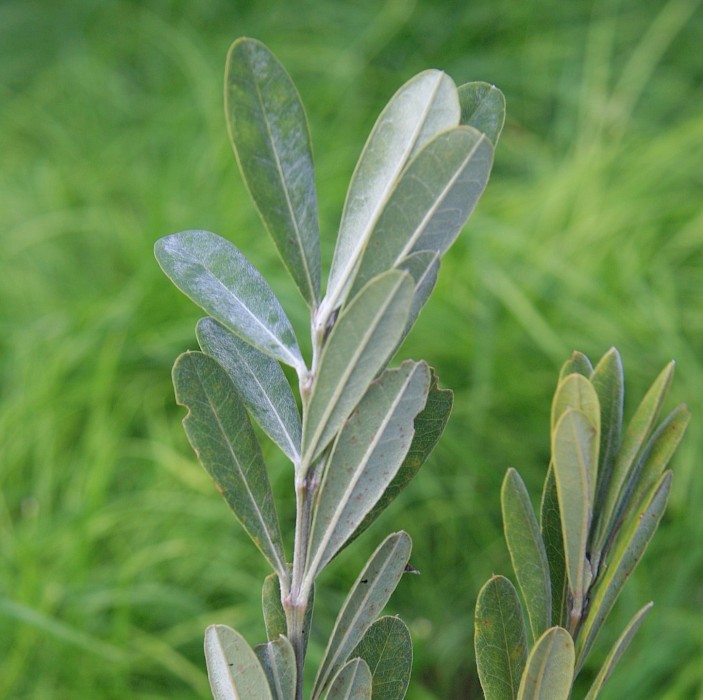
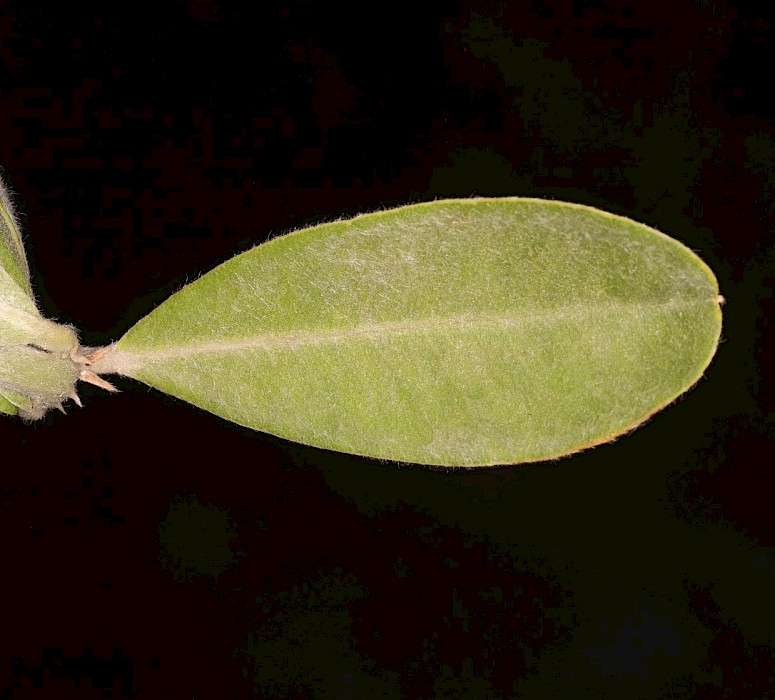
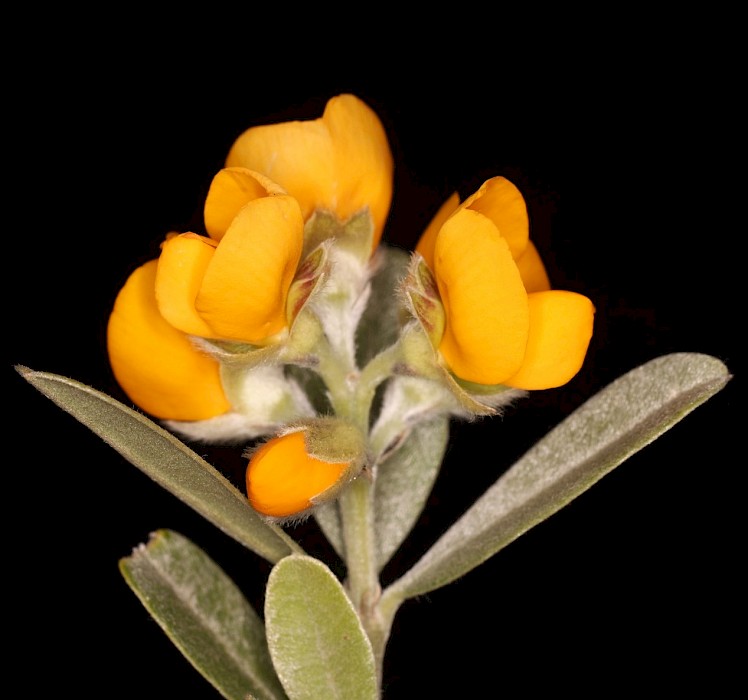
Tall, silvery, usually narrow evergreen shrub (<3-8 m tall) with densely silky, angular stems. Upright, ovalish leaves (35-55 mm long) are very silky both sides when young, and almost hairless on upper surfaces when older. Conspicuous orange-yellow spikes of pea-like flowers (10-15mm) appear in spring and are followed with a curved seedpod (13-17 mm) that is densely silky at first, becoming hairless, ribbed and hard as it matures, and containing 6-8 dull reddish-black seeds.
Are there any similar species?
Banksia spp are similarly silky but flowers are different.
Why is it weedy?
Tolerates very hot, drought, wind, salt, fire, damage, poor soils. Long-lived seed. Dominates low-growing plant communities. Fire stimulates germination. Intolerant of mod shade.
How does it spread?
Mostly through soil movement and dumped vegetation, but sometimes by water, and also locally by pod burst. Germination greatly encouraged by fire. Sources include gardens and waste places.
What damage does it do?
Fixes nitrogen, increasing levels some soil types so that ability of specialised native plants (eg. orchids, ferns, kauri) won?t thrive. Forms dense patches, preventing native species from establishing.
Which habitats is it likely to invade?
Shrubland, short tussockland, fernland, gumland, herbfield, seasonal wetland; all in dry, especially sandy and coastal areas. Waste places, shrubland, sandy coastal sites.
What can I do to get rid of it?
1. Physical removal - dig out small plants or excavate larger areas. Can be left on site to rot down.
2. Cut and paste (all year round) - Cut the stem/trunk as close to the ground as possible and cover the entire stump with herbicide as soon as possible after cutting. Apply metsulfuron gel (10g/l strength). When a gel is inadequate apply a formulation containing triclopyr and picloram 50ml/L water mix. Apply the mixture over the entire exposed surface of the cut stump, i.e. top and sides.
3. Drill or frill - Drill downward sloping holes around the circumference of the trunk about 8-10 cm apart, or Frill (make deep cuts into the sapwood at regular intervals around the base of the tree, taking care not to ring-bark the plant). Fill the holes with undiluted ‘neat’ glyphosate (360g/L active ingredient) or saturate the frill cuts with glyphosate (360g/L active ingredient) mixed at 250ml/L.
4. Foliar spray - Apply herbicide using a hand held sprayer/knapsack to plants <1m tall or gun and hose for larger infestations. Apply metsulfuron herbicide (600g/kg active ingredient at 5g/10L knapsack or 20g/100L gun and hose) plus organosilicone penetrant (3ml/L) Note: Metsulfuron overspray will kill other (desirable) broadleaf plants and has residual activity in the soil which aids in killing below ground parts OR apply picloram/triclopyr herbicide (picloram 100g/l and triclopyr 300g/l active ingredient at 6ml/L) plus organosilicone penetrant (1ml/L) to thoroughly wet all parts of plant. Note: Triclopyr and picloram herbicides are ‘grass friendly’ but overspray will kill other (desirable) broadleaf plants. Picloram has residual activity in the soil which may leach and kill other plants. Do not use under and around other (desirable) broadleaf plants.
NOTE: These herbicides are not for use over or near water bodies or wetlands
CAUTION: When using any herbicide or pesticide, PLEASE READ THE LABEL THOROUGHLY to ensure that all instructions and directions for the purchase, use and storage of the product, are followed and adhered to.
What can I do to stop it coming back?
Avoid soil disturbance and fire at all times. Maintain hygiene measures; clear from roadsides, metal dumps, etc.
Images