Needlebush
Botanical name
Hakea sericea
Family
Proteaceae (protea)
Also known as
Prickly hakea, H. acicularis
Where is it originally from?
Australia
What does it look like?
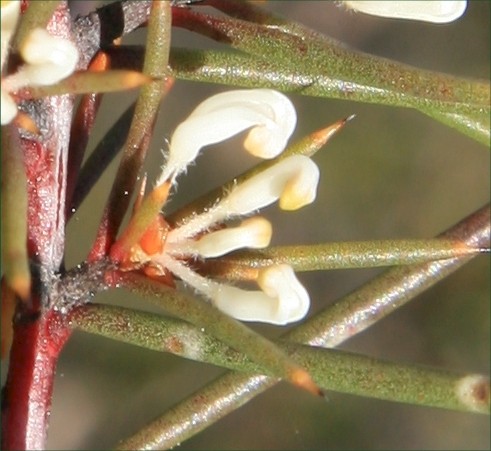
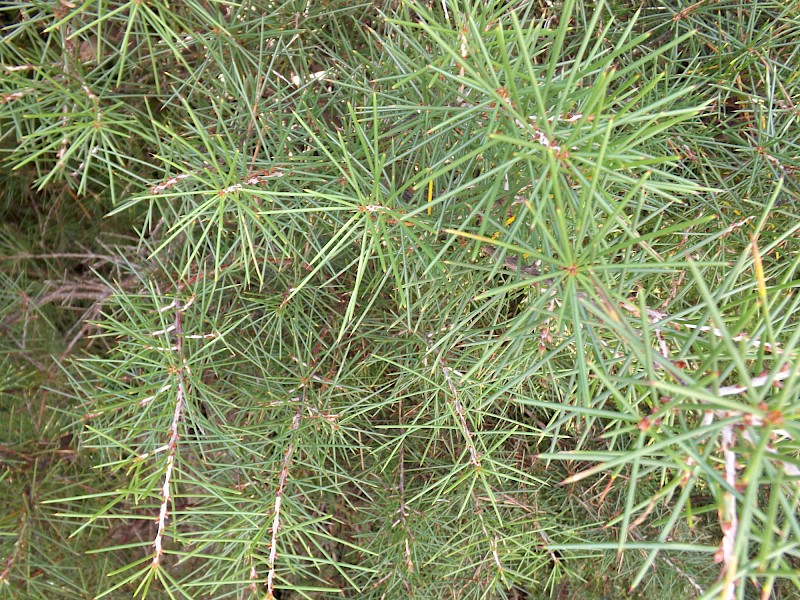
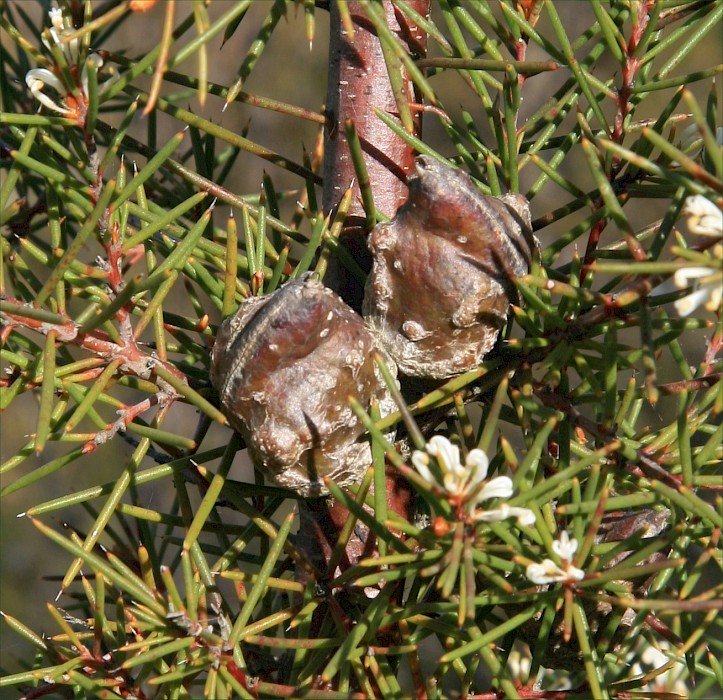
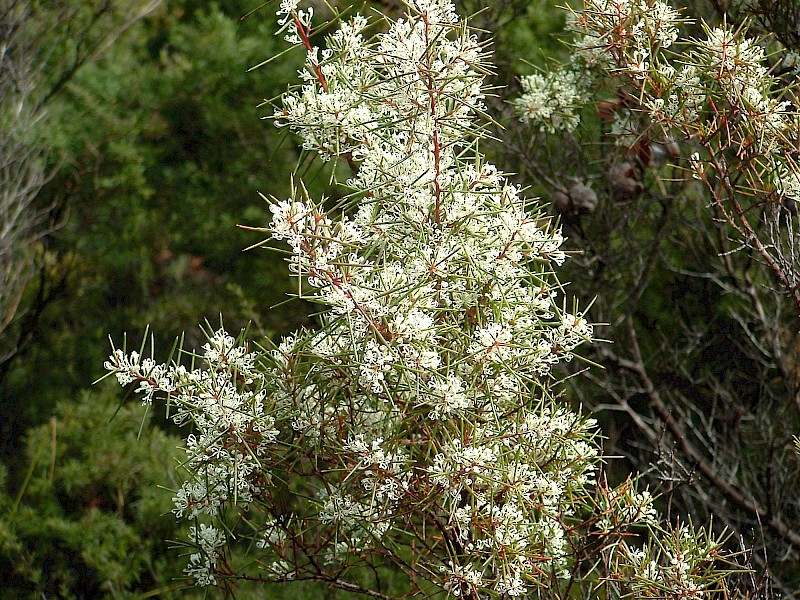
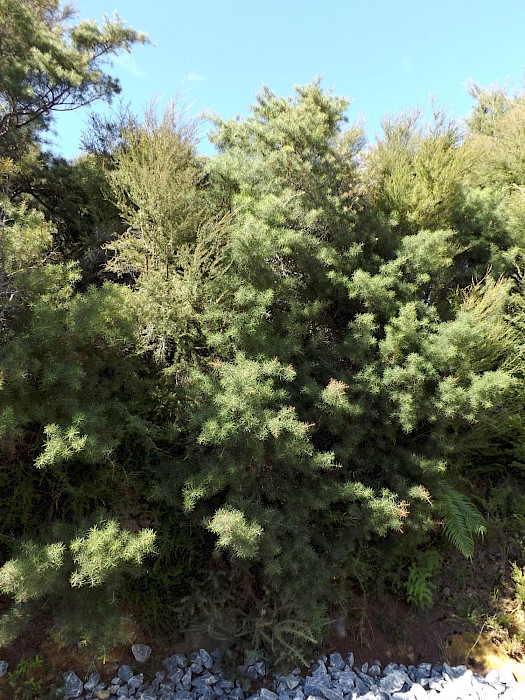
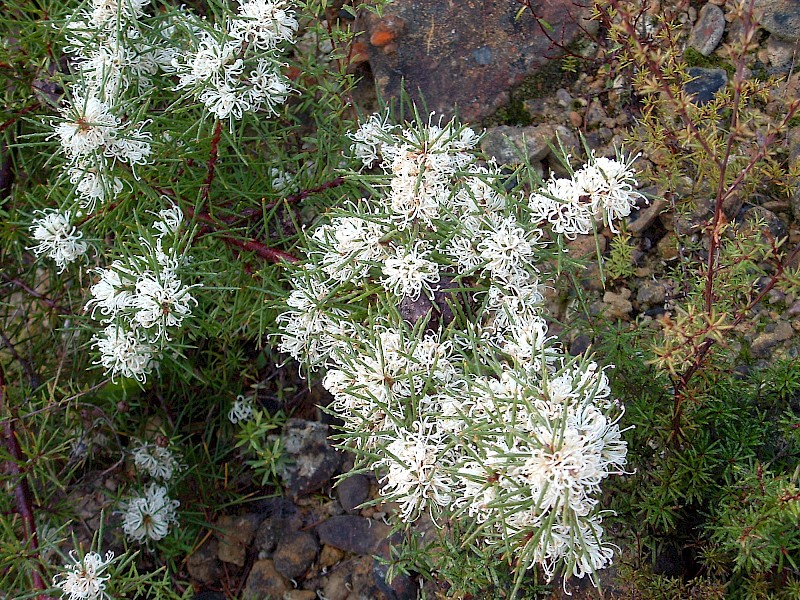
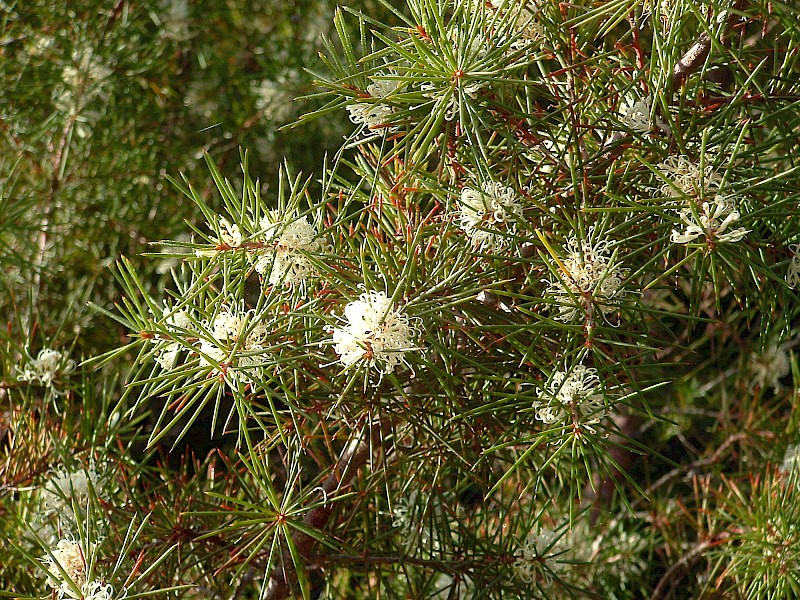
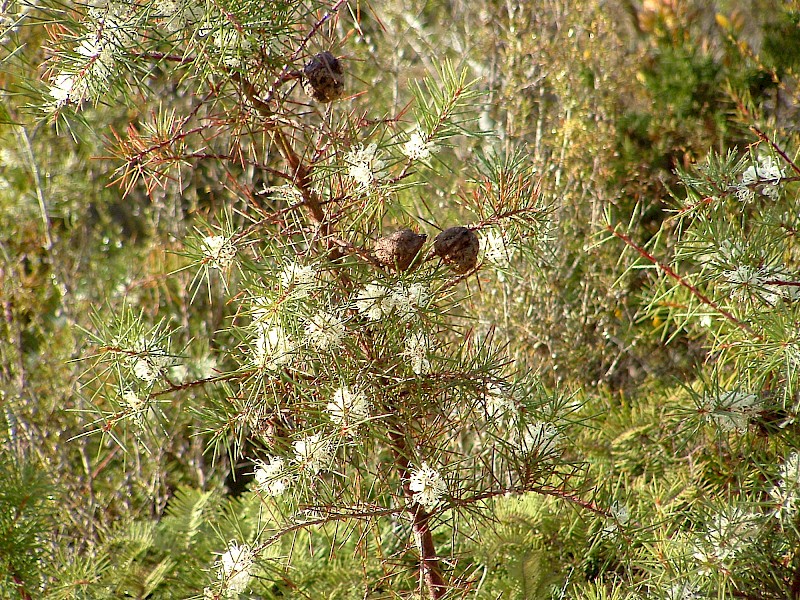
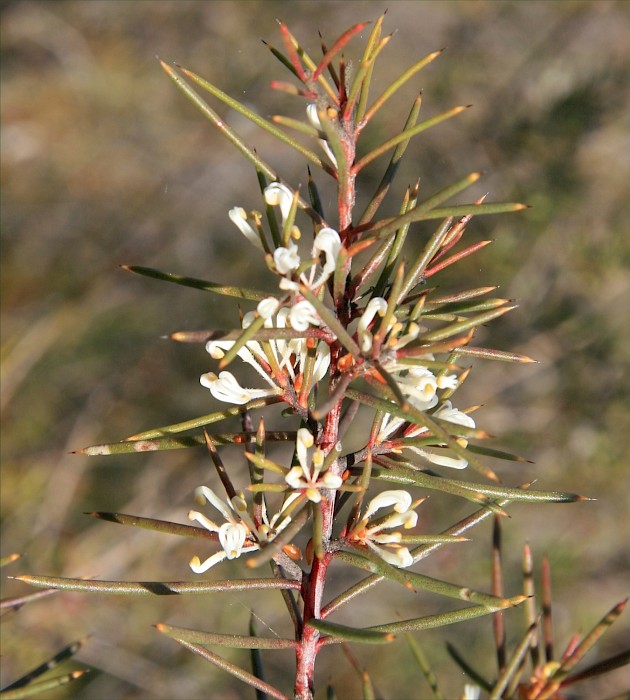
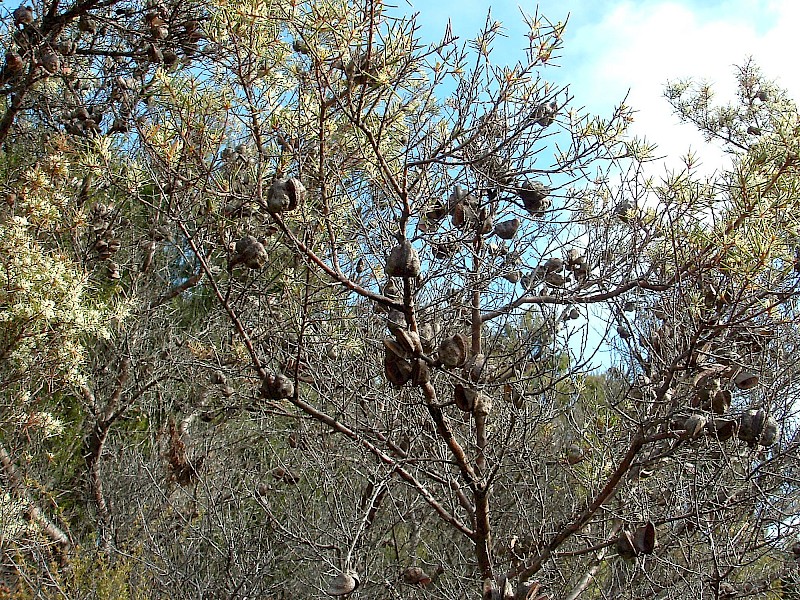
Prickly, woody, spreading, evergreen shrub (<3m tall) with stiff, needle-like leaves (20-60 x 1 mm) with sharp pointed ends. Small sparse clusters of white flowers (winter- summer) develop into round, woody seed capsules (20-30 x 14-25 mm) with corrugated-surfaces, which contain winged black seeds (15-25 x 6- 12 mm).
Are there any similar species?
H. gibbosa leaves are always downy. H. propinqua.
Why is it weedy?
Tolerant of fire, damp to severe drought, moderate shade, poor soils, high to cool temperature. Long-lived seed, and moderately long-lived plants form dense stands, dominating other species in poor soils. Stock won?t graze it.
How does it spread?
Seed is spread by water and soil and livestock movement, and by dumped vegetation. Fire encourages seeds to germinate.
What damage does it do?
Dominates low shrubland and regenerating forest in very low fertility, poor soil habitats. Keeps sites dry, adds to fire risk, causes succession to pampas and grasses. Contributes to local extinction of rare native fern, orchid and shrub species. May decrease recreational use of an area because of spiny habit.
Which habitats is it likely to invade?
Gumlands, shrubland, short tussockland, bare land, fernland, especially burnt sites.
What can I do to get rid of it?
1. Physical removal - Dig out seedlings and small plants (all year round).
2. Cut and paste (all year round) - Cut the stem/trunk as close to the ground as possible and cover the entire stump with herbicide as soon as possible after cutting. Apply either metsulfuron gel (10g/l strength) OR picloram gel (43g/l strength) to the entire cut stem.
3. Basal spray stems up to 20cm diametre with X-Tree Basal. Ensure the base is thoroughly covered at ground level.
3. Foliar spray - Apply Glyphosate (360 g/L active ingredient) herbicide (20ml/L) plus organosilicone penetrant (2ml/L) to cover entire plant Note: Non selective. Avoid overspray onto desirable plants OR Apply Metsulfuron herbicide (600g/kg active ingredient) (Knapsack 0.5g/L, or Gun and hose 20-35g/100L) plus organosilicone penetrant (3ml/L) to thoroughly wet all parts of plant. Note: Metsulfuron overspray will kill other (desirable) broadleaf plants and has residual activity in the soil which aids in killing below ground parts.
Note: Where natural regeneration is the objective, needlebush (hakea) can be left uncontrolled for natural succession (8-20 years): can be accelerated by felling plants in sites of dense native vegetation, allowing native species to overtop it. Best in winter to maximise regeneration and minimise fire risk.
CAUTION: When using any herbicide or pesticide, PLEASE READ THE LABEL THOROUGHLY to ensure that all instructions and directions for the purchase, use and storage of the product, are followed and adhered to.
What can I do to stop it coming back?
Avoid fire at all times, implement fire protection strategy. Most sites can be left to regenerate to native species provided fire can be permanently avoided.
Images