Cape honeysuckle
Botanical name
Tecomaria capensis
Family
Bignoniaceae (bignonia)
Also known as
Cape honeysuckle, Bignonia capensis, tecoma
Where is it originally from?
South Africa and Swaziland, and southern Mozambique
What does it look like?
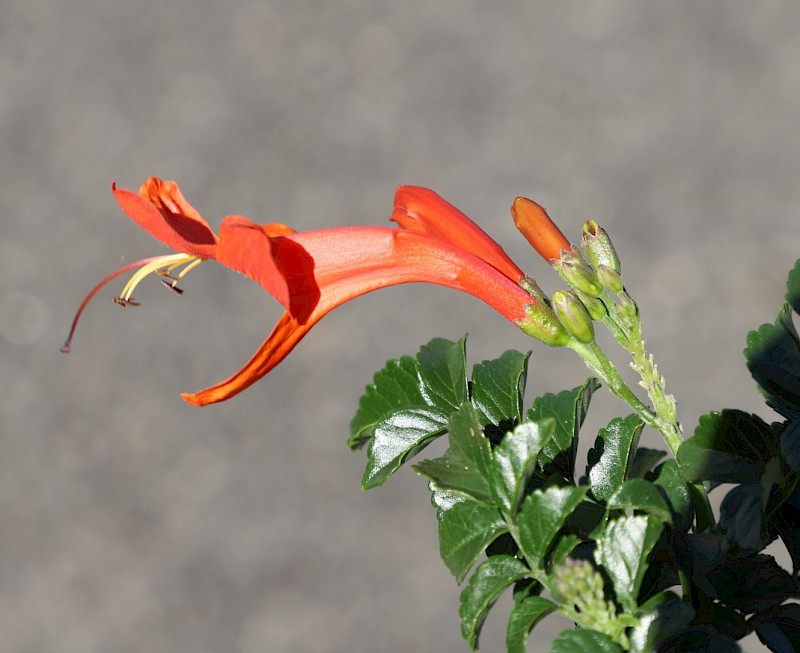
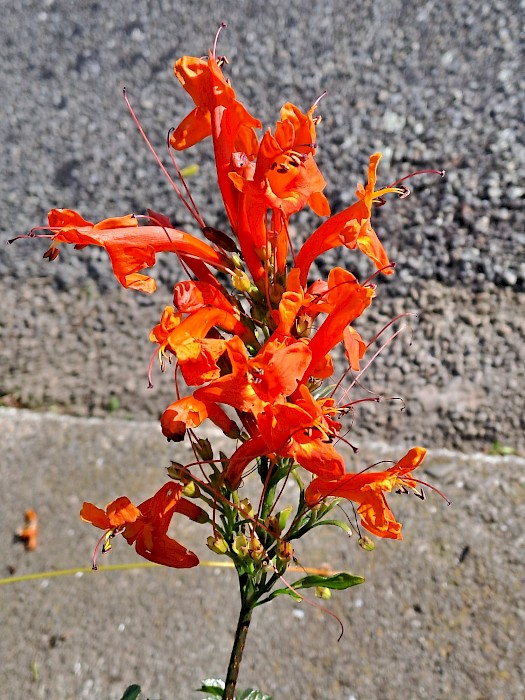
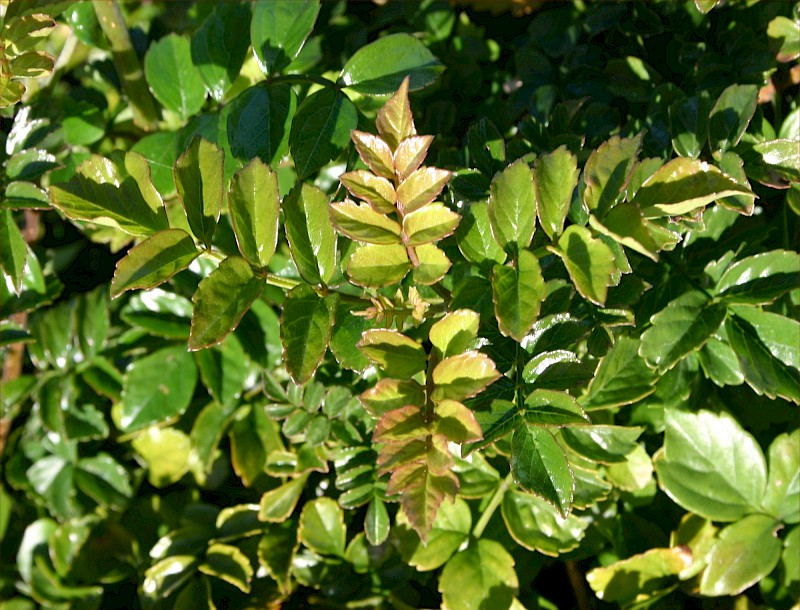
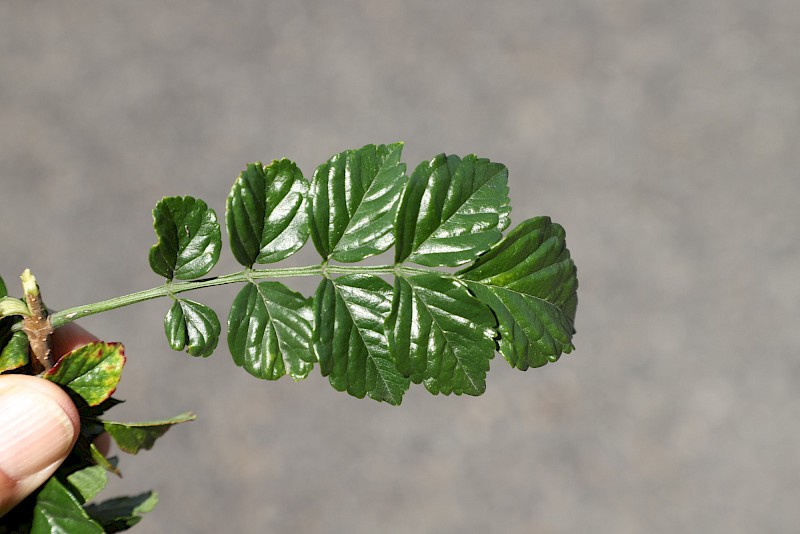
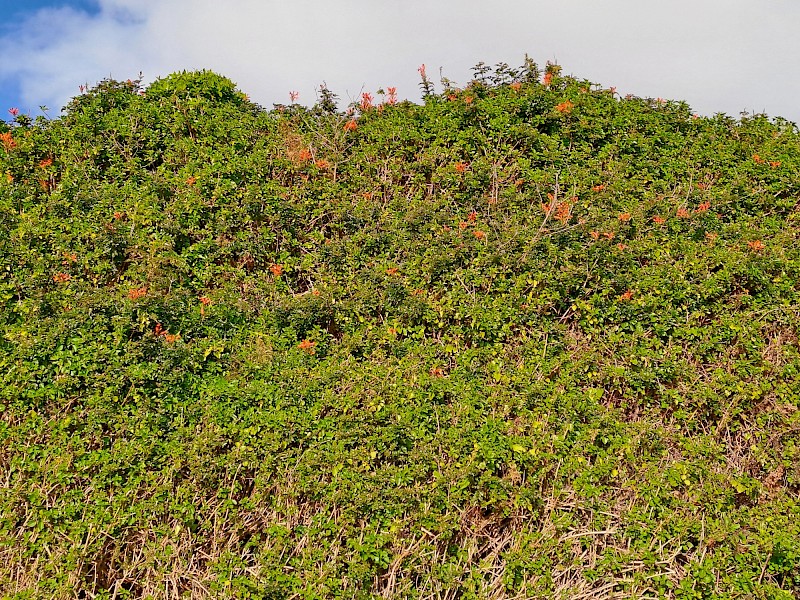
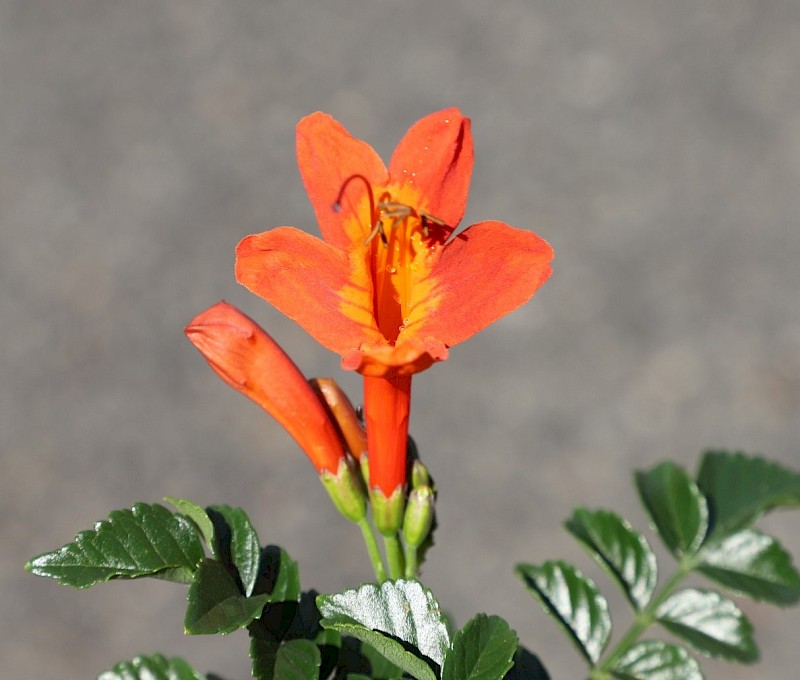
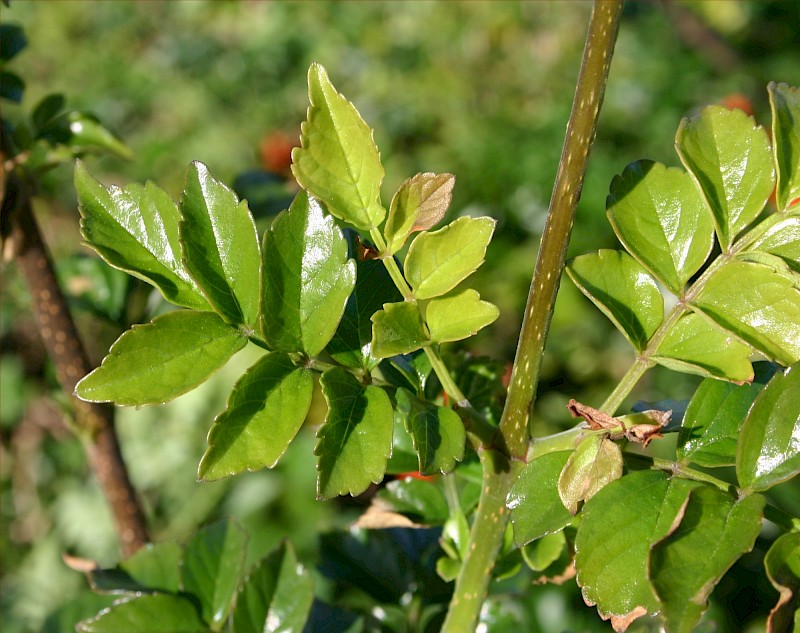
Vigorous, rambling, semi-woody, evergreen (semi-evergreen in cold climates) perennial shrub (<4 m tall) that has been commonly used a hedge plant. Small green to dark green leaves are made up of 5-9 opposite, serrated, round, pointed leaflets (<15 cm long). Distinctive bright orange-scarlet tube-like flowers with deep yellow centres (<7.5 cm long, Apr-Aug) are followed by flattened, leathery capsules (6 cm long).
Why is it weedy?
Vigorous,scrambling growth habit, and the ability to form roots when stems touch the ground, allowing original sites to spread indefinitely. Tolerates salt air and drought, as well as exposed coastal conditions and shaded conditions
How does it spread?
Stems of mature plants may take root where they touch soil, producing new plants. Discarded cuttings may root. Viable seed rarely produced in New Zealand.
What damage does it do?
Forms dense thickets that outcompete and smother native species.
Which habitats is it likely to invade?
Found in the warmer areas of New Zealand where it is a common hedge plant. Prefers frost free, full sun areas.
What can I do to get rid of it?
1. Physical removal - dig out small plants or excavate larger areas.
2. Cut and paste (all year round) - Cut the stem/trunk as close to the ground as possible and cover the entire stump with herbicide as soon as possible after cutting. Apply metsulfuron gel (10g/l strength)
3. Basal spray stems up to 20cm diametre with X-Tree Basal. Ensure the base is thoroughly covered at ground level.
4. Foliar spray - Apply herbicide using a hand held sprayer/knapsack to plants <1m tall or gun and hose for larger infestations. Use metsulfuron herbicide (600g/kg active ingredient at 0.5g/L knapsack or 20g/100L gun and hose) + organosilicone penetrant (3ml/L). Note: Metsulfuron overspray will kill other (desirable) broadleaf plants and has residual activity in the soil which aids in killing below ground parts.
CAUTION: When using any herbicide or pesticide, PLEASE READ THE LABEL THOROUGHLY to ensure that all instructions and directions for the purchase, use and storage of the product, are followed and adhered to.
What can I do to stop it coming back?
Avoid use as ornamental or keep strictly confined by trimming.
Images