Chinese windmill palm
Botanical name
Trachycarpus fortunei
Family
Arecaceae (palm)
Also known as
windmill palm
Where is it originally from?
China
What does it look like?
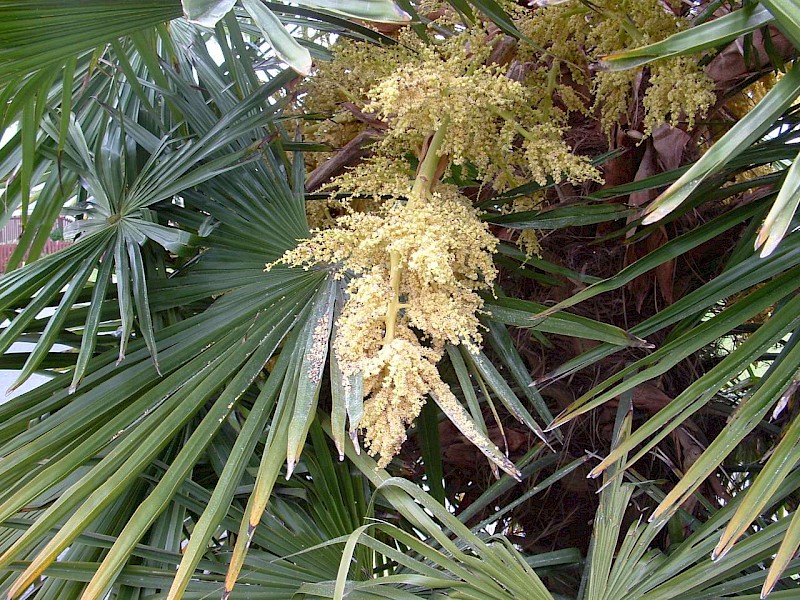
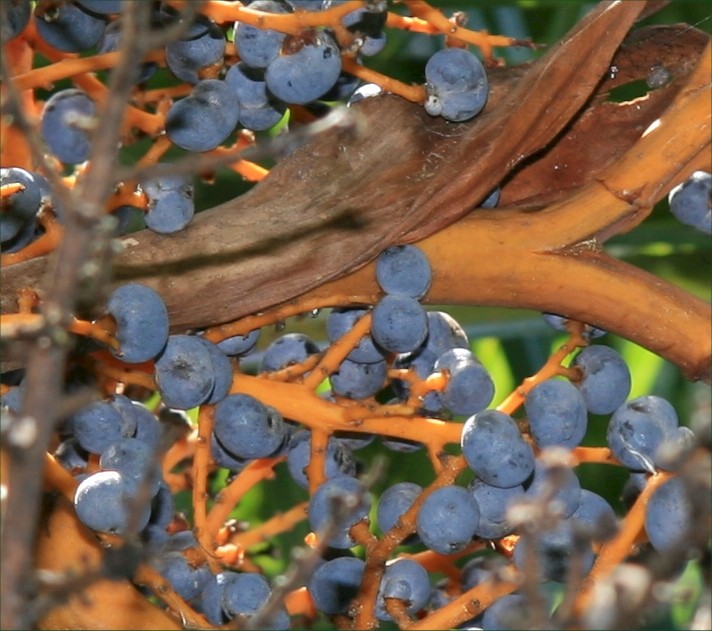
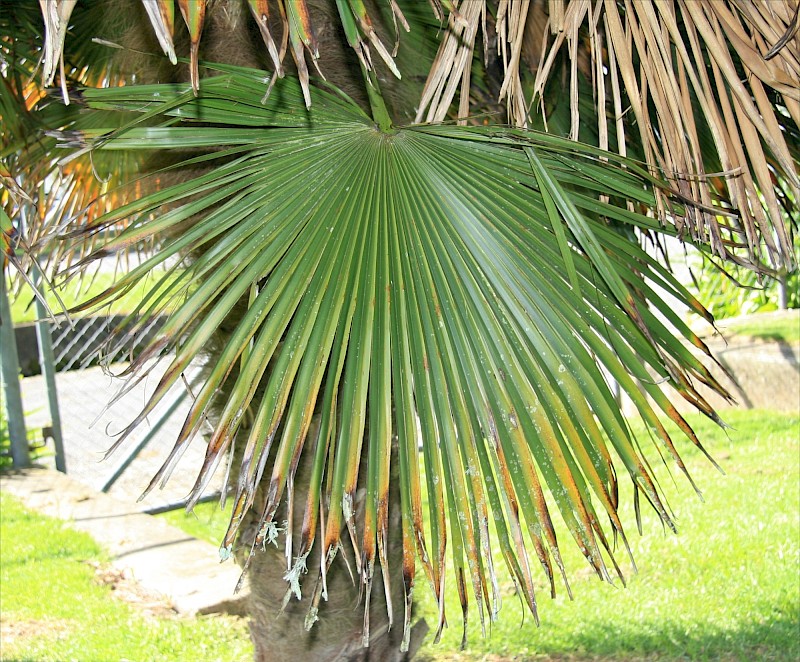
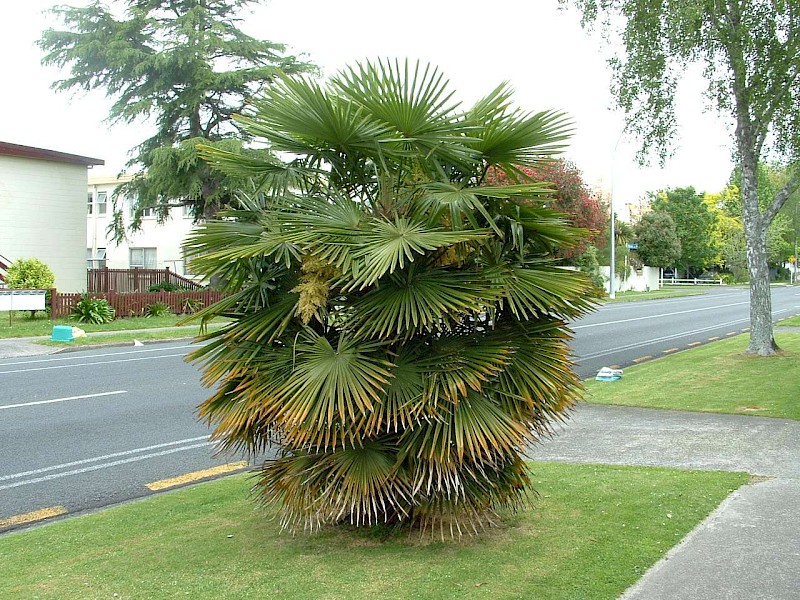
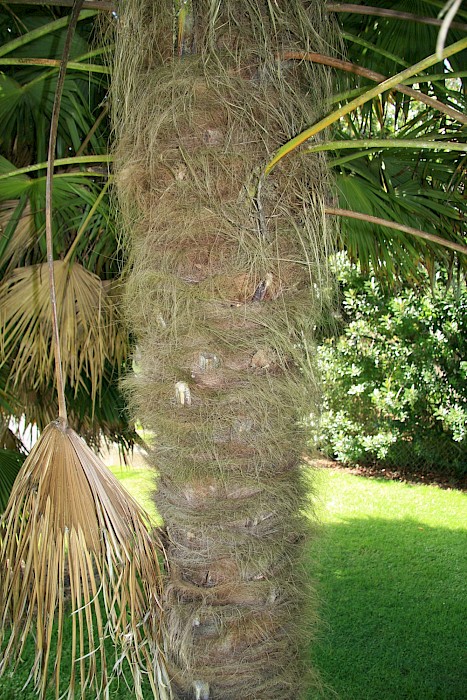
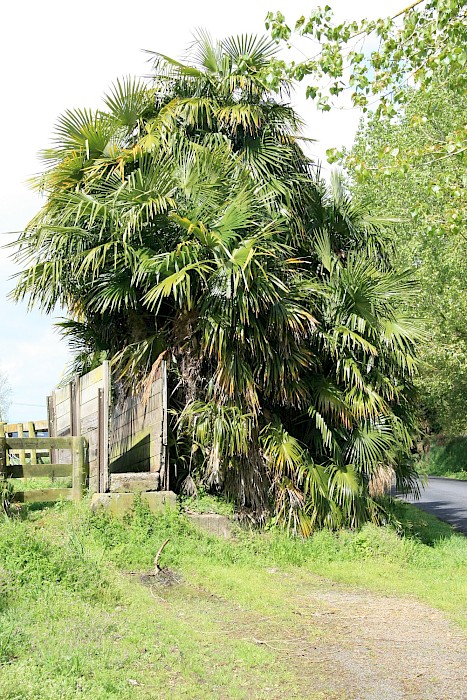
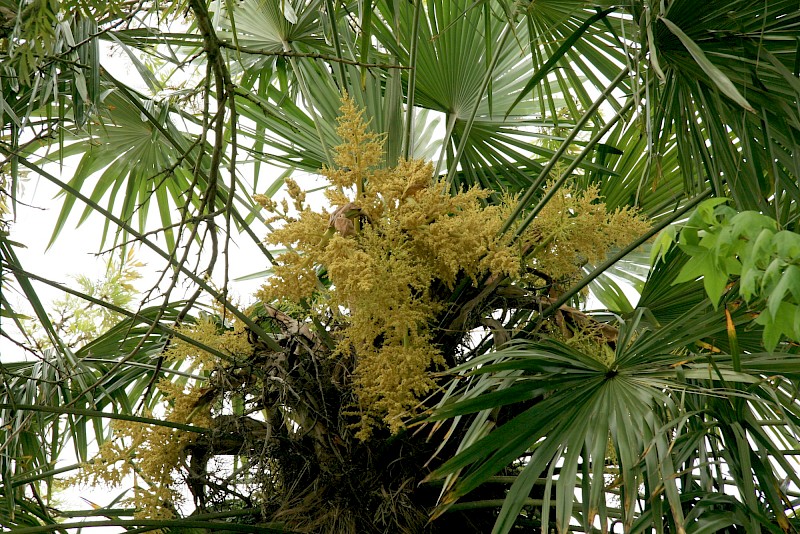
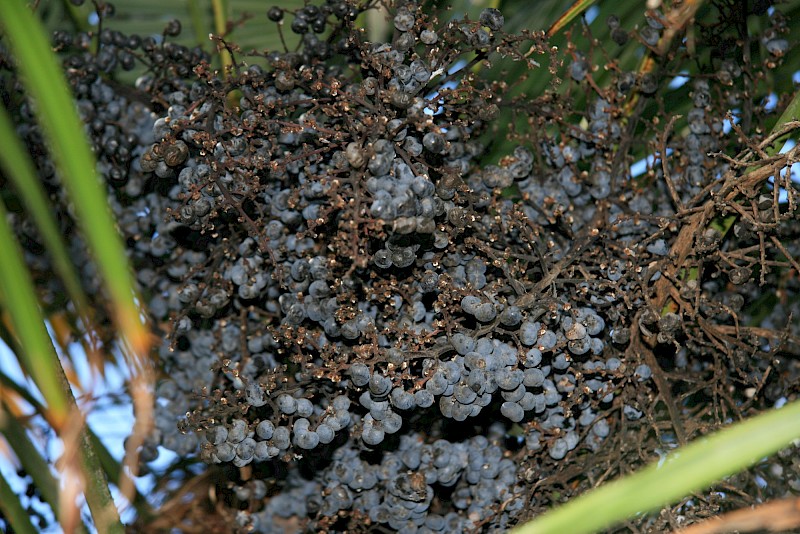
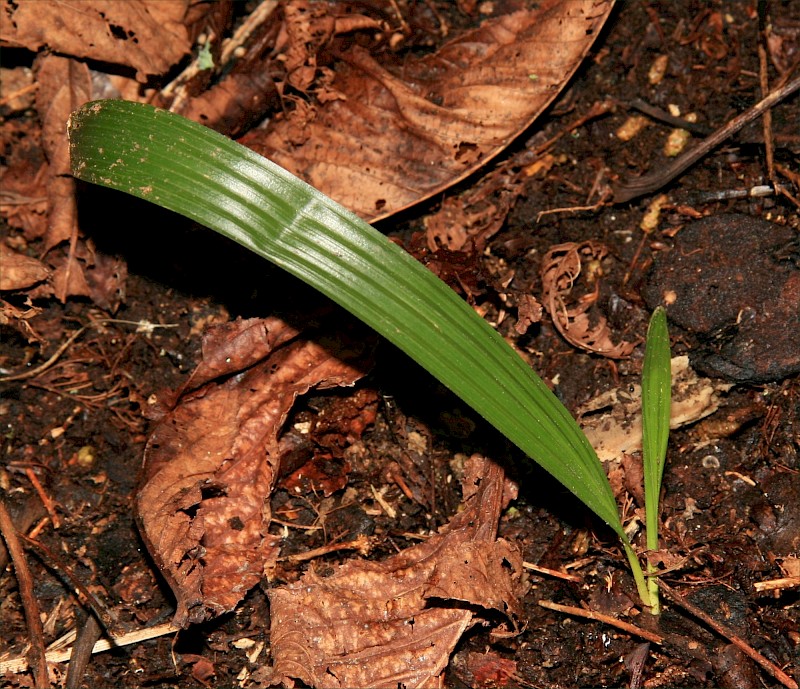
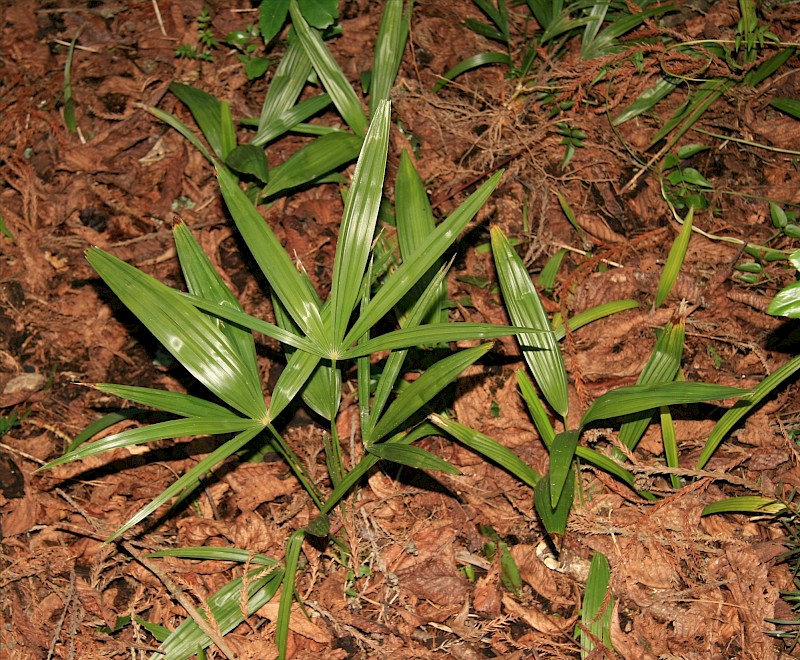
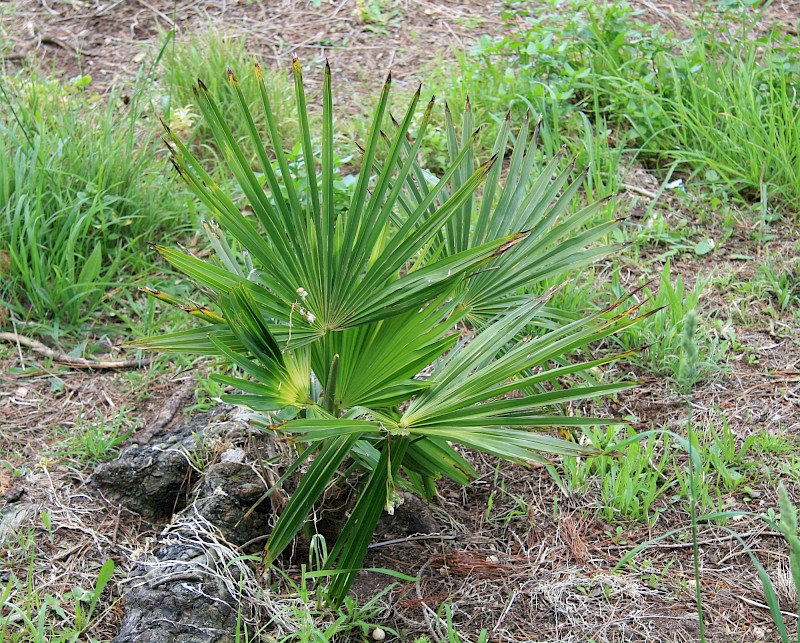
Palm with single, straight, branchless trunk (4-12 m tall). Dead leaves hang from the top of the trunk, forming a skirt. Upper trunk is covered with dark brown fibrous remains of old leaf stalk bases under this ‘skirt’, and lower part of mature trunk develops lumpy ringed bark. Large, round fan-shaped leaves (75 cm long x 100 cm wide), are divided into many narrow, pleated leaflets that droop at the tips. Leaf stalks are long (about 1 m) with stout sharp teeth along the margins. Many small yellow flowers (Nov-Jan) are held on a large, branched and drooping spike. Small, slightly flattened yellow berries (9 mm long x 12 mm wide) follow in March and ripen to blue-black.
Are there any similar species?
Trachycarpus fortunei is the only palm with both fan-like leaves and toothed (not spiny) leaf stalk margins. T. martianus has smooth bark with fibrous leaf scars restricted to just below the leaves. T. takil has fibres closely pressed to the trunk. T. wagnerianus has smaller leaves (<45 cm), fibres closely attached to trunk and white flowers.
Why is it weedy?
Large and long-lived tree. Hardy, fast-growing and produces prolific seed. Tolerates hot to cool climates, moderate shade and poor soils.
How does it spread?
Seeds are dispersed by birds and gravity.
What damage does it do?
Forms tall stands along bush margins or in disturbed forest, competing with native plants for space, light, water and nutrients.
Which habitats is it likely to invade?
Disturbed forest, forest and shrubland margins, river and stream edges, wetlands and offshore islands in warmer climates.
What can I do to get rid of it?
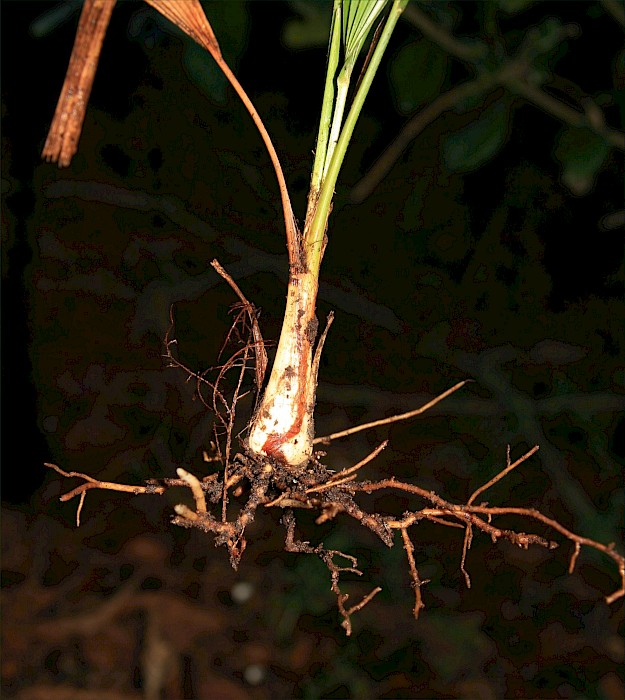
1. Physical removal - Hand pull small plants, or dig out entire plant including roots (all year round). Leave on site to rot down.
2. Cut and paste (all year round) - Cut the stem/trunk as close to the ground as possible and cover the entire stump with herbicide as soon as possible after cutting. Apply either glyphosate gel (120g/L strength) or metsulfuron gel (10g/l strength) or picloram gel (43g/l strength) to the entire cut stem
3. Drill or frill - Drill downward sloping holes around the circumference of the trunk about 8-10 cm apart, or Frill (make deep cuts into the sapwood at regular intervals around the base of the tree, taking care not to ring-bark the plant). Fill the holes with undiluted ‘neat’ glyphosate (360g/L active ingredient) or saturate the frill cuts with glyphosate (360g/L active ingredient) mixed at 250ml/L
4. Foliar spray - Apply Glyphosate (360 g/L active ingredient) herbicide (20ml/L) plus organosilicone penetrant (2ml/L) to cover entire plant Note: Non-selective. Avoid overspray onto desirable plants.
CAUTION: When using any herbicide or pesticide, PLEASE READ THE LABEL THOROUGHLY to ensure that all instructions and directions for the purchase, use and storage of the product, are followed and adhered to.
What can I do to stop it coming back?
Monitor the site and treat any regrowth or seedlings. If possible, search for and eliminate the source of the infestation. Plant local native trees and shrubs to produce dense shade.
Images