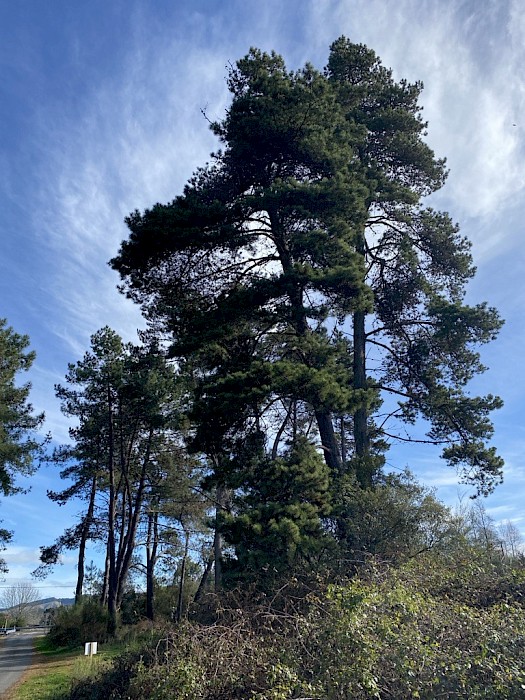
Contorta pine
Botanical name
Pinus contorta
Family
Pinaceae (pine)
Also known as
lodgepole pine, P. murrayana
Where is it originally from?
North America
What does it look like?
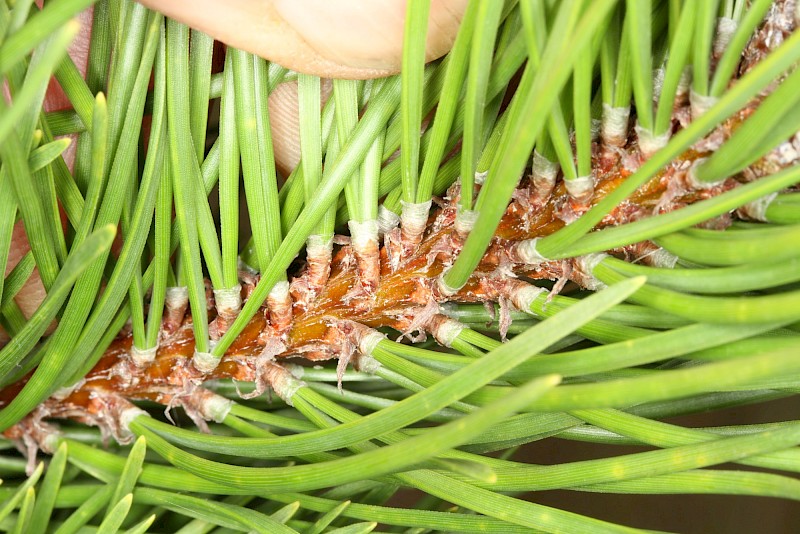
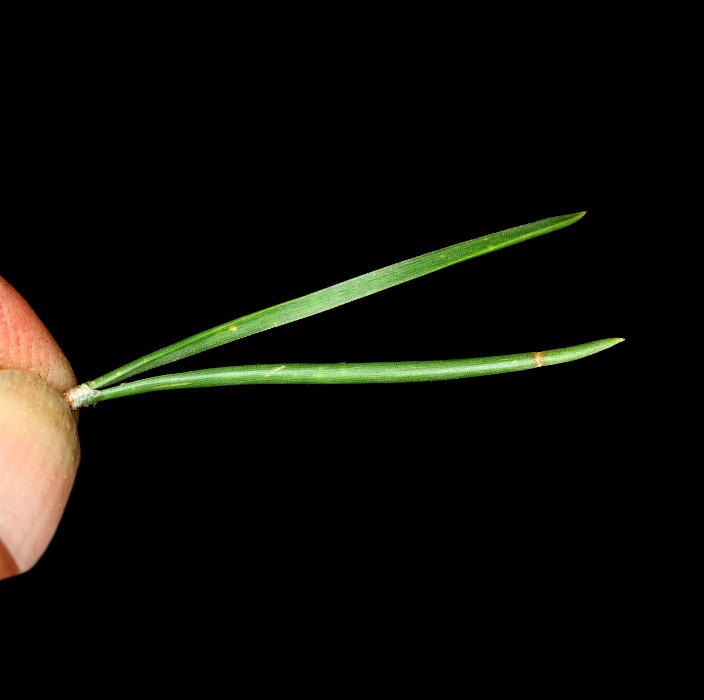
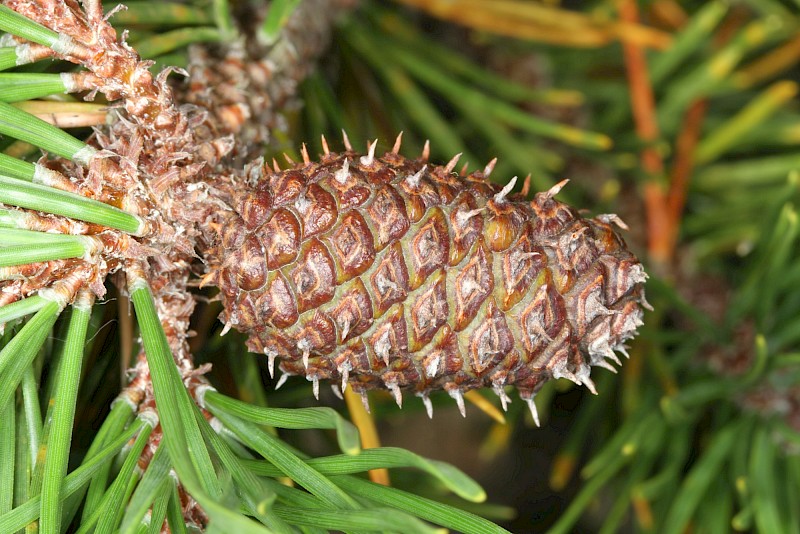
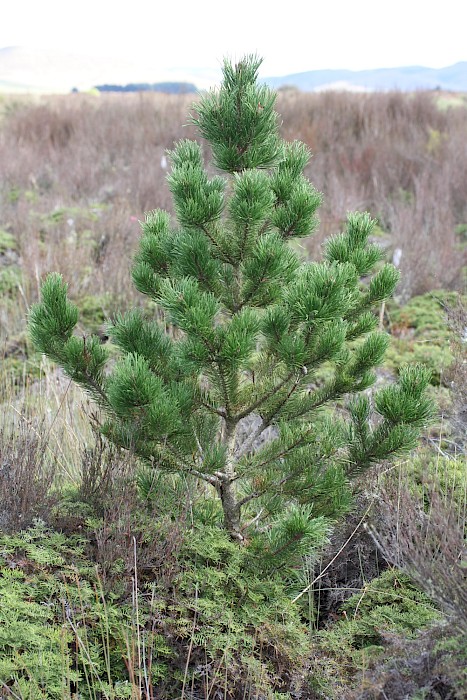
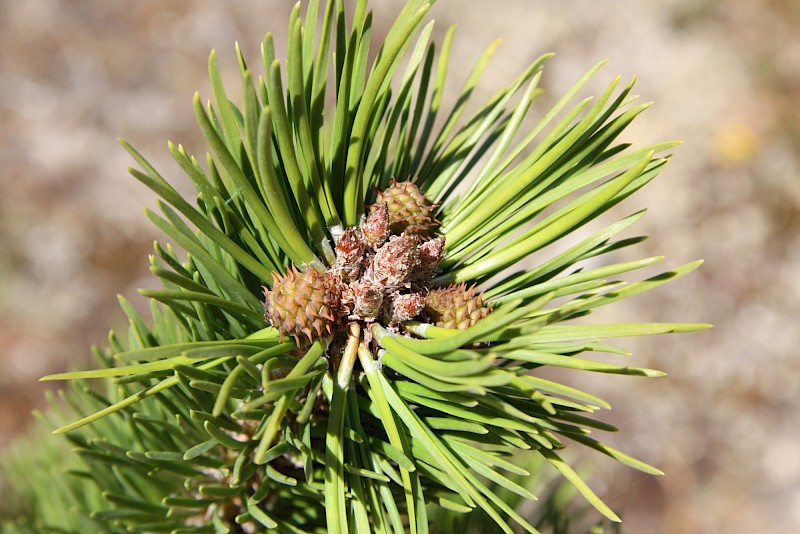
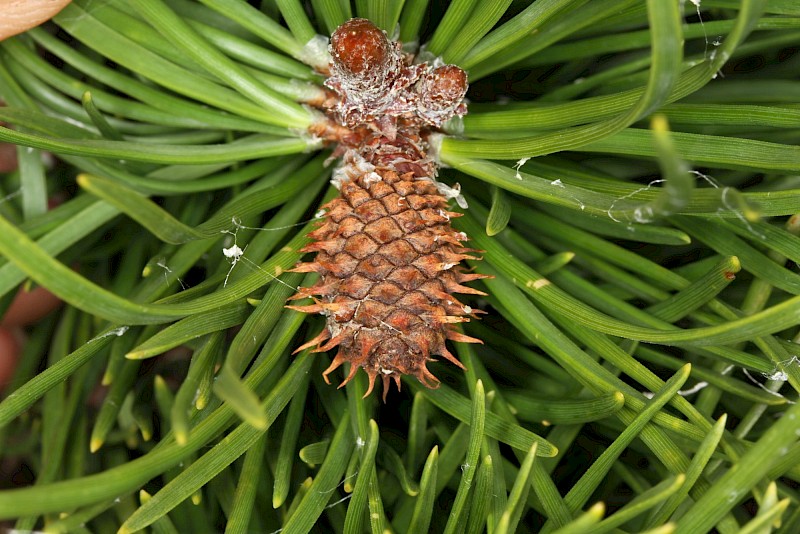
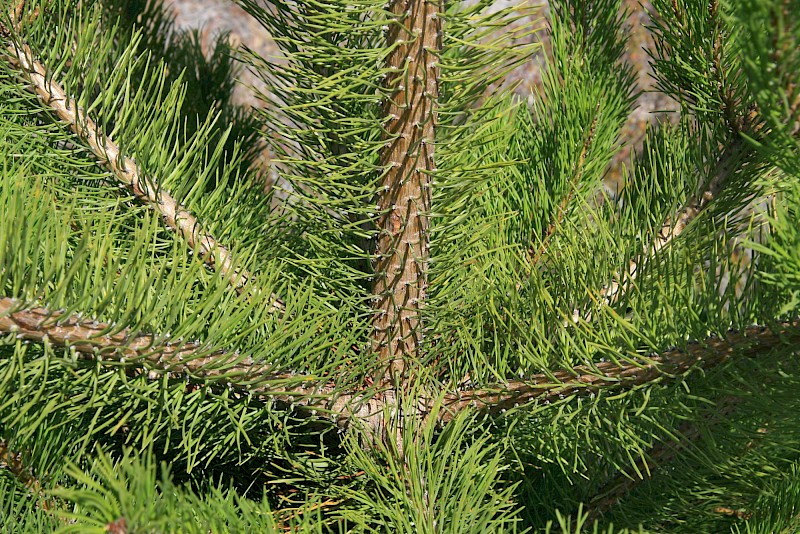
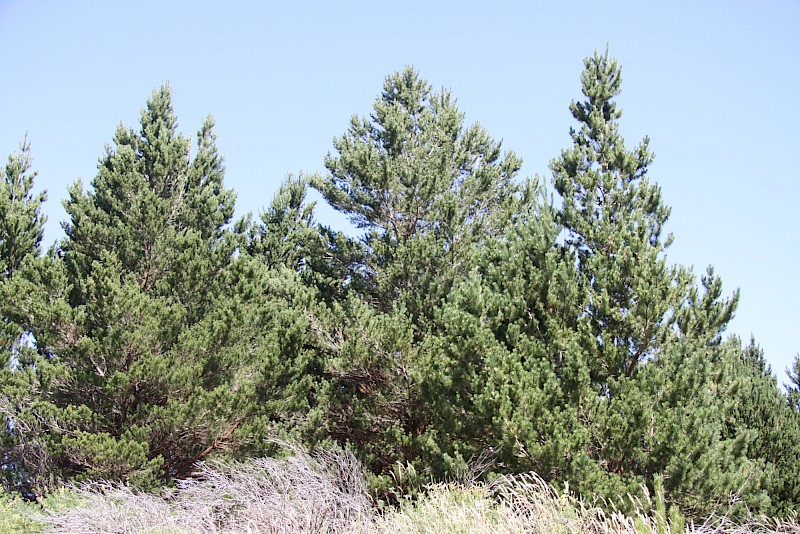
Large shrub, or small to medium (occasionally large) tree, resinous, erect or spreading, with reddish brown bark (grey on surface) that is fissured and forming small plates. Branches are straight or somewhat twisted, usually on the trunk almost to ground level. It has brown hairless shoots and cylinder-shaped, purplish-brown, resinous buds. Two needle-like leaves (35-65 x 0.8-1.5 mm) per ‘bundle’ with each needle usually twisted and yellowish- green, with resin ducts half way along. It has cylinder-shaped male cones (5-15 mm long) and woody, long-lived female cones (30-60 x 20-35 mm) that usually point backwards or downwards on the branch and only open long after maturing to release winged seeds (1 cm long).
Are there any similar species?
Other Pinus species. P. radiata foliage grows mostly towards the ends of branches, and the bark is thick, deeply fissured, ridged on mature trees, dark grey on surface, and reddish beneath. Buds are thinly resinous, deep or dark green needles (60-150 x 1.2-2 mm) are bundled in threes, and female cones (60-130 x 45-85 mm) in clusters of 1-6 point backward but not downward and have larger winged seeds (15-20 mm long).
Why is it weedy?
Prolific seeder, early maturing, tall, long-lived, and forms dense stands. Tolerates hot to very cold temperatures, wind, salt, damp to dry condiitons, good to poor or mineralised soils, high altitude (North Island to 1500m, South Island to 1000m), many habitats, damage and some shade.
How does it spread?
Seed is spread by wind and occasionally water.
What damage does it do?
Forms dense, often pure stands, especially on poor soils, becoming the canopy species and extending the forest above the native treeline. Plantations remove ground water in summer, and fail to retain it in winter, causing drought and flooding. Leaf litter inhibits growth of understorey species, affects water quality, and can destroy freshwater habitats.
Which habitats is it likely to invade?
Disturbed and open forest, shrubland, tussockland, herbfields, fernland, bare land, mineralised places, screes, and volcanic habitats, mainly in sub-alpine areas.
What can I do to get rid of it?
1. Physical removal - Hand pull small plants, or dig out entire plant including roots and mulch (all year round)
2. Cut and paste (all year round) - Cut the stem/trunk as close to the ground as possible and cover the entire stump with herbicide as soon as possible after cutting. Apply metsulfuron gel (10g/l strength). When a gel is inadequate apply a solution of diesel and product containing triclopyr + picloram (20:1 diesel:triclopyr/picloram). Apply the mixture over the entire exposed surface of the cut stump, i.e. top and sides.
3. Basal spray stems up to 20cm diametre with X-Tree Basal. Ensure the base is thoroughly covered at ground level.
4. Drill or frill - Drill downward sloping holes around the circumference of the trunk about 8-10 cm apart, or Frill (make deep cuts into the sapwood at regular intervals around the base of the tree, taking care not to ring-bark the plant). Fill the holes or saturate the cuts with metsulfuron-methyl 600 g/kg at a rate of 20-50g/L.
5. Foliar spray (Late Spring to late Autumn) - Apply herbicide using a knapsack to small areas and plants <1m tall, or gun and hose for larger infestations. Apply glyphosate (360 g/L active ingredient) herbicide at 20ml/L plus organosilicone penetrant (2ml/L) to cover entire plant. Note: Glyphosate overspray will kill other (desirable) plants OR apply metsulfuron herbicide (600g/kg active ingredient at 0.5g/L knapsack or 35g/100L gun and hose) + organosilicone penetrant (3ml/L). Note: Overspray will kill other (desirable) broadleaf plants and has residual activity in the soil which aids in killing below ground parts.
CAUTION: When using any herbicide or pesticide, PLEASE READ THE LABEL THOROUGHLY to ensure that all instructions and directions for the purchase, use and storage of the product, are followed and adhered to.
What can I do to stop it coming back?
Stems can be left to mulch but do occasionally resprout. Avoid fire. Plant shady species to inhibit germination. Create wide shelter belt adjacent to plantations where infestations occur. Exclude livestock.
Images