Douglas fir
Botanical name
Pseudotsuga menziesii
Family
Pinaceae (pine)
Where is it originally from?
North America
What does it look like?
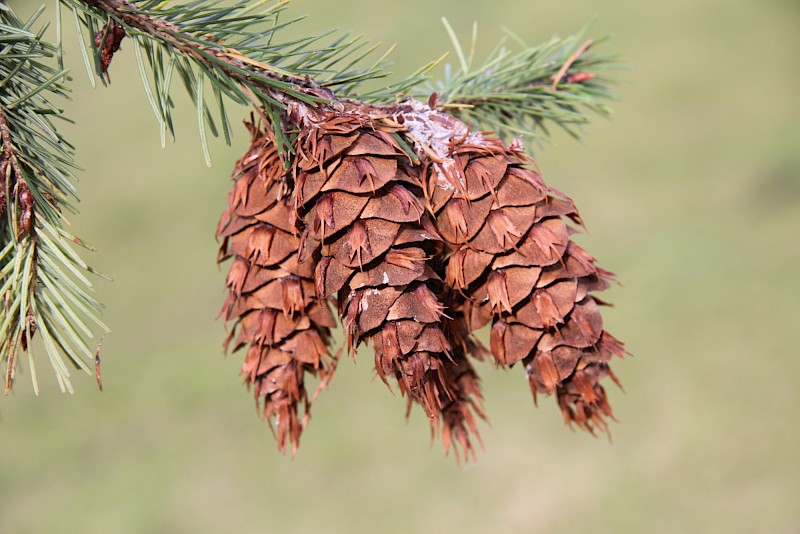
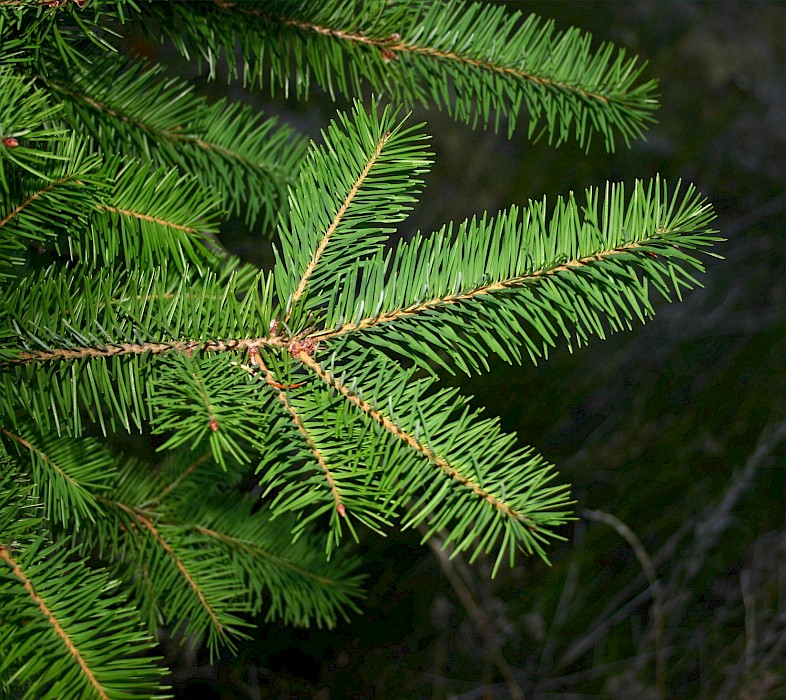
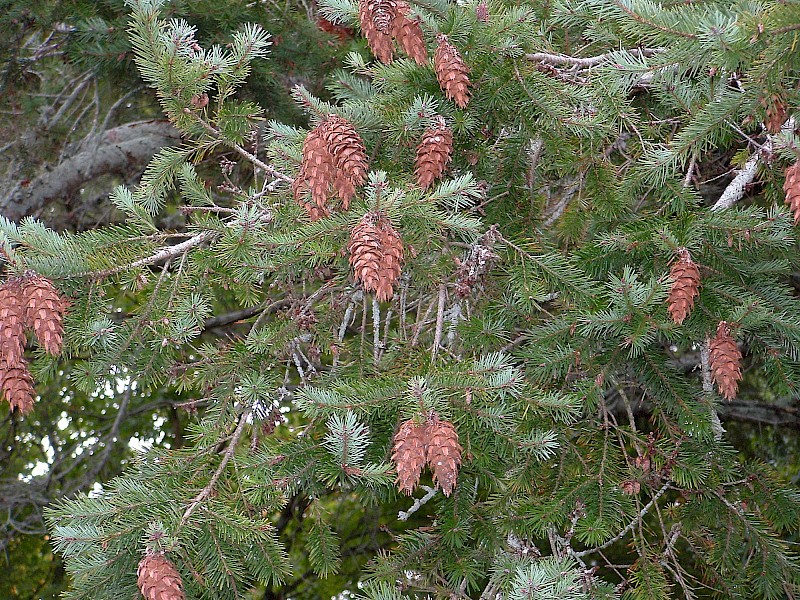
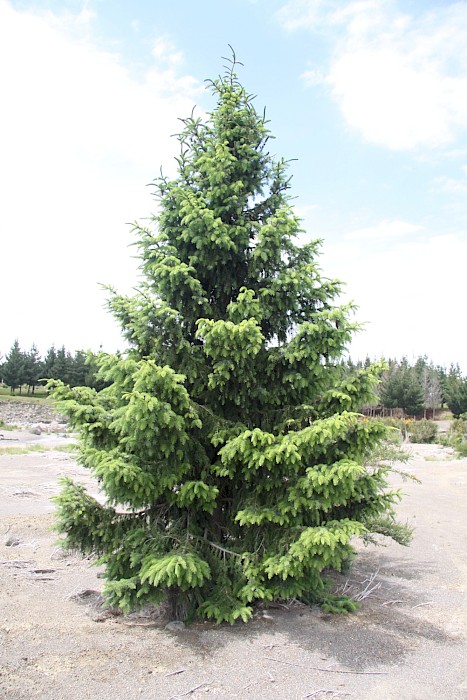
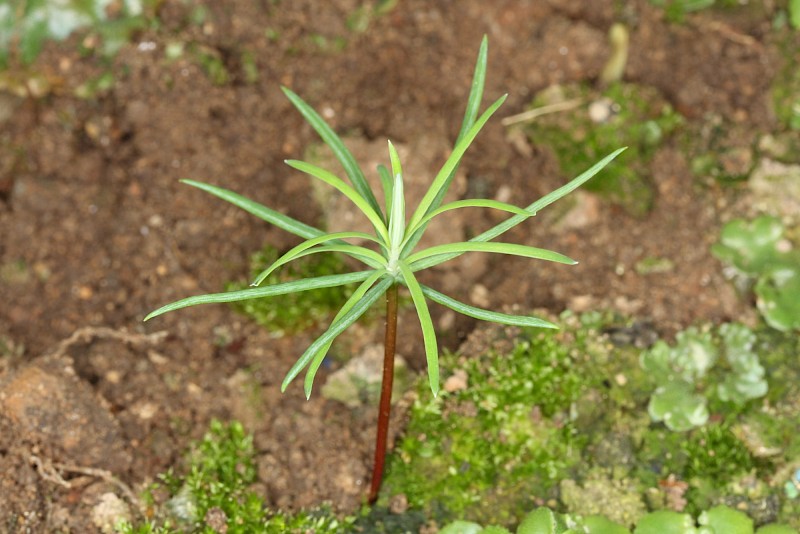
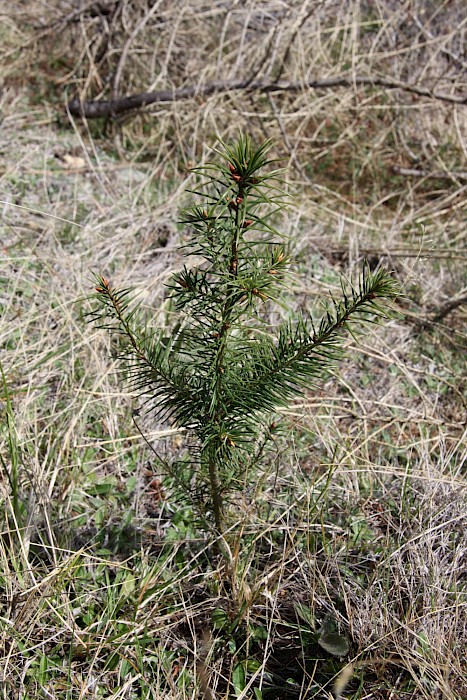
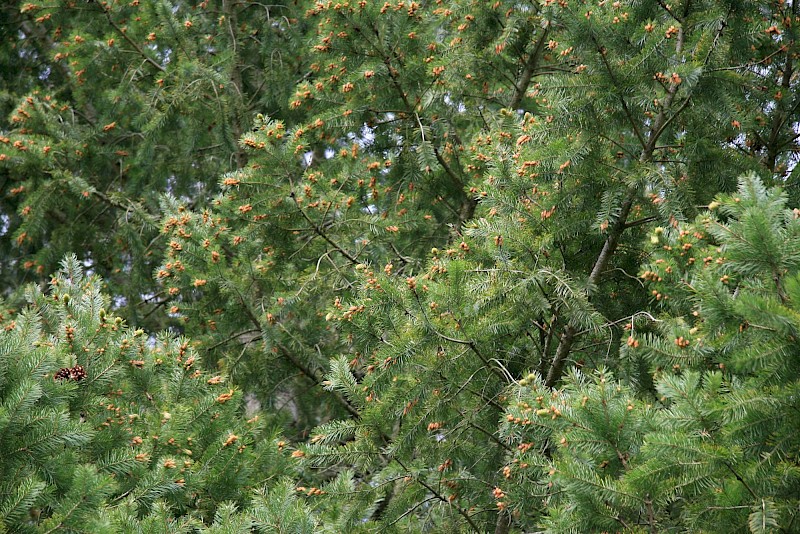
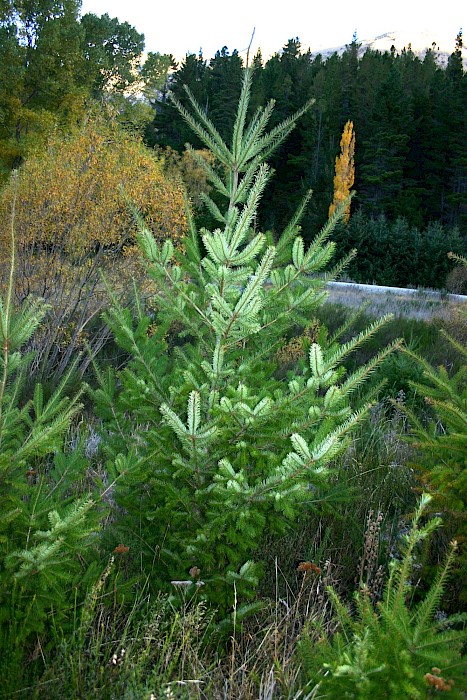
Very large resinous evergreen tree with thick bark that is reddish-brown underneath, and rough and furrowed when mature. Branches sit horizontally, and are in irregular whorls, while branchlets usually droop. Ridged shoots are light to dark brown with short hairs. Shiny purplish-brown winter buds (to 1 cm long) are narrow and sharp. Needle-like leaves (15-38 x 1-2 mm) are clustered in twos, whitish beneath, have edges that are often rolled, and are orange-scented when crushed. Male cones (12-20 mm long) are catkin-like, while papery cylinder-shaped female cones (5-10 cm long) are downward-pointing. Seed scales are large and broad, bract scales are longer and thinner than seed scales, and are 3-pointed, with the centre point longest.
Why is it weedy?
Rapidly invades high country land, costing millions a year to control. Produces up to 20,000 wind-spread seeds per tree every year, and seed can remain viable for years. Can change landscapes completely, threatening fragile grassland and herbfield ecosystems.
How does it spread?
Seed is spread by wind in autumn and winter, with seedlings establishing most readily on well lit sheltered sites where there is no competition from other vegetation. Seldom spreads onto land where vegetation cover is dense.
What damage does it do?
Invasion and suppression of grassland and regenerating shrubland, invasion of low-stature plant communities including herbfield and tussockland. Can also threaten landscape character and recreation value. Major wilding conifer species in southern areas.
Which habitats is it likely to invade?
Lowland, montane and subalpine habitats, growing in sites with low-moderate fertility. Found in scrub and forest margin communities, shrublands, tussockland and light wells in forest.
What can I do to get rid of it?
1. Physical removal - Hand pull or dig out small plants seedlings and small plants.
2. Cut and paste (all year round) - Cut the stem/trunk as close to the ground as possible and cover the entire stump with herbicide as soon as possible after cutting. Apply metsulfuron gel (10g/l strength)
3. Basal spray stems up to 20cm diametre with X-Tree Basal. Ensure the base is thoroughly covered at ground level.
4. Drill or frill - Drill downward sloping holes around the circumference of the trunk about 8-10 cm apart, or Frill (make deep cuts into the sapwood at regular intervals around the base of the tree, taking care not to ring-bark the plant). Fill the holes with undiluted ‘neat’ glyphosate (360g/L active ingredient) or saturate the frill cuts with glyphosate (360g/L active ingredient) mixed at 250ml/L OR metsulfuron-methyl 600 g/kg (20-50g/L + penetrant)
5. Foliar spray- Apply Glyphosate (360 g/L active ingredient) herbicide (20ml/L) plus organosilicone penetrant (2ml/L) to cover entire plant Note: Non selective. Avoid overspray onto desirable plants.
CAUTION: When using any herbicide or pesticide, PLEASE READ THE LABEL THOROUGHLY to ensure that all instructions and directions for the purchase, use and storage of the product, are followed and adhered to.
What can I do to stop it coming back?
Continue to monitor and remove further infestations as seedlings appear.
Images