Giant reed
Botanical name
Arundo donax
Family
Poaceae (grass)
Also known as
Elephant grass, bamboo grass
Where is it originally from?
Eurasia
What does it look like?
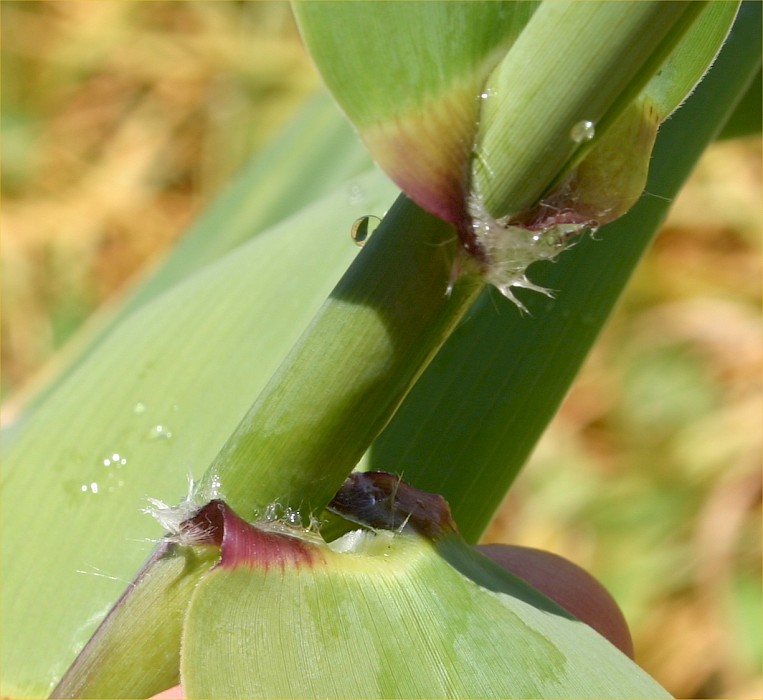
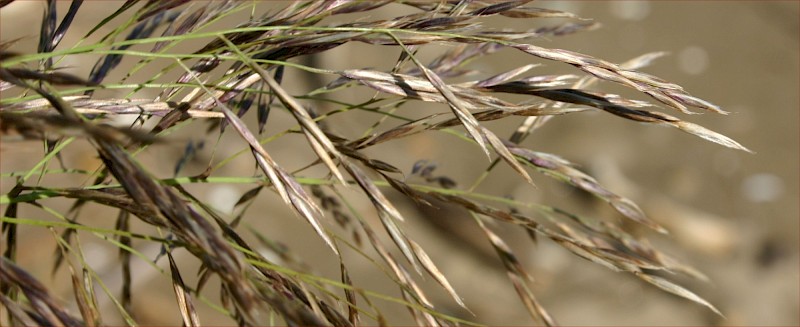
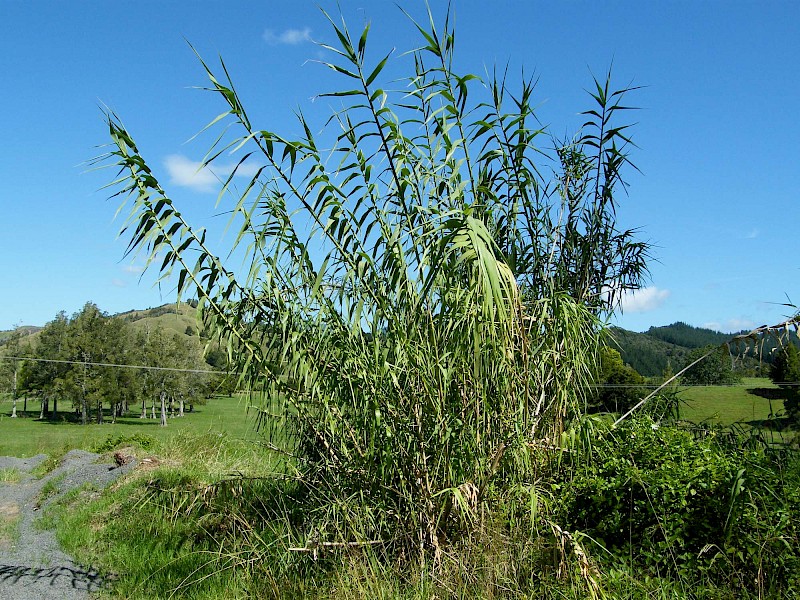
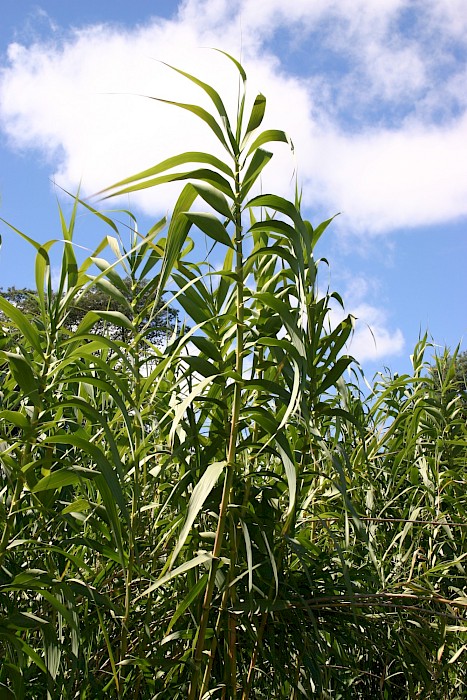
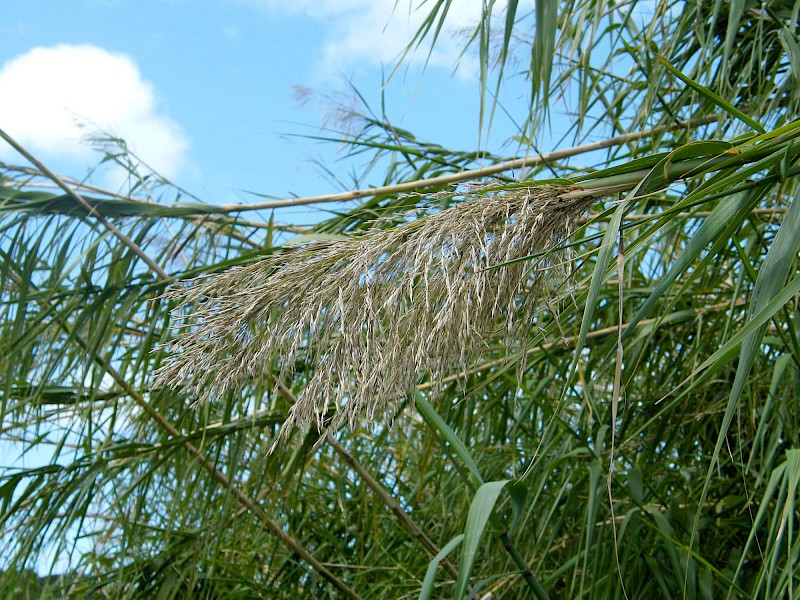
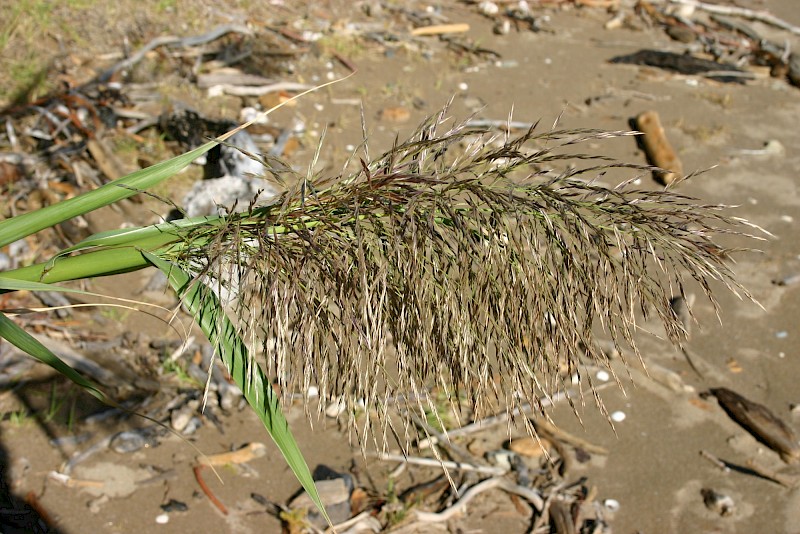
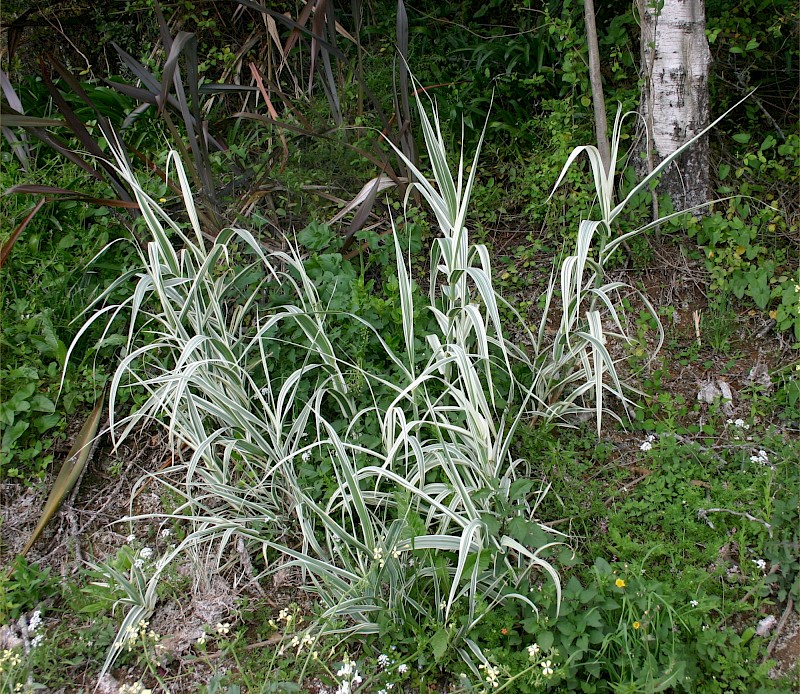
Massive clump-forming perennial (<5-8 m tall) with thin green or variegated leaves that tends to ‘droop’ at the edges of clumps where it is not supported by the mass of canes. Dense root mass and short rhizomes. Woody stems are erect but become semi-lax over time. Bluish-white (occasionally white striped) bamboo-like leaves (30-90 x 5 cm) with parallel veins are arranged alternately along the stems. Fluffy terminal seedhead.
Are there any similar species?
Phragmites australis, Phyllostachys aurea, and Bambusa species are all similar.
Why is it weedy?
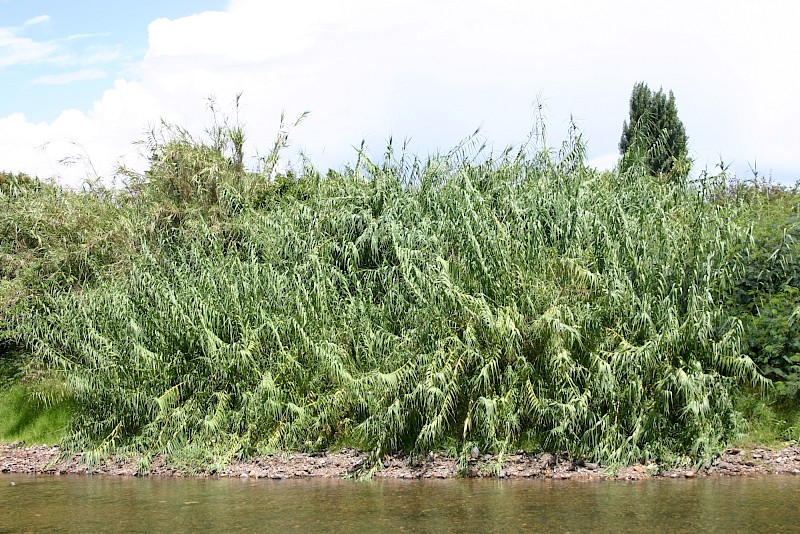
Giant reed forms dense thickets that crowd out and shade out other more desirable species. It can also block drainage. It spreads from root fragments, either through soil movement or dumping of garden waste, and although it rarely sets seed at the moment, there is concern that this may change in future.
How does it spread?
Most or all of its spread is by rhizomes as little or no seed is set in New Zealand. Broken stems may occasionally resprout. Rhizomes and broken stems are spread from roadsides, tips and gardens by water movement and dumping of greenwaste.
What damage does it do?
Slowly crowds out all other species, often killing plants by smothering them from above, and blocks streams, causing flooding. Potential wetland weed, and can affect aquatic native fauna.
Which habitats is it likely to invade?
Streamsides, estuaries (to waterline), disturbed lowland and coastal forest margins, river systems, and gullies. Could potentially establish throughout New Zealand.
What can I do to get rid of it?
1. Physical removal - Cut down close to ground. Dig out entire root/rhizome mass. Dispose of at refuse transfer station or by burning.
2. Cut and paste (all year round) - Cut the stem/trunk as close to the ground as possible and cover the entire stump with herbicide as soon as possible after cutting. Apply glyphosate gel (240g/L strength)
3. Foliar spray - Apply 520g/L haloxyfop-P-methyl (12ml/10L + label recommended penetrant). Haloxyfop is selective for grasses and will not harm broadleaf species, however, in store availability may be limited OR apply glyphosate (360g/L active ingredient at 100ml/10L + label recommended penetrant). Note Glyphosate overspray will kill other (desirable) plants. Not for use near water bodies or wetlands - check with your regional council.
CAUTION: When using any herbicide or pesticide, PLEASE READ THE LABEL THOROUGHLY to ensure that all instructions and directions for the purchase, use and storage of the product, are followed and adhered to.
What can I do to stop it coming back?
While slashed stems can be left or dumped, stumps always resprout and digging root masses can leave rhizomes behind. Follow up control work frequently until eradicated. Don’t replant until six months after last herbicide application.
Images