Hop
Botanical name
Humulus lupulus
Family
Cannabaceae (hemp)
Where is it originally from?
Europe, Western Asia and North America
What does it look like?
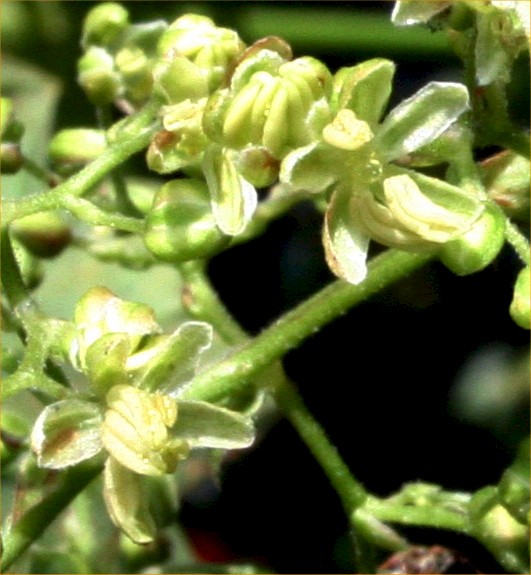
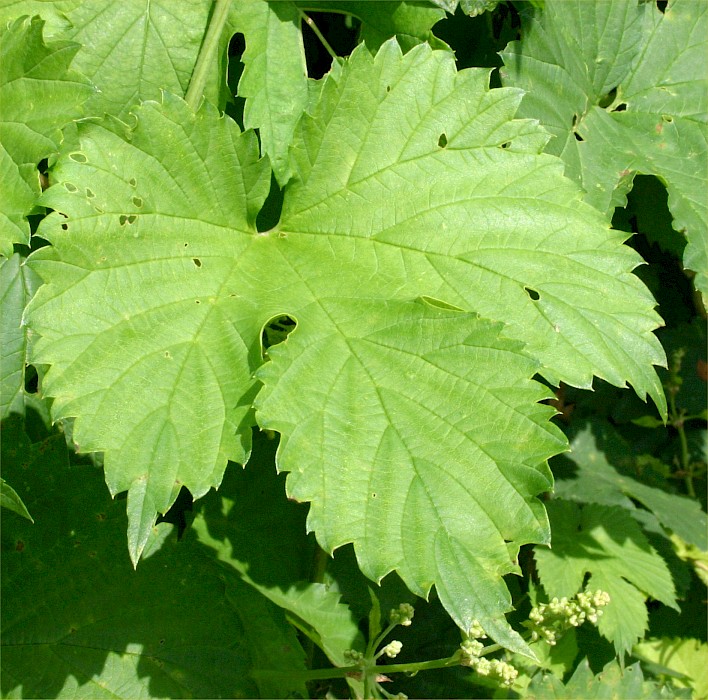
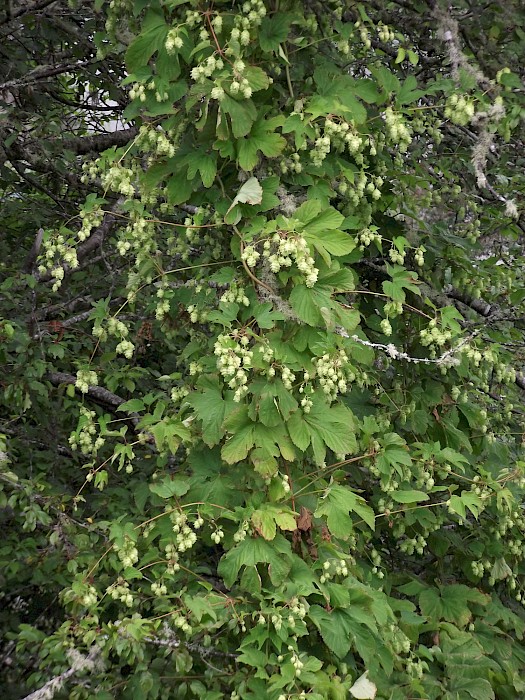
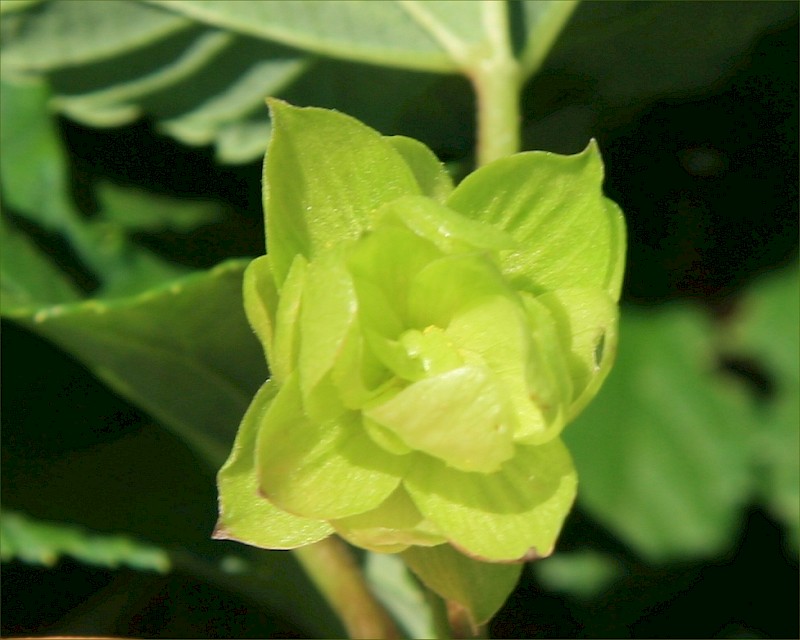
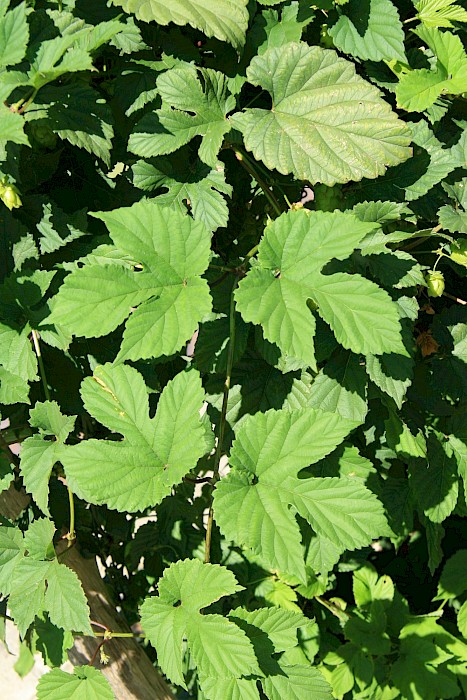
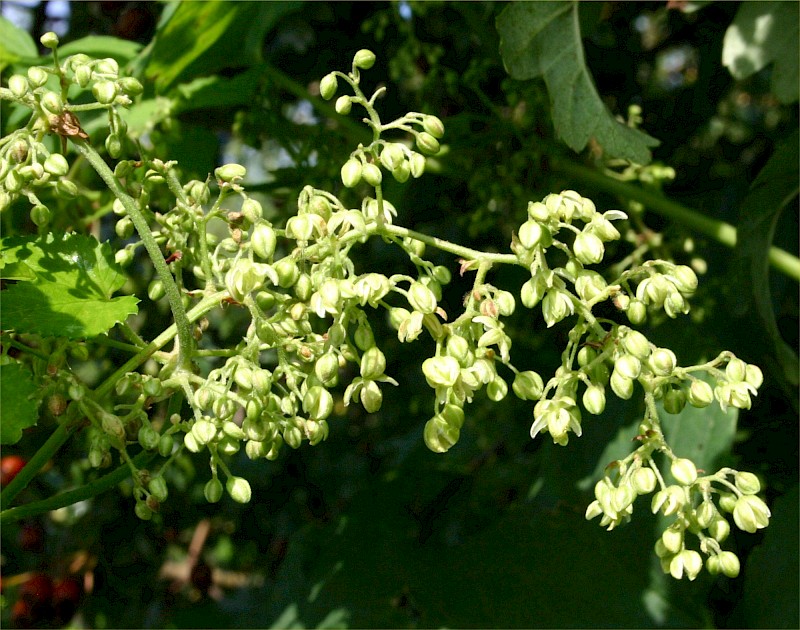
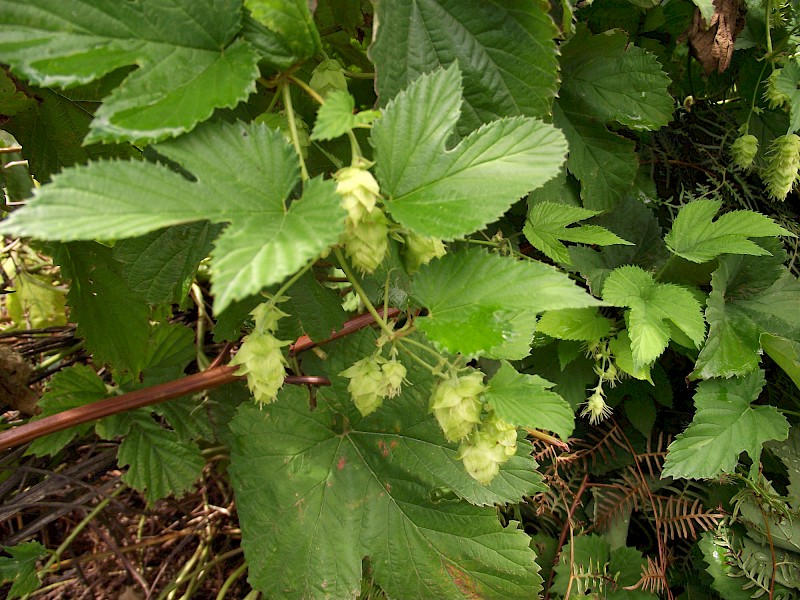
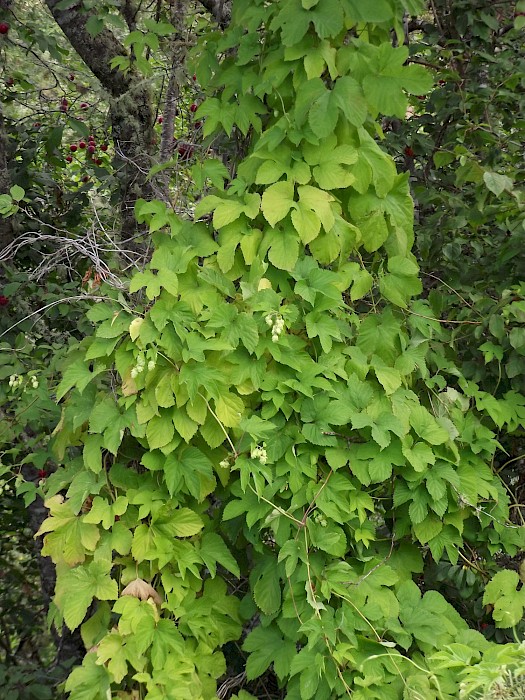
Scrambling perennial (<10 m tall) with extensive roots, and roughly hairy stems with fine ridges. Broadly oval, unlobed or deeply 3-5 lobed leaves have serrated edges, are usually hairless above, and hairless to moderately hairy below with yellow glandular hairs. Male flowers are small, green, hairy, while female flowers are yellowish at fruiting, and form a distinctively smelling cylindric cone (hop) covered with yellow gladular hairs (Jan-Feb). Seeds form Feb-March in a dry husk.
Are there any similar species?
Several different varieties of Humulus lupulus are grown. The weedy variety is grown for the hop, used in brewing.
Why is it weedy?
Grows and matures rapidly, and takes root where it touches the ground. Produces many, long-lived seed. Tolerates damp to dry conditions, warm to cold, salt, damage.
How does it spread?
Limited, usually adjacent to cultivated or dumped plants. Gardens, crops, waste places, riverbanks, lax grassland.
What damage does it do?
Forms dense canopy cover, preventing native species establishing.
Which habitats is it likely to invade?
Disturbed forest, shrubland and margins, fernland, riverbanks.
What can I do to get rid of it?
1. Physical removal - Hand pull or dig out entire plant - Ensure all plant material is removed from site to prevent regrowth and dispose of to a refuse transfer station.
2. Cut and paste - Cut the stem/trunk as close to the ground as possible and cover the entire stump with herbicide as soon as possible after cutting. Apply glyphosate gel (120g/L strength) or metsulfuron gel (10g/L strength) to the entire cut stem.
3. Foliar spray - Apply metsulfuron herbicide at 0.5g/L using a hand held sprayer/knapsack + organosilicone penetrant (3ml/L) OR apply triclopyr herbicide (600g/L active ingredient) at 6ml/L plus organosilicone penetrant (3ml/L).
CAUTION: When using any herbicide or pesticide, PLEASE READ THE LABEL THOROUGHLY to ensure that all instructions and directions for the purchase, use and storage of the product, are followed and adhered to.
What can I do to stop it coming back?
Follow up for 2 years. Replant bared sites to minimise seedlings.
Images