Montpellier broom
Botanical name
Genista monspessulana
Family
Fabaceae (pea)
Also known as
Teline monspessulana, Cytisus canariensis, Cytisus monspessulana, Cape broom, Canary broom, soft broom, leafy broom, French broom
Where is it originally from?
Europe
What does it look like?
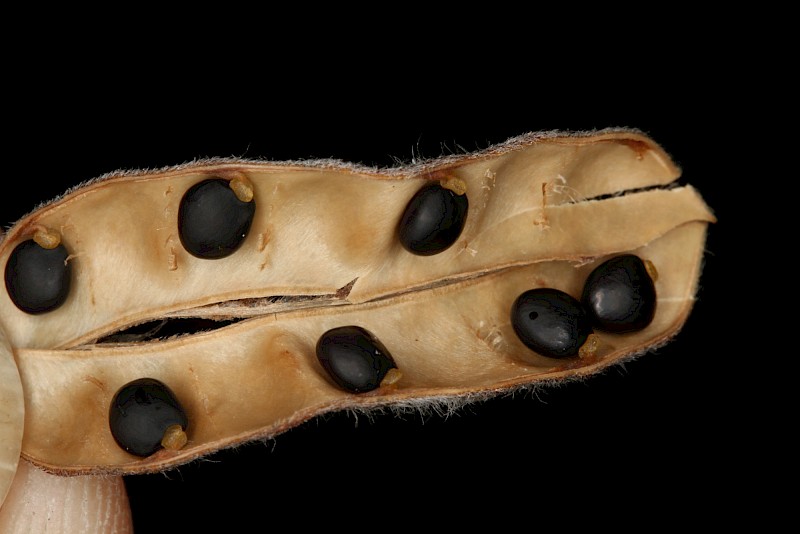
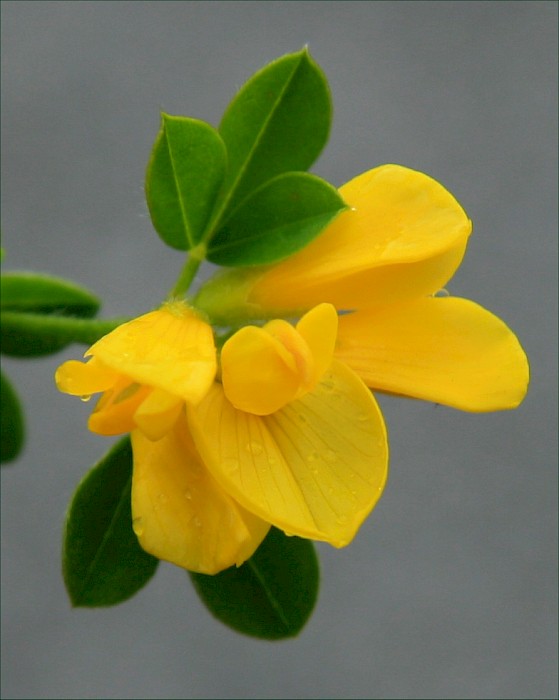
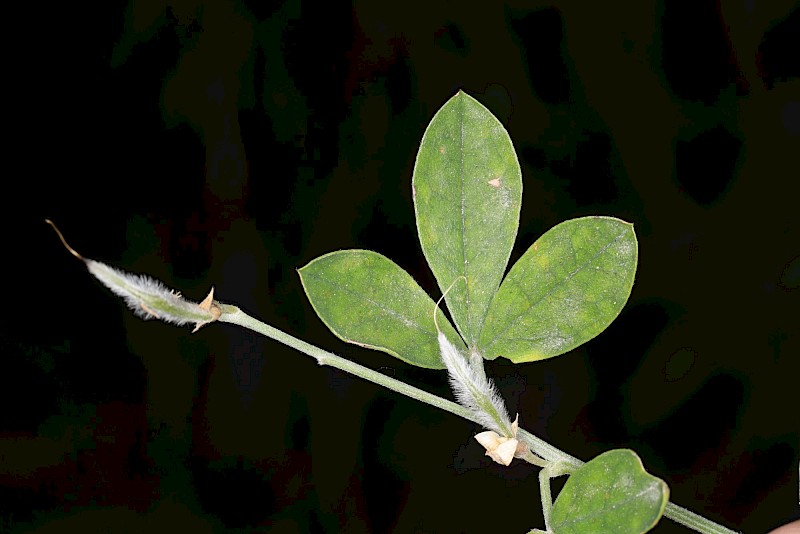
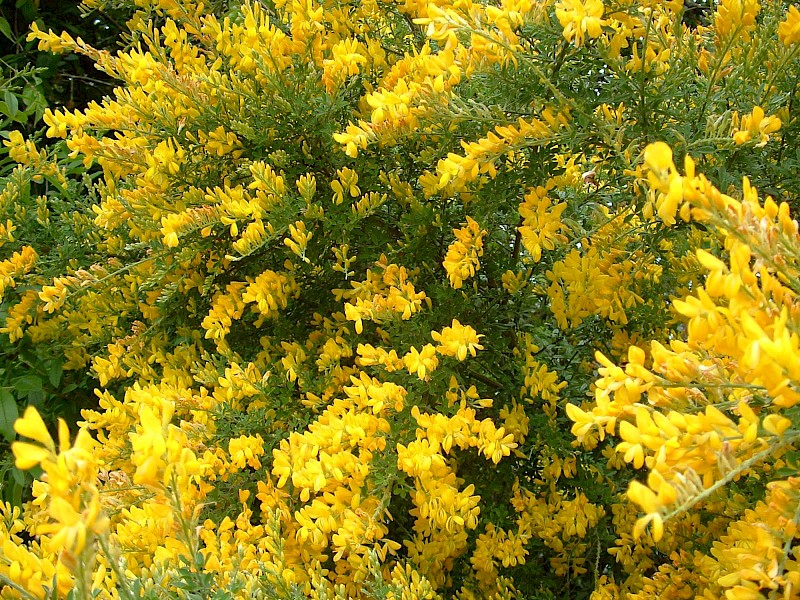
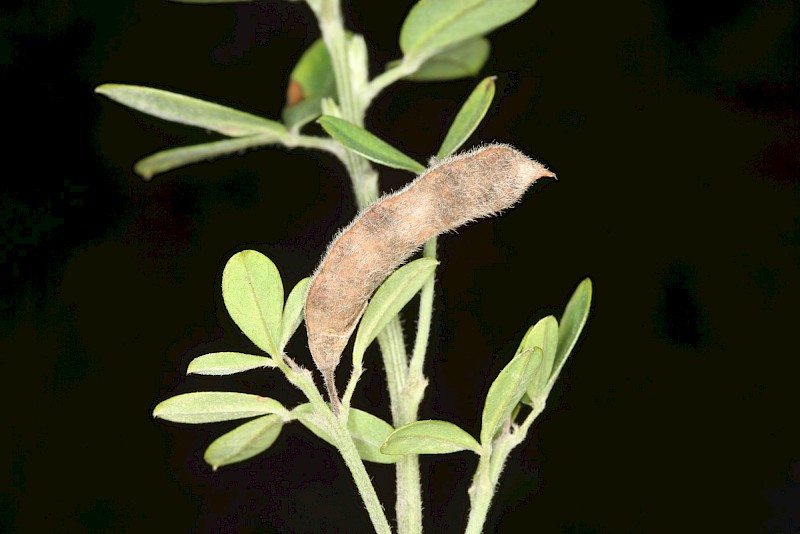
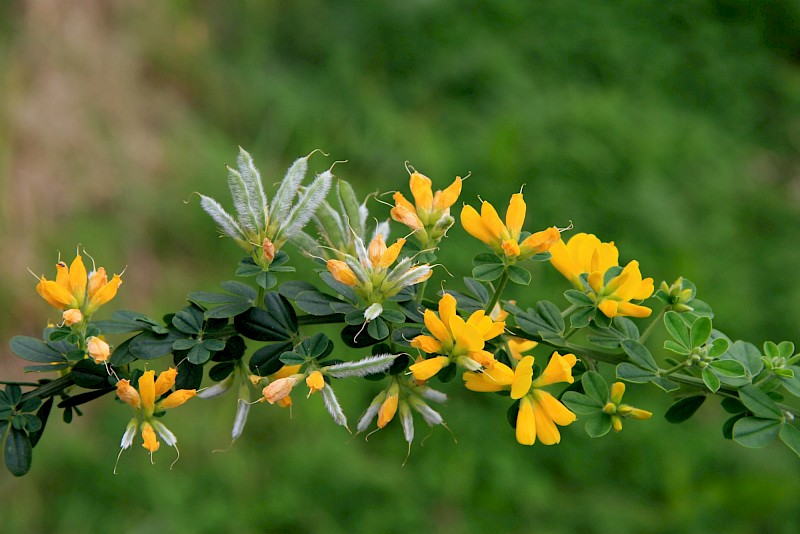
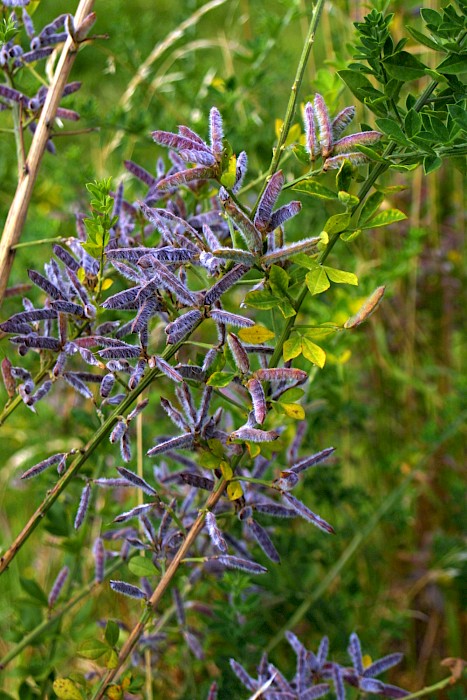
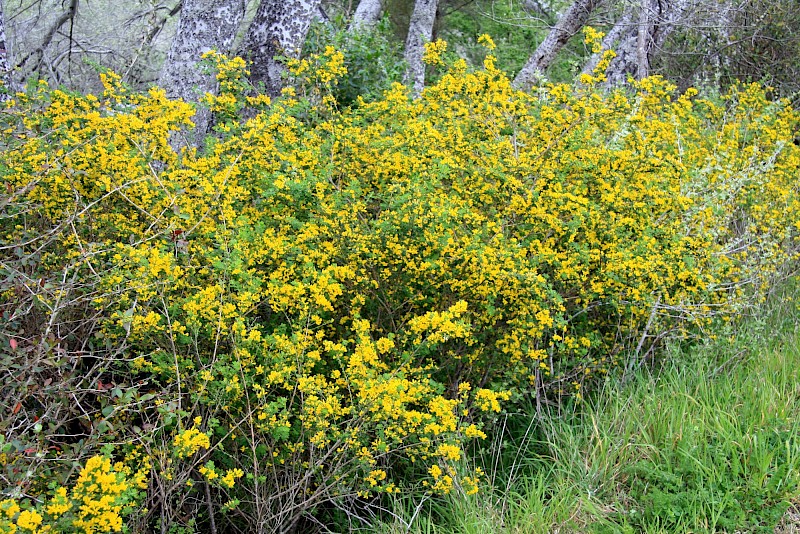
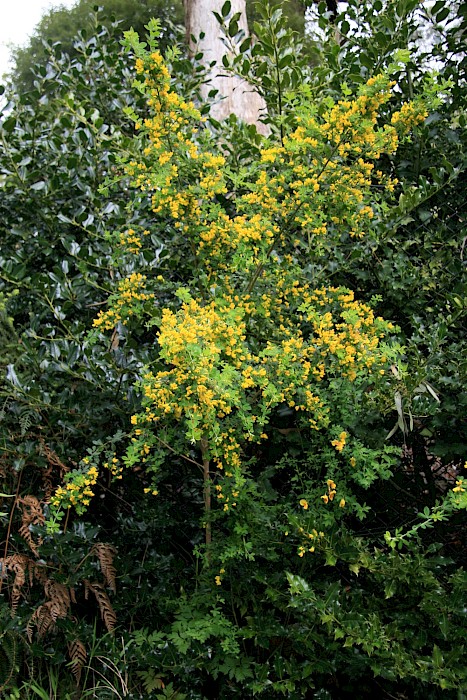
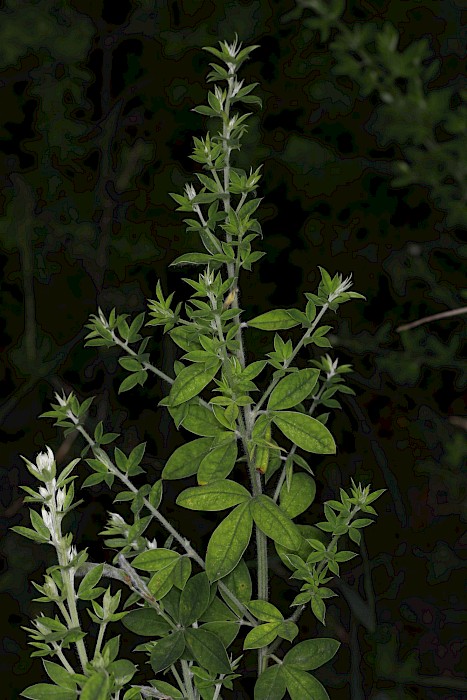
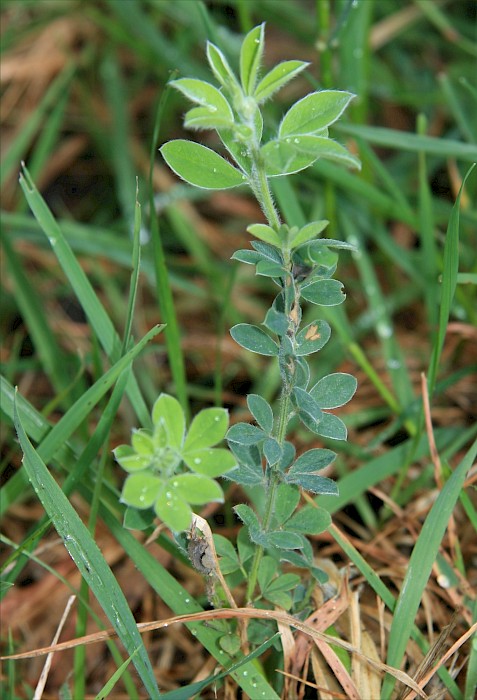
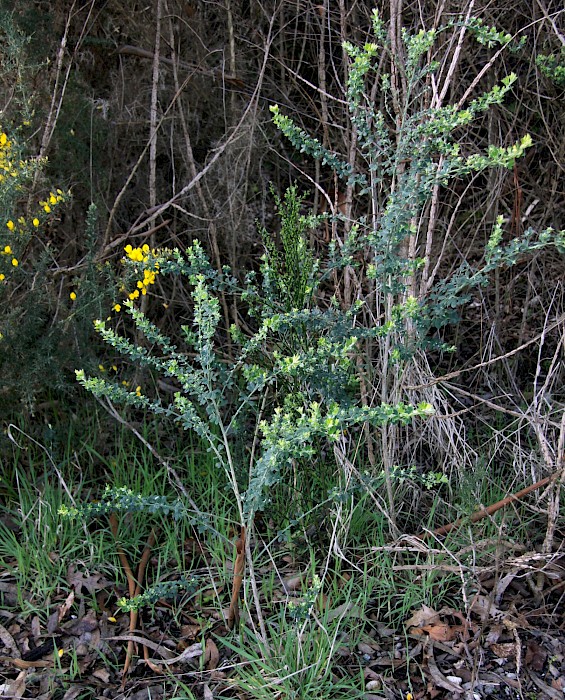
Usually evergreen shrub (<2.5 m tall) with round, ribbed and softly hairy twigs, and ridged, woody, grey-brown stems. Leaves arranged alternately on stems, divided into three, with each leaflet (7-20 x 4-10 mm) usually hairy. Yellow to golden-yellow pea-like flowers (9-13 mm long, May-Nov) are followed by oblong, densely hairy seed pods (18-20 mm long) containing 3-6 round, flattened, green to black seeds (2.5 mm diameter).
Are there any similar species?
Cytisus scoparius, other ornamental broom species, tree lucerne, white broom, and Teline stenopetala are similar.
Why is it weedy?
Prolific seeder, flowers within two years, and grows and spreads rapidly. Tolerates cold to hot temperatures, most soil types, high-to-low rainfall, grazing and damage, and fire stimulates the long-lived seed.
How does it spread?
Explosive seed mechanism spreads seed 1-5 m from the parent plant, and it is also spread by machinery and soil and water movement. Quarries, roadsides, forest tracks, metal dumps, fire breaks, exotic forests, skid sites, riverbeds, domestic gardens, and disturbed land are all common seed sources.
What damage does it do?
Forms pure stands in many habitat types. Dominates low canopy habitats, preventing the seedlings of native species from establishing. Increased nitrogen in gumland and other impoverished soil types may induce the growth of forest species to the detriment of specialised plants eg. orchids, ferns, herbs, etc, or encourage further weed invasions.
Which habitats is it likely to invade?
River systems, shrublands, forest margins, coastline, tussockland, fernland, gumlands, regenerating and disturbed forest, exotic plantations, poor pasture, and bare land.
What can I do to get rid of it?
1. Physical removal - Hand pull small plants, or grub out seedlings
2. Cut and paste (all year round) - Cut the stem/trunk as close to the ground as possible and cover the entire stump with herbicide as soon as possible after cutting. Apply either metsulfuron gel (10g/l strength) OR picloram gel (43g/l strength) to the entire cut stem.
3. Foliar spray - Apply Glyphosate (360 g/L active ingredient) herbicide (20ml/L) plus organosilicone penetrant (2ml/L) to cover entire plant Note: Non selective. Avoid overspray onto desirable plants OR Apply Metsulfuron herbicide (600g/kg active ingredient) (Knapsack 0.5g/L, or Gun and hose 20-35g/100L) plus organosilicone penetrant (3ml/L) to thoroughly wet all parts of plant. Note: Metsulfuron overspray will kill other (desirable) broadleaf plants and has residual activity in the soil which aids in killing below ground parts. OR Apply Triclopyr herbicide (600g/L active ingredient) at 6ml/L plus organosilicone penetrant (1ml/L) to thoroughly wet all parts of plant
CAUTION: When using any herbicide or pesticide, PLEASE READ THE LABEL THOROUGHLY to ensure that all instructions and directions for the purchase, use and storage of the product, are followed and adhered to.
What can I do to stop it coming back?
Resprouts after slashing. Colonises bare areas, reinvades after non-selective spraying, fire or soil disturbance. Not long-lived, relying on seedling replacement. A light lover, so can be succeeded in tall canopy habitats by taller native species where their seedlings exist. These sites can be left, or regeneration rate can be increased by slashing, selective spraying or replanting of shade-creating species. Clear roads, metal dumps, quarries. Maintain pest and livestock control, as plant is not browsed as readily as native species and recovers more quickly from browsing.
Images