Plectranthus
Botanical name
Plectranthus ciliatus
Family
Lamiaceae (mint)
Where is it originally from?
South Africa
What does it look like?
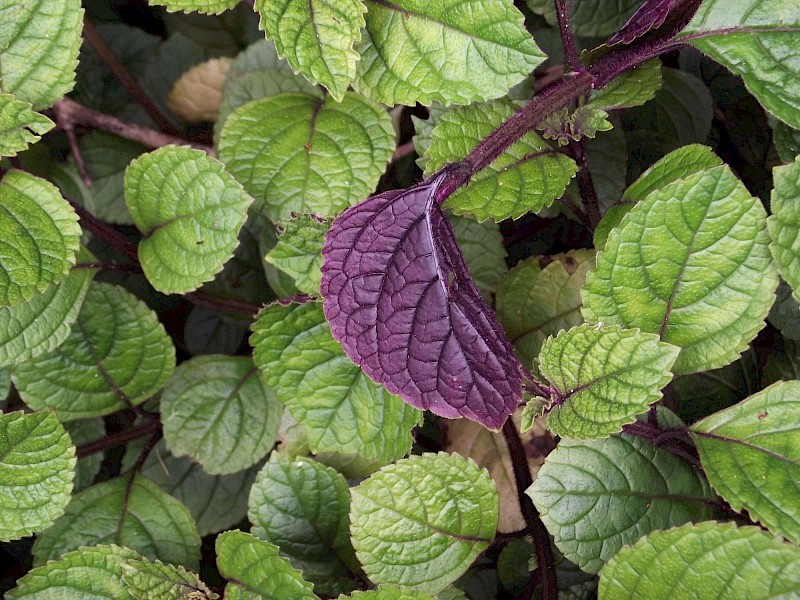
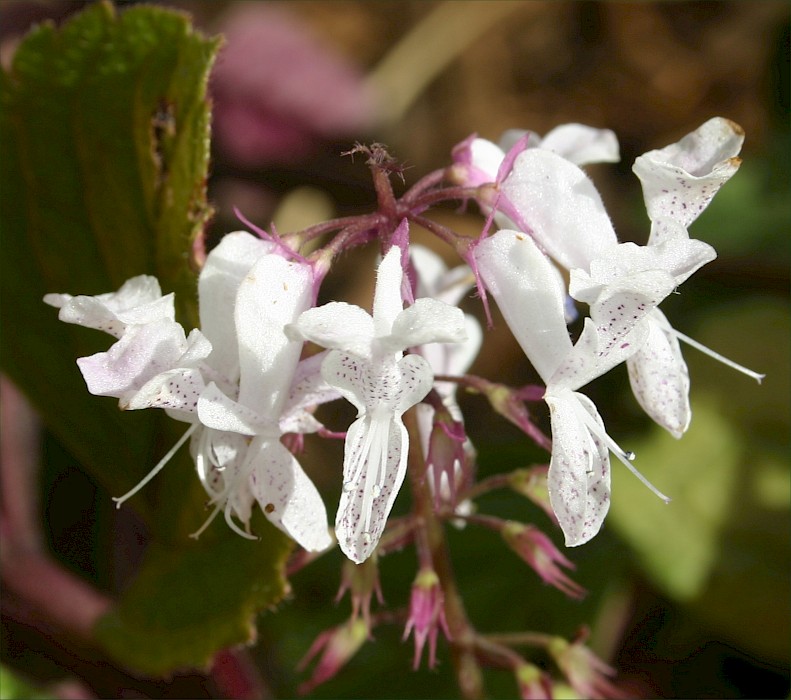
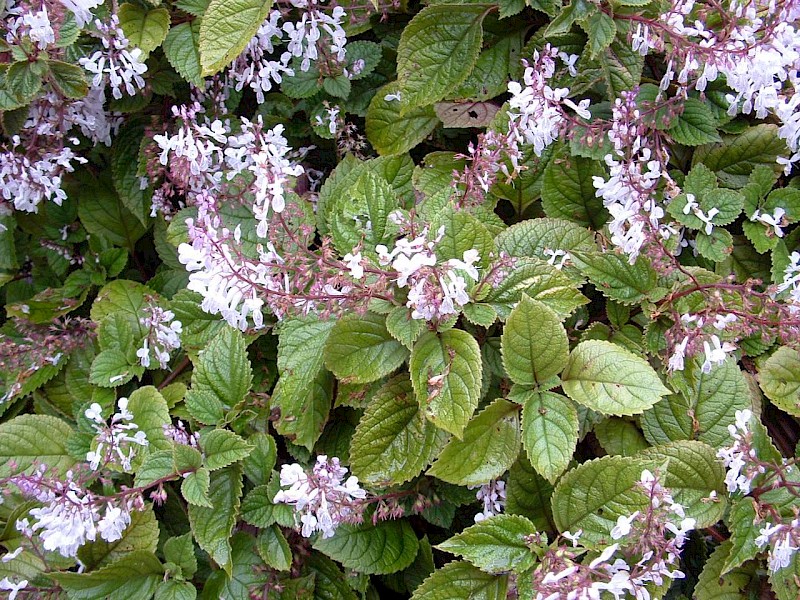
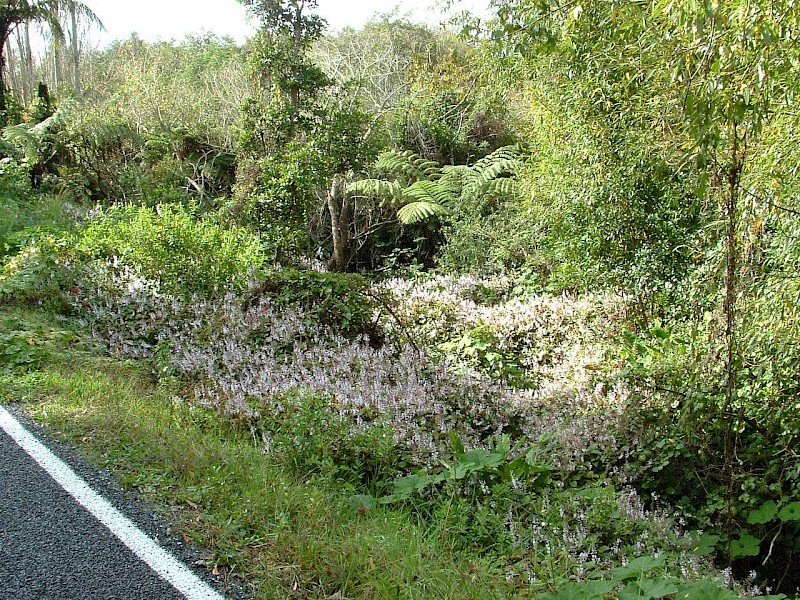
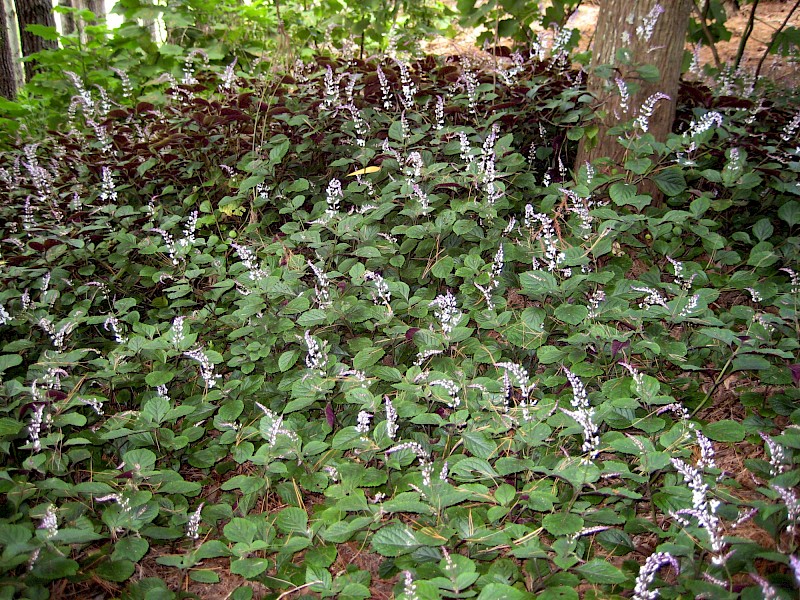
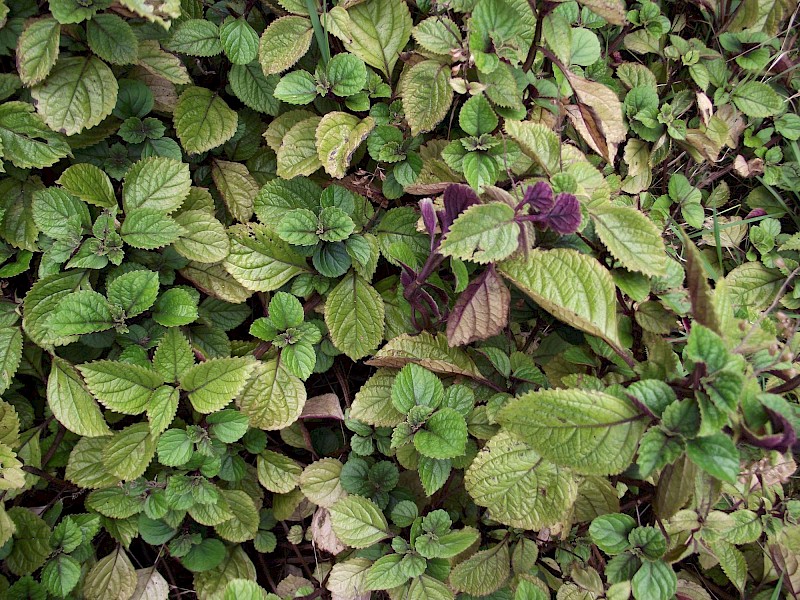
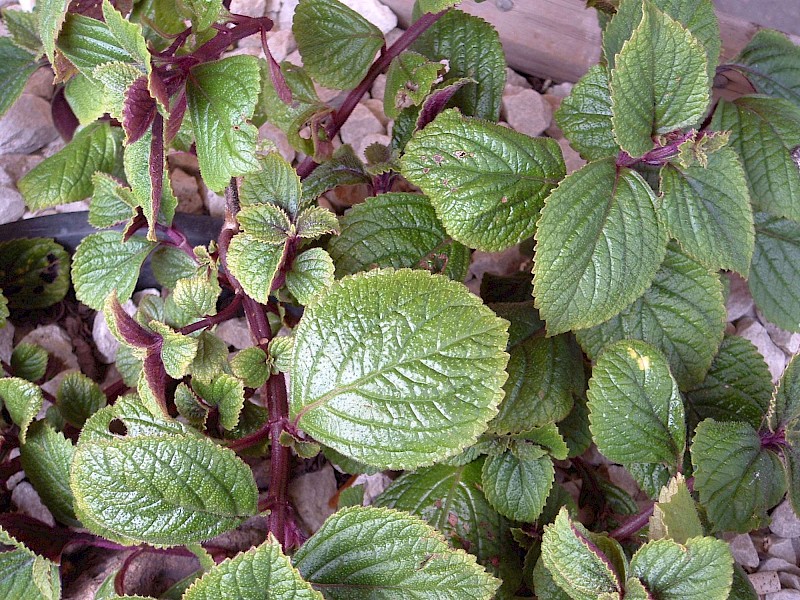
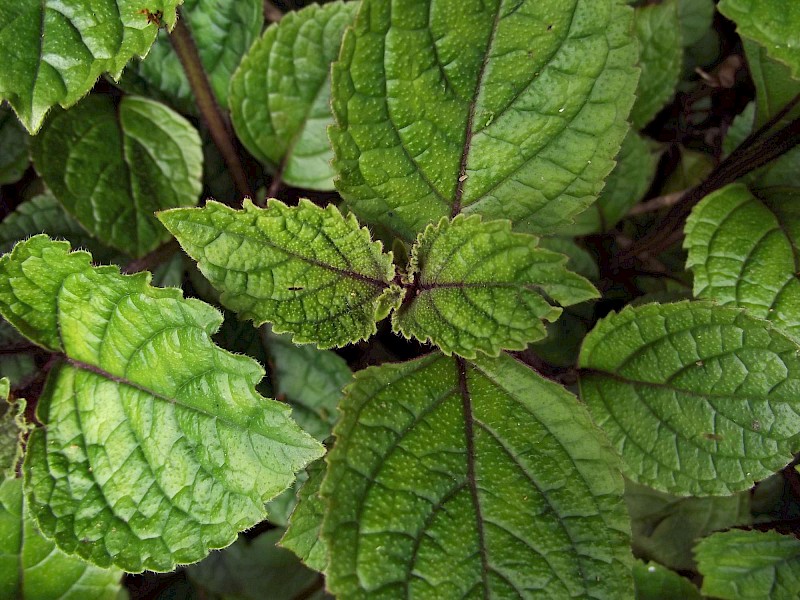
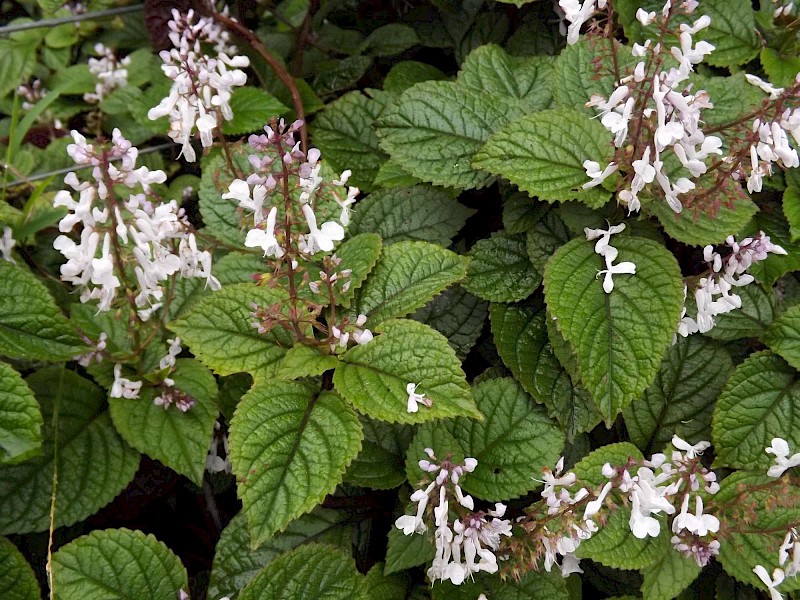
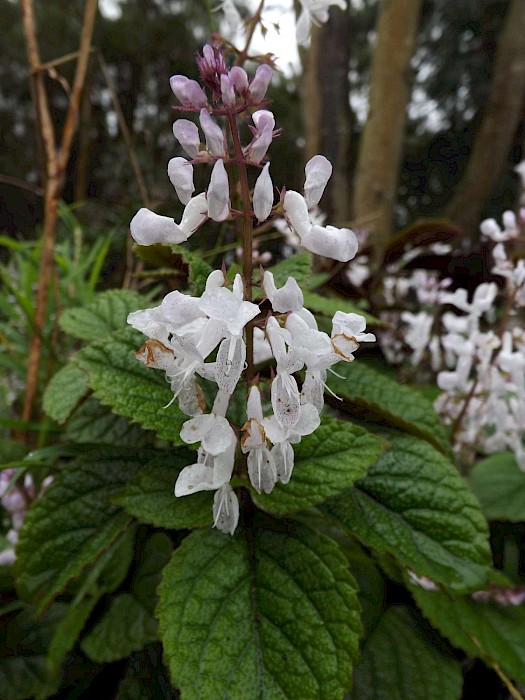
Trailing or straggling herb (occasionally subshrub) with stems covered in purple hairs that form runners and root at nodes. Hairy oval, textured leaves (5-12 x 3-7 cm) with serrated edges are in opposite pairs and are purple underneath below and dotted with glands. Erect stems (<30 cm tall) of tubular white flowers (1 cm long) with purple dots inside lower lip are produced (Dec-Aug), followed by small dark brown nutlets.
Are there any similar species?
Mint species and Teucrium scorodonia are similar, but their leaves are mint-scented and aren’t purple beneath.
Why is it weedy?
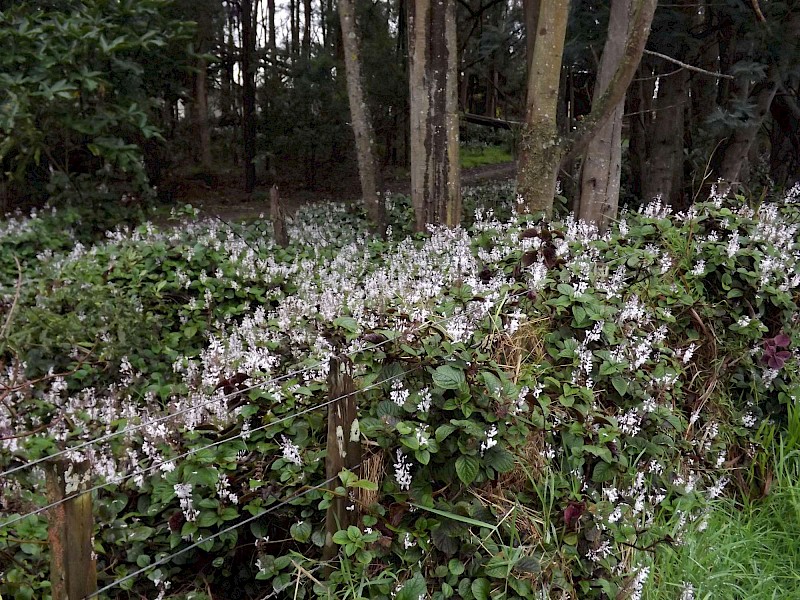
Creeps along the ground to form thick mats. Tolerates damp, moderate shade, and cool to high temperatures.
How does it spread?
Runners are the primary method of spread, and are moved around in soil and with greenwaste dumping. Common in gardens. Seed is produced, however because they are not evolved for dispersal by birds, wind and water spread is primarily vegetative.
What damage does it do?
Forms dense mats, similar to tradescantia, that prevent seedlings of native species from establishing, leading to eventual thinning of the canopy and the area being opened up to invasion by other weedy vines and shrubs.
Which habitats is it likely to invade?
Damp shaded habitats, especially disturbed forest, shrubland, streamsides, river systems, fernland, and wetlands throughout New Zealand.
What can I do to get rid of it?
1. Physical removal - Hand pull or dig out entire plant - Ensure all root material is removed from site to prevent regrowth and burnt or disposed of to a refuse station.
2. Foliar spray - Apply Glyphosate (360 g/L active ingredient) herbicide (20ml/L) plus organosilicone penetrant (2ml/L) to cover entire plant Note: Non selective. Avoid overspray onto desirable plants. OR Apply Metsulfuron herbicide (600g/kg active ingredient) (Knapsack 0.5g/L, or Gun and hose 20-35g/100L) plus organosilicone penetrant (3ml/L) to thoroughly wet all parts of plant. Note: Metsulfuron overspray will kill other (desirable) broadleaf plants and has residual activity in the soil which aids in killing below ground parts.
CAUTION: When using any herbicide or pesticide, PLEASE READ THE LABEL THOROUGHLY to ensure that all instructions and directions for the purchase, use and storage of the product, are followed and adhered to.
What can I do to stop it coming back?
Followup within 3-6 months, and replant bare sites.
Images