Purple guava
Botanical name
Psidium cattleyanum
Family
Myrtaceae (myrtle)
Also known as
Strawberry guava
Where is it originally from?
Brazil
What does it look like?
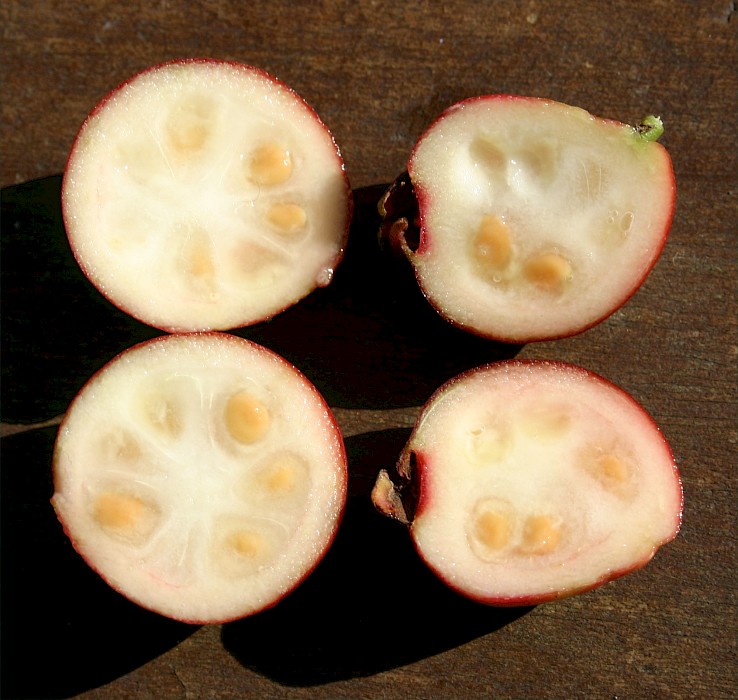
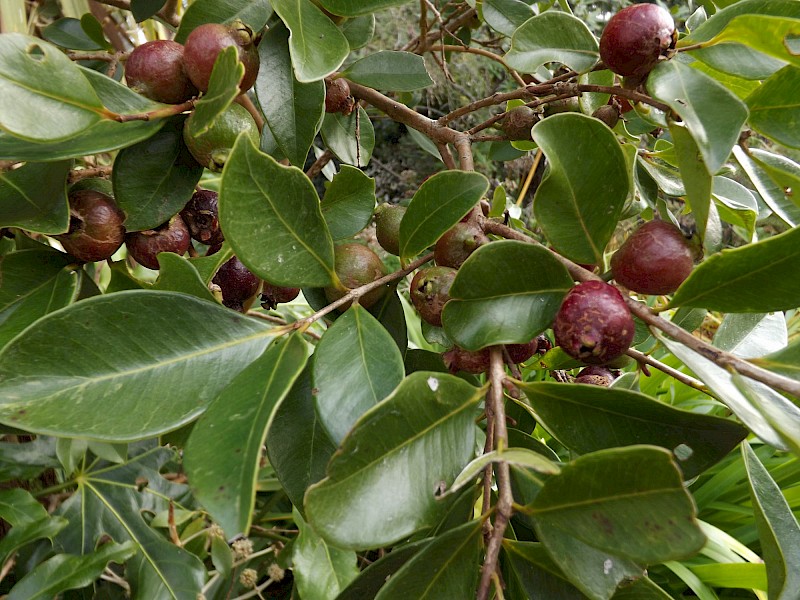
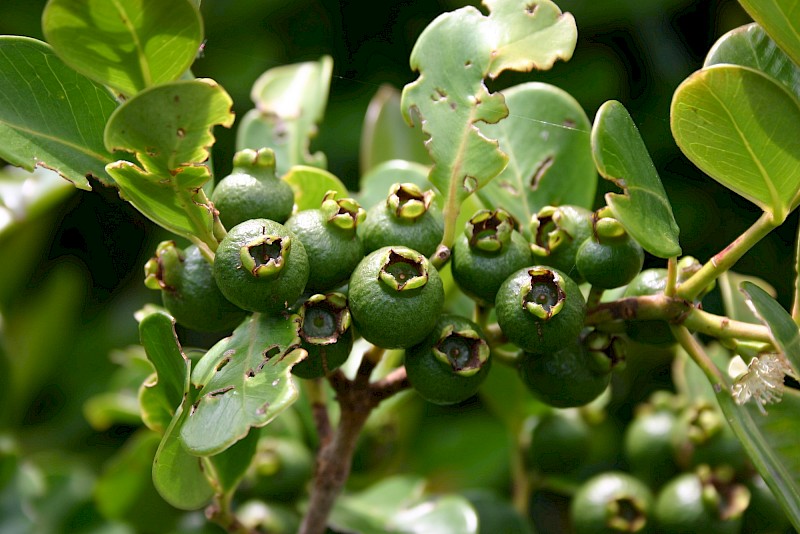
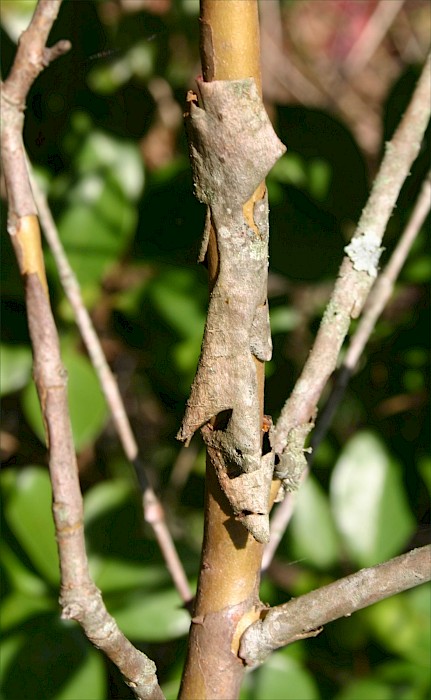
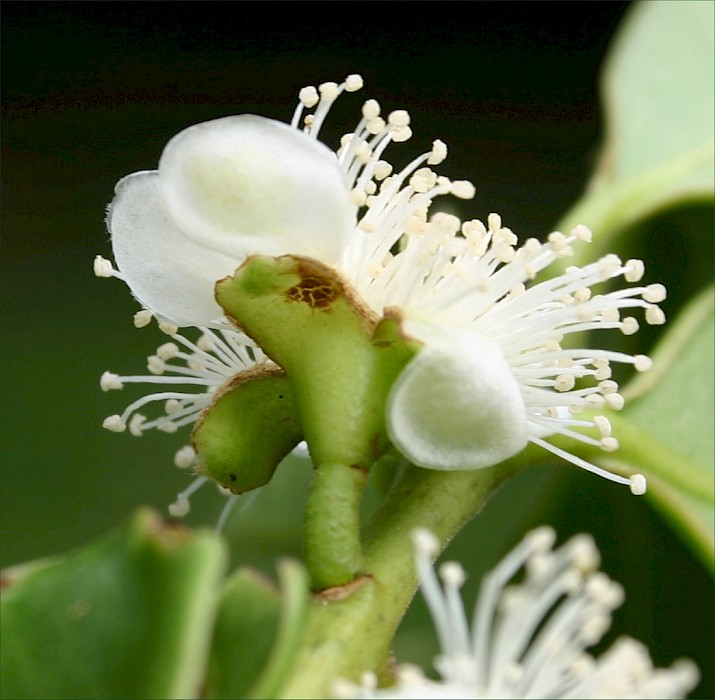
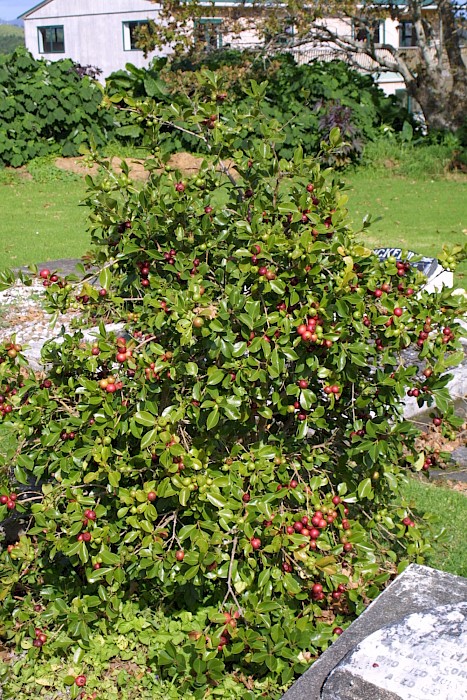
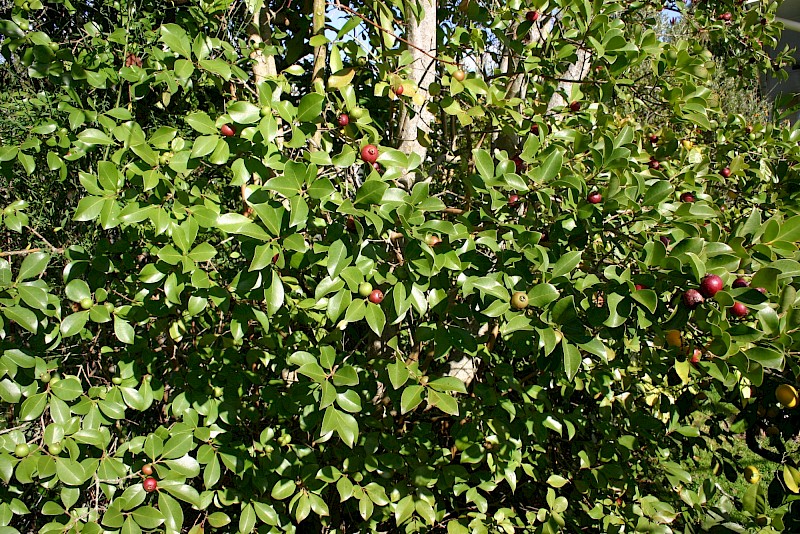
Large shrub or small tree (<6 m) with smooth, pale brown trunk and shoots covered with thick, fine hairs when young. Hairless oval leaves (40-80 x 25-45 mm) are in opposite pairs on the stem, glossy and dark green above, and dotted with glands beneath. Solitary white flowers (to 10 mm diameter) are usually produced in all upper leaf bases (Jun-Mar), followed by round, berry-like fruits (<2 cm diameter) that have sweet, purple (occasionally whitish) flesh that becomes dark purple as they mature. Each fruit contains numerous seeds.
Are there any similar species?
Yellow guava (Psidium guajava) has larger leaves which are densely hairy when young, and yellow fruit (3-4 cm diameter) with sweet pink flesh.
Why is it weedy?
Massive seeding ability and seeds are well dispersed. Forms a dense root mat. Tolerates shade, heat, high to moderately low rainfall, wind and salt, but is intolerant of frost.
How does it spread?
Birds, possums, pigs and other livestock all spread the seed. Common seed sources include gardens and old orchards.
What damage does it do?
Forms dense or pure stands in open area and under bush canopy, preventing the establishment of native plant seedlings, taking over native forest areas. Potentially a major weed in New Zealand.
Which habitats is it likely to invade?
Most forest and shrubland types in warmest northern areas and islands.
What can I do to get rid of it?
1. Physical removal - Hand pull small plants, or grub out seedlings
2. Cut and paste (all year round) - Cut the stem/trunk as close to the ground as possible and cover the entire stump with herbicide as soon as possible after cutting. Apply metsulfuron gel (10g/l strength)
3. Basal spray stems up to 20cm diametre with X-Tree Basal. Ensure the base is thoroughly covered at ground level.
4. Foliar spray - Apply Metsulfuron herbicide (600g/kg active ingredient) (Knapsack 0.5g/L, or Gun and hose 20-35g/L) plus organosilicone penetrant (3ml/L) to thoroughly wet all parts of plant. Note: Metsulfuron overspray will kill other (desirable) broadleaf plants and has residual activity in the soil which aids in killing below ground parts
CAUTION: When using any herbicide or pesticide, PLEASE READ THE LABEL THOROUGHLY to ensure that all instructions and directions for the purchase, use and storage of the product, are followed and adhered to.
What can I do to stop it coming back?
Stumps resprout, reseeds profusely in bared areas. Follow up for seedlings 2-3 times each year until eradicated. Control possums and pigs. Do not replant sites until clear.
Images