Spindle tree
Botanical name
Euonymus europaeus
Family
Celastraceae (spindle tree)
Also known as
European spindle tree, common spindle
Where is it originally from?
Europe
What does it look like?
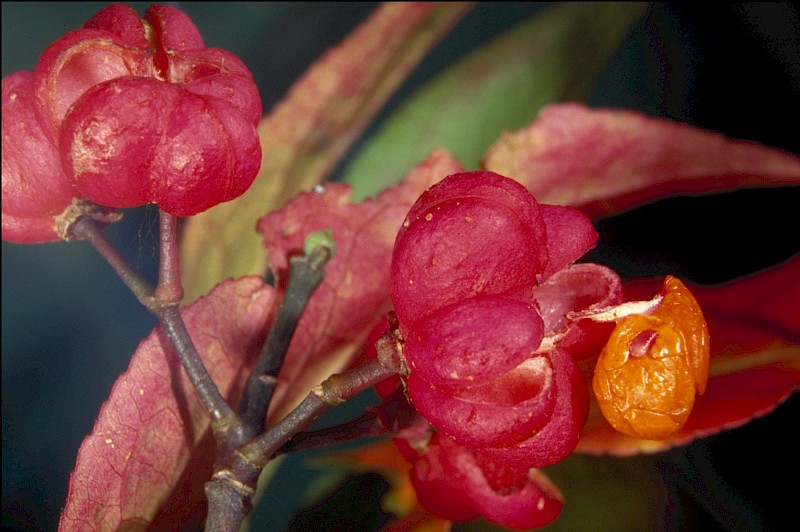
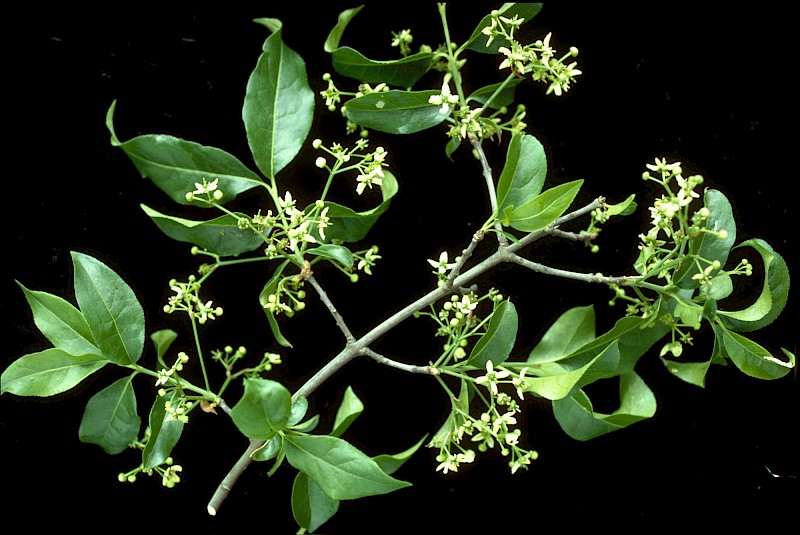
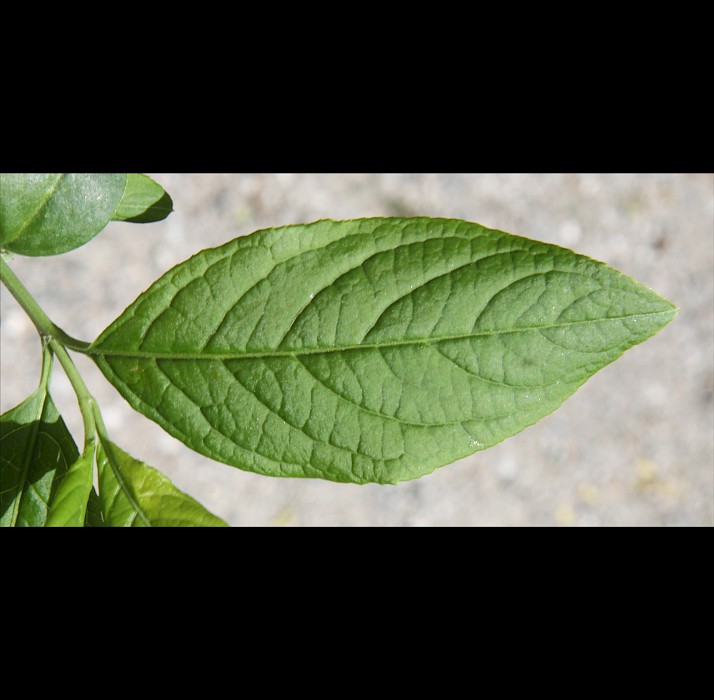
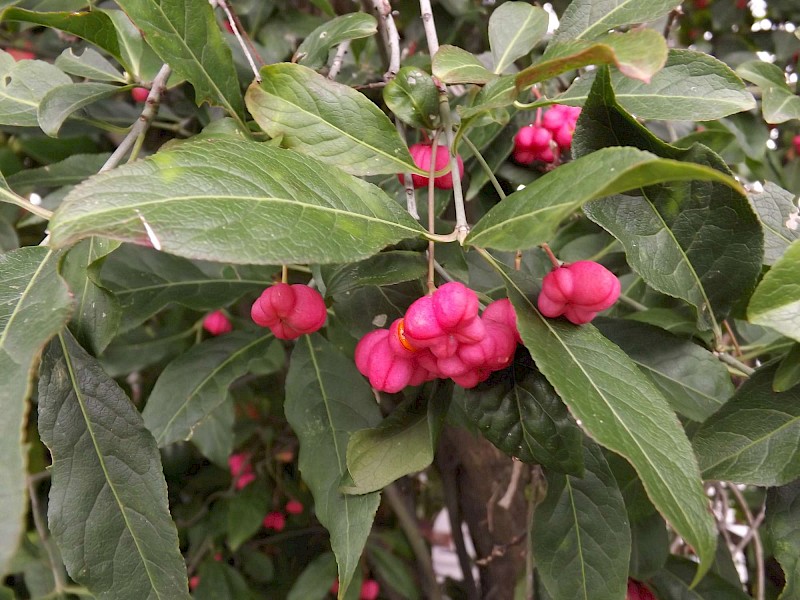
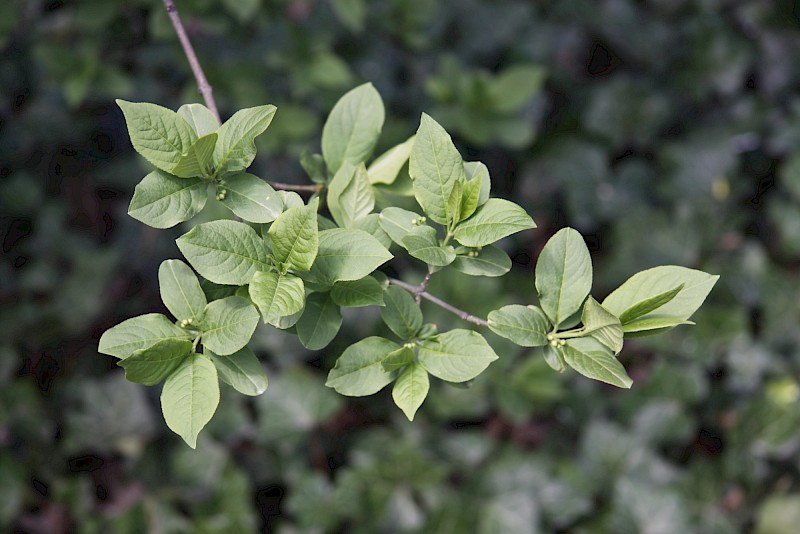
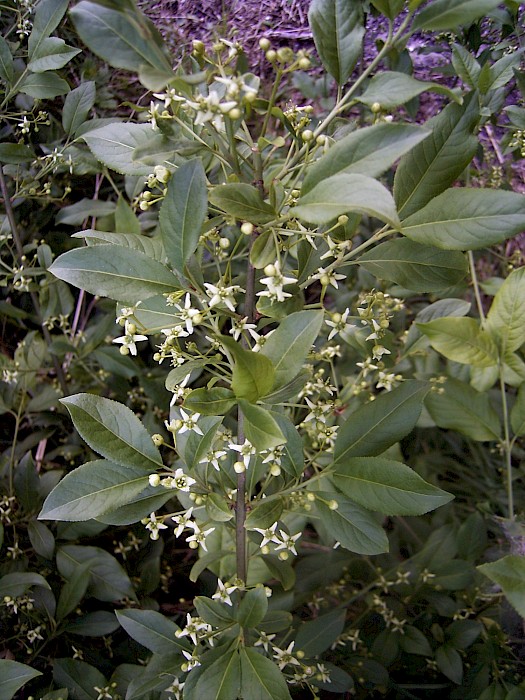
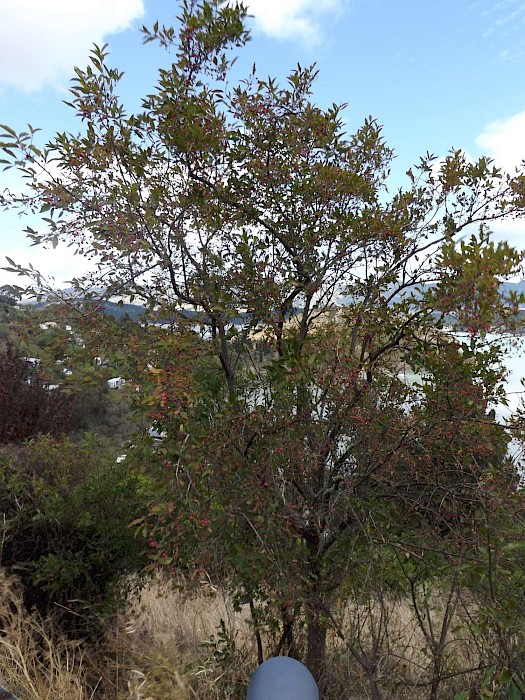
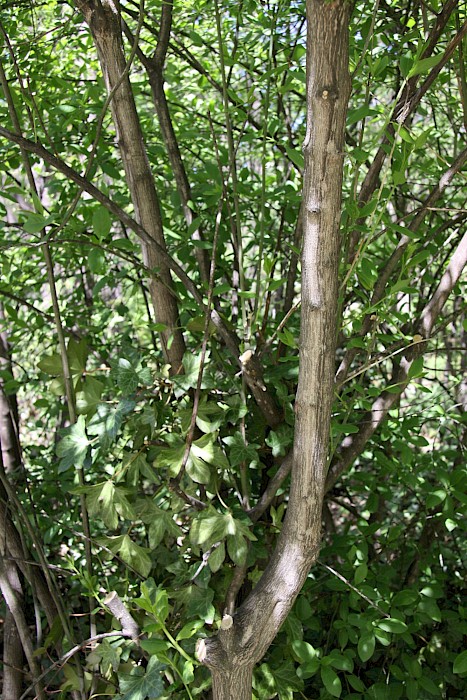
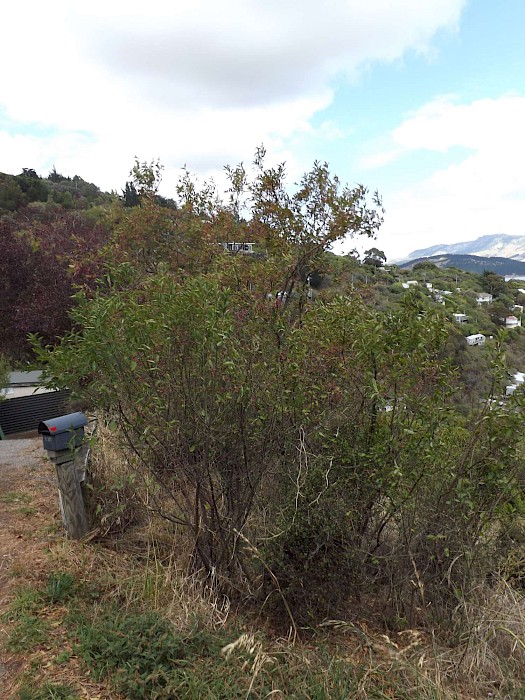
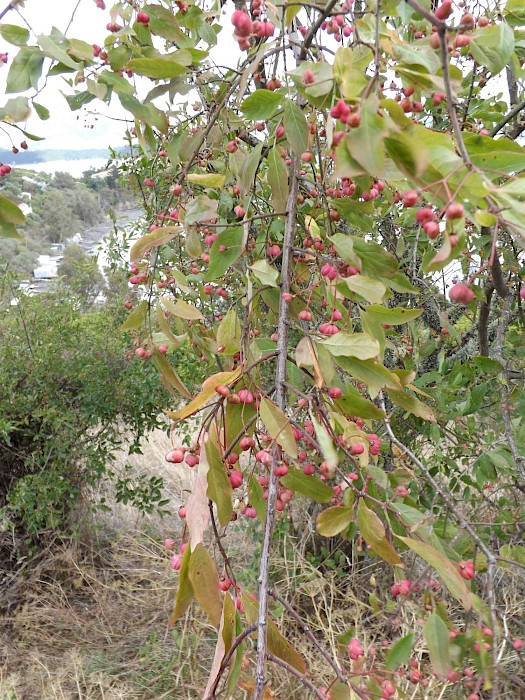
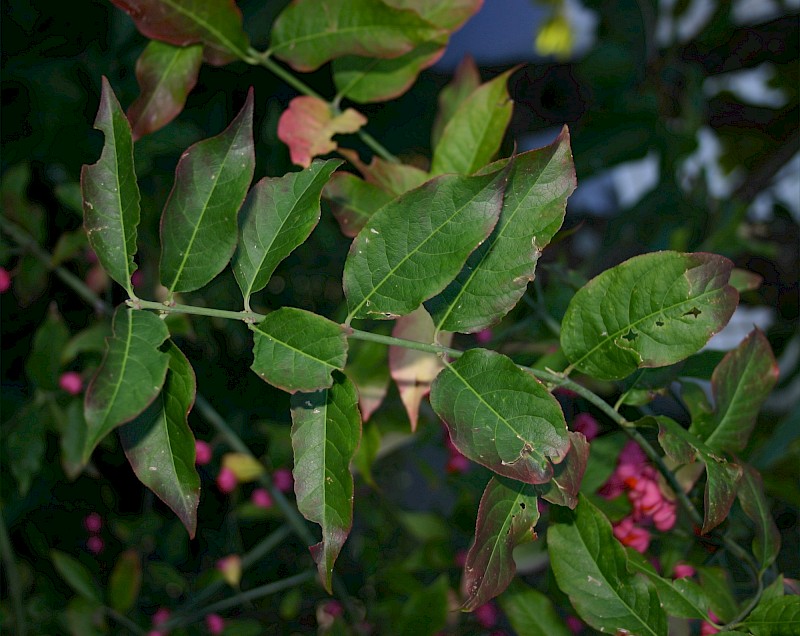
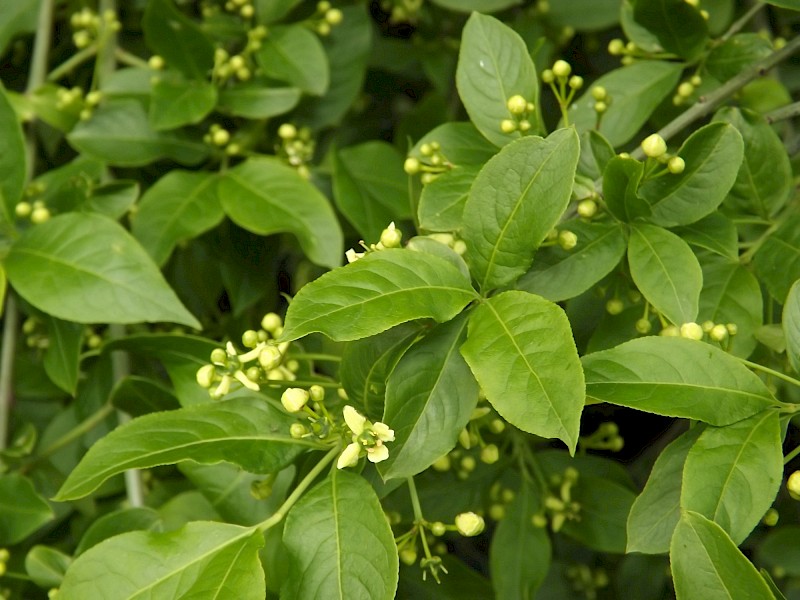
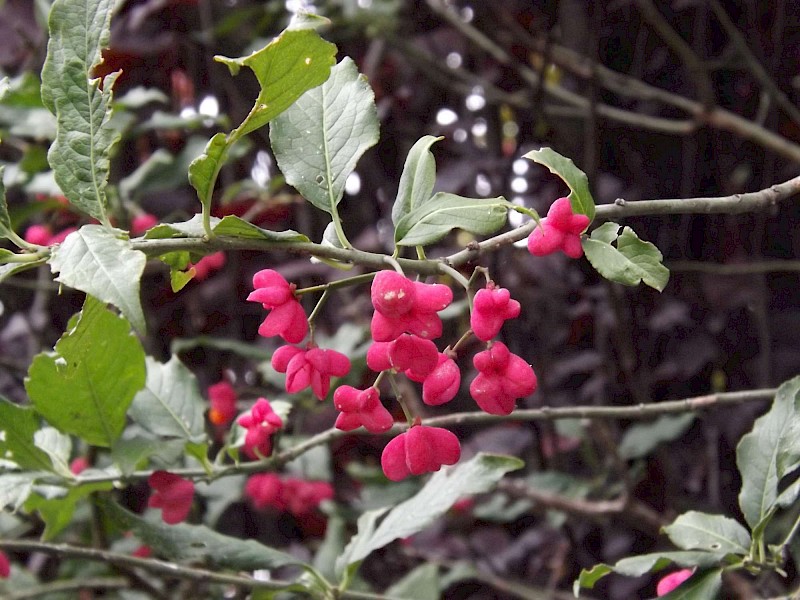
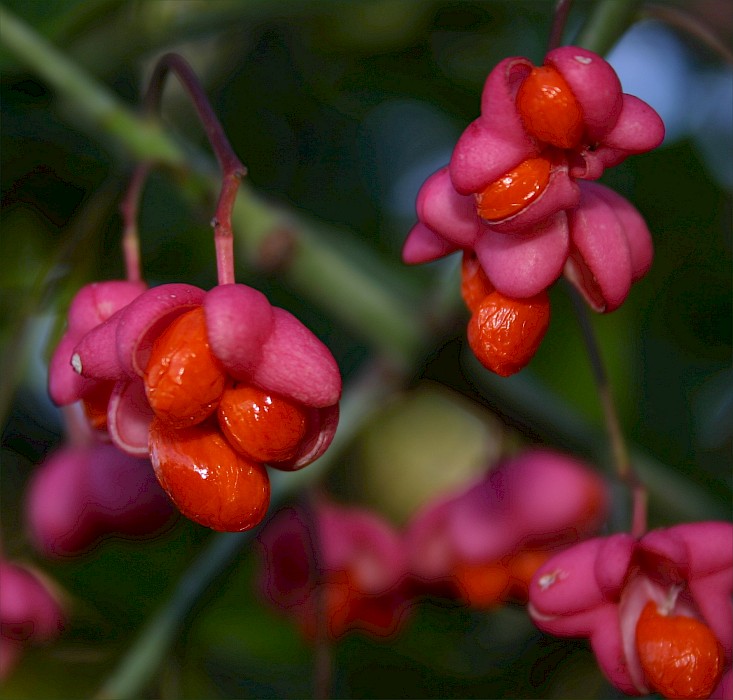
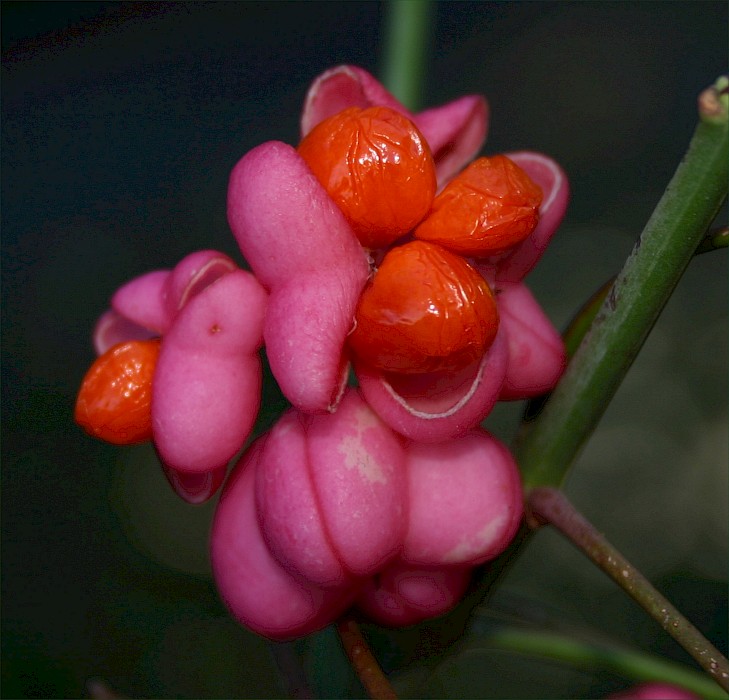
Much-branched, deciduous shrub or small tree (<6m tall) with smooth, grey bark and young branches that are square, green and smooth. Paired oval leaves (2-10 cm) with pointed tips, margins with shallow rounded teeth, and 6-12mm leaf stalks usually turn red in autumn. Flower buds are greenish and usually 4-angled. Clusters of 2-15 flowers (8-10 mm diameter, Nov-Dec) with four narrow and widely separated greenish-yellow petals are followed by 4-lobed, deep pink seed capsules (Mar-May) that ripen to expose bright orange flesh covering each seed.
Are there any similar species?
Japanese spindle tree (E. japonicus) is similar but evergreen, with thicker leaves. It has round instead of 4-lobed seed capsules, and bark on young branches becomes wrinkled.
Why is it weedy?
Tolerates a wide range of conditions including shade, warm and cold temperatures, wind, poor soils and moderate to low rainfall. It is poisonous so is not grazed by stock.
How does it spread?
Produces many seeds which germinate freely and are spread widely by birds, and sprouts (suckers) from its root system.
What damage does it do?
Forms dense thickets in the open and in the shade, blocking light and space for native understorey plants and seedlings.
Which habitats is it likely to invade?
Forest, forest margins, shrubland, scrubland, cliffs, dry sites, hedges, urban areas.
What can I do to get rid of it?
1. Physical removal - Hand pull small plants, or dig out entire plant including roots (all year round).
2. Cut and paste (all year round) - Cut the stem/trunk as close to the ground as possible and cover the entire stump with herbicide as soon as possible after cutting. Apply either glyphosate gel (120g/L strength) or metsulfuron gel (10g/l strength) to the entire cut stem.
3. Foliar spray - Apply herbicide using a hand held sprayer/knapsack to plants <1m tall or gun and hose for larger infestations. Apply metsulfuron herbicide (600g/kg active ingredient at 0.5g/L knapsack or 20g/100L gun and hose) + organosilicone penetrant (3ml/L). Note: Metsulfuron overspray will kill other (desirable) broadleaf plants and has residual activity in the soil which aids in killing below ground parts.
CAUTION: When using any herbicide or pesticide, PLEASE READ THE LABEL THOROUGHLY to ensure that all instructions and directions for the purchase, use and storage of the product, are followed and adhered to.
What can I do to stop it coming back?
Monitor the site for a least a year and treat any regrowth or seedlings (seeds survive more than 1 year in soil). Where appropriate plant a local native shrub or tree.
Images