Tree of heaven
Botanical name
Ailanthus altissima
Family
Simaroubaceae (quassia)
Also known as
Ailanthus glandulosa, Chinese sumac, stinking shumac
Where is it originally from?
China
What does it look like?
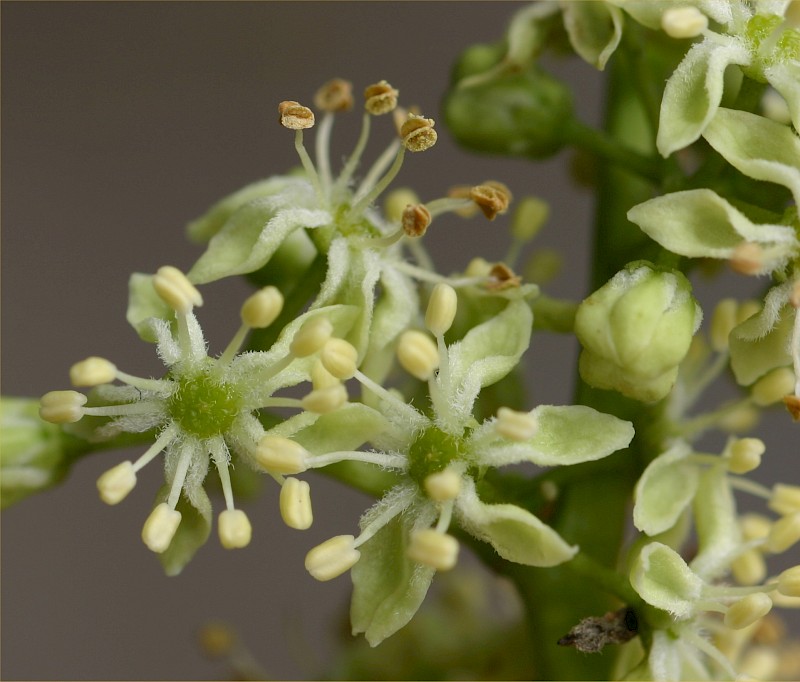
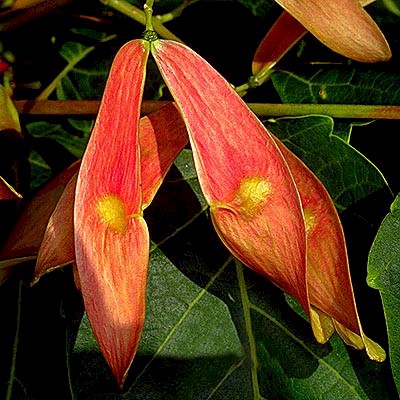
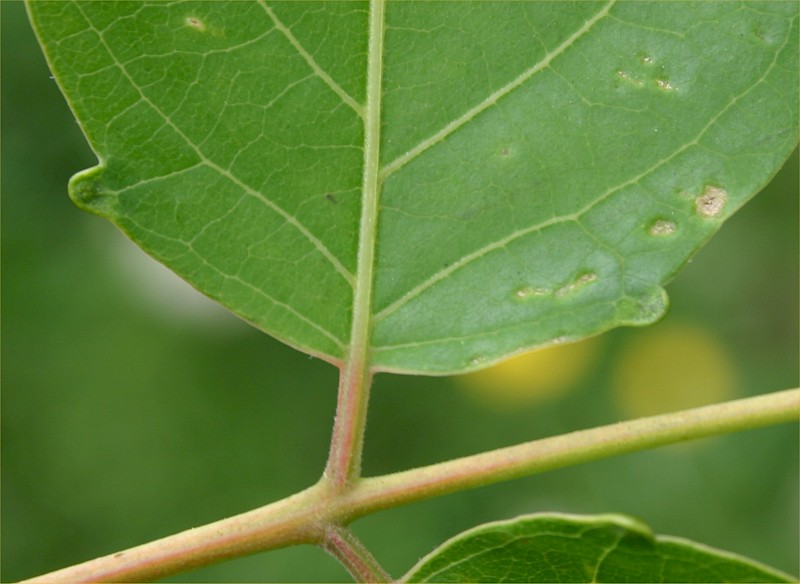
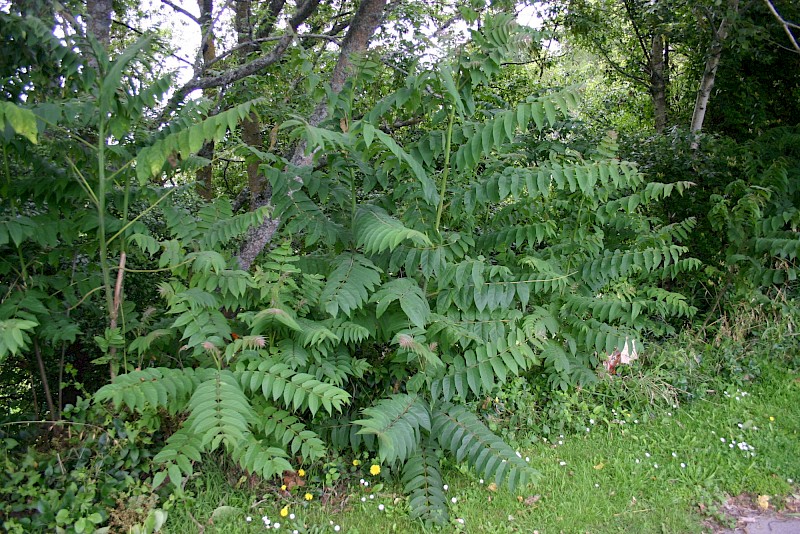
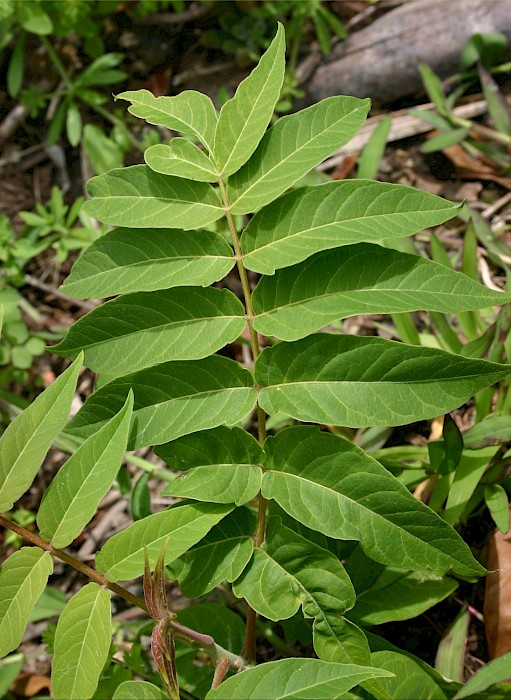
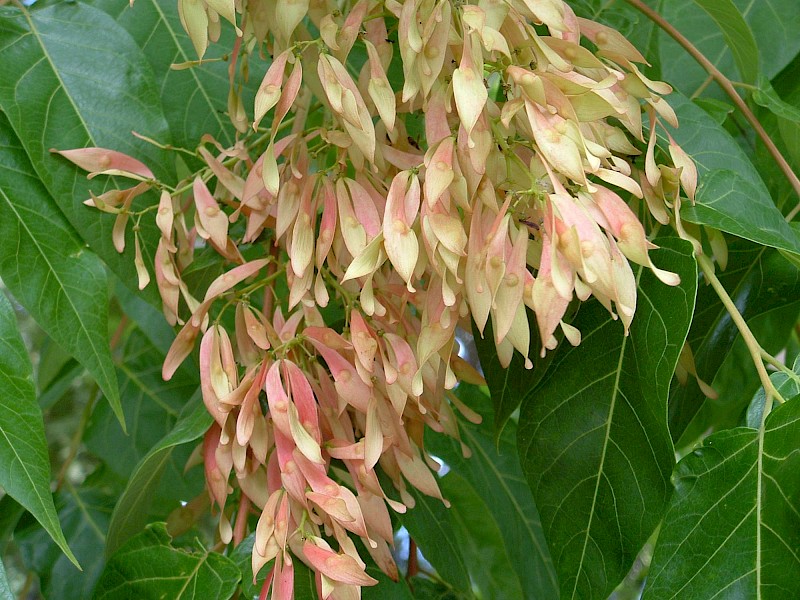
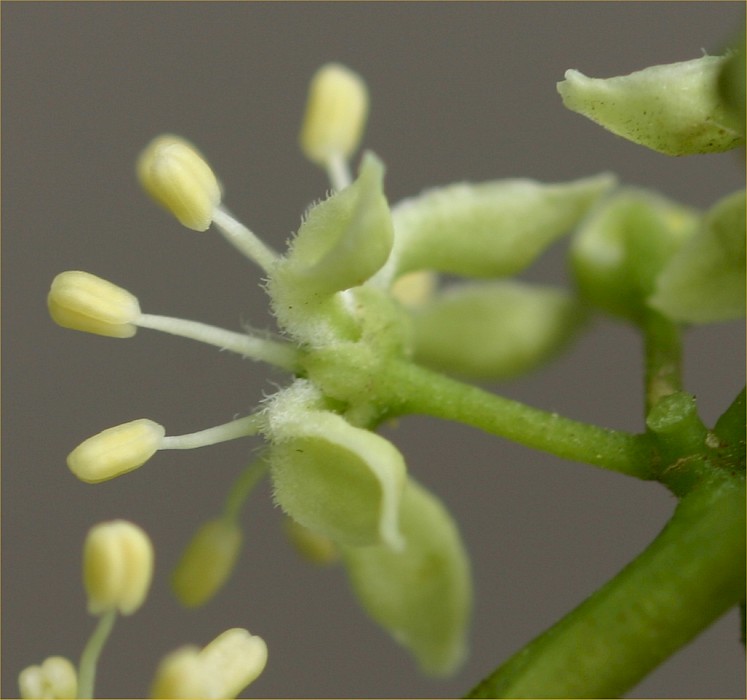
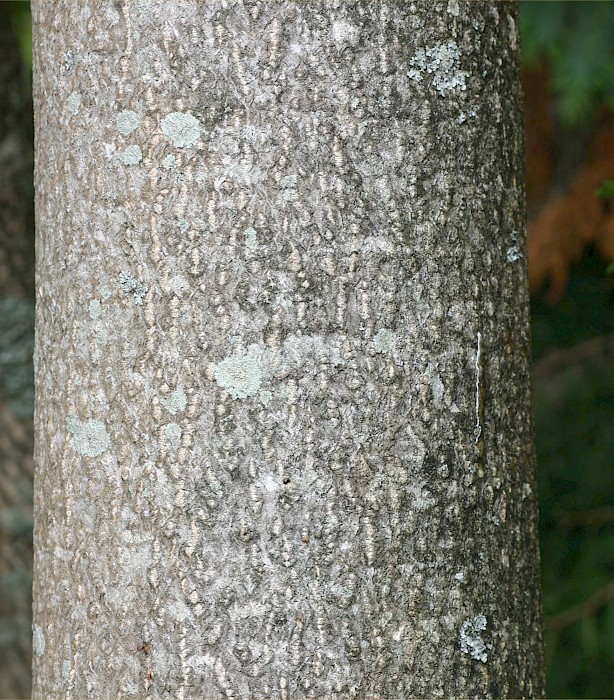
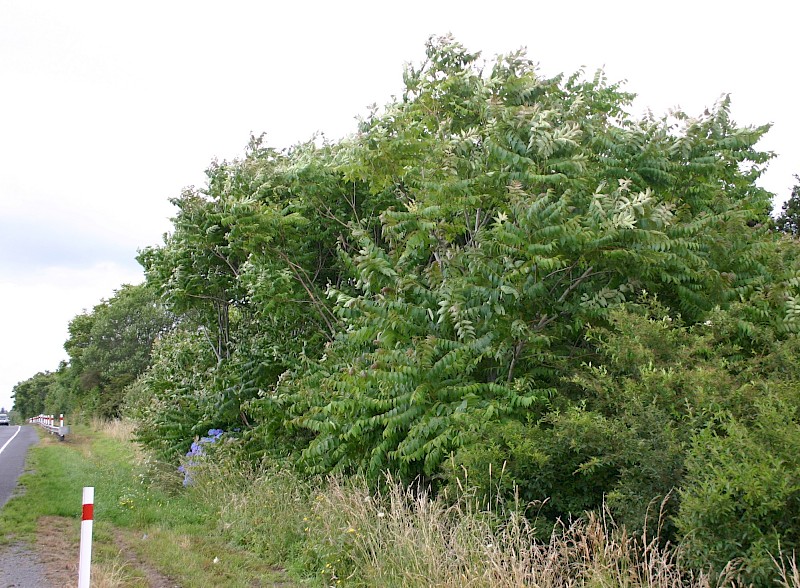
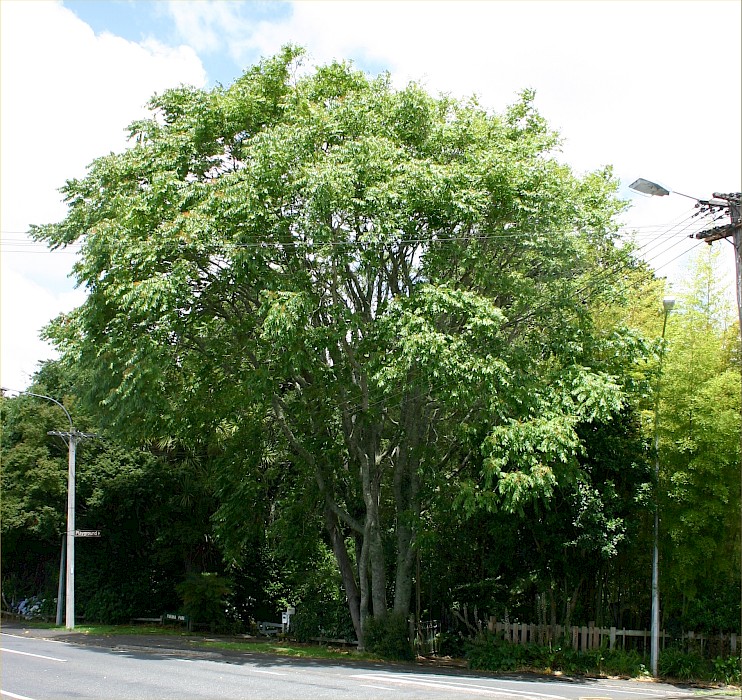
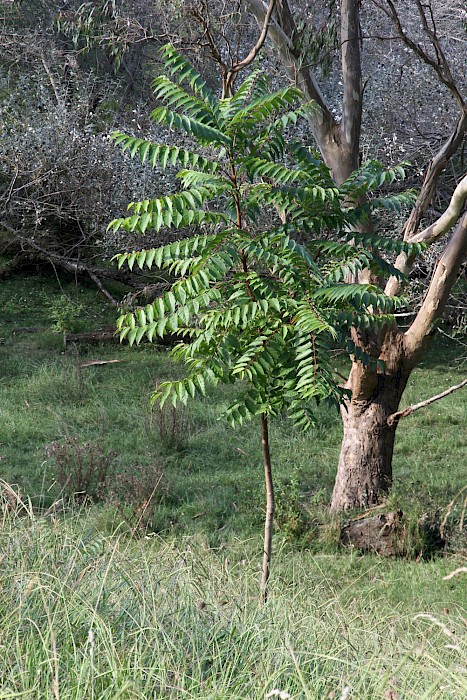
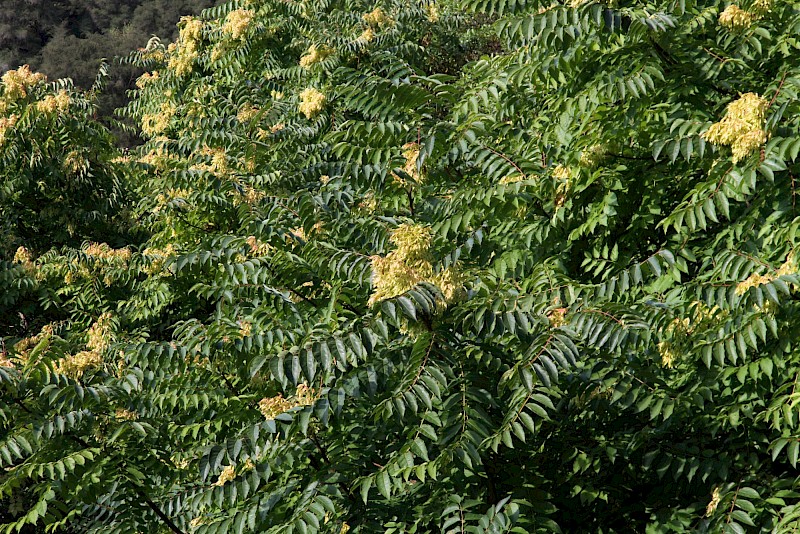
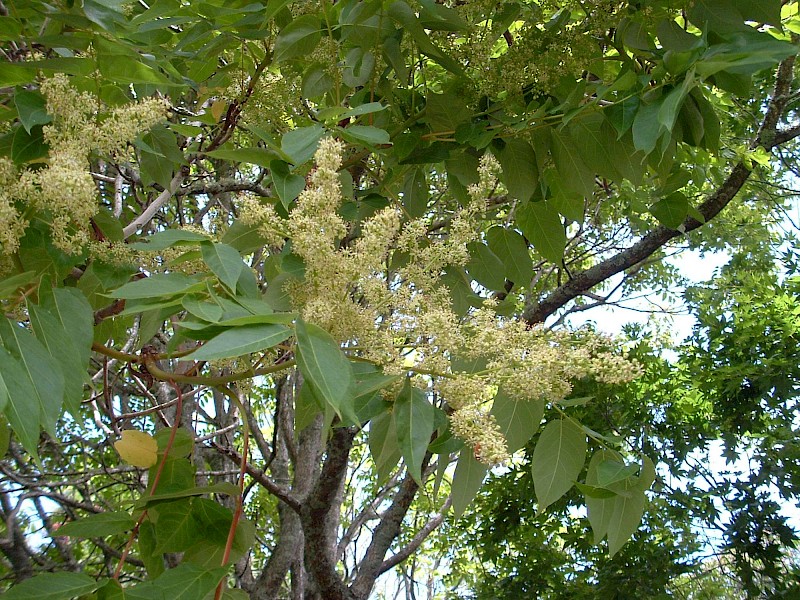
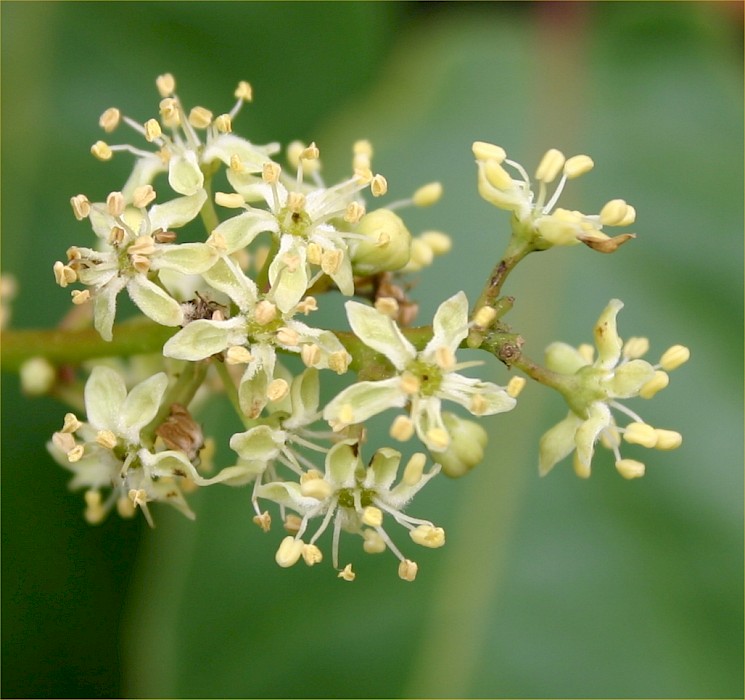
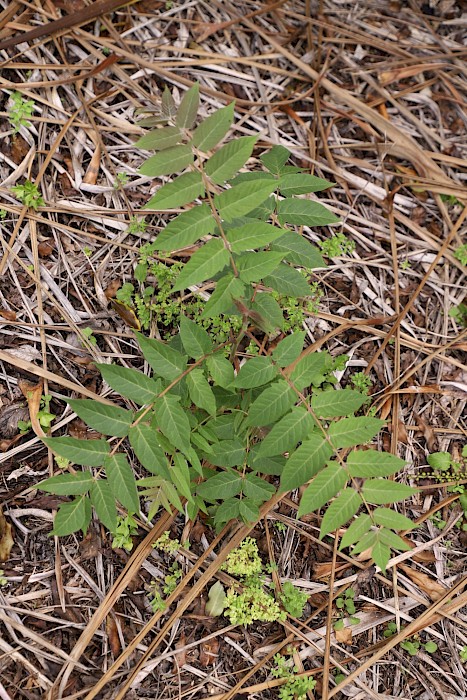
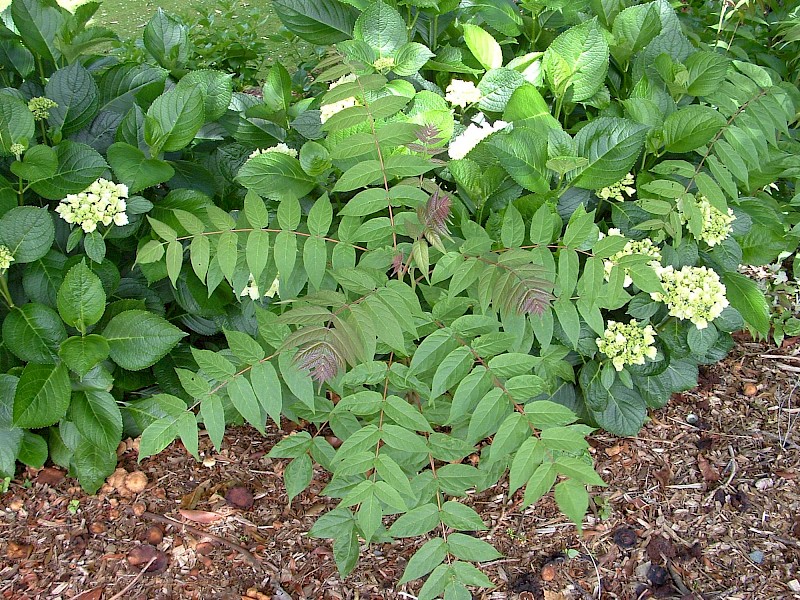
Deciduous tree with smooth, grey, pale-striped bark, and leaves made up of 11-25 alternating hairless leaflets (7-17cm long x 3-7.5 cm wide) with bluish green undersides and 1-3 coarse teeth near their bases. Clusters of yellow-green flowers (2.5-4 mm long petals, Dec-Jan) are followed by seeds enclosed in pink to tan papery, twisted and winged sheaths. Bark is grey, pale-striped and smooth. All parts of the tree have a strong smell that can be described as similar to peanuts or cashews.
Are there any similar species?
Rhus typhina (staghorn sumac) has hairy branchlets and petioles, and flowers from October to November, producing hairy fruit.
Why is it weedy?
Grows rapidly and forms dense thickets of suckering shoots.
How does it spread?
Produces suckering shoots from an aggressive root system, as well as large amounts of seed.
What damage does it do?
Out-competes native species for sunlight and space, and produces a toxin in its bark and leaves that accumulates in the soil to prevent other plant species establishing near it. The root system is capable of damaging drains.
Which habitats is it likely to invade?
High light areas with poor soil (such as clay), spreading along roadsides and waste places from gardens or plantations.
What can I do to get rid of it?
1. Physical removal - dig out small plants or excavate larger areas. Remove all roots and fragments, as these can regrow. Burn all plant material or dispose of at a refuse transfer station.
2. Basal spray stems up to 20cm diametre with X-Tree Basal. Ensure the base is thoroughly covered at ground level.
3. Foliar spray - Apply Glyphosate (360 g/L active ingredient) herbicide (20ml/L) plus organosilicone penetrant (2ml/L) to cover entire plant Note: Non selective, avoid overspray onto desirable plants OR Apply Metsulfuron herbicide (600g/kg active ingredient) (Knapsack 0.5g/L, or Gun and hose 20-35g/100L) plus organosilicone penetrant (3ml/L) to thoroughly wet all parts of plant. Note: Metsulfuron overspray will kill other (desirable) broadleaf plants and has residual activity in the soil which aids in killing below ground parts OR Apply Triclopyr herbicide (600g/L active ingredient) at 6ml/L plus penetrant 1ml/L to thoroughly wet all parts of plant. Tricolopyr herbicide is ‘grass friendly’ but overspray will kill other (desirable) broadleaf plants.
CAUTION: When using any herbicide or pesticide, PLEASE READ THE LABEL THOROUGHLY to ensure that all instructions and directions for the purchase, use and storage of the product, are followed and adhered to.
What can I do to stop it coming back?
Followup monitoring required and treatment when needed. Establishing a thick cover of native trees to shade out and prevent establishment of seedlings.
Images