Asiatic knotweed
Botanical name
Fallopia japonica
Family
Polygonaceae (dock)
Also known as
Japanese knotweed, Reynoutria japonica, Polygonum cuspidatum
Where is it originally from?
Asia
What does it look like?
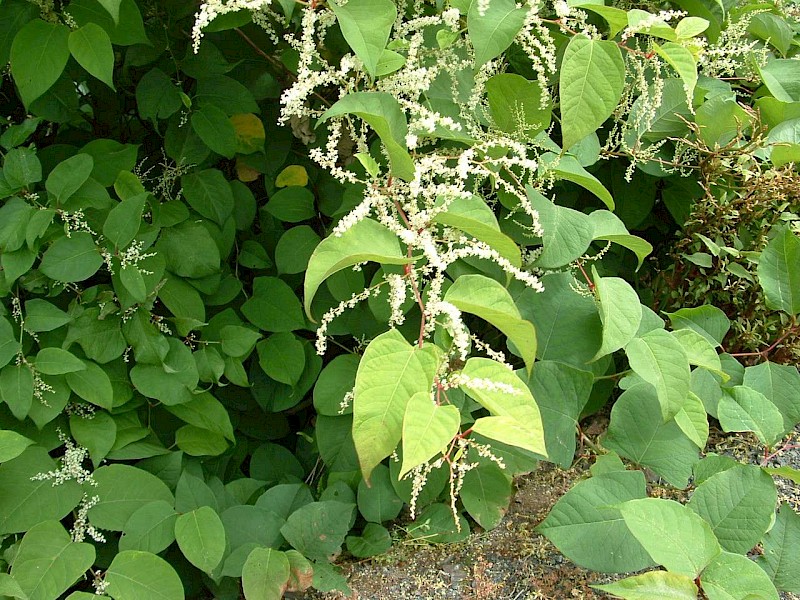
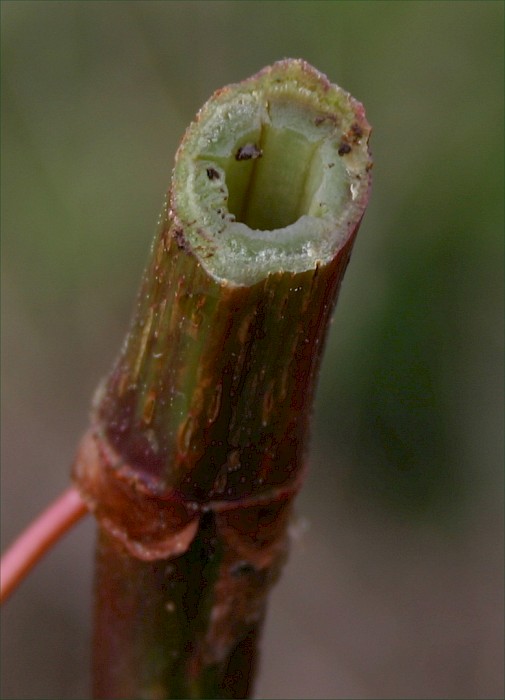
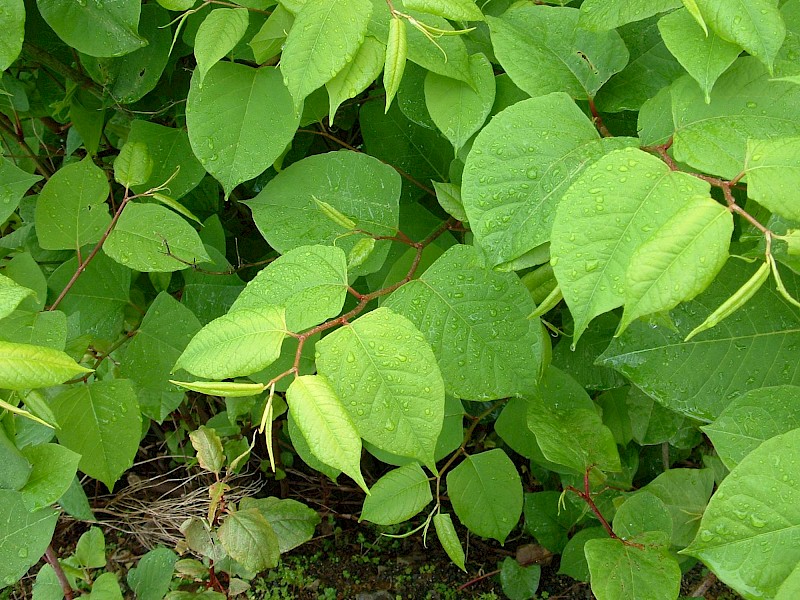
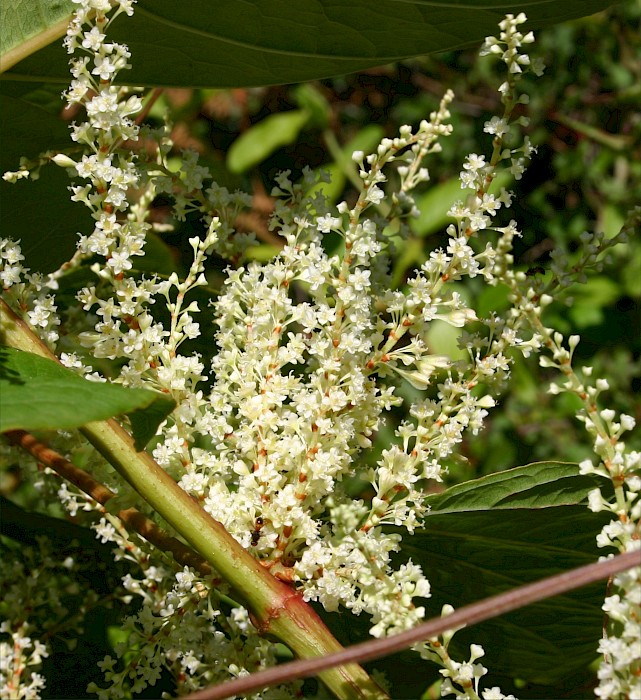
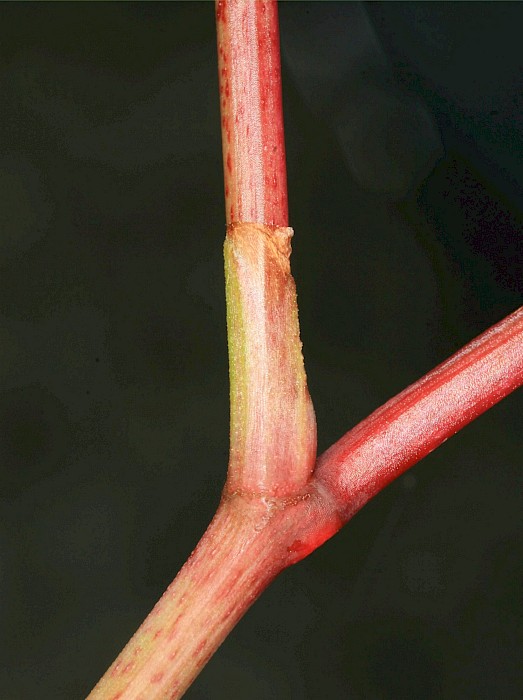
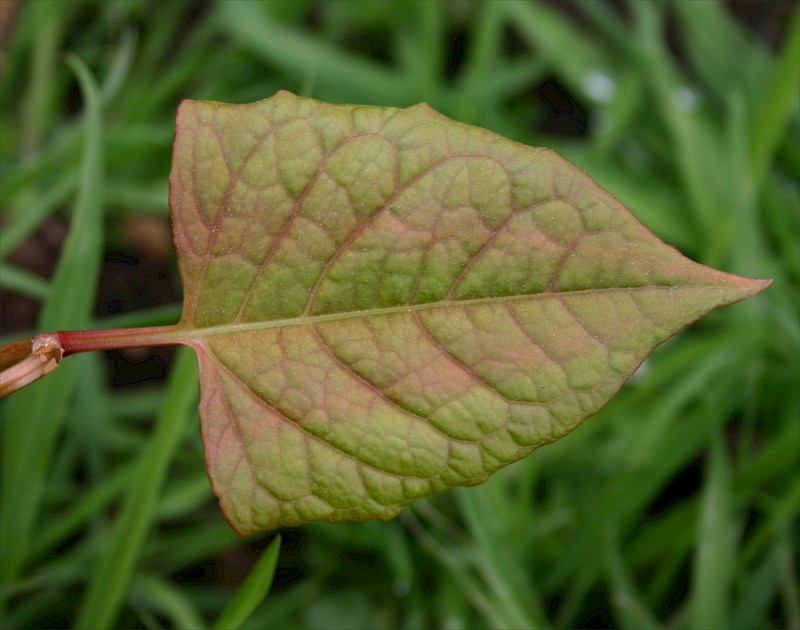
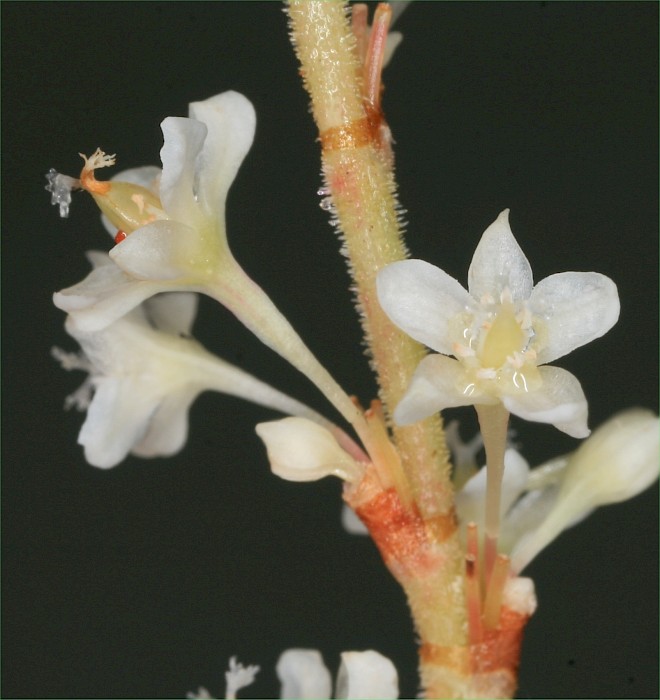
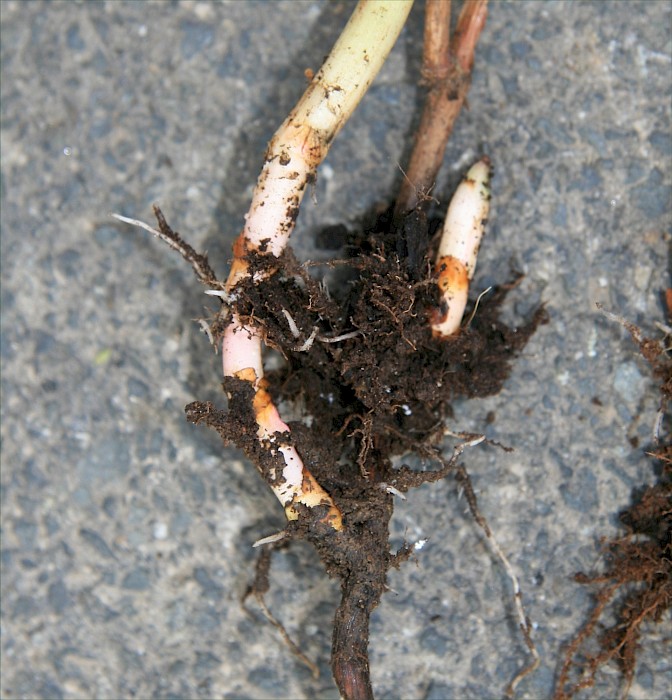
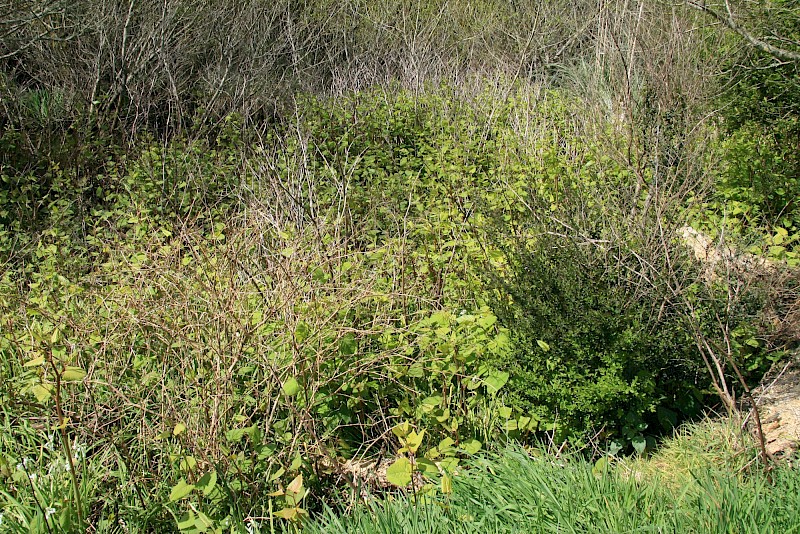
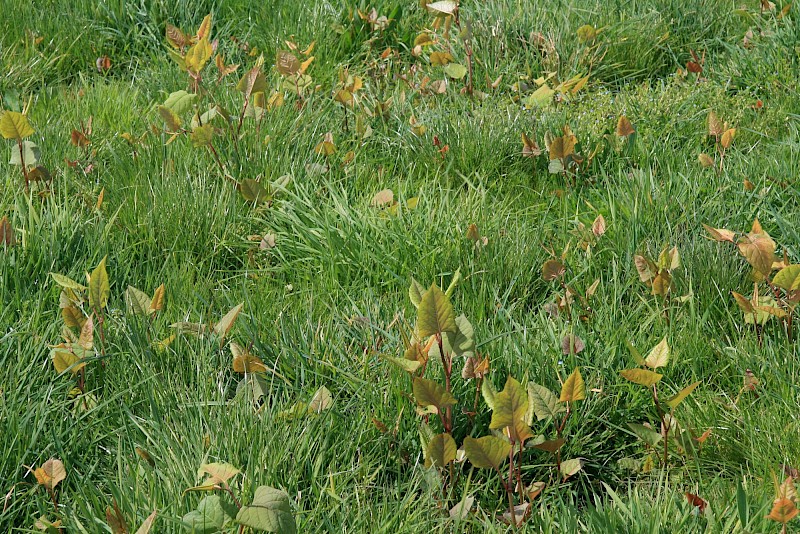
Many-stemmed, thicket-forming perennial shrub (<1-2 m high) forming roots with rhizomes and numerous, zigzagging, hairless, bluish to reddish stems (<15 mm diameter) that hollow and woody at the base when mature. Ovalish, pointed leaves (8-23 x 5-17 cm) with less than 14 pairs of lateral veins are bluish below, and on dark crimson stalks. Produces masses of creamy white flowers (<2.5 mm long) in densely-hairy, branched hanging clusters (<6 cm long, Dec-Apr).
Are there any similar species?
Fallopia sachalinensis
Why is it weedy?
Grows rapidly and extensively from rhizomes and multiple stems. Produces relatively long-lived and well dispersed seed, and tolerates wet to moderately dry conditions, and warm to cold temperatures, but is intolerant of shade.
How does it spread?
Seed and rhizomes are spread by soil and water movement.
What damage does it do?
Forms dense, long-lived thickets, excludes other species and prevents native seedlings establishing.
Which habitats is it likely to invade?
Shrubland, urban areas, waste areas and areas around waterways.
What can I do to get rid of it?
Note: Check with your local regional council first. This is classed as a pest plant in some regions and the council may be responsible for its control.
1. Dig out small patches (all year round): Note this plant can regrow from fragments. Ensure all parts of the plant are securely bagged so that no plant material can escape before disposal at refuse transfer station.
2. Cut and paste (all year round) - Cut the stem/trunk as close to the ground as possible and cover the entire stump with herbicide as soon as possible after cutting. Apply either glyphosate gel (120g/L strength) or metsulfuron gel (10g/l strength) or picloram gel (43g/l strength) to the entire cut stem.
3. Foliar spray - Apply herbicide using a hand held sprayer/knapsack to plants <1m tall or gun and hose for larger infestations. Apply glyphosate (360 g/L active ingredient) herbicide at 20ml/L plus organosilicone penetrant (2ml/L) to cover entire plant. Note: Glyphosate overspray will kill other (desirable) plants. OR apply metsulfuron herbicide (600g/kg active ingredient at 5g/10L knapsack or 20g/100L gun and hose) plus organosilicone penetrant (3ml/L) OR picloram/triclopyr herbicide (picloram 100g/l and triclopyr 300g/l active ingredient at 6ml/L) plus organosilicone penetrant (1ml/L) to thoroughly wet all parts of plant. Note: Triclopyr and picloram herbicides are ‘grass friendly’ but overspray will kill other (desirable) broadleaf plants. Picloram and metsulfuron herbicides have residual activity in the soil which may leach and kill other plants. Do not use under and around other (desirable) broadleaf plants.
CAUTION: When using any herbicide or pesticide, PLEASE READ THE LABEL THOROUGHLY to ensure that all instructions and directions for the purchase, use and storage of the product, are followed and adhered to.
What can I do to stop it coming back?
Stem fragments and rhizomes resprout. Seeds germinate in bared areas. Difficult to control. Follow up 3-monthly for at least two years until eliminated.
Images