Bushy asparagus
Botanical name
Asparagus aethiopicus
Family
Liliaceae (lily)
Also known as
Fox tail fern, Sprenger’s asparagus
Where is it originally from?
South Africa
What does it look like?
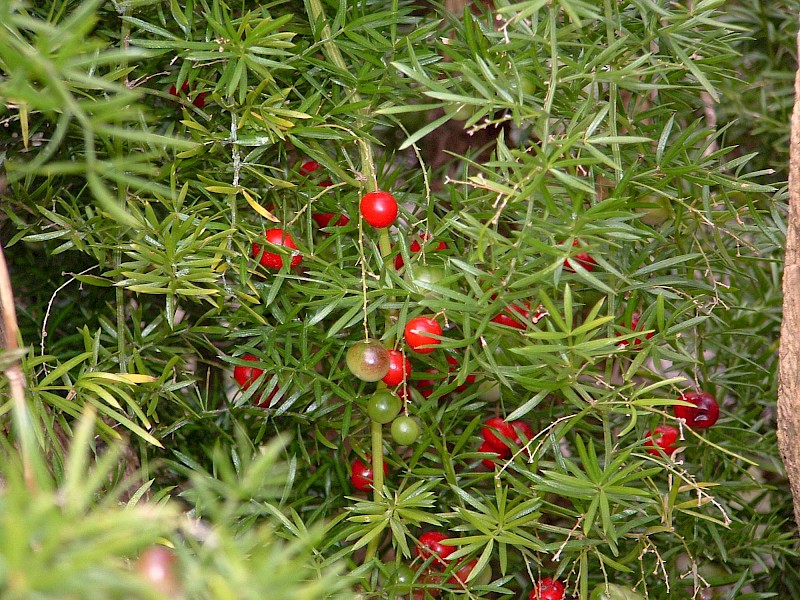
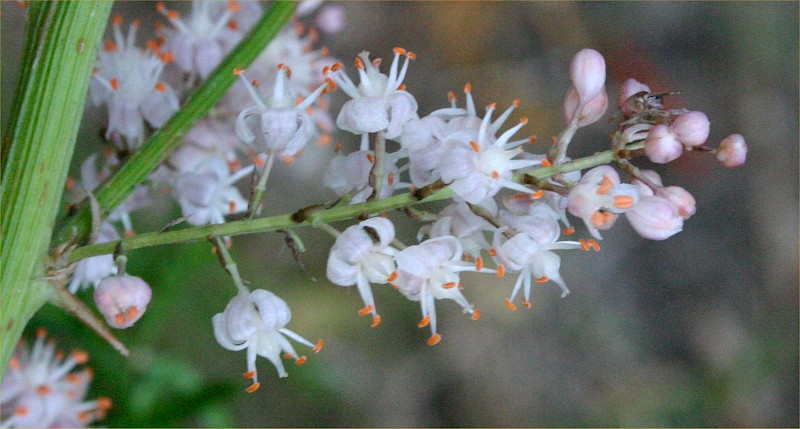
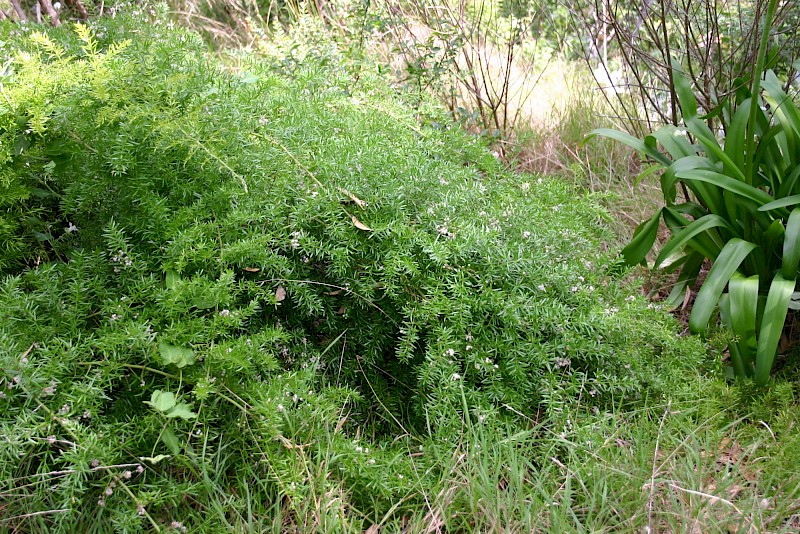
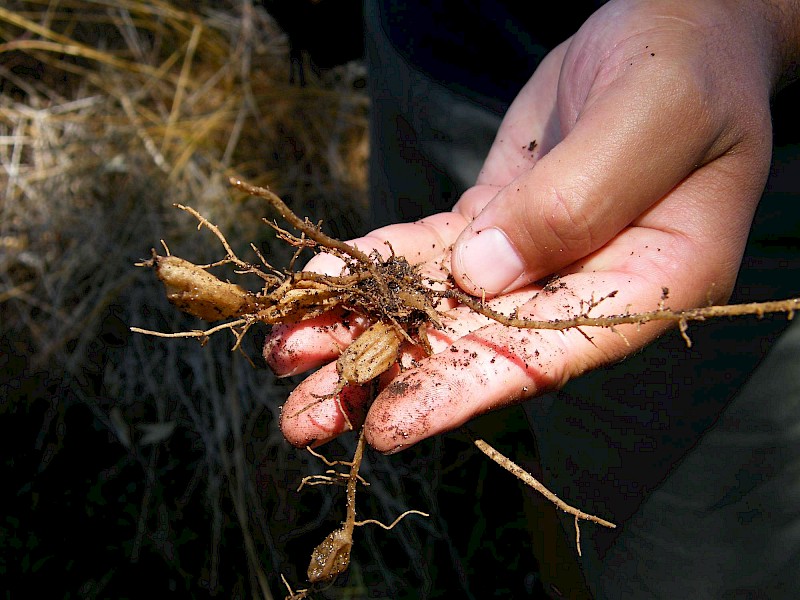
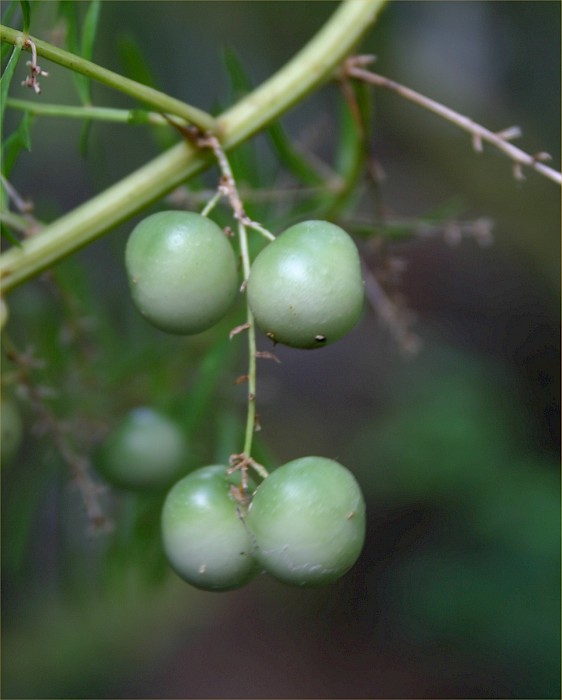
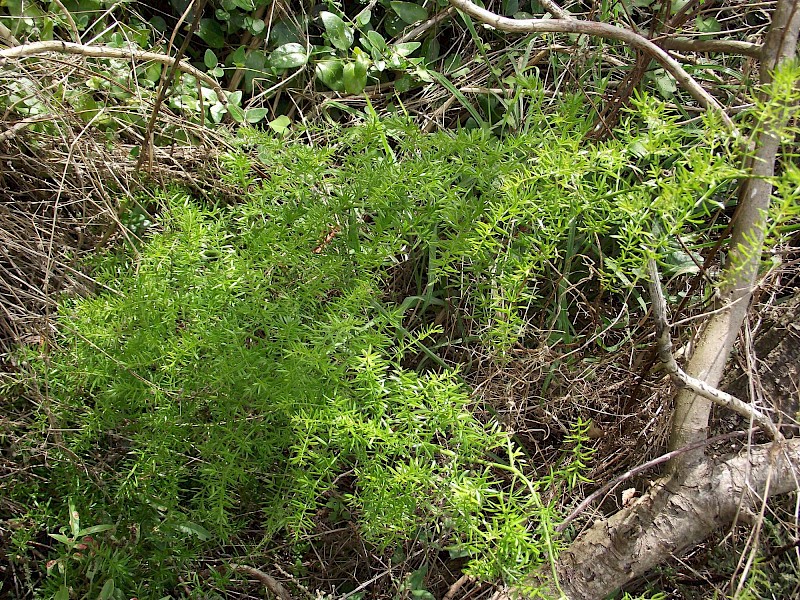
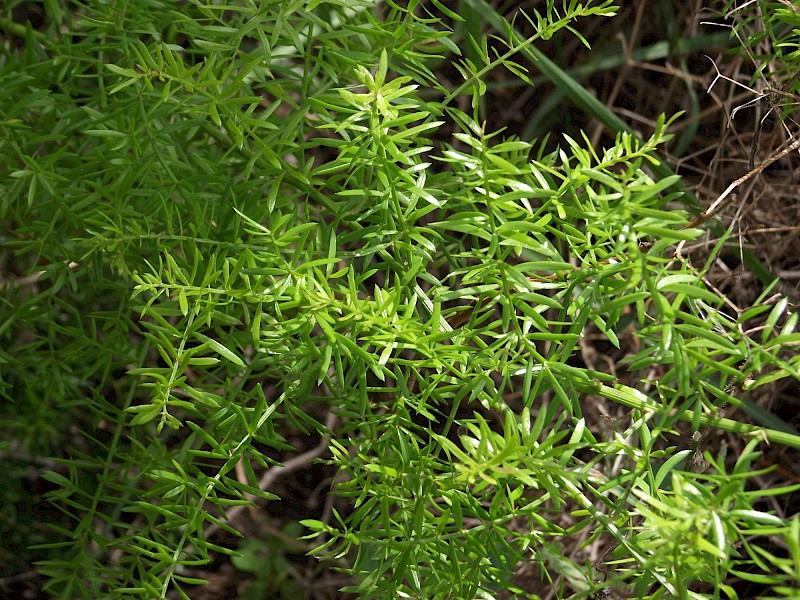
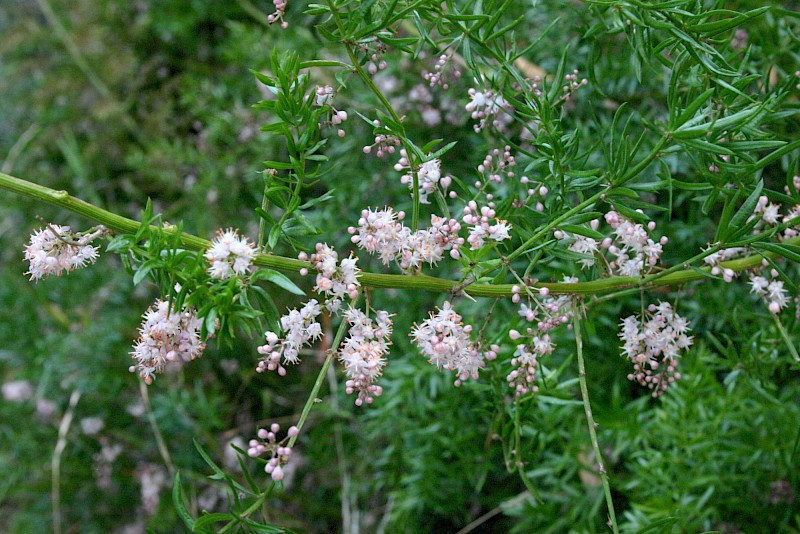
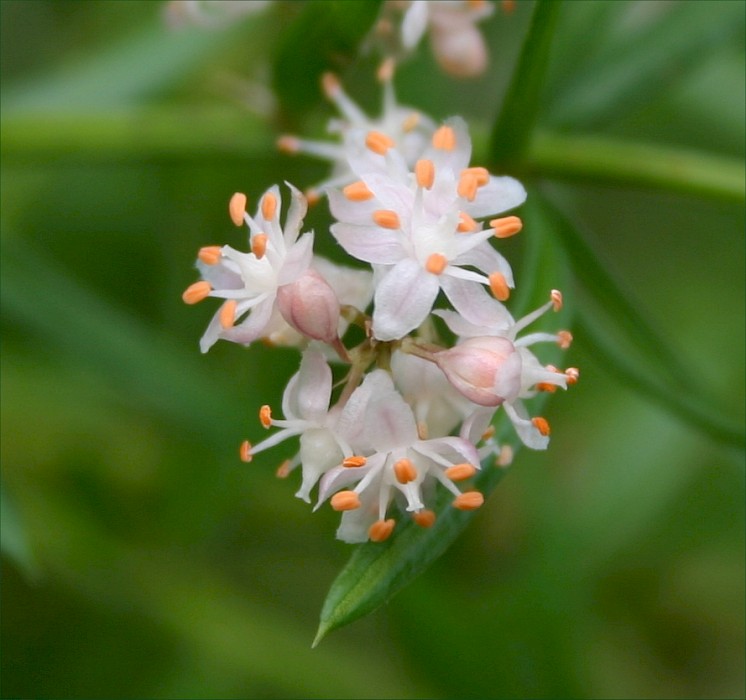
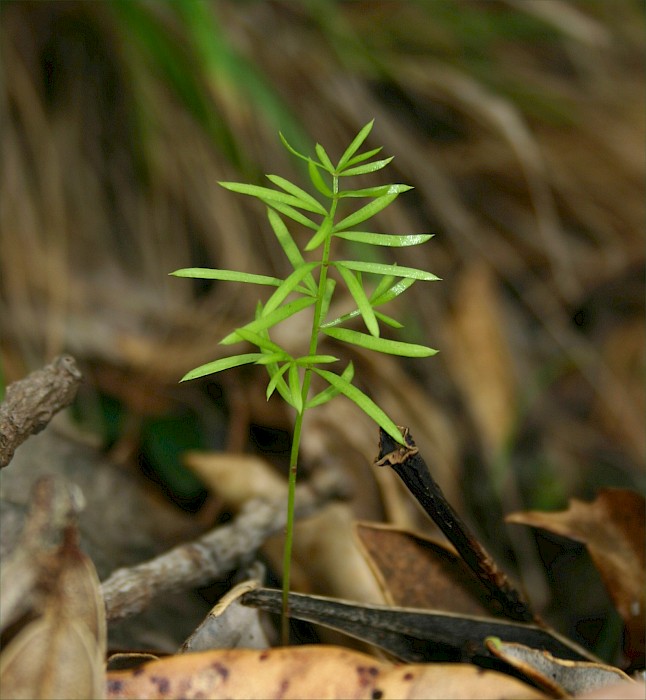
Two growth forms are known: (1) cultivar ‘Sprengeri’ is a trailing scrambler with stems to 2 m that are branched towards tips, and with sparse cladodes (flattened leaf-like stems,10-25 mm) that are flat in cross section, and (2) cultivar ‘Meyeri’ has erect stems to 700 mm forming a dense cylinder, and is covered in cladodes (5-10 mm) that are triangular in cross section. Both cultivars have small tubers, thin wiry stems, tiny pinkish flowers and bright red berries.
Are there any similar species?
Climbing asparagus (Asparagus scandens), and asparagus fern (A. setaceus, also known as A. plumosa) are similar.
Why is it weedy?
Dense, patch-forming habit, tough, long-lived tubers that resprout, moderate to slow growth rate, and seeds that are widely distributed. Tolerates moderate to high rainfall.
How does it spread?
Birds spread the seeds, and tubers resprout and are spread by soil and water movement. Common as both a garden and house plant, and occasionally found in hedges.
What damage does it do?
Can smother shrubs and other low vegetation.
Which habitats is it likely to invade?
Bush edges, low-growing habitats and dune vegetation, especially near gardens.
What can I do to get rid of it?
1. Physical removal - Hand pull or dig out entire plant (all year round) - Ensure tubers, are removed from site to prevent regrowth. Dispose of to a refuse transfer station.
2. Foliar spray (spring to autumn) - Apply herbicide using a hand-held sprayer/knapsack. Apply glyphosate 360 g/L active ingredient at 10ml/L plus organosilicone penetrant at 3ml/L, to cover entire plant OR for larger harder to kill plants apply a mix of Glyphosate (360 g/L active ingredient) herbicide at 10ml/L + metsulfuron herbicide (600g/kg active ingredient) at 0.3g/L + an organo silicone penetrant at 3ml/L and thoroughly wet all parts of plant. Note: Overspray will kill other (desirable) broadleaf plants and metsulfuron has residual activity in the soil which aids in killing below ground parts.
CAUTION: When using any herbicide or pesticide, PLEASE READ THE LABEL THOROUGHLY to ensure that all instructions and directions for the purchase, use and storage of the product, are followed and adhered to.
What can I do to stop it coming back?
Tubers often resprout after spraying, stems break at ground level so plants cannot be pulled. Tuber fragments usually survive digging. Always follow up on treated areas at least 6-monthly. Replant treated areas where possible after 2-3 treatments to establish dense ground cover and minimise reinvasion.
Images