Elaeagnus
Botanical name
Elaeagnus xreflexa
Family
Elaeagnaceae (elaeagnus)
Also known as
Elaeagnus hybrid, Elaeagnus pungens, E. glabra, E. ‘variegata’
Where is it originally from?
Thought to be from Japan
What does it look like?
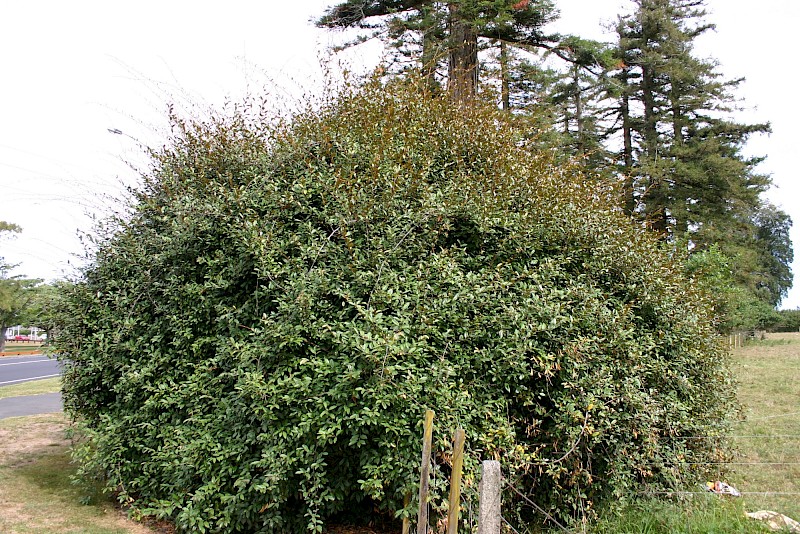
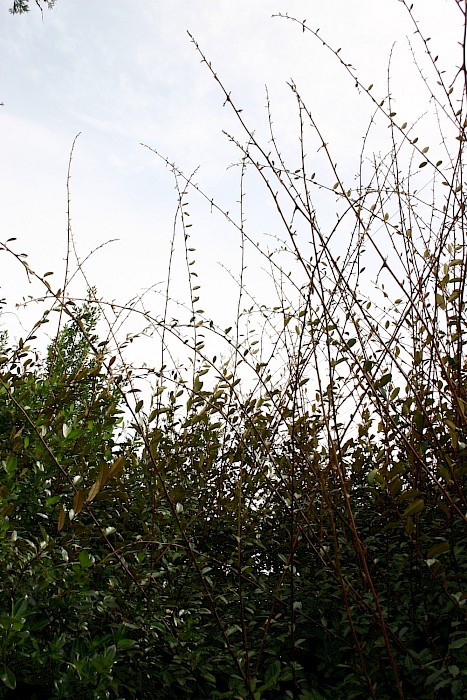
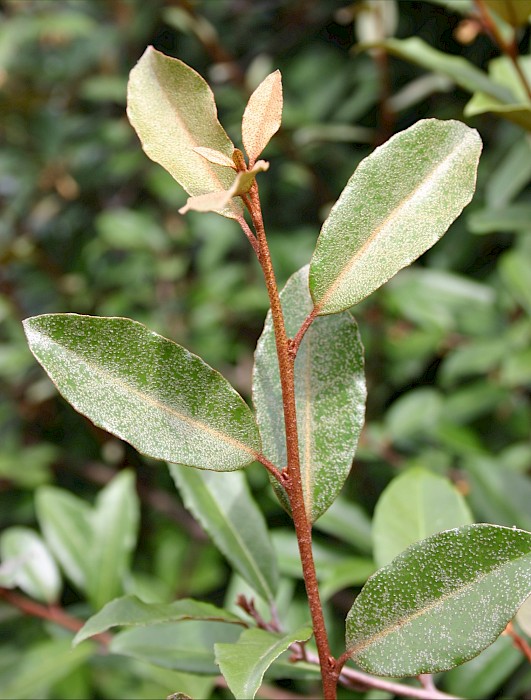
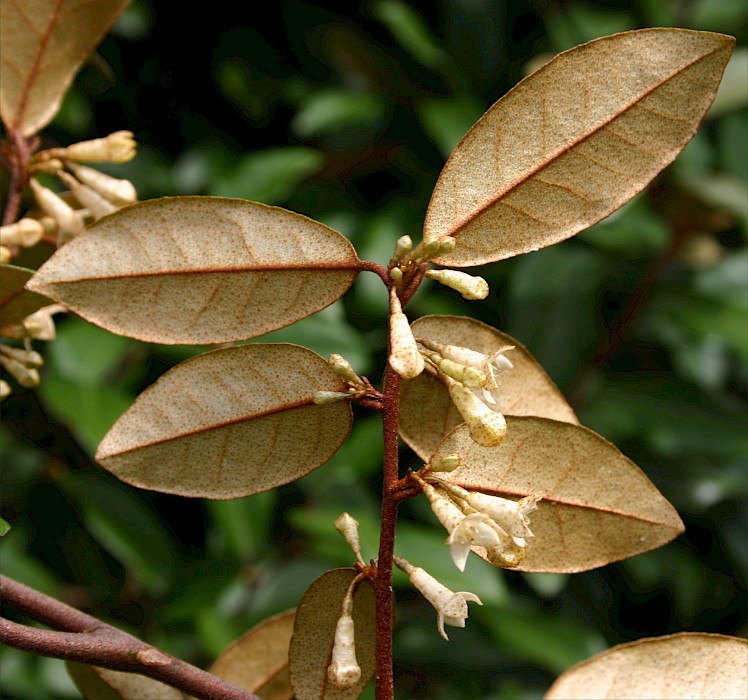
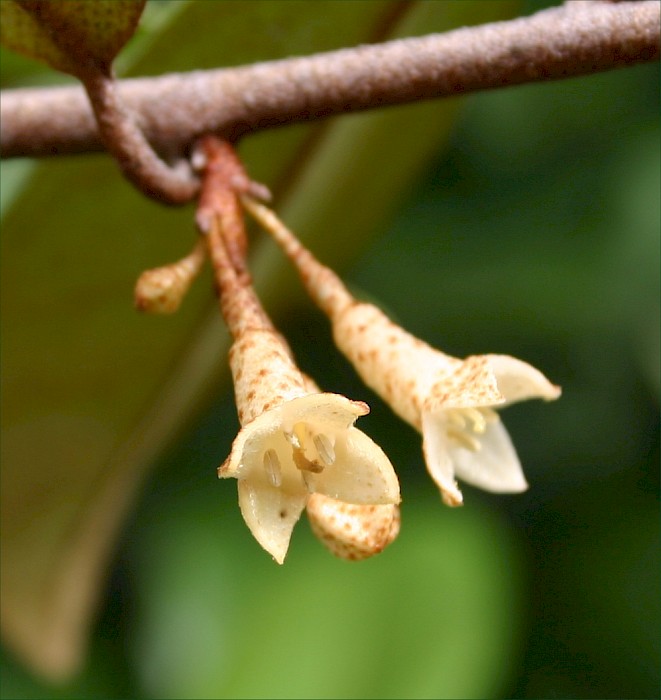
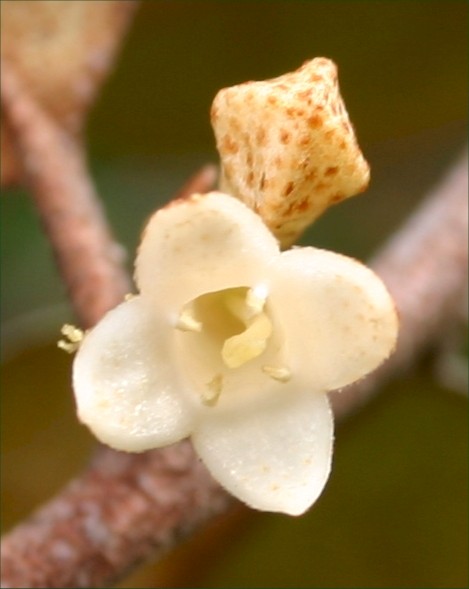
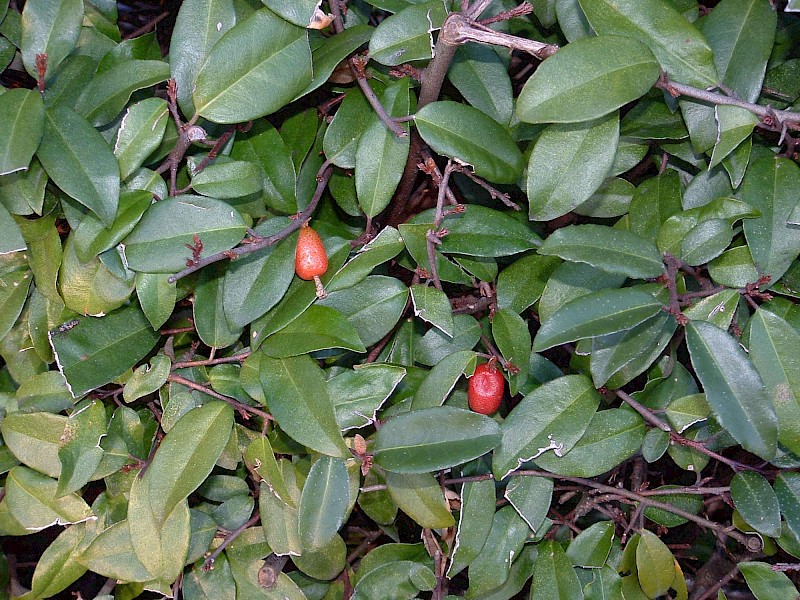
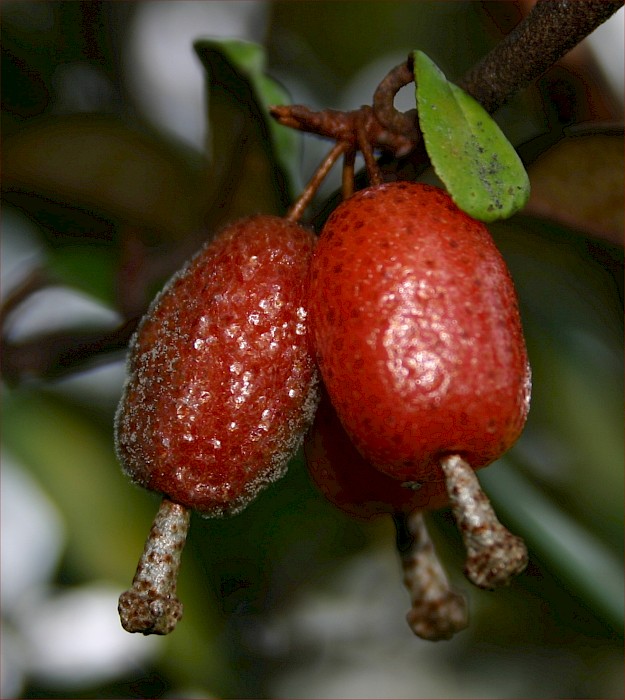
Vigorous, dense, evergreen shrub, scrambling over support (<20 m tall), with a very tough, suckering rootstock. Stems are long, arching, tough, with young shoots being brown and scaly and older stems often with spines. Leaves (45-90 x 15-40 mm) are arranged alternately on the stems, are hairless above, and silvery or browny-scaly (often densely) underneath. Small drooping clusters of tiny, whitish, fragrant flowers (Mar-May) are followed by a pale reddish-orange fruit (18 x 10 mm) containing one ribbed seed.
Why is it weedy?
Scrambling habit, suckering roots, layering stems, nitrogen fixing ability, extremely long-lived and not grazed. Tolerant of drought, wet, high to medium-low temperature, wind, salt, most soil types, and moderate shade.
How does it spread?
Birds, and possibly possums and goats, spread the very rare seed which most plants never produce. Layering stems and suckers are spread in dumped vegetation. Common sources are old homestead and farm sites, roadsides, hedges, and tips.
What damage does it do?
Slowly smothers all other plants to canopy height, invades well-lit or partially shaded sites, and can increase soil nutrient status, affecting which native plant species can grow there.
Which habitats is it likely to invade?
Forest margins, consolidated sand dunes, shrubland, cliffs, and fernland.
What can I do to get rid of it?
1. Physical removal - Hand pull seedlings, or dig out entire plant including roots (all year round). Machinery may be required to excavate large infestations.
2. Cut and paste - Cut the stem/trunk as close to the ground and cover the entire stump with herbicide as soon as possible after cutting. Apply either glyphosate gel (120g/L strength) OR metsulfuron gel (10g/L strength) OR picloram gel (43g/l strength) to the entire cut stem.
3. Basal spray - spray stems up to 20cm diametre with X-Tree Basal. Apply from the ground to a height of 6 times the diameter of the plant, ensure the base is thoroughly covered at ground level.
4. Foliar spray - Apply Glyphosate (360 g/L active ingredient) herbicide (20ml/L) plus organosilicone penetrant (2ml/L) to cover entire plant Note: Non-selective. Avoid overspray onto desirable plants.
OR Apply Metsulfuron herbicide (600g/kg active ingredient) (Knapsack 0.5g/L, or Gun and hose 20-35g/100L) plus Picloram/triclopyr herbicide (picloram 100g/l and triclopyr 300g/l active ingredient) at 6ml/L plus organosilicone penetrant (3ml/L) to thoroughly wet all parts of plant. Note: Overspray will kill other (desirable) broadleaf plants and has residual activity in the soil which aids in killing below ground parts. Do not use under and around other (desirable) broadleaf plants
CAUTION: When using any herbicide or pesticide, PLEASE READ THE LABEL THOROUGHLY to ensure that all instructions and directions for the purchase, use and storage of the product, are followed and adhered to.
What can I do to stop it coming back?
Stumps resprout, roots sucker and cut stems can layer. Extremely hard to kill, repeat treatments needed.
Images