Queen of the night
Botanical Name
Cestrum nocturnum
Family
Solanaceae (nightshade)
Also known as
Night-scented jasmine
Where is it originally from?
Chile and Peru
What does it look like?
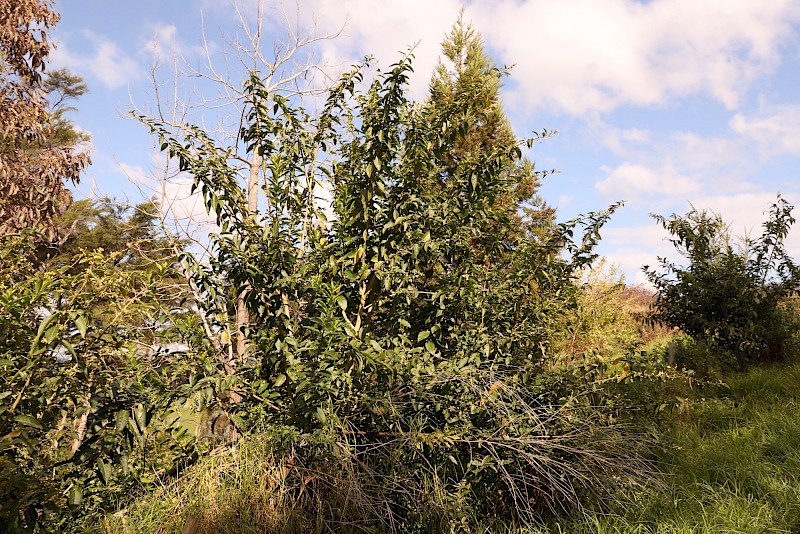
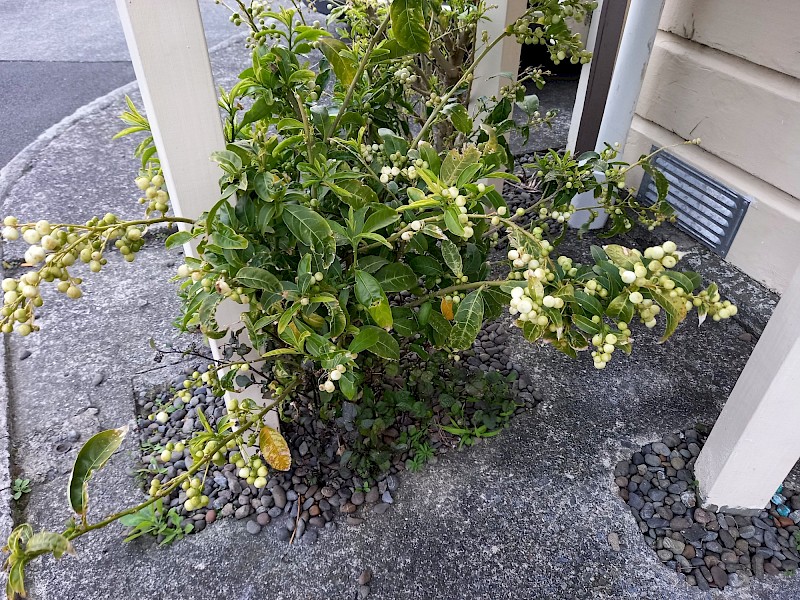
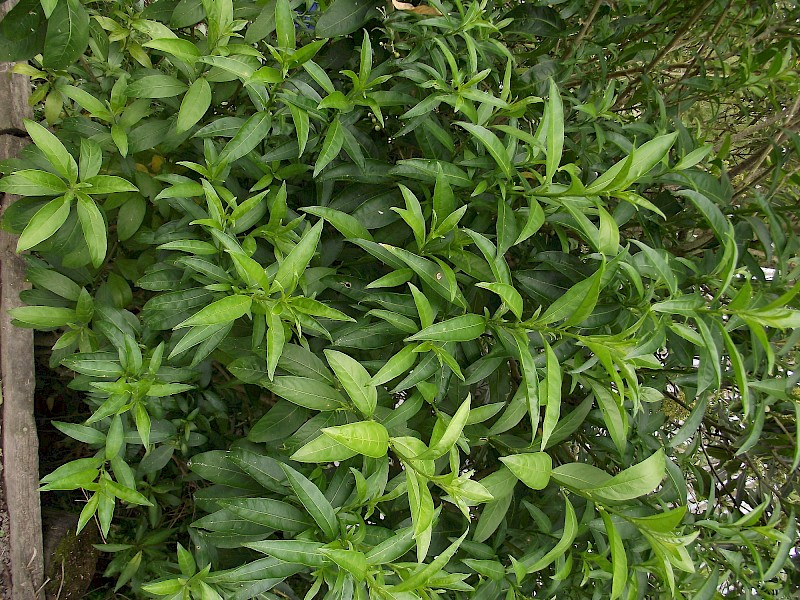
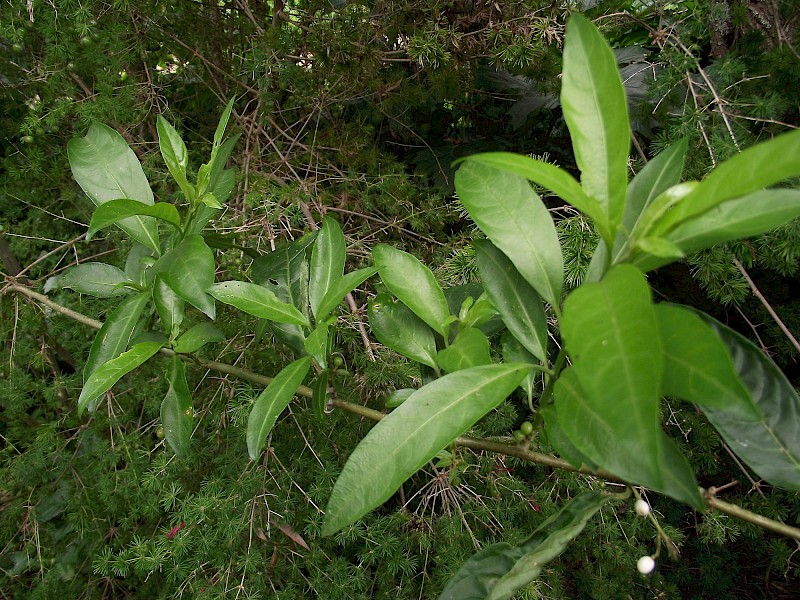
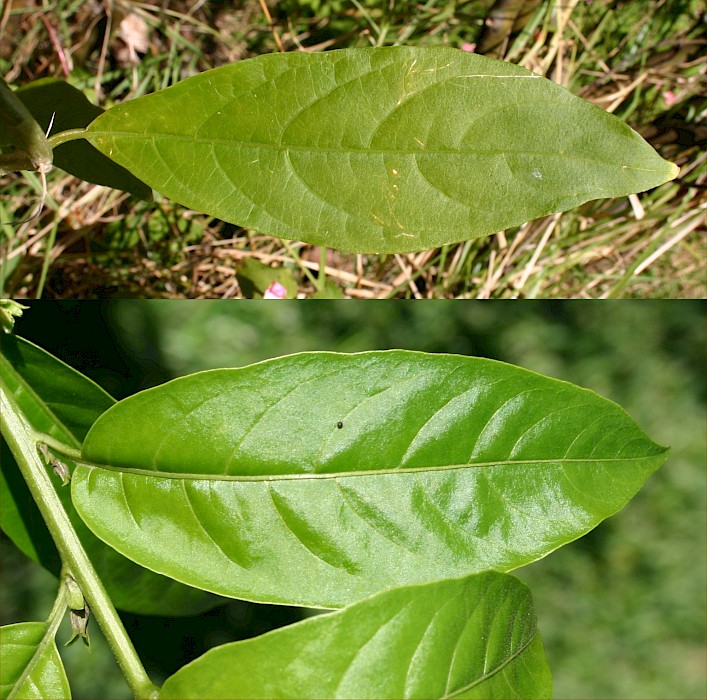
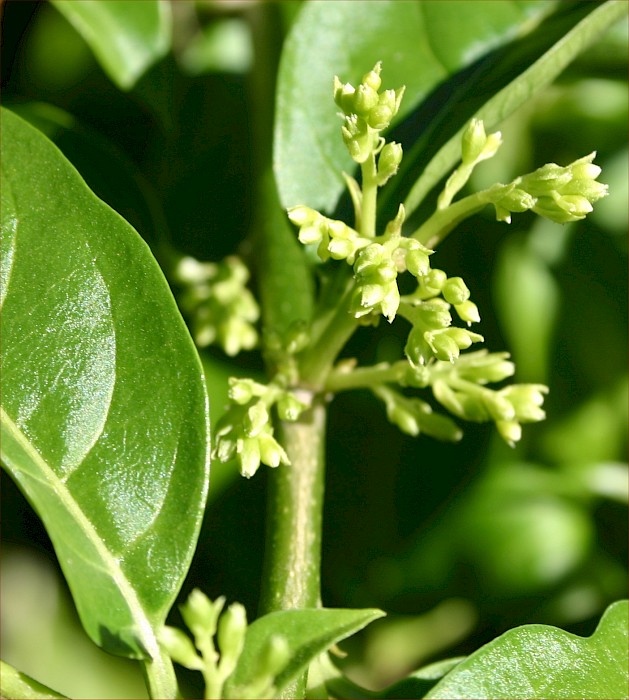
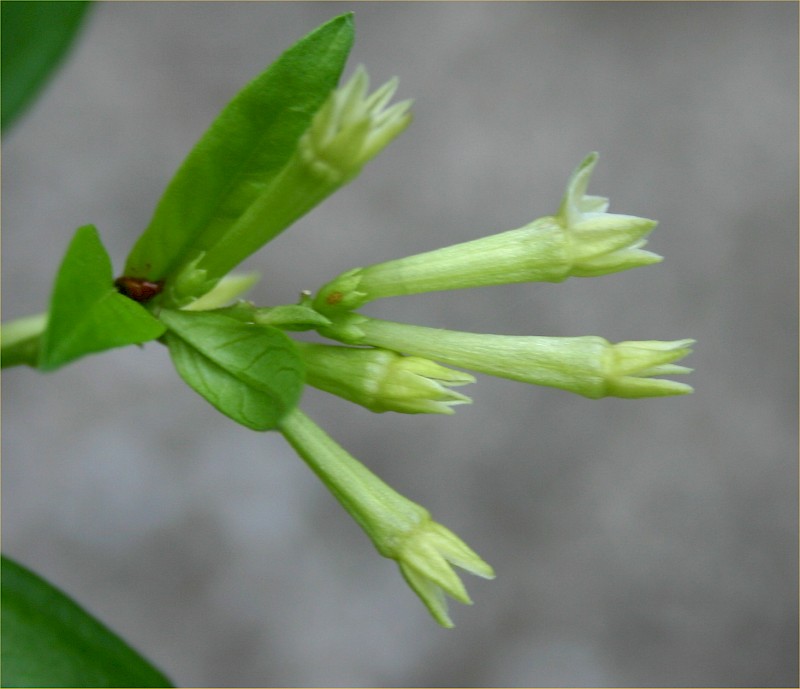
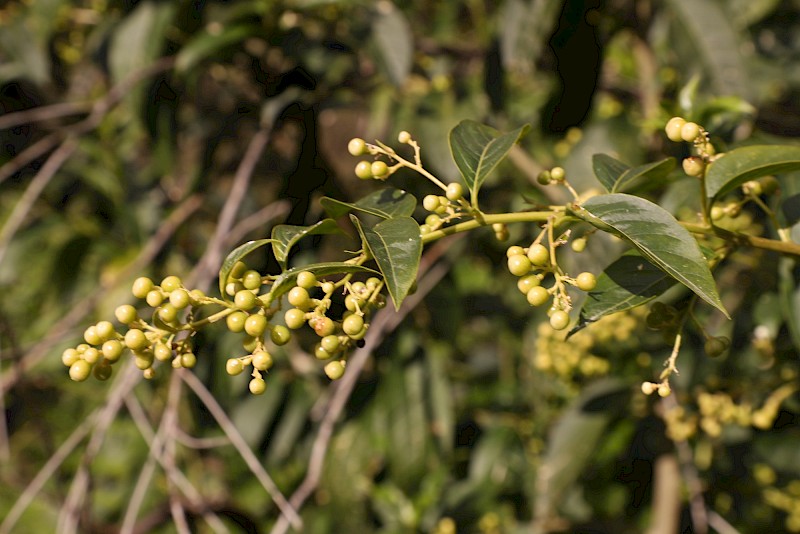
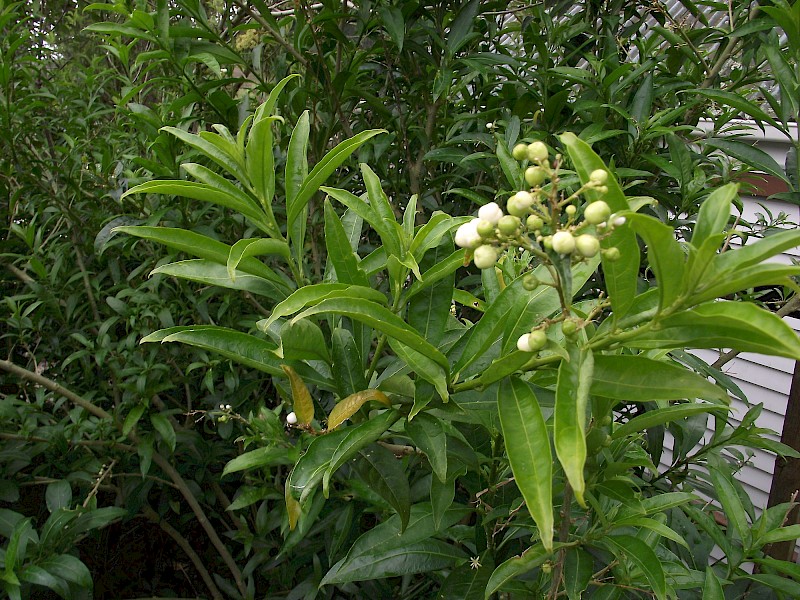
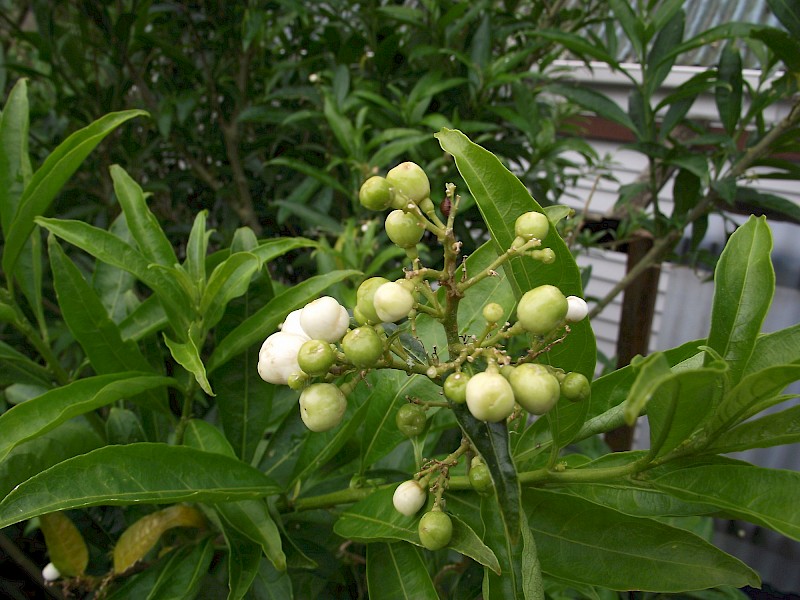
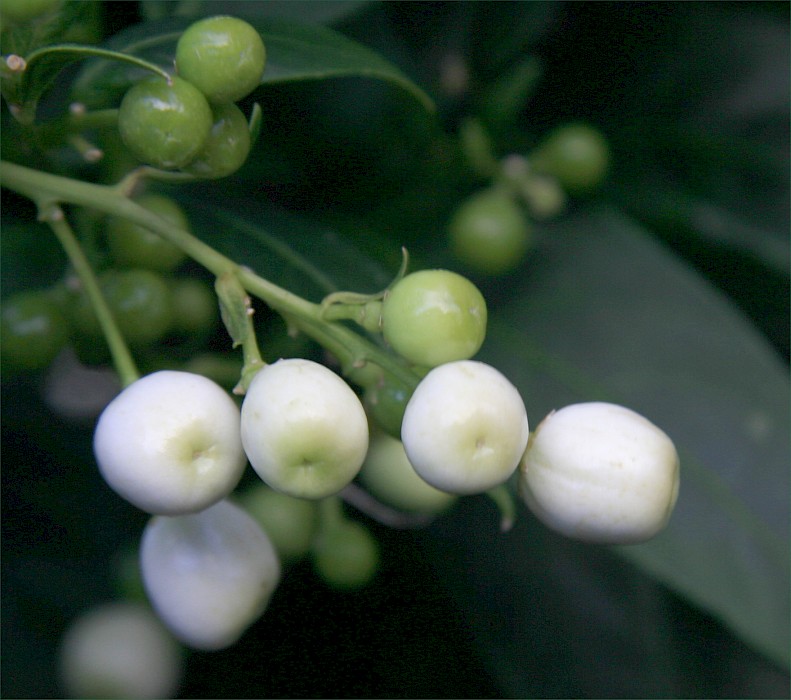
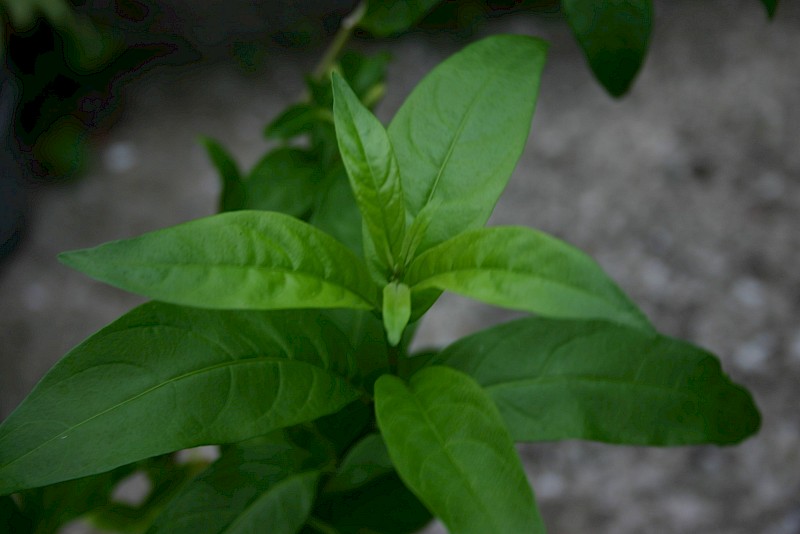
Smelly shrub (<1.5-2.5 m tall)with erect, hairless stems that become woody as the plant matures. Hairless, alternate leaves (5-15 x 1.5-6 cm) are foul-smelling when bruised. Large open clusters of strongly-scented pale green or greenish-white tubular flowers (15-20 mm long) with petal margins bent backwards and which only open at nightime (Nov-Mar) are followed by clusters of glossy white berries (5-10 mm diameter).
Are there any similar species?
Cestrum elegans, C. fasciculatum, C. aurantiacum, C. parqui and many native shrub species, eg. Mahoe, are similar.
Why is it weedy?
Produces many long-lived and widely dispersed seeds, and forms dense, shady masses. Likes damp conditions, is moderate to highly shade tolerant and grows in most soil types. Poisonous, not grazed.
How does it spread?
Birds, flooding, soil movement, and vegetation dumping. Very common in gardens.
What damage does it do?
Forms dense (occasionally pure) stands in forest understorey, preventing the establishment of native plant seedlings. Poisonous berries and rotting vegetation may affect native fauna.
Which habitats is it likely to invade?
Disturbed and open forest and margins, streamsides, and shrublands, especially in warmer areas.
What can I do to get rid of it?
1. Physical removal - Hand pull small plants, or dig out entire plant including roots (all year round).
2. Cut and paste - Apply picloram gel (43g/l strength) to the entire cut stem. Do not use near desirable plants or overwater or wetlands. When a gel is inadequate apply a commercial formulation of (120g triclopyr/l of oil or product containing triclopyr and picloram 50ml/L water mix). Apply the mixture over the entire exposed surface of the cut stump, i.e. top and sides.
3. Foliar spray - Apply Triclopyr herbicide (600g/L active ingredient) at 6ml/L plus organosilicone penetrant (1ml/L) to thoroughly wet all parts of plant.
Note: Tricolopyr herbicides are ‘grass friendly’ but overspray will kill other (desirable) broadleaf plants. Do not use over or near water bodies or wetlands and use only as directed on label.
CAUTION: When using any herbicide or pesticide, PLEASE READ THE LABEL THOROUGHLY to ensure that all instructions and directions for the purchase, use and storage of the product, are followed and adhered to.
What can I do to stop it coming back?
Stems resprout and bared areas are reinfested by seed bank. Exclude stock at all times. Replant bared sites to minimise regrowth. Check for seedlings 6-monthly.
Images