African olive
Botanical name
Olea europeaea subsp. cuspidata
Family
Oleaceae (olive)
Also known as
Olea europaea subspecies africana
Where is it originally from?
Europe
What does it look like?
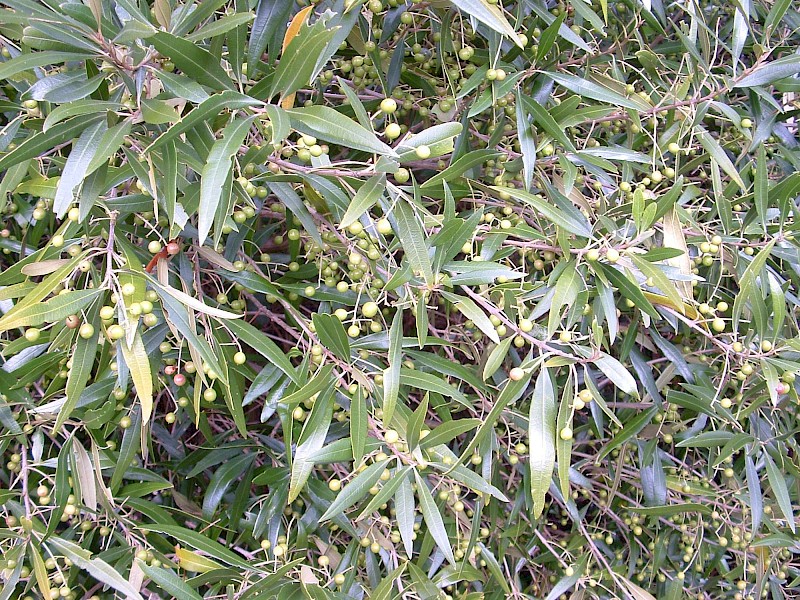
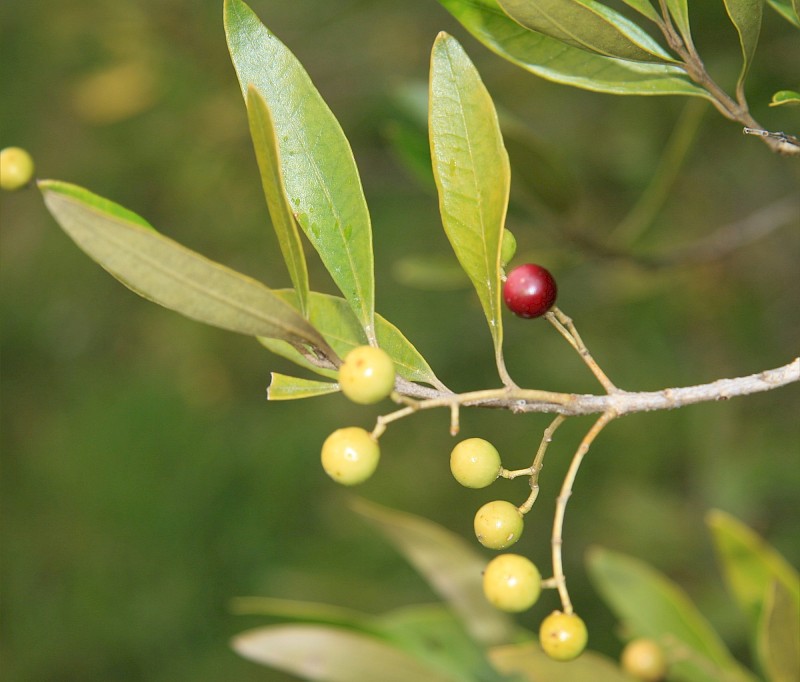
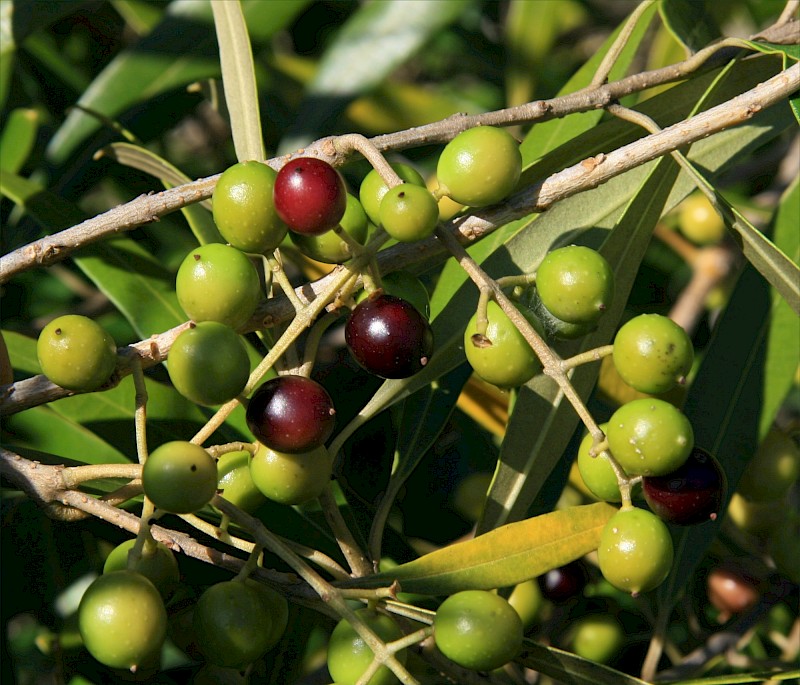
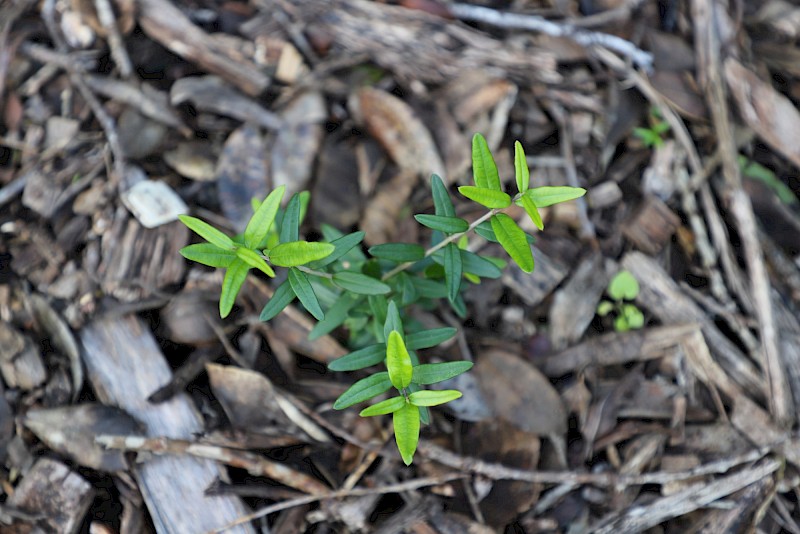
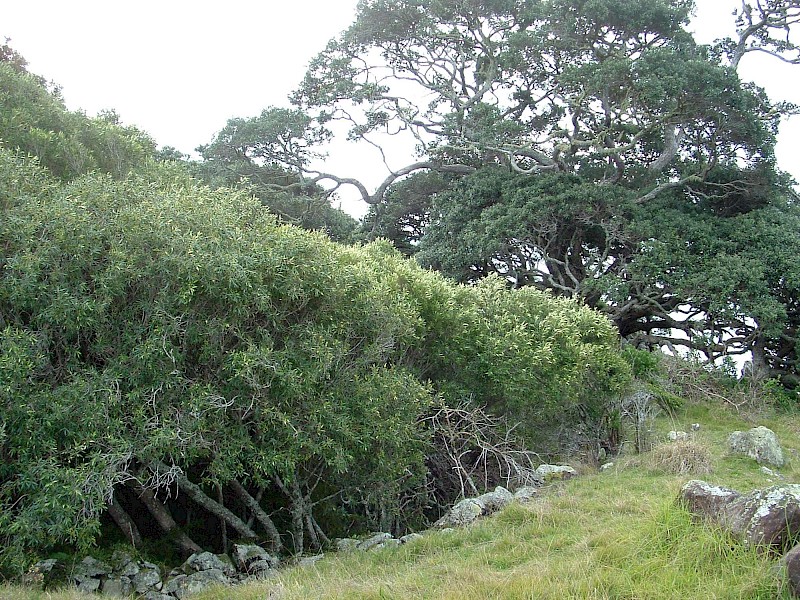
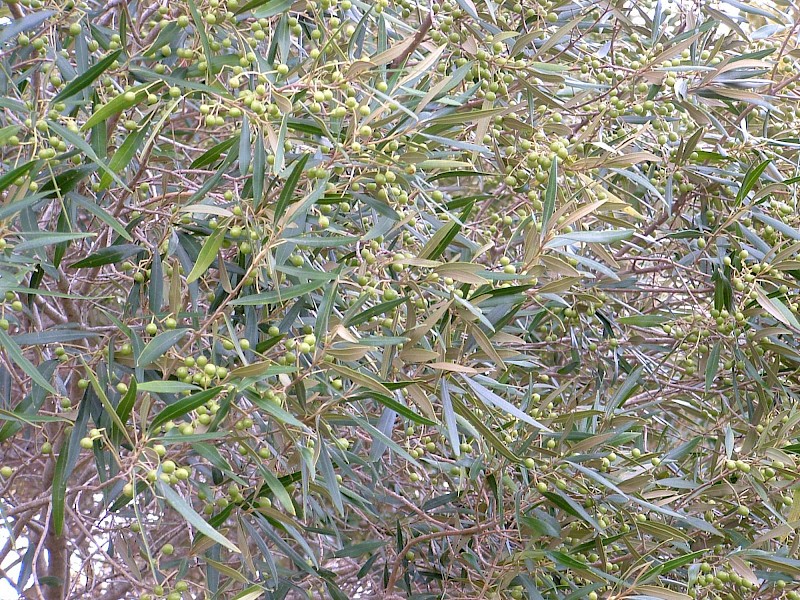
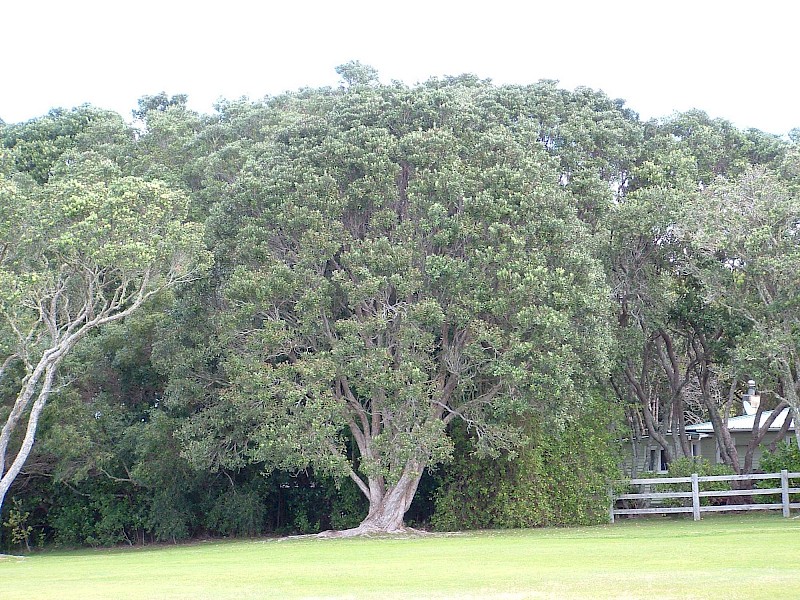
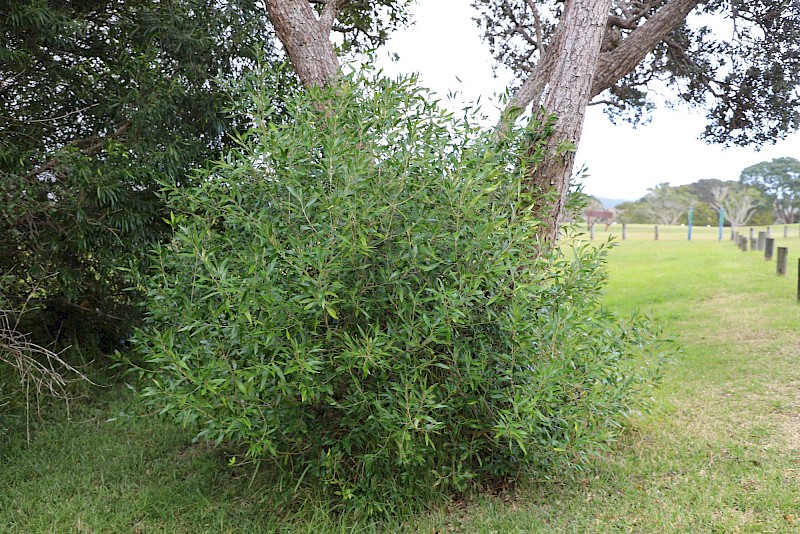
Dense bushy shrub or small tree (<7 m tall) with angular, scaly young stems and bark that becomes rough as it matures. Lance-shaped leaves (5-11 x 1-2 cm) are in opposite pairs on the stem, dark green and occasionally scaly above, and scaly and pale green or silvery underneath. Whitish, strongly smelling flowers (3-4 mm long) appear from July to March, followed by an ovalish glossy fruit (5-8 mm diameter) that ripens from green to red to black.
Are there any similar species?
The commonly cultivated European olive (Olea europaea subspecies europaea) which has white leaf undersides and black fruit (1-2 cm long) can also become weedy.
Why is it weedy?
Long-lived, forms dense canopy, and produces many long-lived, well dispersed seeds. Tolerates drought, hot to moderate temperatures, wind, salt, damage, and moderate shade.
How does it spread?
Birds, possibly possums and livestock eat the fruit and spread the seeds. Common sources are gardens, hedges and waste places.
What damage does it do?
Forms dense (occasionally pure), long-lived stands in open and understorey, and fills canopy in light gaps. Prevents establishment of native plant seedlings.
Which habitats is it likely to invade?
Dry disturbed forest and shrubland, bare land, especially in coastal areas, and inshore islands.
What can I do to get rid of it?
1. Physical removal - Hand pull small plants, or dig out entire plant including roots (all year round). Leave on site to rot down.
2. Cut and paste (all year round) - Cut the stem/trunk as close to the ground as possible and cover the entire stump with herbicide as soon as possible after cutting. Apply either glyphosate gel (120g/L strength) or metsulfuron gel (10g/l strength) or picloram gel (43g/l strength) to the entire cut stem.
3. Basal spray stems up to 20cm diametre with X-Tree Basal. Ensure the base is thoroughly covered at ground level.
4. Drill or frill - Drill downward sloping holes around the circumference of the trunk about 8-10 cm apart, or Frill (make deep cuts into the sapwood at regular intervals around the base of the tree, taking care not to ring-bark the plant). Fill the holes with undiluted ‘neat’ glyphosate (360g/L active ingredient) or saturate the frill cuts with glyphosate (360g/L active ingredient) mixed at 250ml/L OR metsulfuron-methyl 600 g/kg (20-50g/L + penetrant) OR a product containing 100g picloram+300g triclopyr/L (undiluted).
5. Foliar spray (full leaf stage only) - Apply herbicide using a hand held sprayer/knapsack to plants <1m tall or gun and hose for larger infestations. Apply glyphosate (360 g/L active ingredient) herbicide at 20ml/L plus organosilicone penetrant (2ml/L) to cover entire plant. Note: Glyphosate overspray will kill other (desirable) plants OR apply metsulfuron herbicide (600g/kg active ingredient at 0.5g/L knapsack or 20g/100L gun and hose) + organosilicone penetrant (3ml/L). Note: Metsulfuron overspray will kill other (desirable) broadleaf plants and has residual activity in the soil which aids in killing below ground parts.
CAUTION: When using any herbicide or pesticide, PLEASE READ THE LABEL THOROUGHLY to ensure that all instructions and directions for the purchase, use and storage of the product, are followed and adhered to.
What can I do to stop it coming back?
Cut stumps resprout. Reseeds in bared areas. Garden and hedge sources should be removed. Avoid soil disturbance, replant bared sites where possible.
Images