Bittersweet
Botanical name
Solanum dulcamara
Family
Solanaceae (nightshade)
Also known as
bitter nightshade
Where is it originally from?
Eurasia, North Africa
What does it look like?
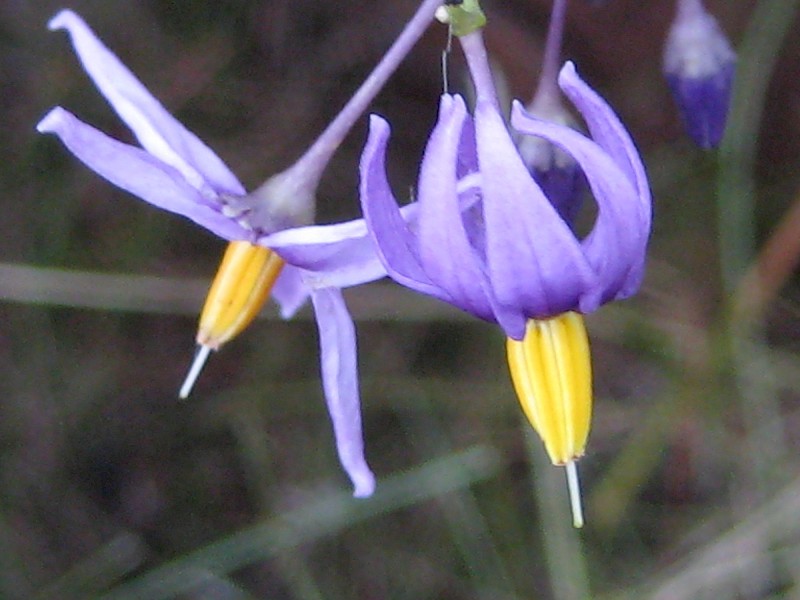
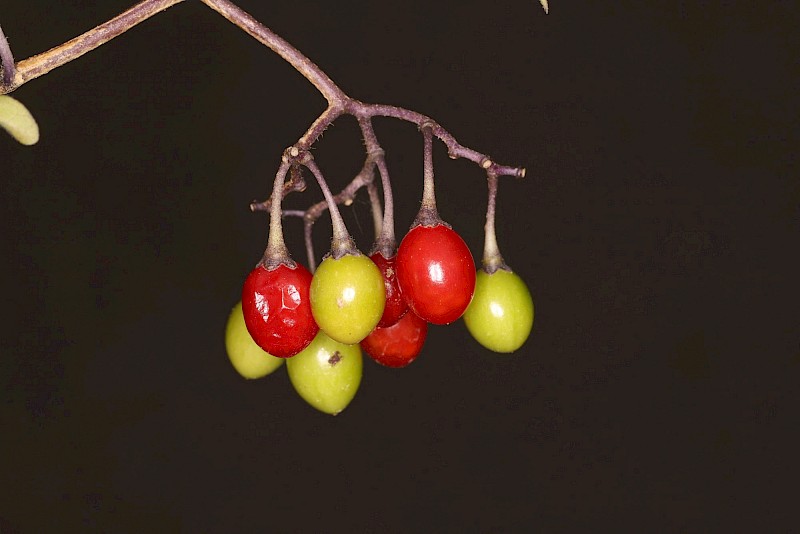
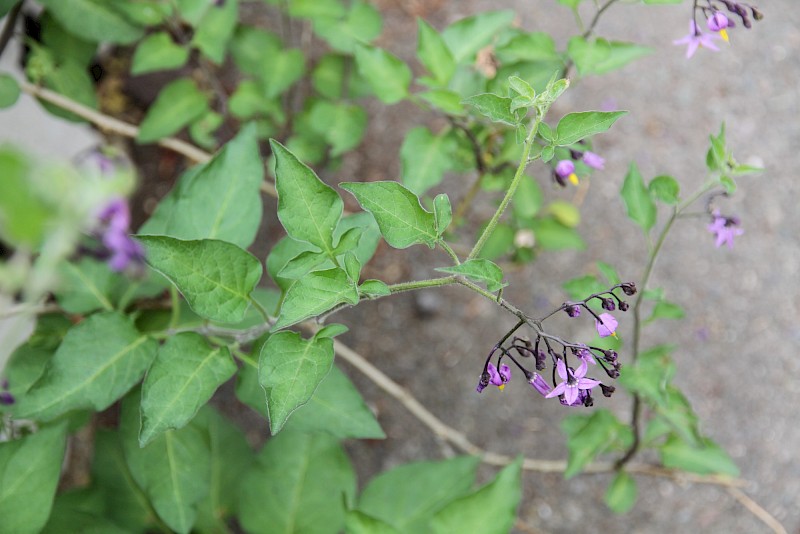
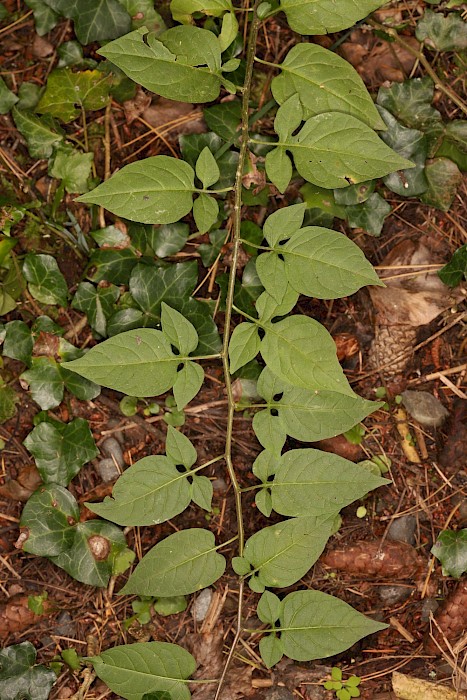
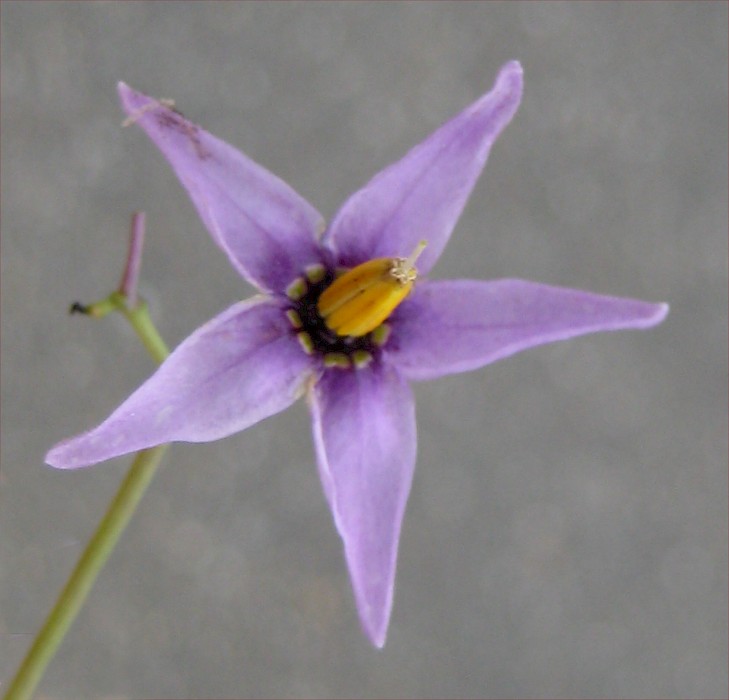
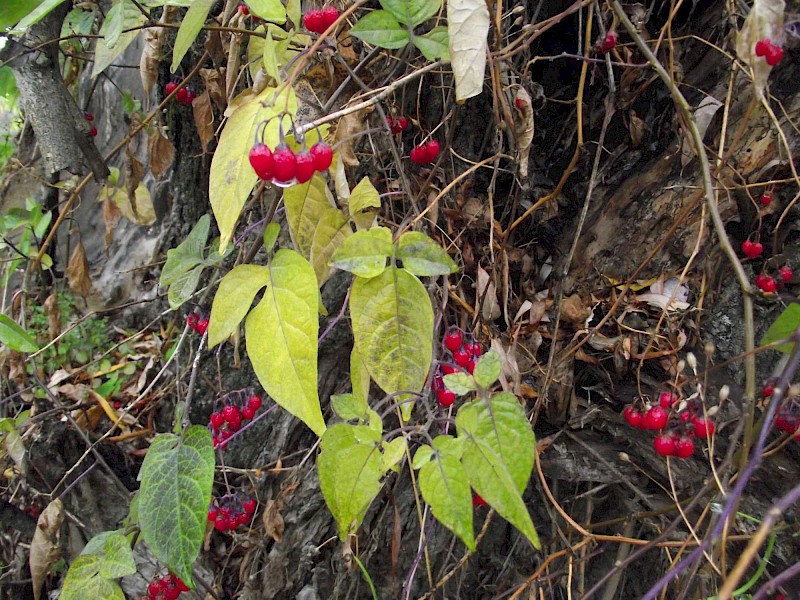
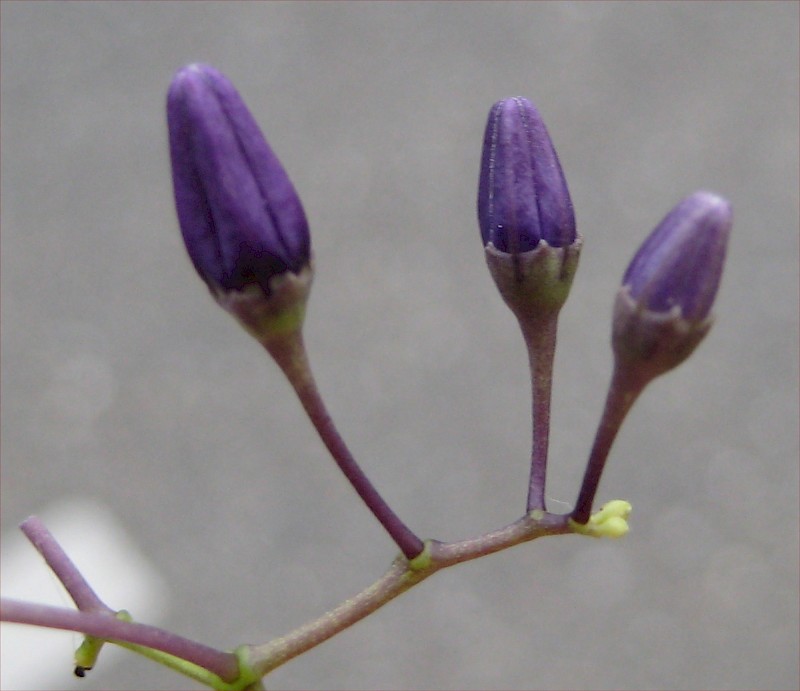
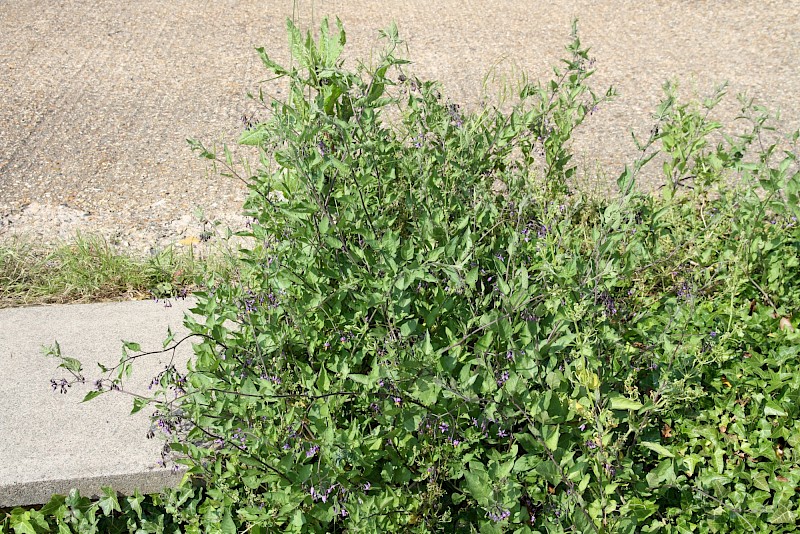
Scrambling or sprawling, vine-like perennial (<2 m tall) with branched, usually hairless stems (<4 m long) that are woody towards the base and have corky, raised glands. Hairy oval leaves (4-12 cm long x 2-8 cm wide) have pointed tips and up to 4 small lobes or leaflets at the leaf base. Clusters of 10-25 potato-like flowers with yellow centres and backwards-bending purple petals (Nov-Mar) held on a long stalk (<13 cm) are followed by egg-shaped berries (8-15 mm diameter) that mature from green through yellow to shining bright scarlet and contain seeds (2-3 mm).
Are there any similar species?
Jerusalem cherries (Solanum diflorum, S. pseudocapsicum) are small, bushy evergreen shrubs with white flowers.
Why is it weedy?
Produces many viable seeds, grows fast, and spreads vegetatively in all directions, smothering the ground and small shrubs. Tolerates shade, and is poisonous so is not grazed by stock.
How does it spread?
Seed is spread by birds.
What damage does it do?
Smothers the ground and small shrub layer in disturbed forest, reducing light levels to native plants and seedlings, and preventing regeneration.
Which habitats is it likely to invade?
Disturbed forest, scrub, forest margins, riparian zones, plantations and urban areas.
What can I do to get rid of it?
1. Physical removal - Hand pull or dig out entire plant - Ensure all root material is removed to prevent regrowth. Burn or dispose of tubers to refuse.
2. Cut and paste - Cut the stem as close to the ground as possible and cover the entire stump with herbicide as soon as possible after cutting. Apply either glyphosate gel (400g/l strength) or picloram gel (43g/L strength). Do not use picloram gel near desirable plants or over wetlands.
3. Foliar spray - Apply Glyphosate (360 g/L active ingredient) herbicide at a rate of 20ml/L or to cover entire plant OR triclopyr (600g/L active ingredient) herbicide at a rate of 6ml/L. Note: overspray will kill other (desirable) plants.
CAUTION: When using any herbicide or pesticide, PLEASE READ THE LABEL THOROUGHLY to ensure that all instructions and directions for the purchase, use and storage of the product, are followed and adhered to.
What can I do to stop it coming back?
Monitor the site and treat any regrowth or seedlings. Plant local native trees and shrubs to produce dense shade.
Images