Bolivian fuchsia
Botanical name
Fuchsia boliviana
Family
Onagraceae
Also known as
Synonym of Fuchsia sanctae-rosea
Where is it originally from?
Bolivia and South Peru, South America
What does it look like?
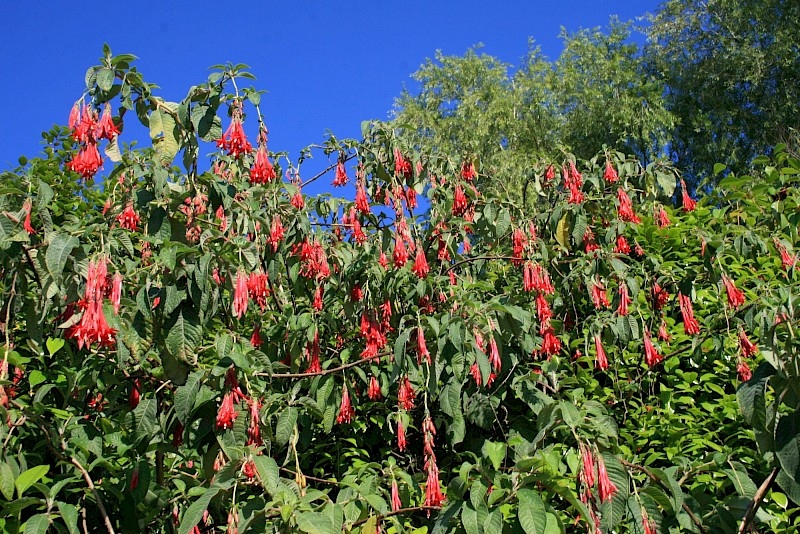
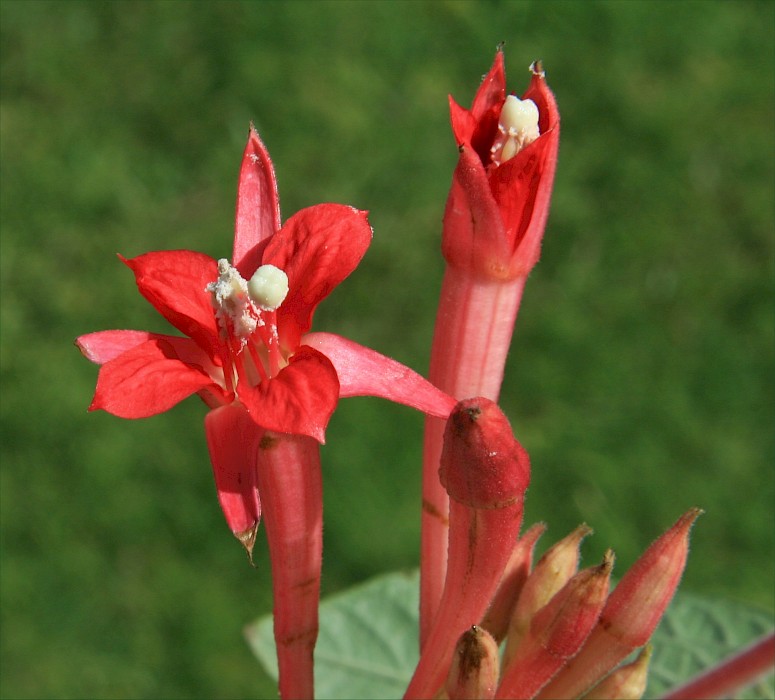
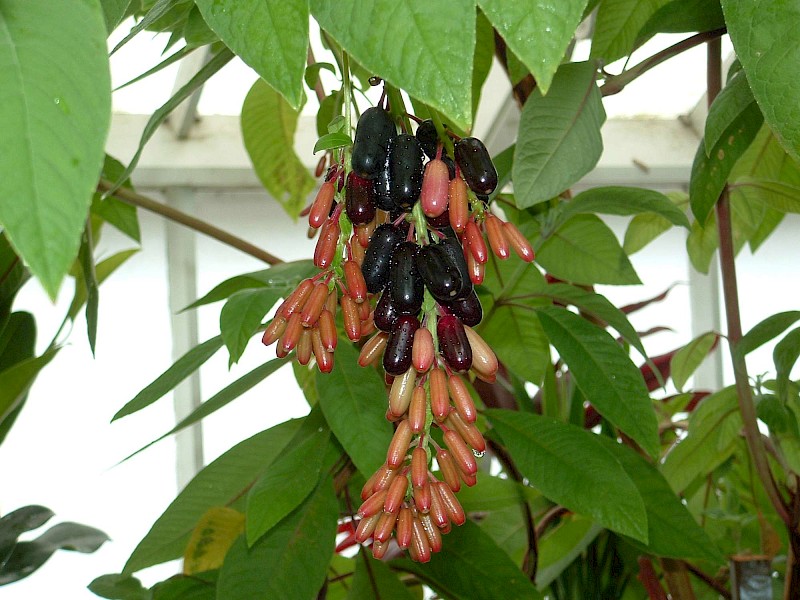
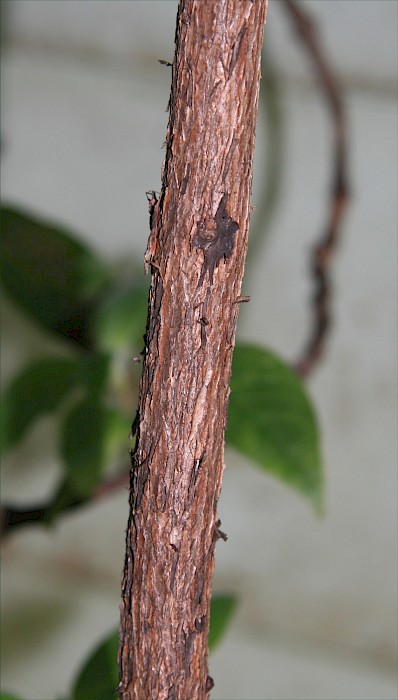
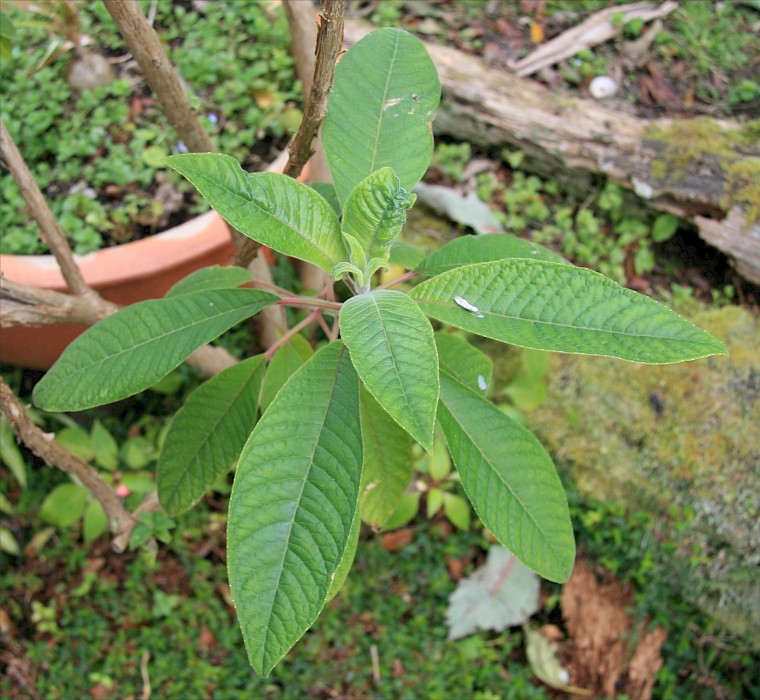
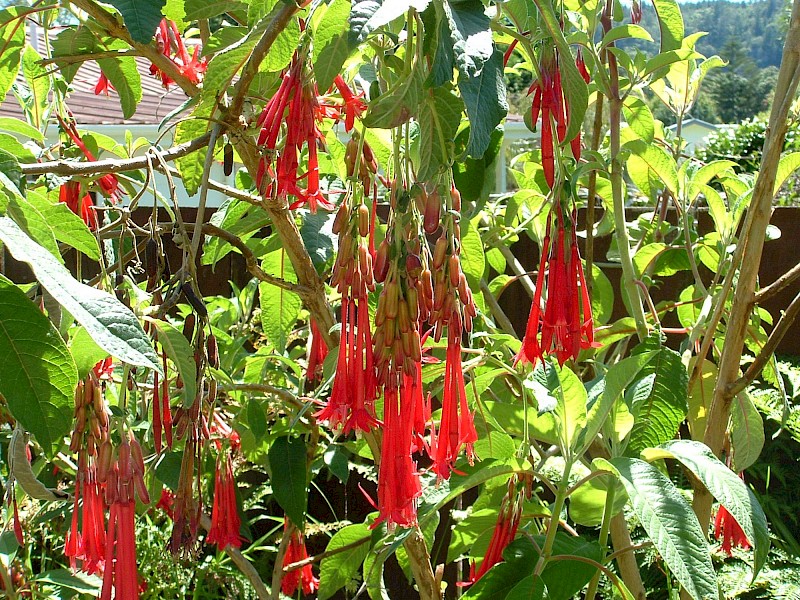
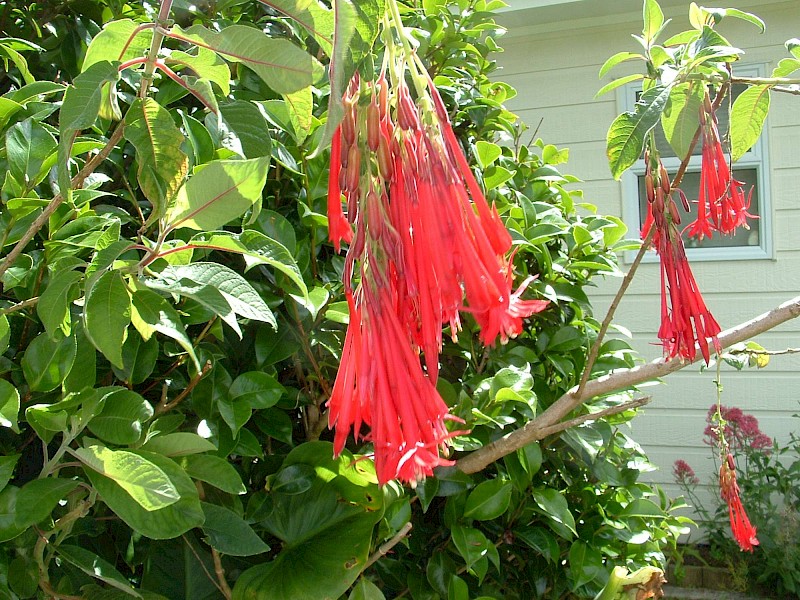
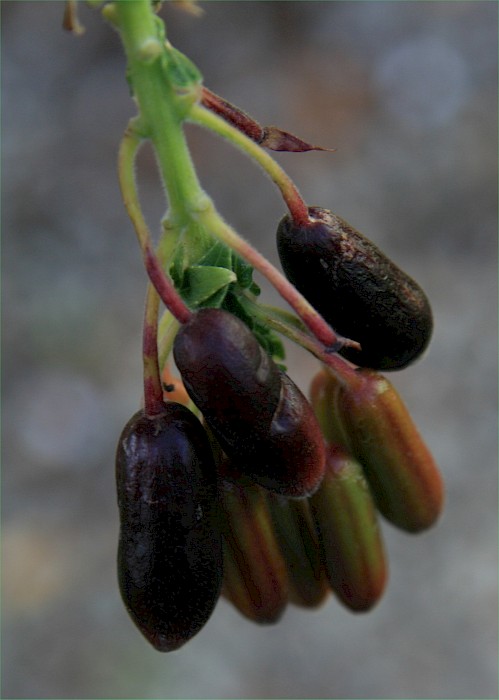
Erect, evergreen shrub (2-5 m tall) with long, thin, densely hairy stems with leaves at the ends, and green shoots. Grey-green, oblong (<20 x 9 cm) leaves grow in pairs on reddish pink leaf stems (<80 mm), have with flattened hairs, and faintly toothed edges. Trumpet-like flowers with crimson petals (1.2-1.5 cm long) and stamens, and hairy pink or crimson flower tubes (50-60 mm long) and outer petals (15-22 mm x 4 mm) are produced all year round in hanging clusters at the end of stems, and are followed by cylindrical dark purple berries (20 mm long). Flowers may be white in cultivation.
Are there any similar species?
Fuchsia fulgens and F. triphylla have shorter floral tubes and outer petals. F. fulgens has orange-red floral tubes with green-tipped outer petals, and F. triphylla has leaves that are purple below and sometimes above, and orange-scarlet flowers.
Why is it weedy?
Forms dense, shade-tolerant thickets.
How does it spread?
Birds spread the seeds long distances.
What damage does it do?
Shades out smaller plants and seedlings, preventing native plants establishing.
Which habitats is it likely to invade?
Forests and their margins, scrub, riparian areas and open wasteland.
What can I do to get rid of it?
1. Physical removal - Hand pull small plants, or dig out entire plant including roots (all year round):
2. Cut and paste (all year round) - Cut the stem/trunk as close to the ground as possible and cover the entire stump as soon as possible after cutting with glyphosate gel (120g/L strength).
CAUTION: When using any herbicide or pesticide, PLEASE READ THE LABEL THOROUGHLY to ensure that all instructions and directions for the purchase, use and storage of the product, are followed and adhered to.
Images