Bomarea
Botanical name
Bomarea multiflora
Family
Alstroemeriaceae (alstroemeria)
Also known as
Synonym of: Bomarea caldasii, Alstroemeria multiflora
Where is it originally from?
South America
What does it look like?
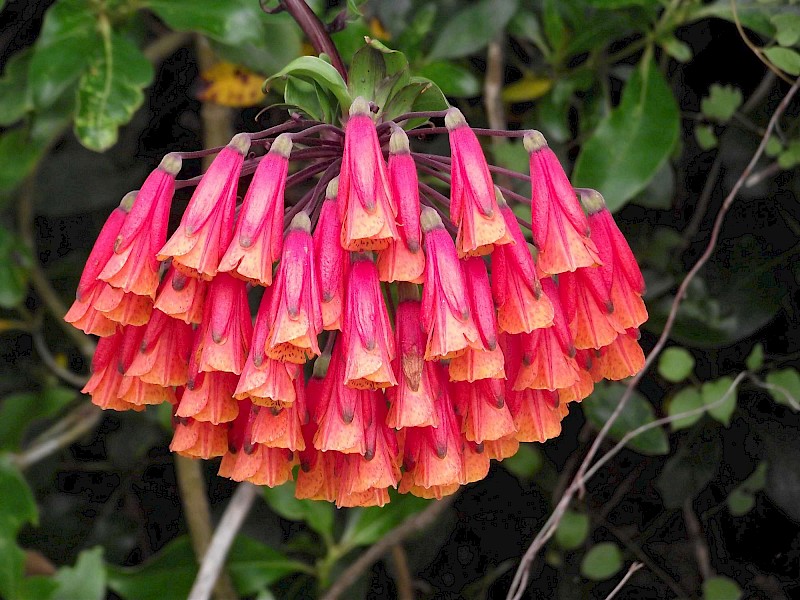
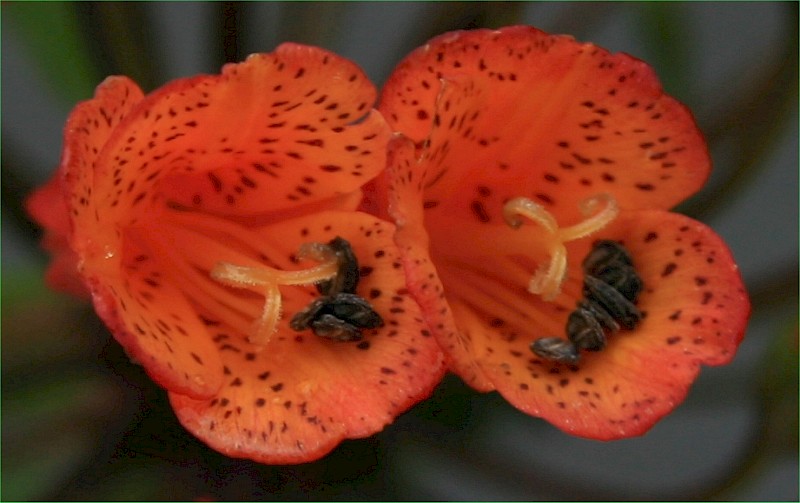
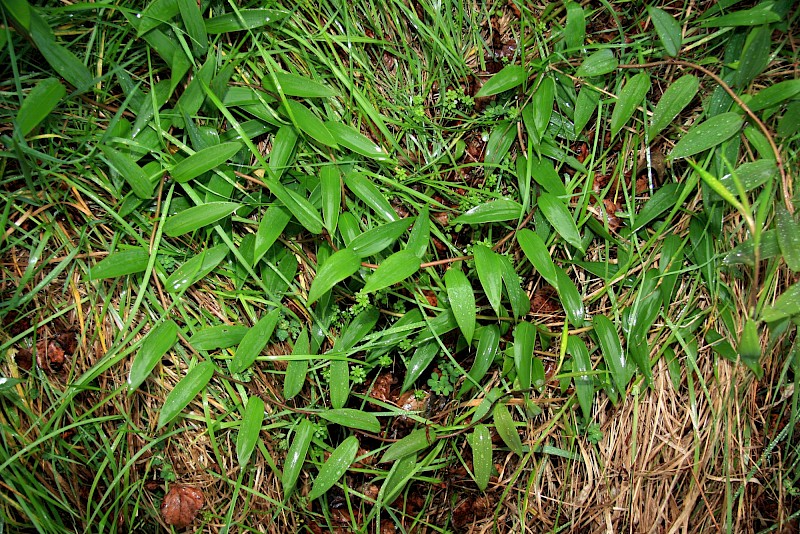
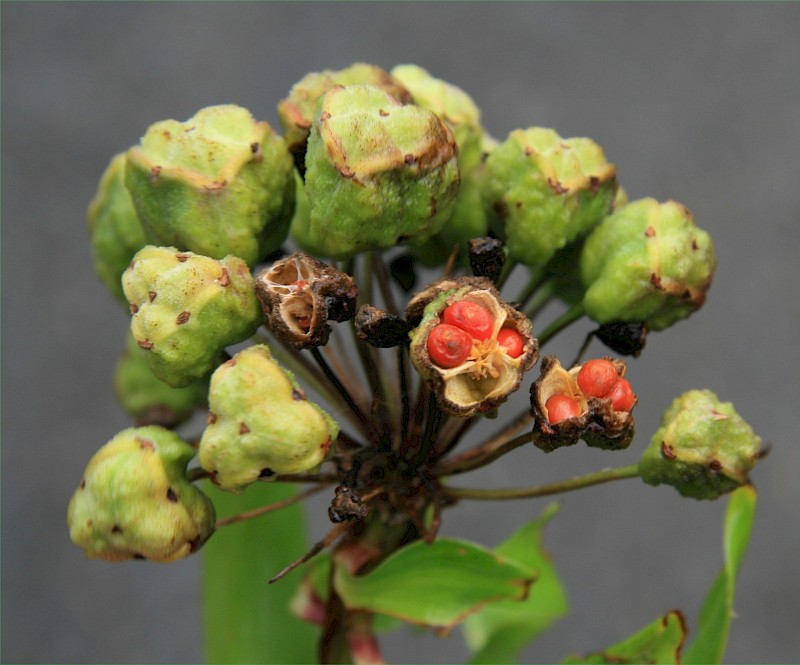
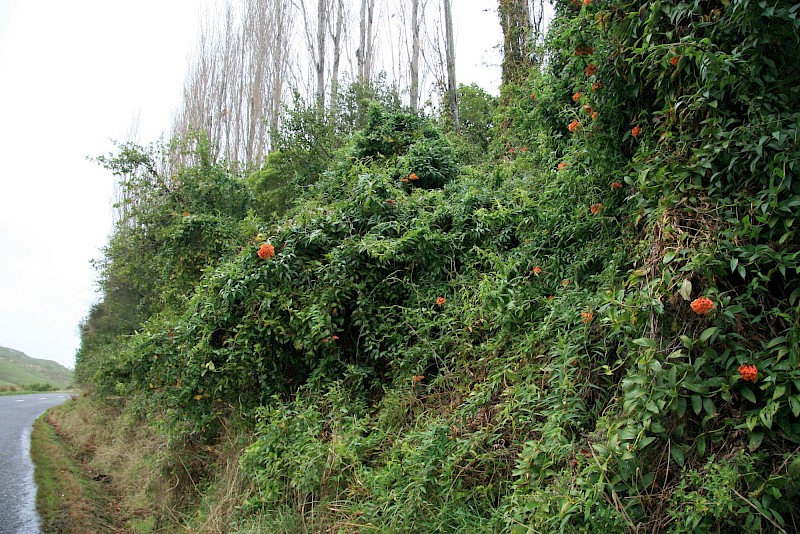
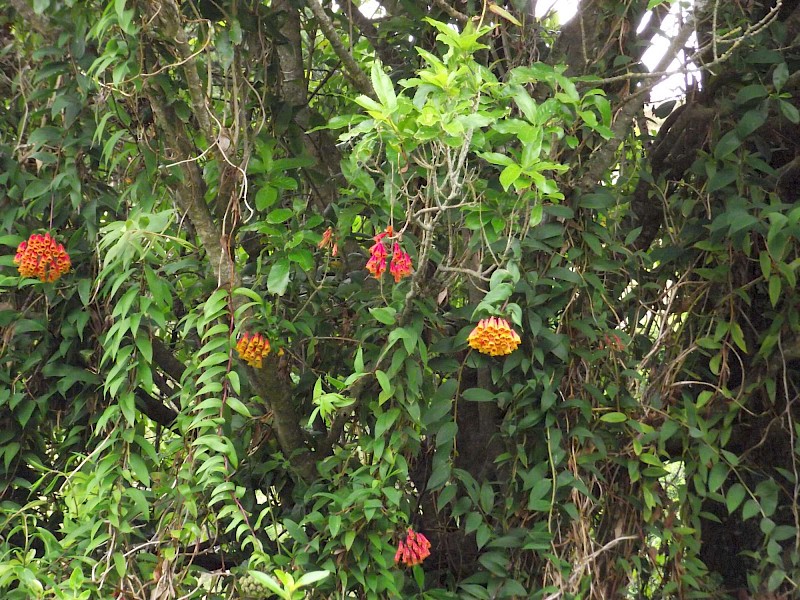
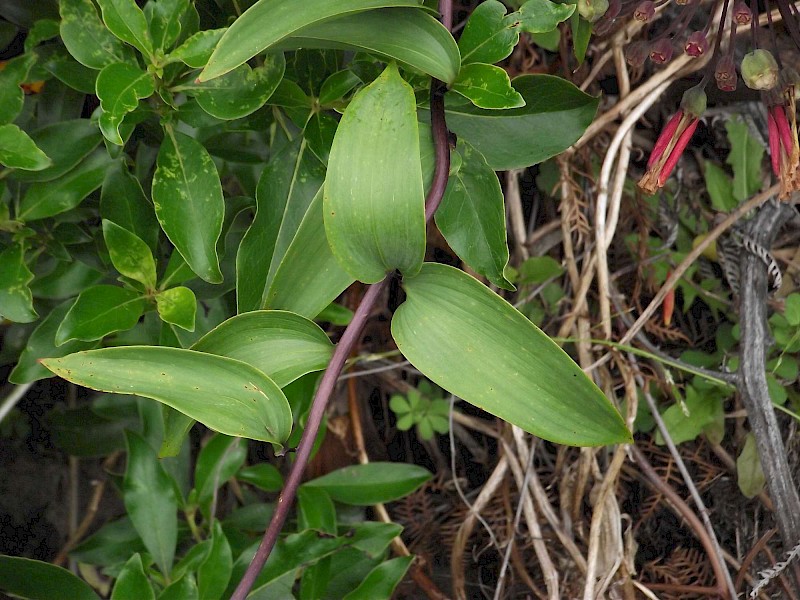
Multi-stemmed, scrambling, perennial vine that twines around any available support and may die back over winter in frost-prone localities. Stems arise from short underground rhizomes that bear numerous tubers. Leaves are long and pointed, with parallel vines. Tubular flowers range from red to orange or gold on the outside and yellow inside with dark spots, and hang in clusters of 15-20 flowers from summer to winter. Numerous fleshy, round, bright orange fruit develop in a capsule (2 cm diameter) from May to August.
Are there any similar species?
Alstromeria aurantiaca is an erect perennial with very similar flowers, leaves and roots to bomarea, but it only reaches 1 m in height. A. pulchella is a herb that only reaches 60 cm in height.
Why is it weedy?
Fast-growing scrambling vine that forms large masses that can smother and kill supporting trees. Shade tolerant, and invades and threatens forest and shrubland. Develops a thicket of stems from a dense mass of roots, rhizomes and tubers. Hard to kill.
How does it spread?
Sprouts (suckers) from the spreading rhizomes and seed is spread by birds.
What damage does it do?
Smothers and kills supporting trees, and prevent the growth of native seedlings and understorey plants by blocking their light. Seedlings are capable of growing in the forest interior and will creep along the ground, strangling saplings and smothering low-growing species.
Which habitats is it likely to invade?
Forest edges, forest remnants, shrublands, areas along rivers and lakes, urban areas.
What can I do to get rid of it?
1. Physical removal - Hand pull or dig out entire plant - Ensure all root material is removed to prevent regrowth. Burn or dispose of tubers to refuse.
2. Cut and paste - Cut the stem as close to the ground as possible and cover the entire stump with herbicide as soon as possible after cutting. Apply either glyphosate gel (400g/l strength) or picloram gel (43g/L strength). Do not use picloram gel near desirable plants or over wetlands.
3. Foliar spray - (when in full leaf). Apply Glyphosate (360 g/L active ingredient) herbicide at a rate of 20ml/L to cover entire plant.
Note glyphosate herbicide is not selective and may damage the plant that the bomarea is growing over. To prevent off-target damage, pull the vine off the support plant and lay it on the ground and then spray.
CAUTION: When using any herbicide or pesticide, PLEASE READ THE LABEL THOROUGHLY to ensure that all instructions and directions for the purchase, use and storage of the product, are followed and adhered to.
What can I do to stop it coming back?
Monitor the site and treat any regrowth from rhizomes or seedlings. Where appropriate plant a local native shrub, tree or climber.
Images