Brush cherry
Botanical name
Syzygium australe
Family
Myrtaceae (myrtle)
Also known as
Purple monkey apple, Eugenia myrtifolia, Eugenia paniculata (misnamed)
Where is it originally from?
Australia
What does it look like?
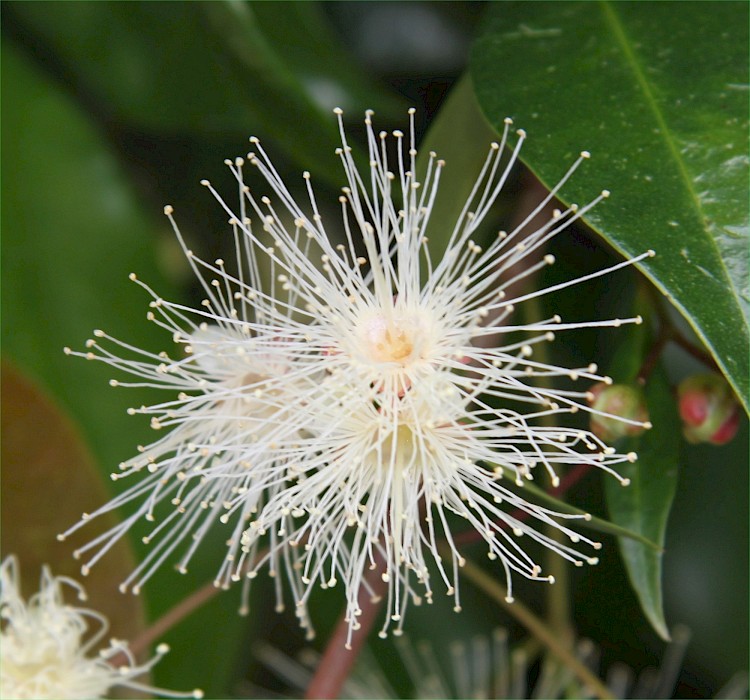
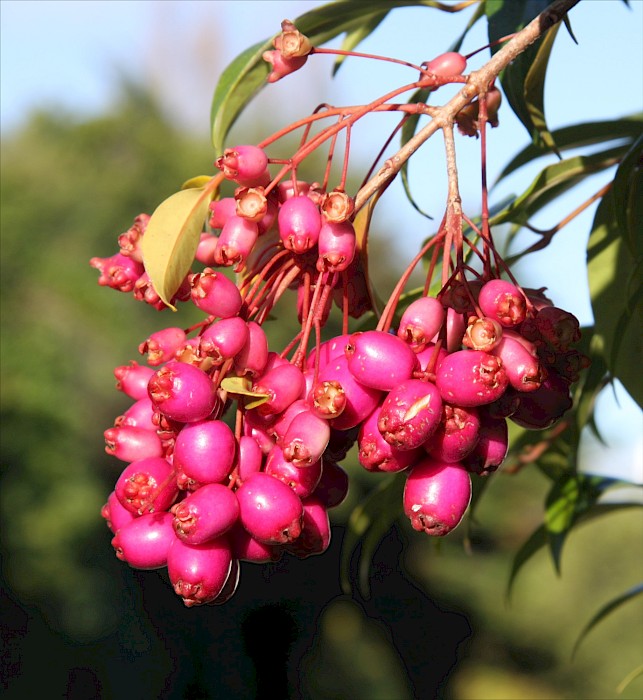
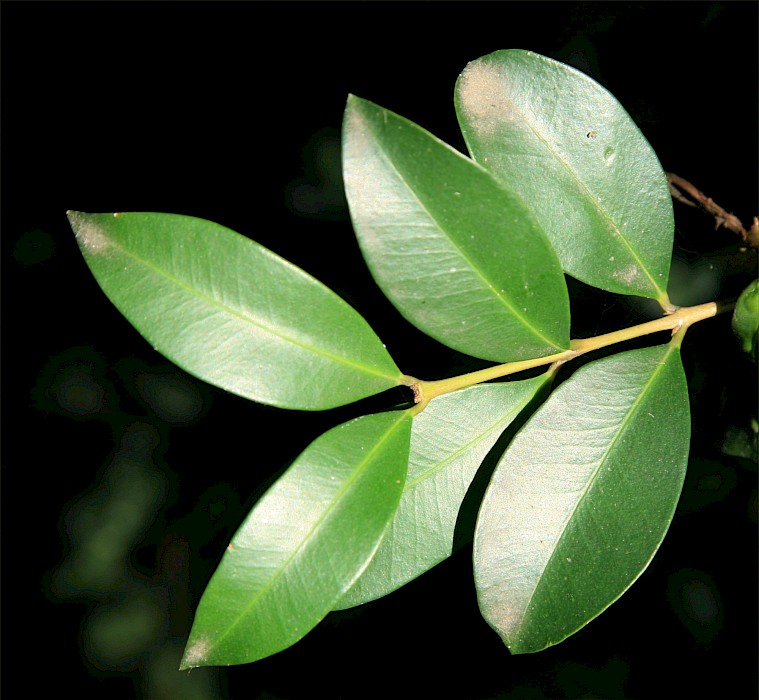
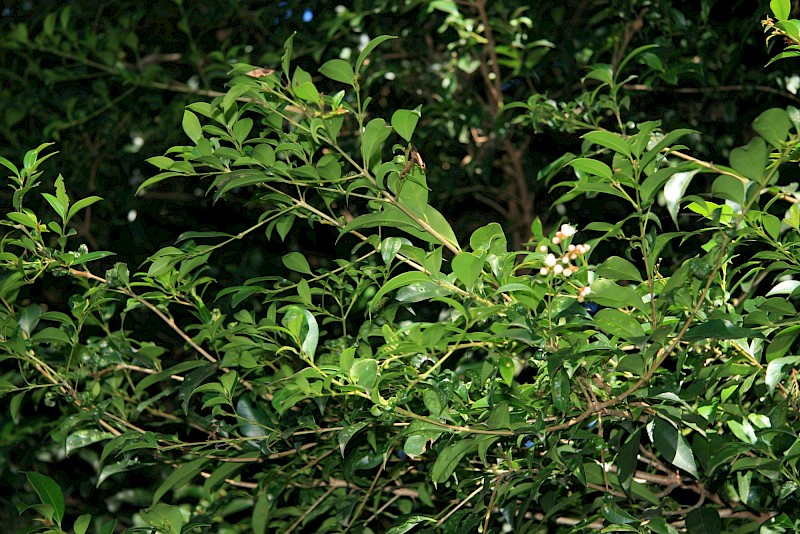
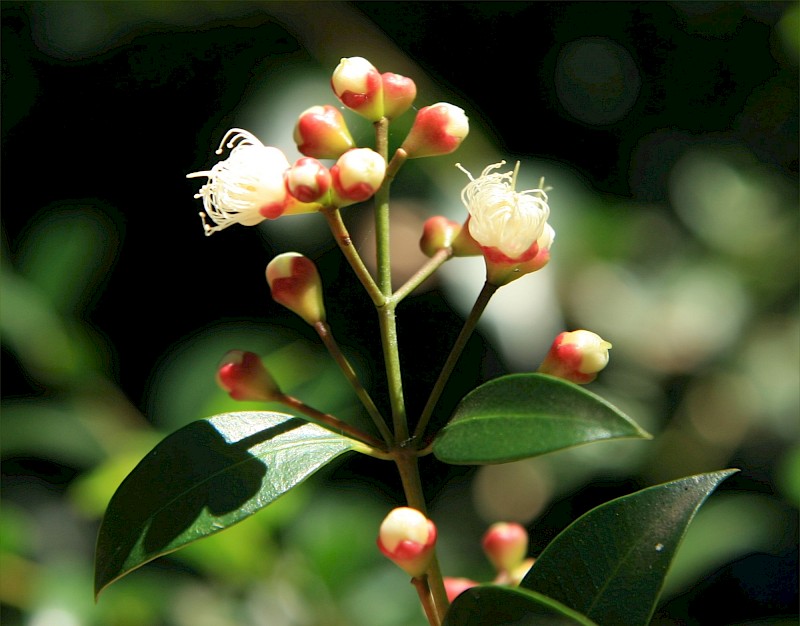
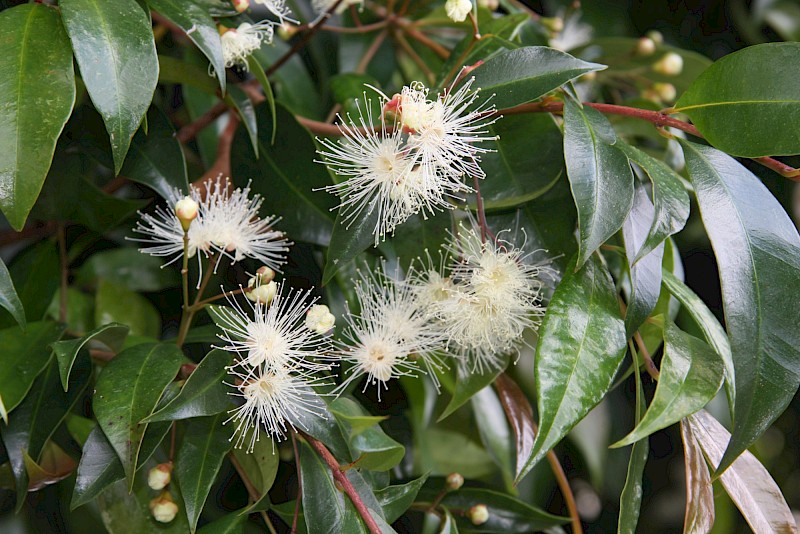
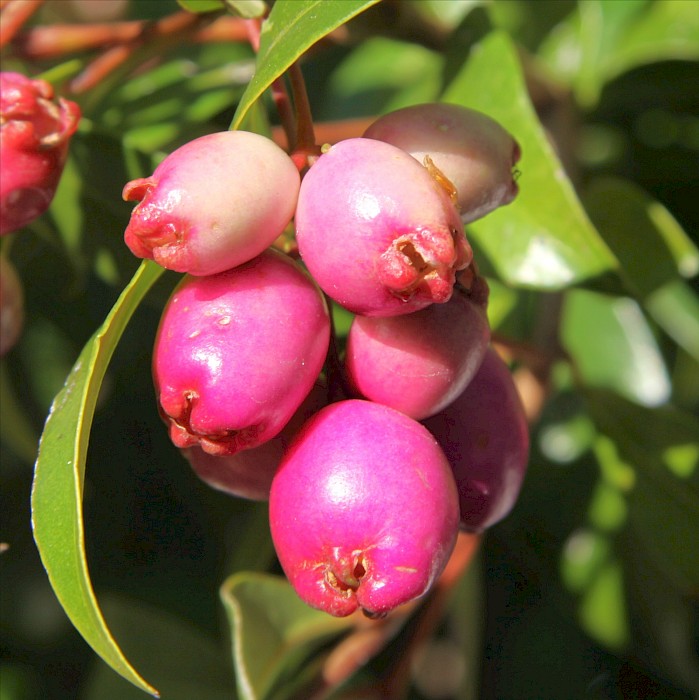
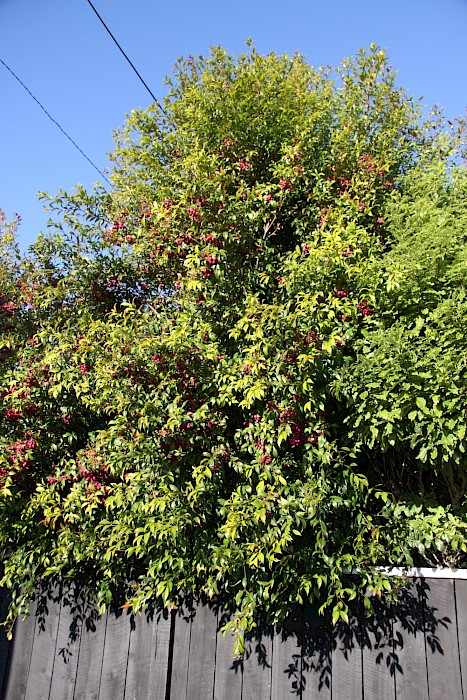
Large shrub or small tree (<10 m high) with smooth, light grey bark and angular, usually hanging branchlets. Leathery, glossy, oval leaves (4-10 x 1-4 cm) are aromatic when crushed and have numerous, conspicuous, parallel veins. Clusters of 3-25 whitish flowers with red bases (Jan-July) are followed by bunches of oblong-oval crimson-purple berry-like fruit (10-20 x 7-15 mm) each containing a large seed.
Are there any similar species?
Acmena smithii has white or pink-mauve fruit. S. paniculatum is also similar.
Why is it weedy?
Long-lived with well-dispersed seeds. Prefers moderate to highly fertile, well-drained soils, but tolerates frost, salt, dry, wind, shade, and damage. Grows faster than native hardwoods.
How does it spread?
Birds and soil movement spread the seeds. Common seed sources are hedges, shelterbelts, gardens, and roadsides.
What damage does it do?
Seedlings remain in shade, and grow tall into any canopy gap caused by windfall or damage to other trees to become long-lived canopy species.
Which habitats is it likely to invade?
Disturbed forests, shrublands and margins.
What can I do to get rid of it?
1. Physical removal - Hand pull or dig out small plants seedlings and small plants.
2. Cut and paste (all year round) - Cut the stem/trunk as close to the ground as possible and cover the entire stump with herbicide as soon as possible after cutting. Apply metsulfuron gel (10g/l strength)
3. Basal spray stems up to 20cm diametre with X-Tree Basal. Ensure the base is thoroughly covered at ground level.
4. Drill or frill - Drill downward sloping holes around the circumference of the trunk about 8-10 cm apart, or Frill (make deep cuts into the sapwood at regular intervals around the base of the tree, taking care not to ring-bark the plant). Fill the holes or saturate the cuts with metsulfuron-methyl 600 g/kg at a rate of 20-50g/L.
5. Foliar spray - Apply metsulfuron herbicide (600g/kg active ingredient) (knapsack 0.5g/L, or Gun and hose 20-35g/100L) plus organosilicone penetrant (3ml/L) to thoroughly wet all parts of plant. Note: Metsulfuron overspray will kill other (desirable) broadleaf plants and has residual activity in the soil which aids in killing below ground parts.
CAUTION: When using any herbicide or pesticide, PLEASE READ THE LABEL THOROUGHLY to ensure that all instructions and directions for the purchase, use and storage of the product, are followed and adhered to.
What can I do to stop it coming back?
Reseeds in bared areas. Cut stumps resprout. Follow up at least 6-monthly to control seedlings. Replant densely (use pigeon-friendly species) where possible to minimise seedling growth.
Images