Elder
Botanical name
Sambucus nigra
Family
Caprifoliaceae (honeysuckle)
Also known as
Elderberry
Where is it originally from?
Europe, West Asia, North Africa
What does it look like?
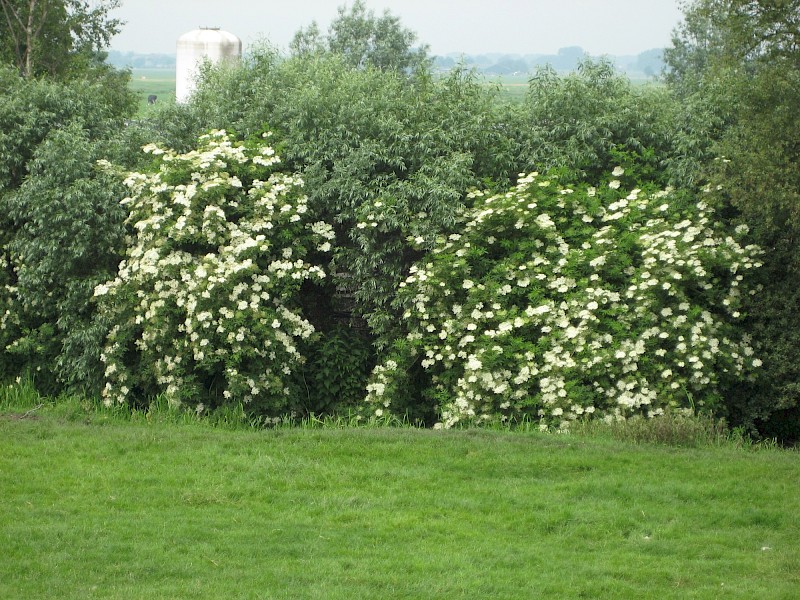
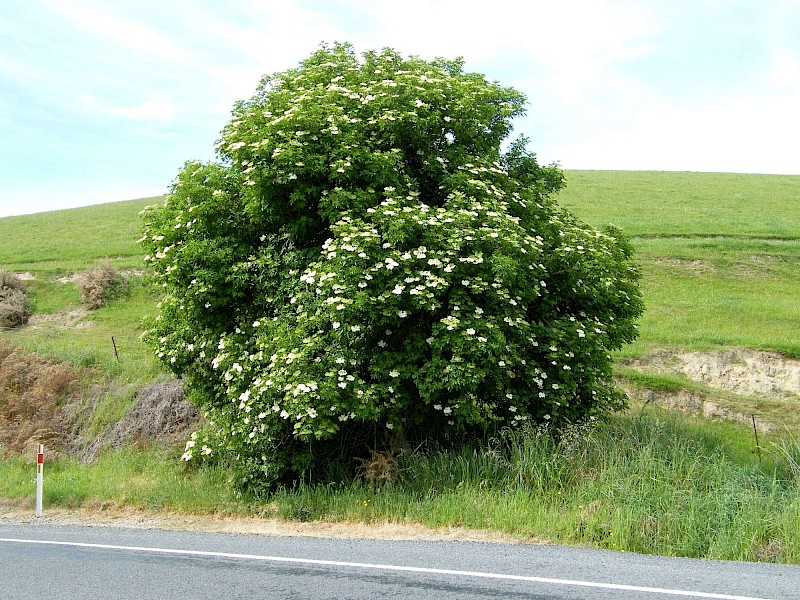
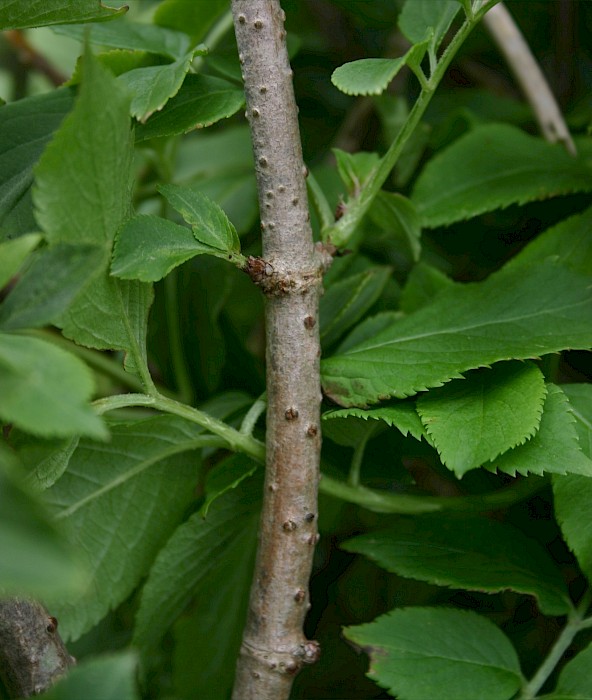
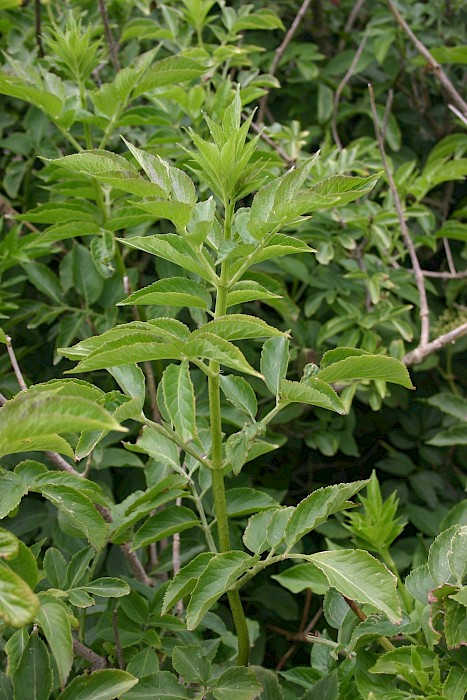
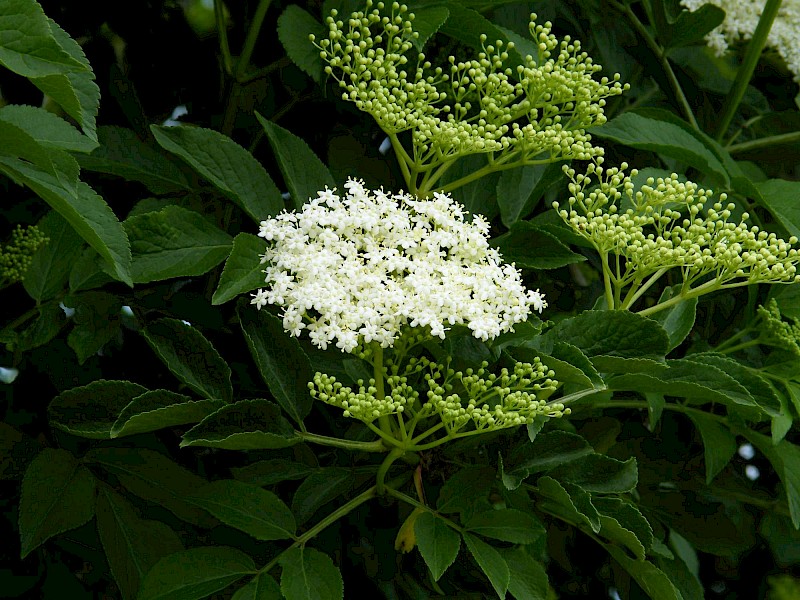
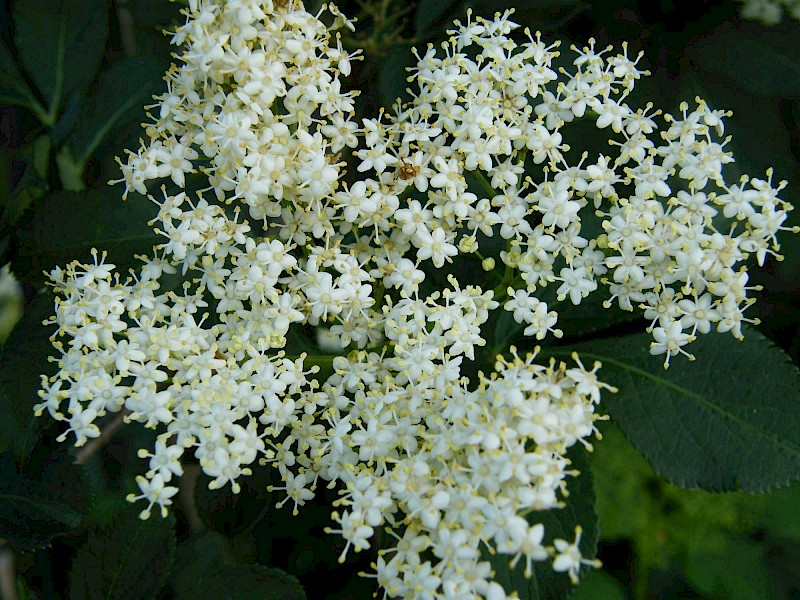
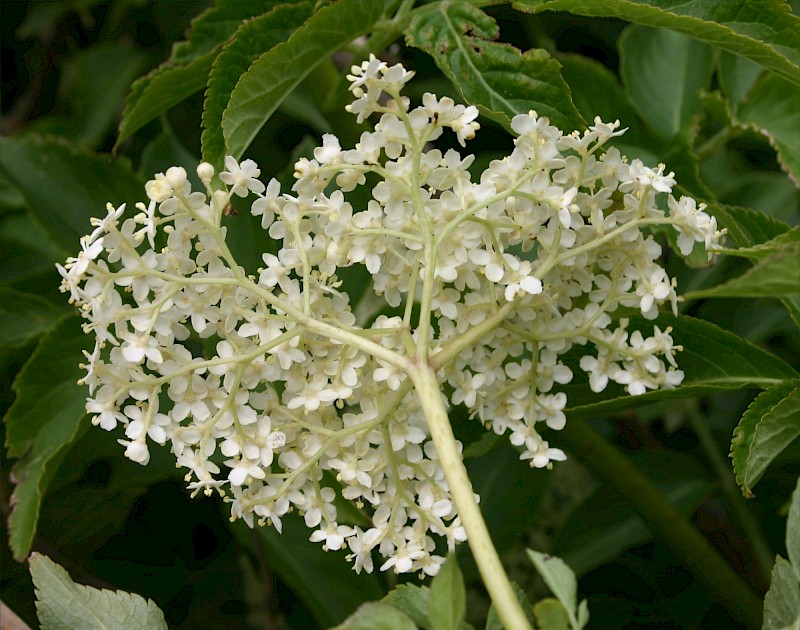
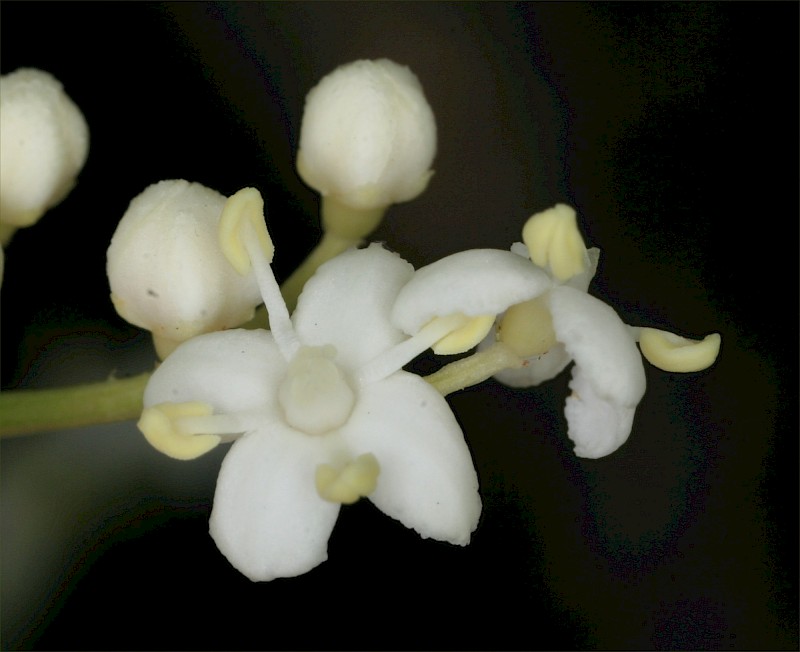
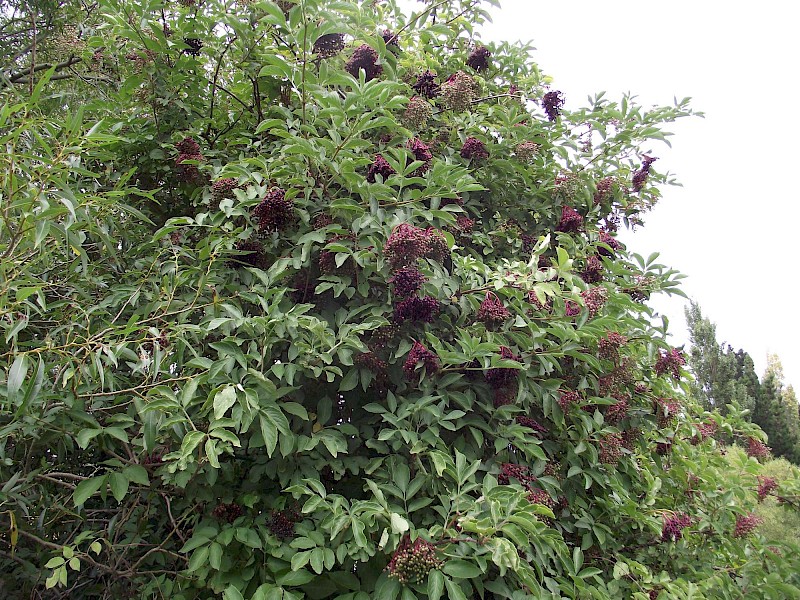
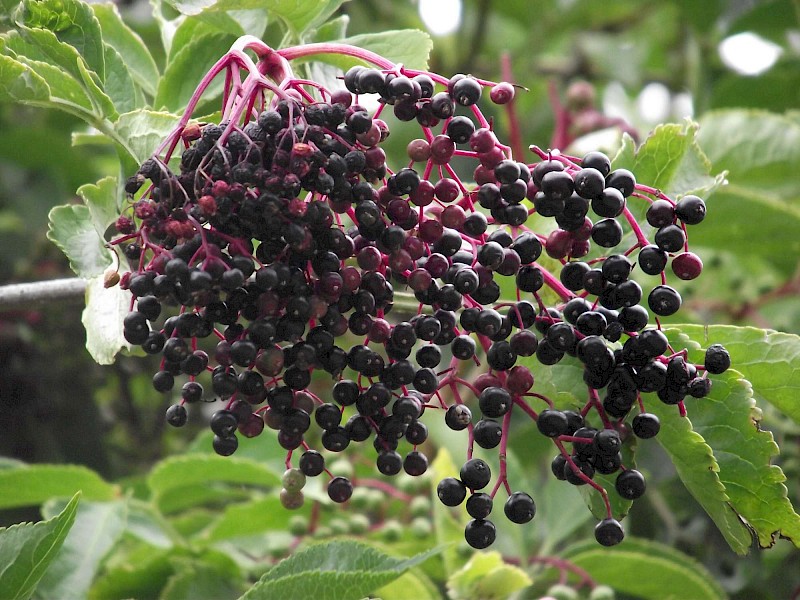
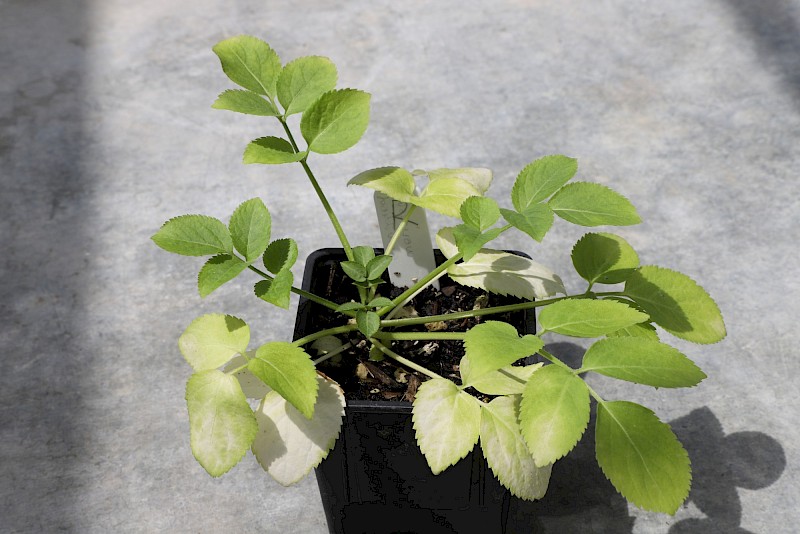
Deciduous shrub or small tree (<6 m tall). Stems are grey-fawn with white pith and many small and corky lumps (glands). Leaves comprise of 5-7 leaflets that are purple when very young, becoming green. Leaflet at the tip is broadly oval (4.5-11 cm long, 3.5-6 cm wide), hairless or hairy on veins beneath and on midrib above, serrated except towards base, and has a pointed tip. Other leaflets are smaller and narrower. Flowers and fruit form in a flat umbrella-shaped cluster (10-20 cm diameter). Dull white, pungent flowers (2-3 mm long, Nov-Jan) are on stalks that usually turn red-purple when fruit develop. Berry-like, round fruits (4-9 mm diameter) mature to shining black, occasionally remaining green.
Are there any similar species?
Sambucus pubens has pyramid shaped flower and fruit clusters and brown stem pith.
Why is it weedy?
Produces many well-dispersed seeds. Leaves are toxic so it is not grazed. It tolerates sun, shade and dry soils.
How does it spread?
Seed is dispersed by birds.
What damage does it do?
It invades disturbed habitats, forming moderately dense stands that inhibit regeneration of native species.
Which habitats is it likely to invade?
Scrub, shrubland, fernland, disturbed forest, forest margins, modified plant communities, roadsides in coastal and lowland habitats on medium to high fertility soils.
What can I do to get rid of it?
1. Physical removal - Hand pull small plants, or dig out entire plant including roots and mulch (all year round)
2. Cut and paste (all year round) - Cut the stem/trunk as close to the ground as possible and cover the entire stump with herbicide as soon as possible after cutting. Apply metsulfuron gel (10g/l strength). When a gel is inadequate apply a solution of diesel and product containing triclopyr + picloram (20:1 diesel:triclopyr/picloram). Apply the mixture over the entire exposed surface of the cut stump, i.e. top and sides.
3. Basal spray - spray stems up to 20cm diametre with X-Tree Basal. Apply from the ground to a height of 6 times the diameter of the plant, ensure the base is thoroughly covered at ground level.
4. Drill or frill - Drill downward sloping holes around the circumference of the trunk about 8-10 cm apart, or Frill (make deep cuts into the sapwood at regular intervals around the base of the tree, taking care not to ring-bark the plant). Fill the holes or saturate the cuts with metsulfuron-methyl 600 g/kg (20-50g/L + penetrant) or a product containing 100g picloram+300g triclopyr/L (undiluted) .
5. Foliar spray - Apply metsulfuron herbicide (600g/kg active ingredient) (Knapsack 0.5g/L, or Gun and hose 20-35g/100L) plus organosilicone penetrant (3ml/L) to thoroughly wet all parts of plant. Note: Metsulfuron overspray will kill other (desirable) broadleaf plants and has residual activity in the soil which aids in killing below ground parts.
CAUTION: When using any herbicide or pesticide, PLEASE READ THE LABEL THOROUGHLY to ensure that all instructions and directions for the purchase, use and storage of the product, are followed and adhered to.
What can I do to stop it coming back?
Monitor the site and treat any regrowth and seedlings. Plant local native trees or shrubs to produce dense shade.
Images