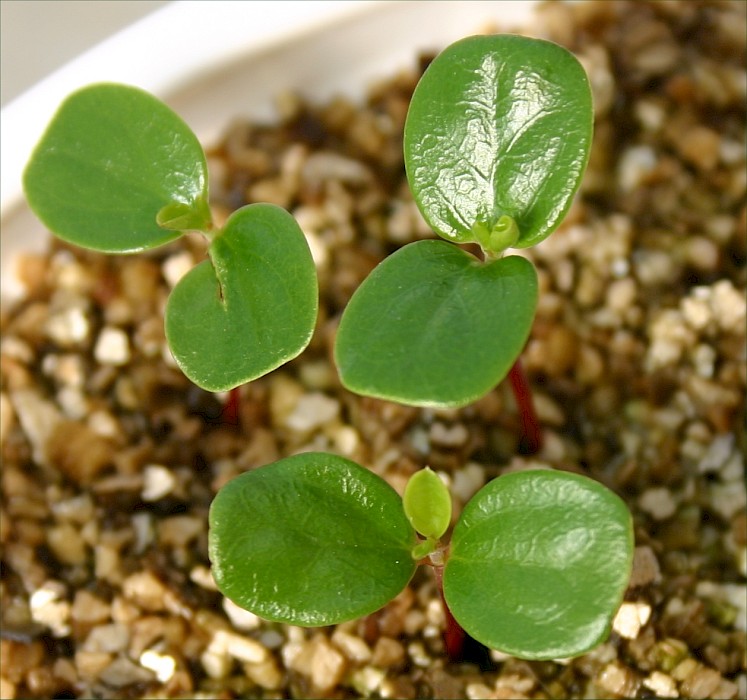
Evergreen buckthorn
Botanical name
Rhamnus alaternus
Family
Rhamnaceae (buckthorn)
Also known as
Rhamnus, evergreen buckthorn, Italian buckthorn
Where is it originally from?
Mediterranean region
What does it look like?
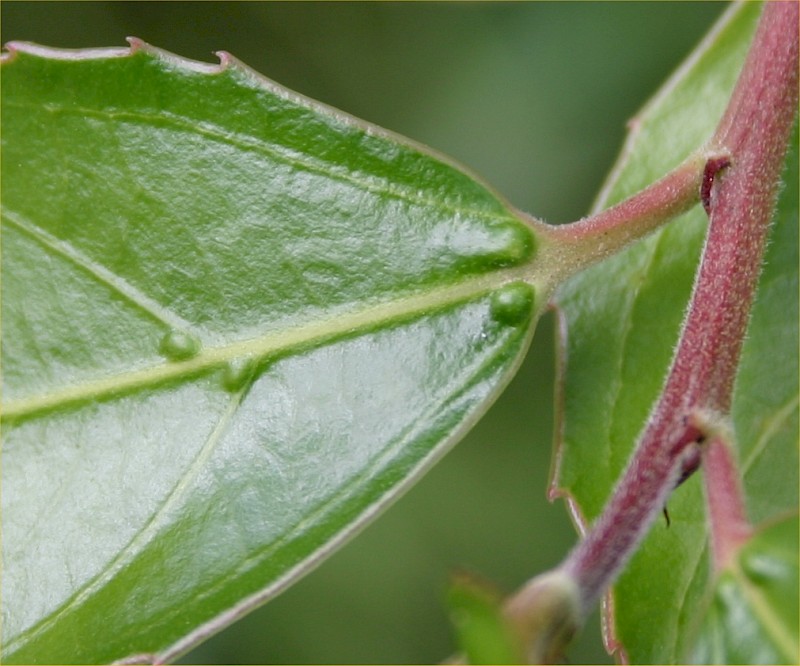
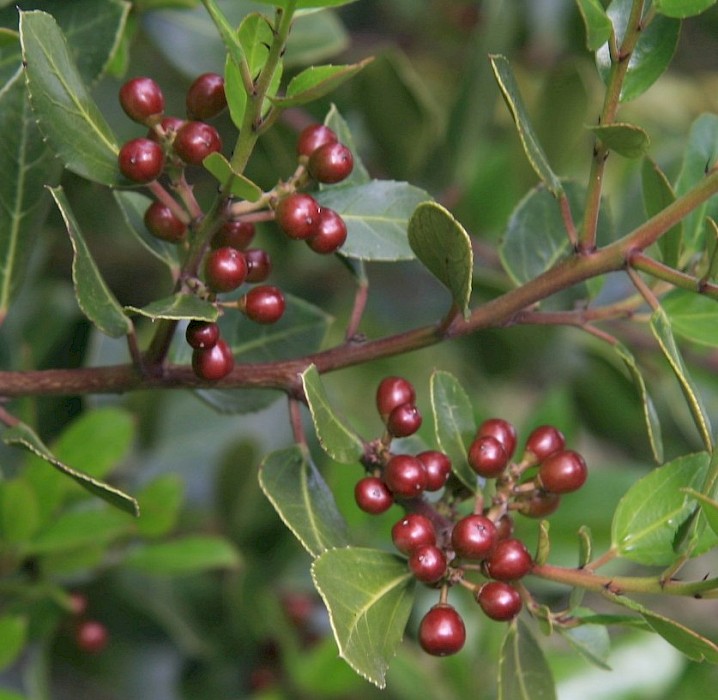
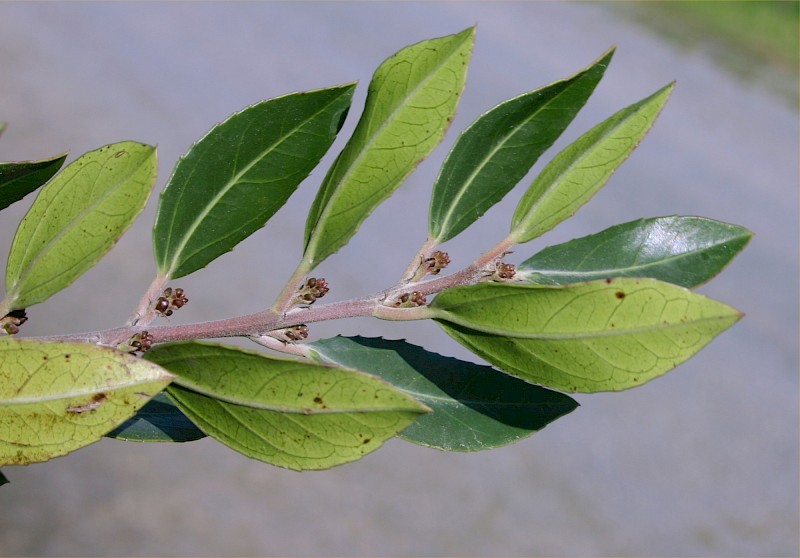
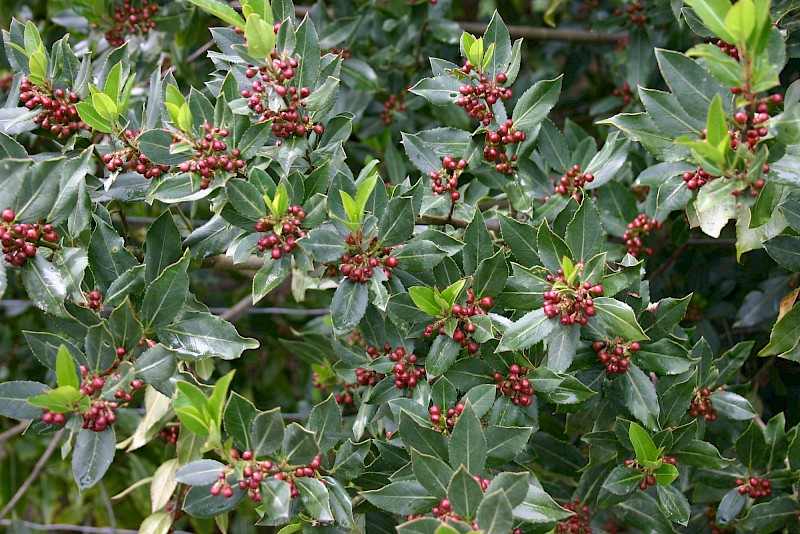
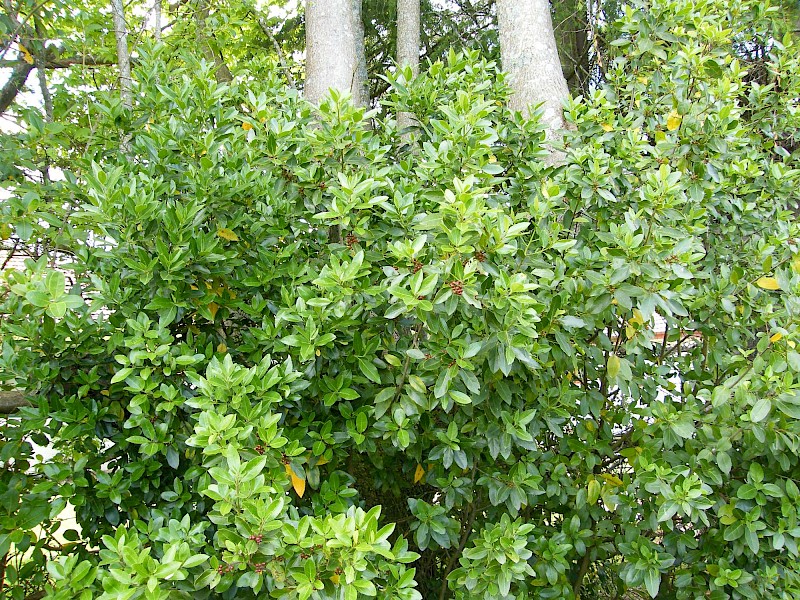
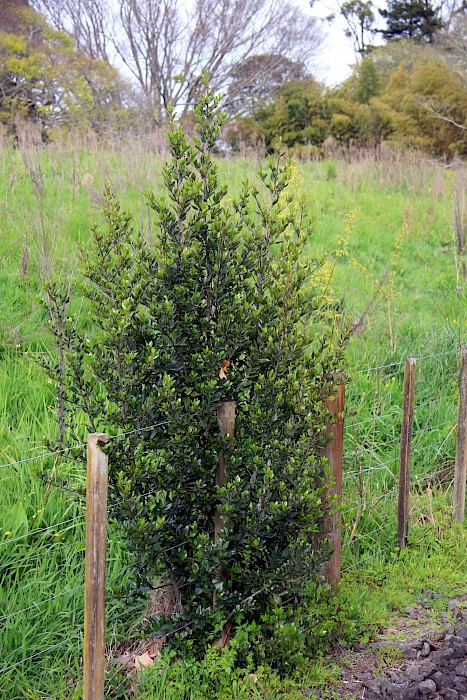
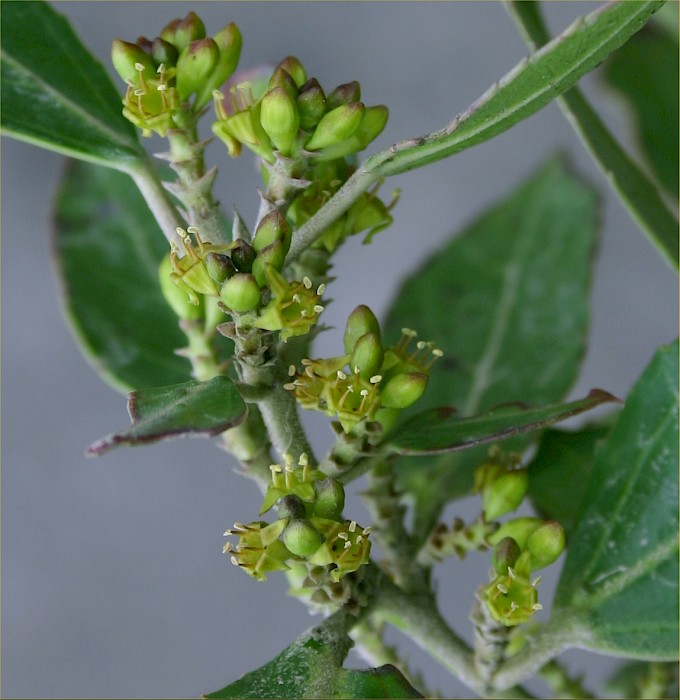
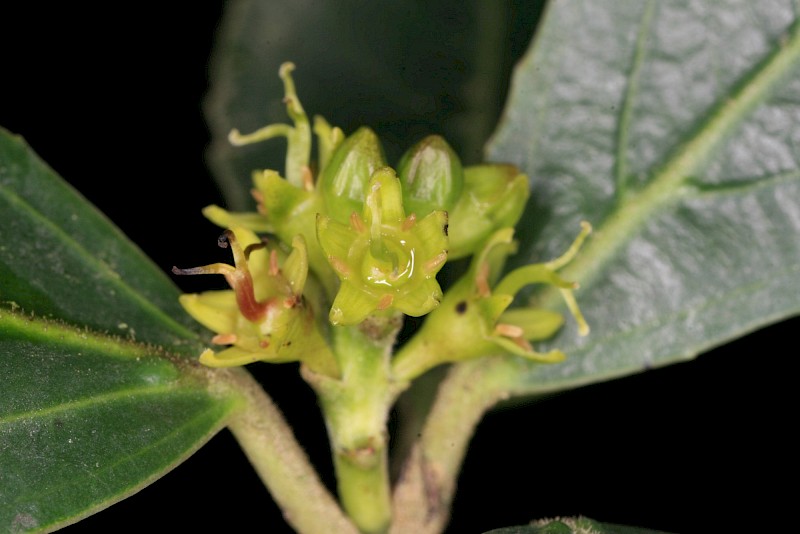
Evergreen, often multistemmed, shrub or tree (<2-3m tall, occasionally <15 m) with hairy, angular, purplish shoots. Ovalish, leathery leaves (15-60 x 10-30 mm) are glossy above, entire or toothed sharply or blunt along the edges. Plants are either male or female, with small, green, petal-less fragrant flowers (3-4 mm diameter, May-Nov) followed by many showy, glossy berries (5-7 mm long, Dec-Jan) ripening from dark red to black.
Are there any similar species?
Similar to many native species, especially Coprosma, Pittosporum, and Myrsine.
Why is it weedy?
Quick growing, long-lived, forms dense stands and produces many viable, long-lived and well dispersed seeds. Tolerant to salt, wind, poor soils, frost and heat, damage and grazing, and seedlings also tolerate deep shade. Grows quickly when a light gap appears.
How does it spread?
Birds, soil movement and dumped vegetation. Old hedges and gardens are common seed sources.
What damage does it do?
Forms dense stands and prevents the establishment of native plant seedlings. Acts as a low shrub on windswept rocky shores or understorey shrub in tall canopy.
Which habitats is it likely to invade?
Coastal and other shrublands, cliffs, forest margins, inshore and offshore islands, and rocky lands.
What can I do to get rid of it?
Control female plants (those producing berries) first to minimise seeding.
1. Physical removal - Hand pull small plants, or dig out entire plant including roots and mulch (all year round)
2. Cut and paste (all year round) - Cut the stem/trunk as close to the ground as possible and cover the entire stump with herbicide as soon as possible after cutting. Apply metsulfuron gel (10g/l strength). When a gel is inadequate apply a solution of diesel and product containing triclopyr + picloram (20:1 diesel:triclopyr/picloram). Apply the mixture over the entire exposed surface of the cut stump, i.e. top and sides.
3. Drill or frill - Drill downward sloping holes around the circumference of the trunk about 8-10 cm apart, or Frill (make deep cuts into the sapwood at regular intervals around the base of the tree, taking care not to ring-bark the plant). Fill the holes or saturate the cuts with a mix of metsulfuron-methyl 600 g/kg (20-50g/L + penetrant)
4. Foliar spray (Spring-Summer) - Apply Triclopyr herbicide (600g/L active ingredient) at a rate of 6ml/L to thoroughly wet all parts of plant. Note: This herbicide is ‘grass friendly’ but overspray will kill other (desirable) broadleaf plants. Do not use over water bodies or wetlands and use only as directed on label.
CAUTION: When using any herbicide or pesticide, PLEASE READ THE LABEL THOROUGHLY to ensure that all instructions and directions for the purchase, use and storage of the product, are followed and adhered to.
What can I do to stop it coming back?
Bared sites reinfested by seed bank. Stumps resprout. Remove all browsing pests. Follow up sites 6 monthly until eradicated before replanting.
Images