Fairy crassula
Botanical name
Crassula multicava
Family
Crassulaceae (stonecrop)
Also known as
Pitted crassula
Where is it originally from?
South Africa
What does it look like?
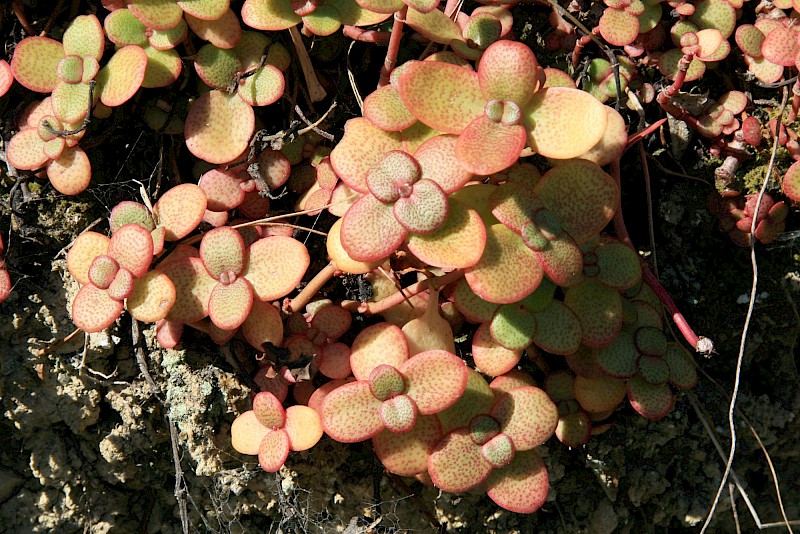
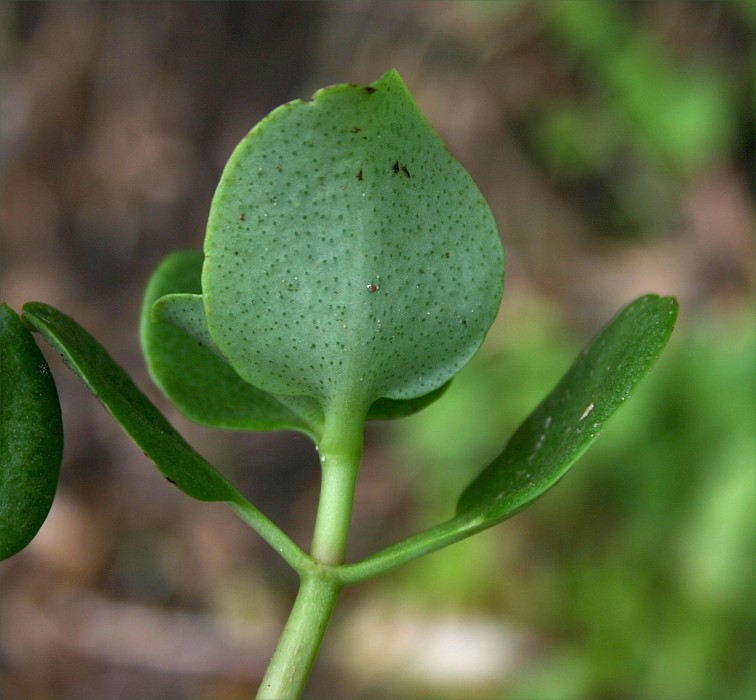
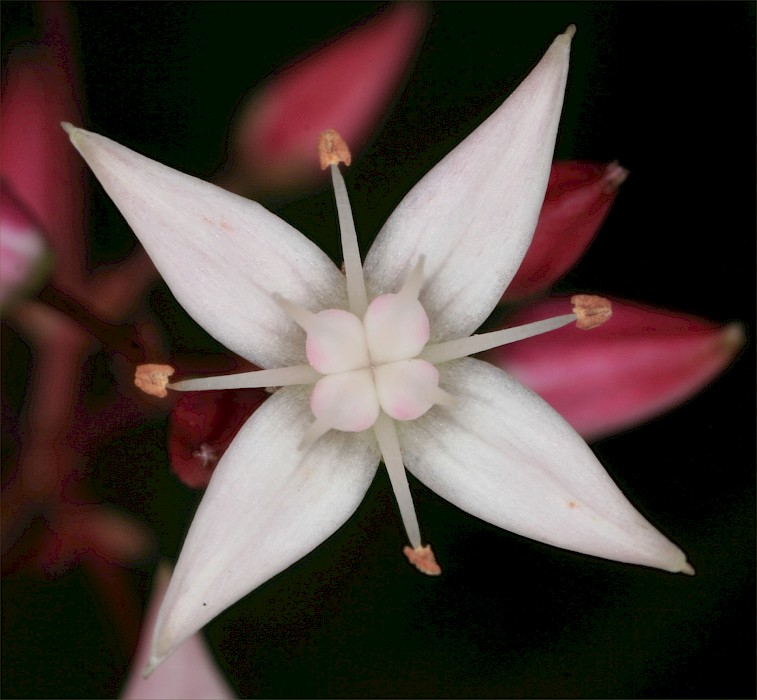
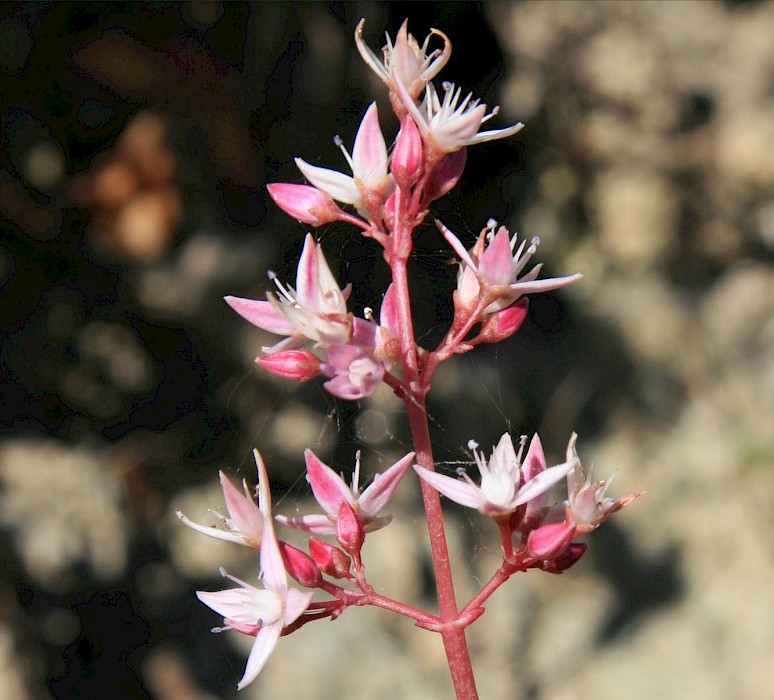
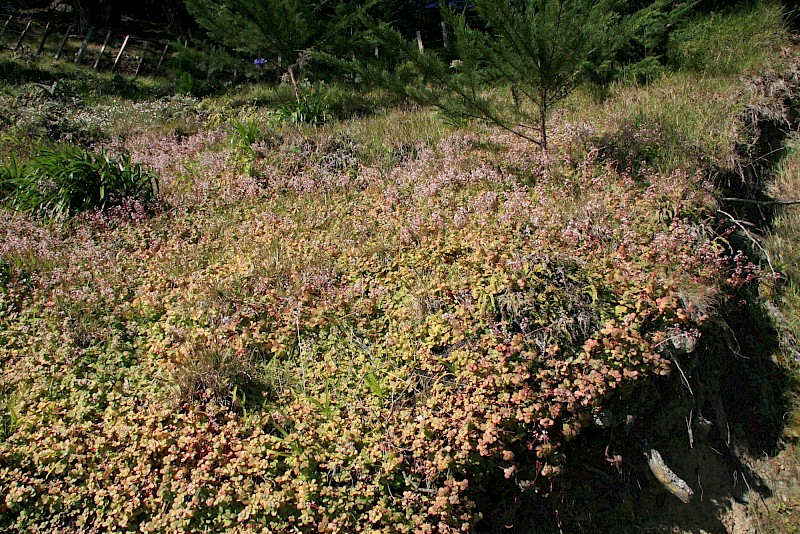
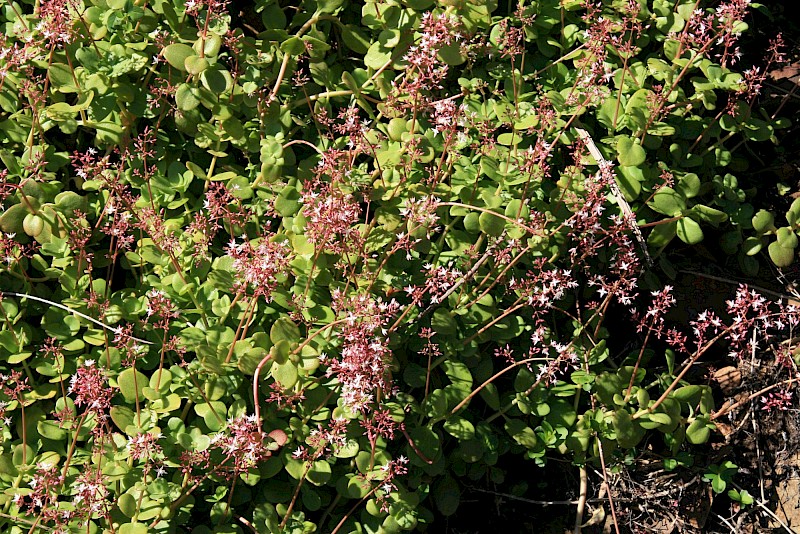
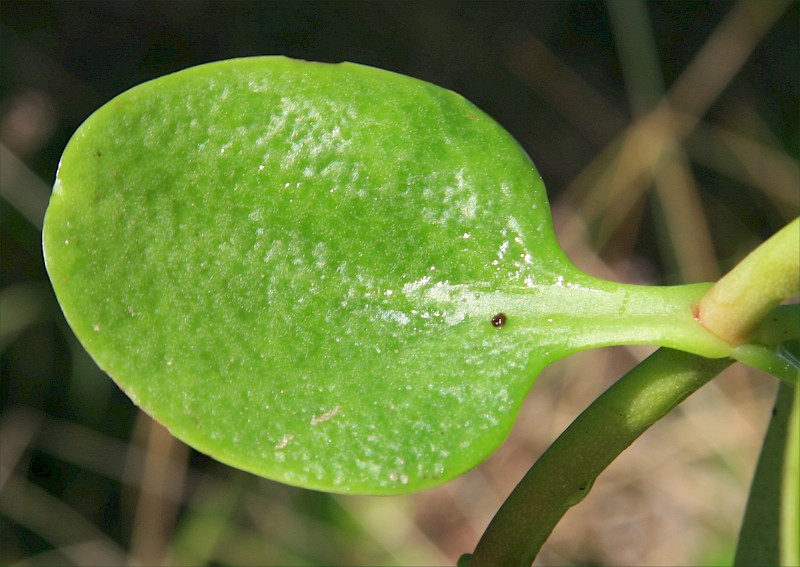
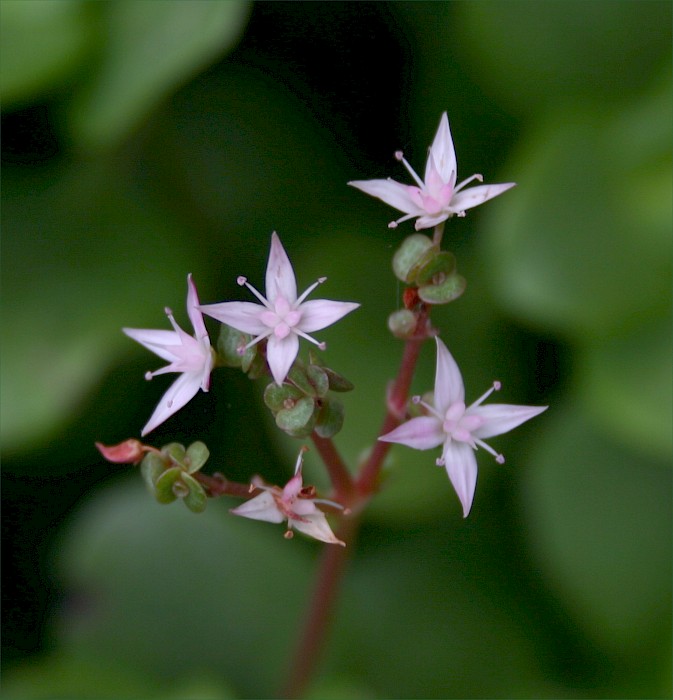
Creeping succulent herb with fleshy leaves (4 x 4 cm) covered with small, pitted dots. Clusters of small, pale pink flowers on upright stems appear in spring, and small plantlets develop in these clusters after flowering.
Why is it weedy?
Spreads easily, particularly on rocky sites, and crowds out other species. Is partially shade-tolerant.
How does it spread?
Plantlets on flowerheads drop off and develop into new plants, but seeds have not yet been observed in NZ.
What damage does it do?
Competes with native species, forming dense mats.
Which habitats is it likely to invade?
Grows well on open sites, particularly rocky areas, and can tolerate some shade.
What can I do to get rid of it?
1. Physical removal - Pull seedlings and dig out individual plants or small patches. Ensure removal of all rhizome fragments and flower/seedheads and dispose of these at a refuse transfer station.
2. Foliar spray - Apply herbicide using a knapsack sprayer. Apply Glyphosate (360 g/L active ingredient) herbicide (20ml/L) plus organosilicone penetrant (2ml/L) to cover entire plant OR a mix of metsulfuron-methyl 600g/kg (0.5g/L) + glyphosate 360g/L (20ml/L) + organosilicone penetrant (2ml/L).
*Note: Overspray will kill other (desirable) plants. Avoid spraying metsulfuron around the root zone of desirable plants.
CAUTION: When using any herbicide or pesticide, PLEASE READ THE LABEL THOROUGHLY to ensure that all instructions and directions for the purchase, use and storage of the product, are followed and adhered to.
Images