German ivy
Botanical name
Delairea odorata
Family
Asteraceae (daisy)
Also known as
African ivy, climbing groundsel, Senecio mikanioides
Where is it originally from?
South Africa
What does it look like?
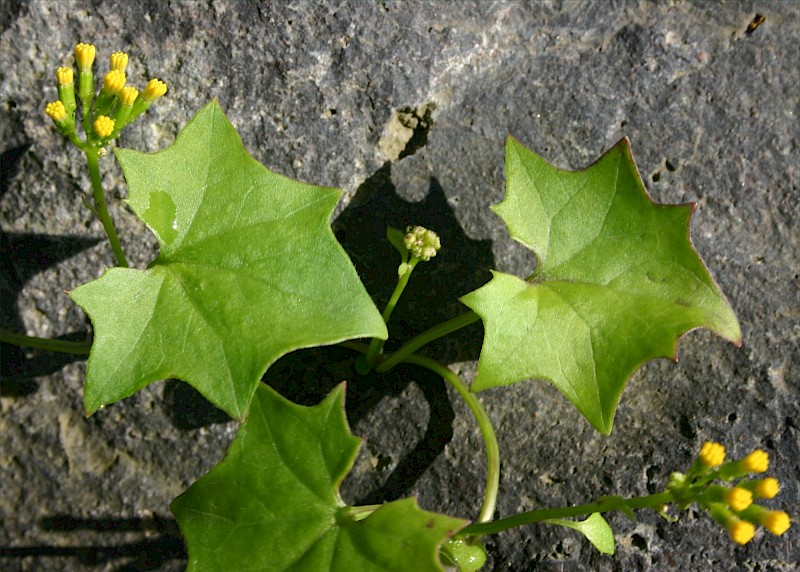
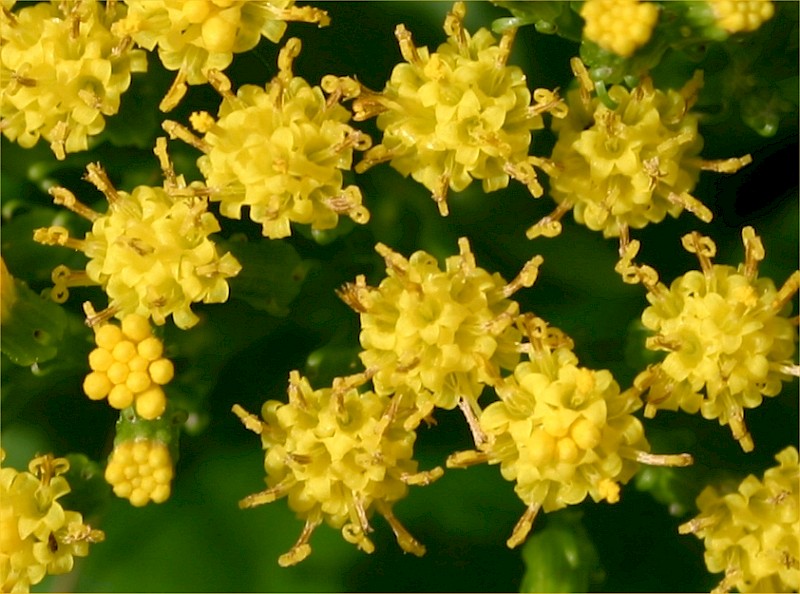
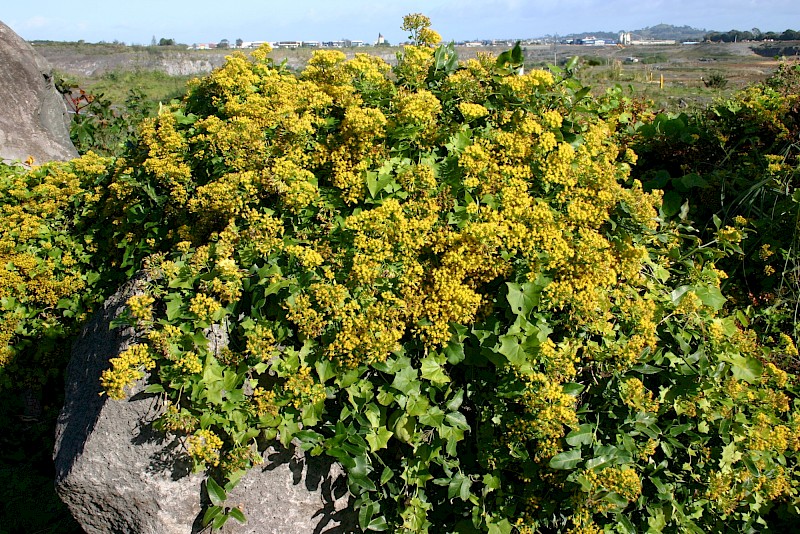
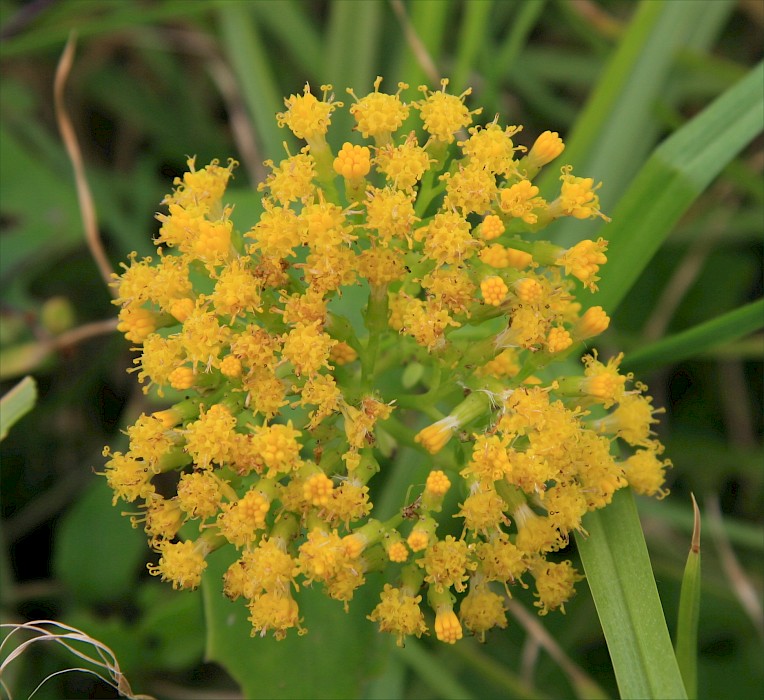
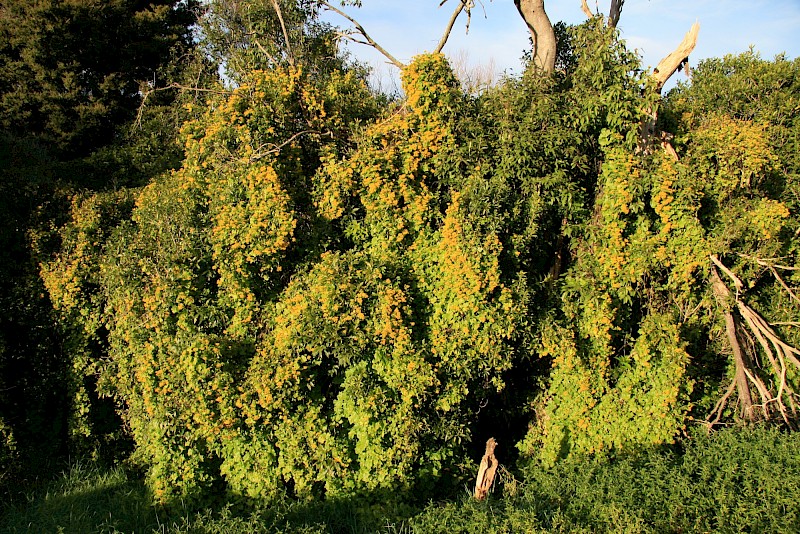
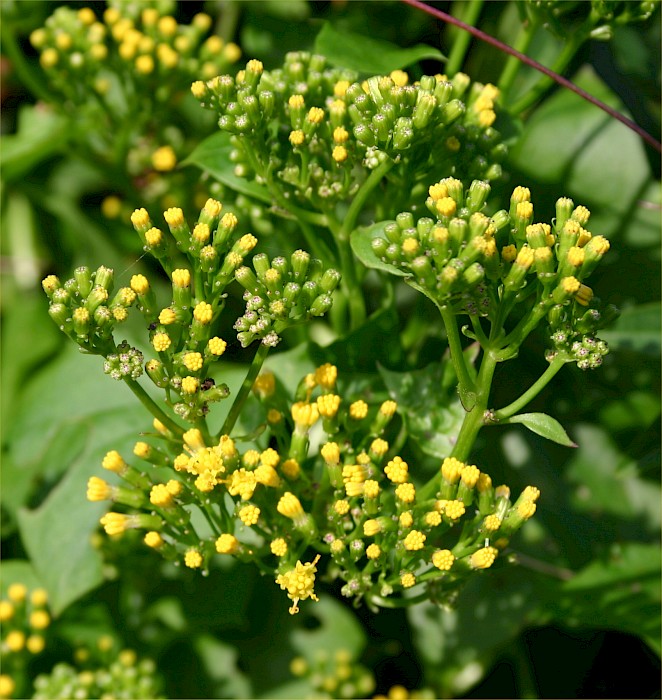
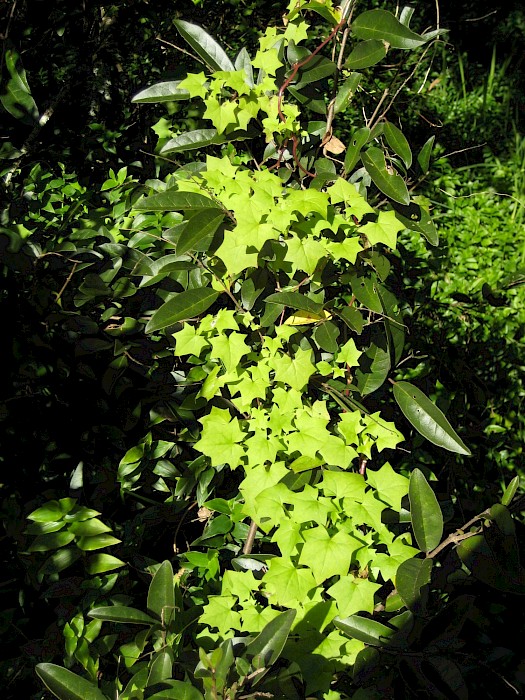
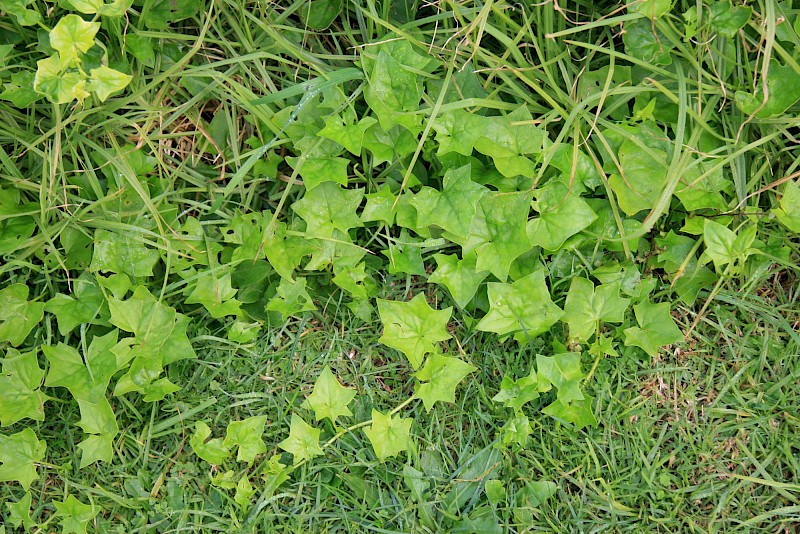
Scrambling or climbing perennial vine (<3-5 m) with thin, weak green stems. Thin, soft, glossy, hairless leaves are ivy-shaped and clammy to touch. Dense clusters of yellow, ragwort-like flowers (7 mm diameter, May-Oct) are followed by fluffy seeds.
Are there any similar species?
Cape ivy (Senecio angulatus) is similar but its leaves are more succulent. Ivy (Hedera helix) is also similar.
Why is it weedy?
Fast growing and dense smothering habit. Distributes many wind-blown seeds long distances. Prefers open, damp sites but partially shade and drought-tolerant, and will grow in most soil types throughout New Zealand.
How does it spread?
Seeds spread by wind and in dumped vegetation and soil movement. Common sources are gardens, waste places, roadsides and bush edges.
What damage does it do?
Smothers small trees and lower vegetation, preventing the seedlings of native species from establishing. Often first exotic vine to appear on bush edge and subsequently supports more aggressive or taller vine species (eg. Lonicera, Ipomoea) as they invade.
Which habitats is it likely to invade?
Lowland forest and stream edges (especially in coastal areas), inshore islands and low growing habitats.
What can I do to get rid of it?
Easiest controlled at flowering, when highly visible and before seed is produced.
1. Physical removal - Hand pull or dig out entire plant - Ensure all root material is removed to prevent regrowth. Burn or dispose of all plant material to a refuse station.
2. Cut and paste - Cut the stem/trunk as close to the ground as possible and cover the entire stump with herbicide as soon as possible after cutting. Apply glyphosate gel (120g/L strength) or metsulfuron gel (10g/L strength) or picloram gel (43g/l strength) to the entire cut stem.
2. Foliar spray - summer to autumn. Apply Glyphosate (360 g/L active ingredient) herbicide at a rate of 20ml/L to cover entire plant OR Apply metsulfuron herbicide at a rate of 0.5g/L using a hand held sprayer/knapsack Or apply Clopyralid herbicide (300g/l active ingredient) at a rate of 12.5ml/L. Clopyralid is a herbicide for selective control on plants in the daisy family and some broadleaf weeds. Use the recommended adjuvant shown on the label for all of the above herbicides.
Note: Overspray will kill other (desirable) broadleaf plants. Metsulfuron based herbicides have residual activity in the soil which may leach through soil and kill other plants, do not use under and around other (desirable) broadleaf plants. Do not use these herbicides over or near water bodies or wetlands.
CAUTION: When using any herbicide or pesticide, PLEASE READ THE LABEL THOROUGHLY to ensure that all instructions and directions for the purchase, use and storage of the product, are followed and adhered to.
What can I do to stop it coming back?
Pulled roots and vines may be left to rot down on site.
Images