Grey willow
Botanical name
Salix cinerea
Family
Salicaceae (willow)
Also known as
Pussy willow, sallow, Salix atrocinerea
Where is it originally from?
Europe, West Asia, North Africa
What does it look like?
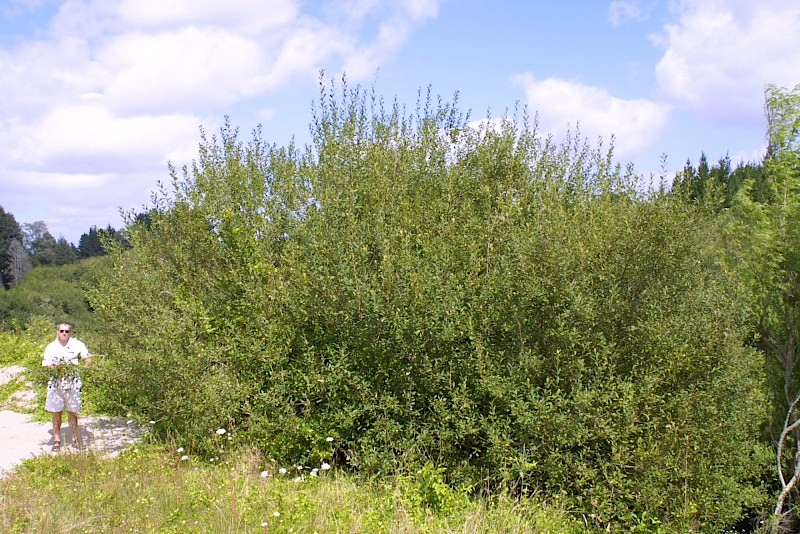
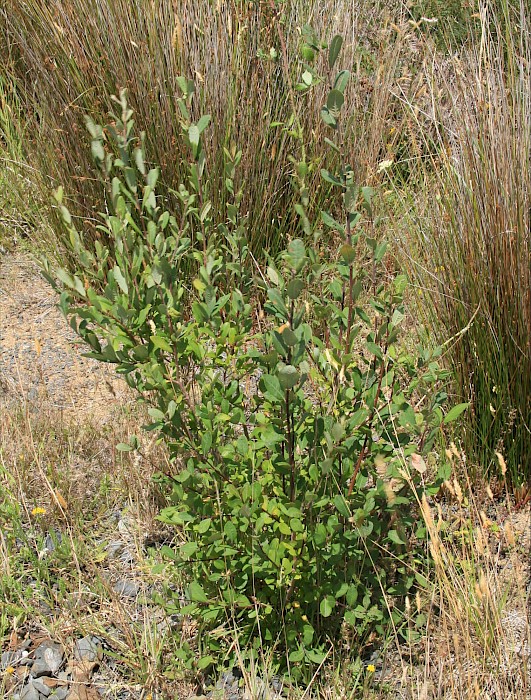
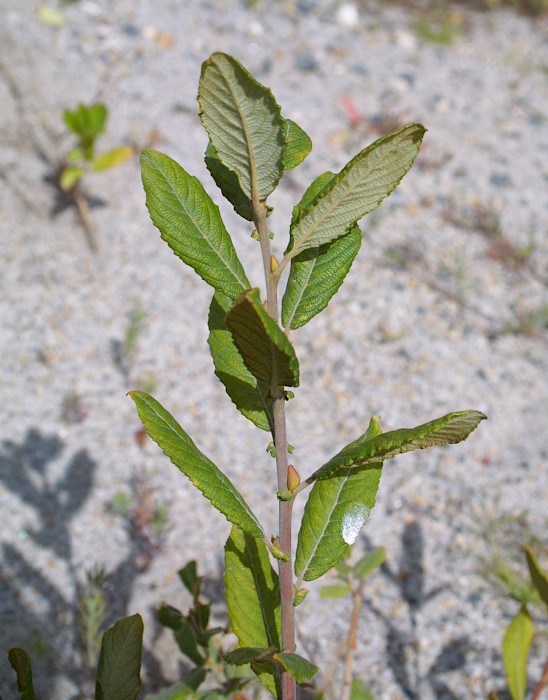
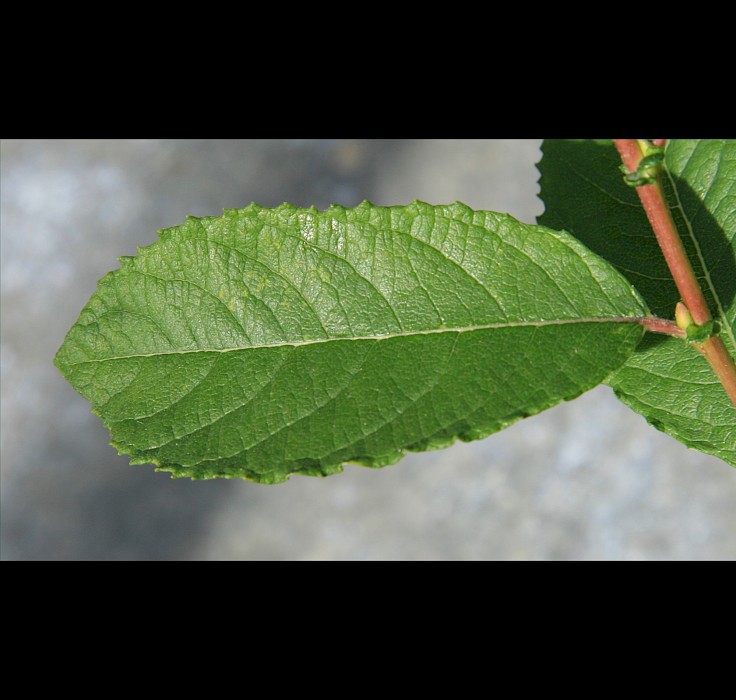
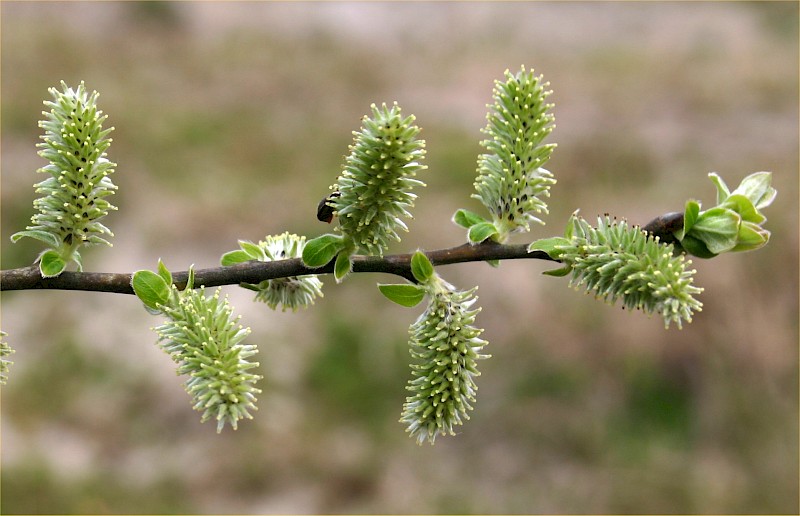
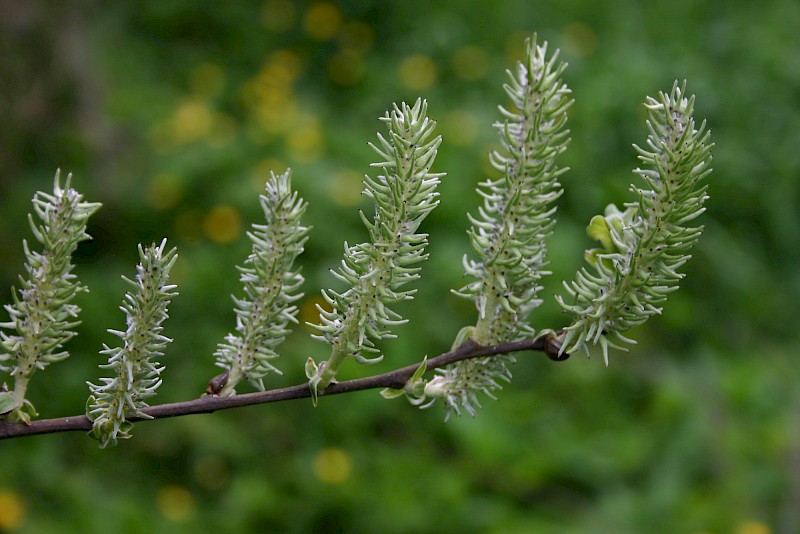
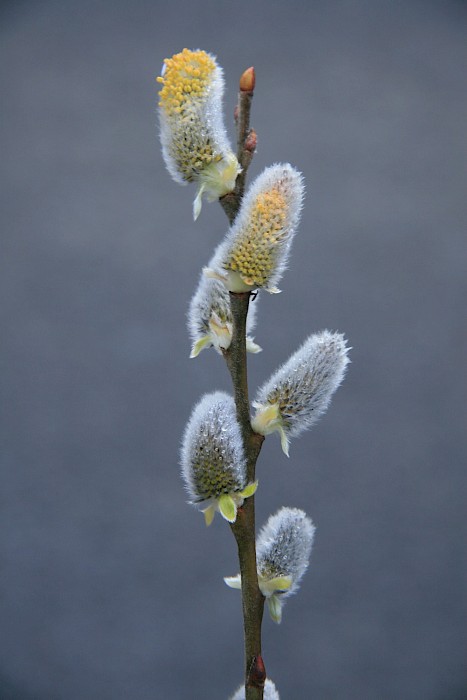
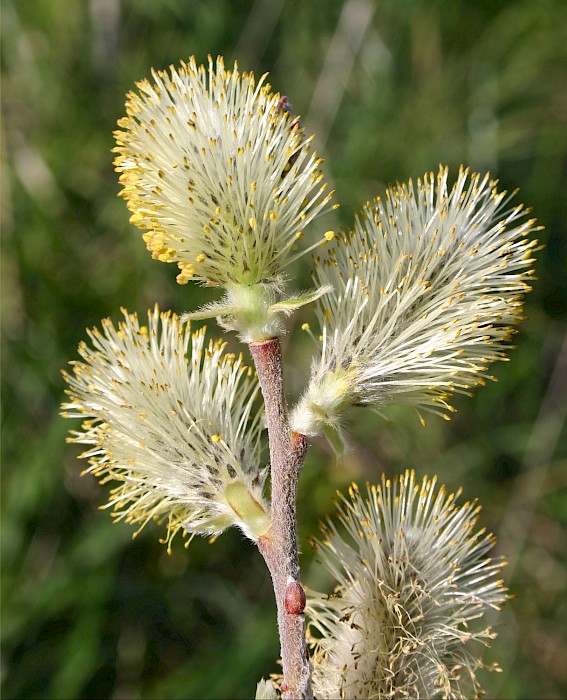
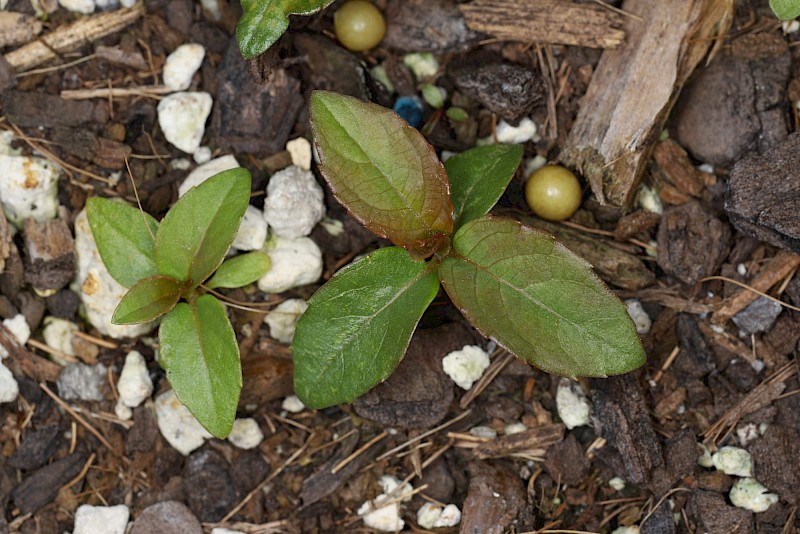
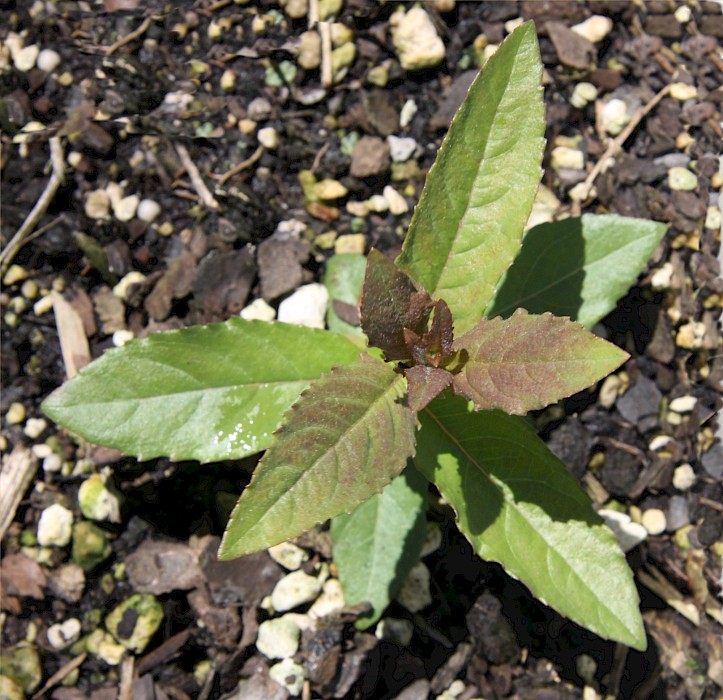
Deciduous shrub or small tree (<7 m), spreading or thicket-forming with suckering roots and smooth bark. Separate male and female plants. Shoots aren’t brittle, and are either grey or greenish-grey and hairy, or reddish-purple and hairless, usually with pale brown markings below surface for two years. Buds are reddish, and oval serrated leaves (20-70 x 15-35 mm) are shiny on the top surface and grey or bluish with dense, soft, grey (occasionally reddish-brown) hairs underneath, are not bitter to taste, and are arranged alternately on the stem. Erect, cylindrical catkins (15- 35 mm long) are produced from September to October before leaves appear. Seed capsule is 2-valved and contains many seeds.
Are there any similar species?
Many Salix species are similar. Pussy willow (S. x reichardtii) is a cross of S. cinerea and has yellow catkins.
Why is it weedy?
Produces many, widely dispersed, short-lived seeds, grows rapidly, and resprouting and suckering habit creates dense thickets. Tolerates flooding, hot to cold temperatures, range of soils, and semi-shade.
How does it spread?
Seeds spread by the wind, and stem fragments and occasionally seed are spread by water. Suckers locally. Planted intentionally on stream and river banks and also in damp places to absorb water.
What damage does it do?
Replaces native species in wetlands and forms vast dense (often pure) stands and thickets. Causes blockages, flooding and structural changes in waterways.
Which habitats is it likely to invade?
Stream and lake edges, river systems, wetlands, and alluvial plains, throughout New Zealand.
What can I do to get rid of it?
Begin control at top of catchment, treat every stem.
1. Physical removal - dig out small plants or excavate larger areas. Dispose or burn all plant material and don’t leave any plant material on site to regrow.
2. Cut and paste - Cut the stem/trunk as close to the ground and cover the entire stump with herbicide as soon as possible after cutting. Apply either glyphosate gel (120g/L strength) OR metsulfuron gel (10g/L strength) OR picloram gel (43g/l strength) to the entire cut stem. Remove all plant material from site as all cut stems can root where they fall.
3. Basal Spray - Basal spray stems up to 20cm diametre with X-Tree Basal. Apply from the ground to a height 6 times the diameter of the plant, ensure the base is thoroughly covered at ground level.
4. Drill or frill - Drill downward sloping holes around the circumference of the trunk about 8-10 cm apart, or Frill (make deep cuts into the sapwood at regular intervals around the base of the tree, taking care not to ring-bark the plant). Fill the holes with undiluted ‘neat’ glyphosate (360g/L active ingredient) or saturate the frill cuts with glyphosate (360g/L active ingredient) mixed at 250ml/L, or fill with metsulfuron-methyl 600 g/kg (20-50g/L + penetrant).
5. Foliar spray (Full leaf stage only) - Apply herbicide using a hand held sprayer/knapsack to plants <1m tall or gun and hose for larger infestations. Apply glyphosate (360 g/L active ingredient) herbicide at 20ml/L plus organosilicone penetrant (2ml/L) to cover entire plant. Note: Glyphosate overspray will kill other (desirable) plants. OR apply metsulfuron herbicide (600g/kg active ingredient at 0.5g/L knapsack or 20g/100L gun and hose) + organosilicone penetrant (3ml/L). Note: Metsulfuron overspray will kill other (desirable) broadleaf plants and has residual activity in the soil which aids in killing below ground parts.
CAUTION: When using any herbicide or pesticide, PLEASE READ THE LABEL THOROUGHLY to ensure that all instructions and directions for the purchase, use and storage of the product, are followed and adhered to.
What can I do to stop it coming back?
Cut stumps regrow rapidly. Best to poison while standing to avoid live stem contact with ground. Prevent grazing and other disturbance. Interplanting can follow if non-spray follow up control options used.
Images