Himalayan balsam
Botanical name
Impatiens glandulifera
Family
Balsaminaceae (balsam)
Also known as
Indian balsam, policeman’s helmet, Impatiens roylei
Where is it originally from?
Himalayas (Northern Pakistan, Kashmir, India)
What does it look like?
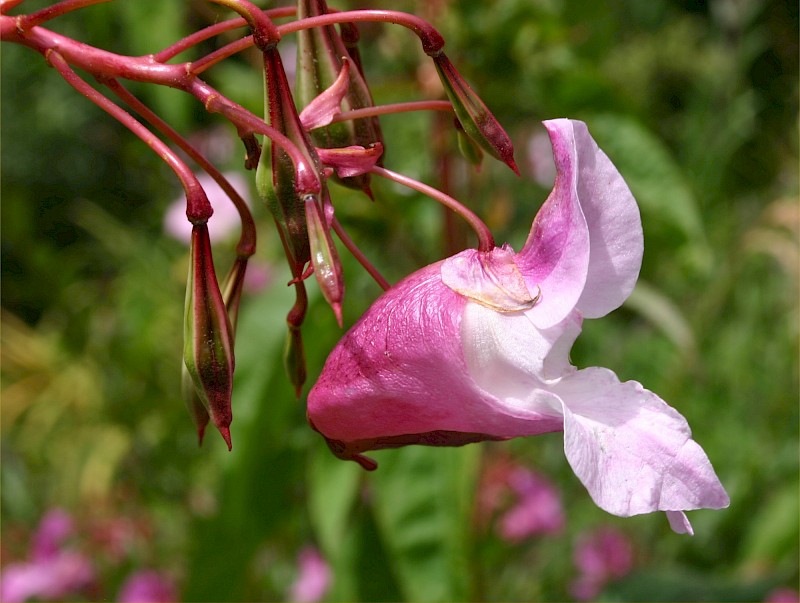
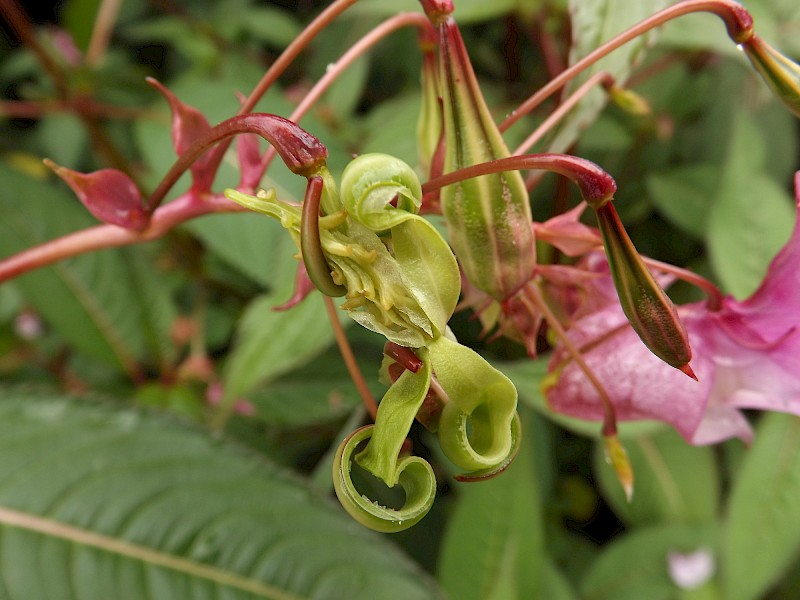
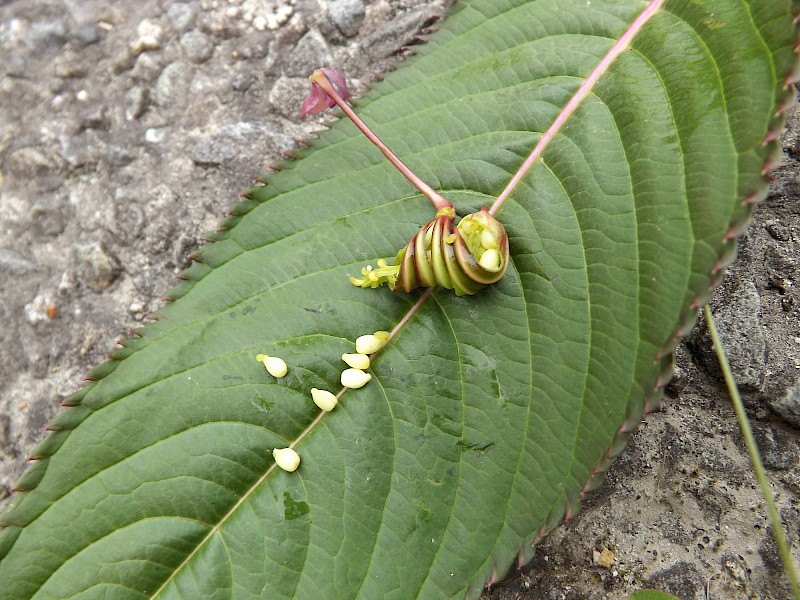
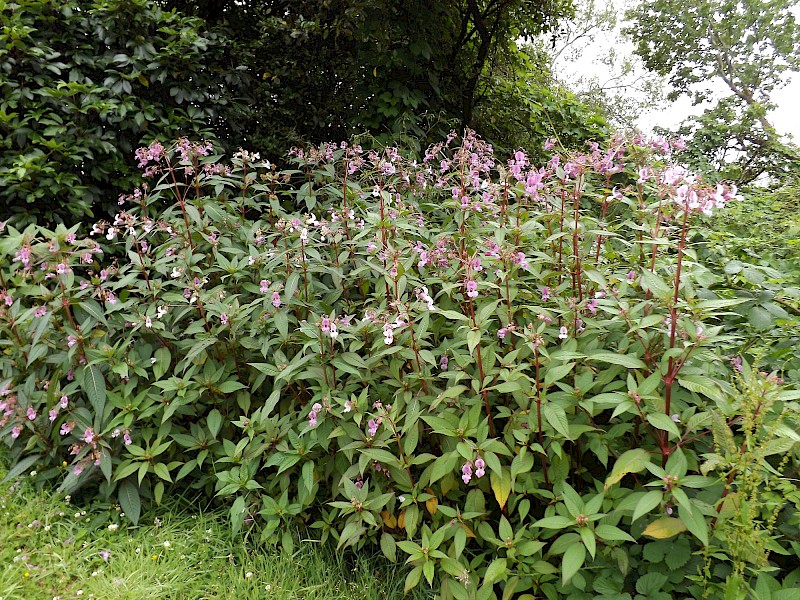
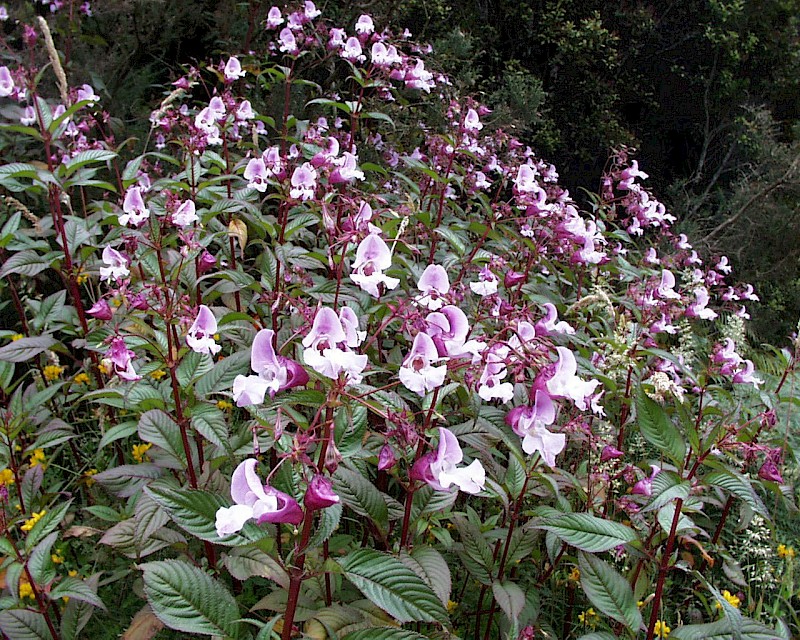
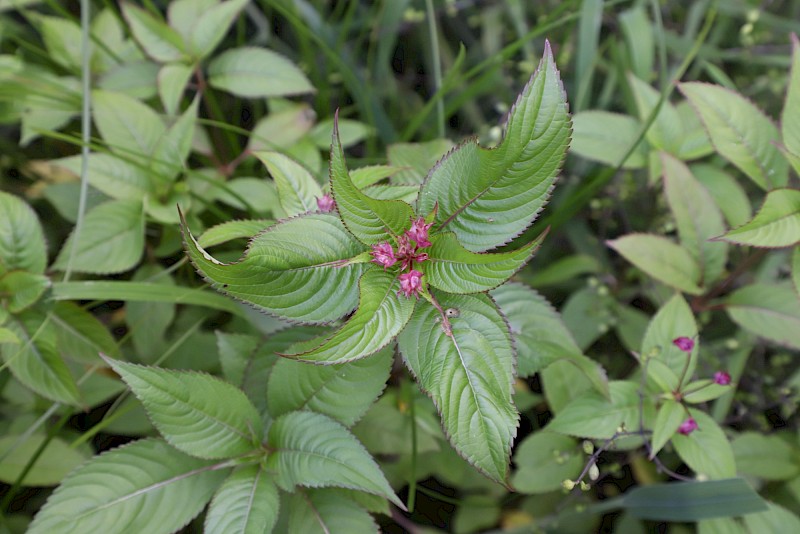
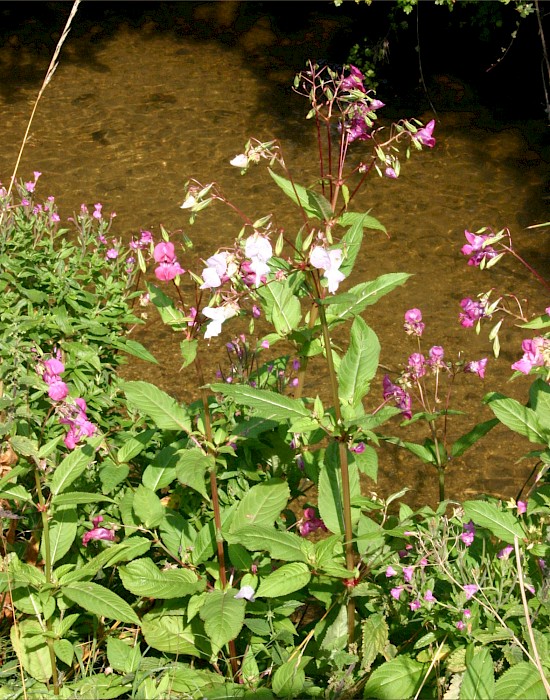
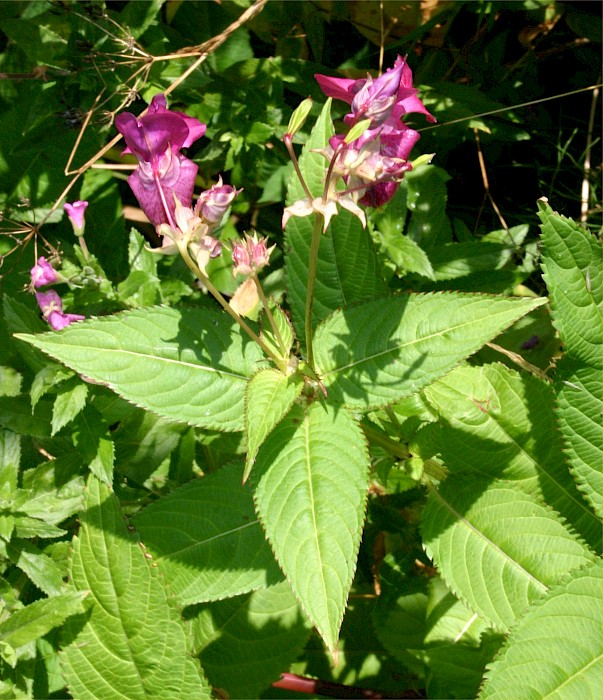
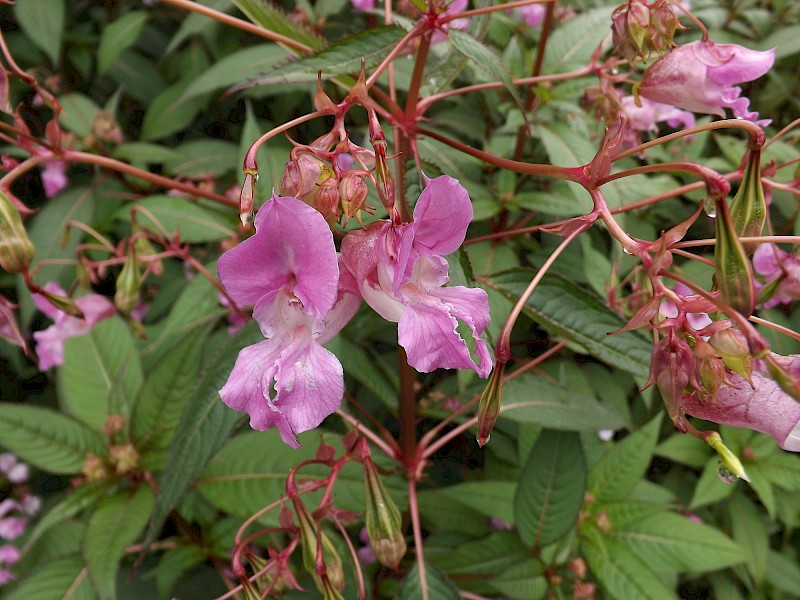
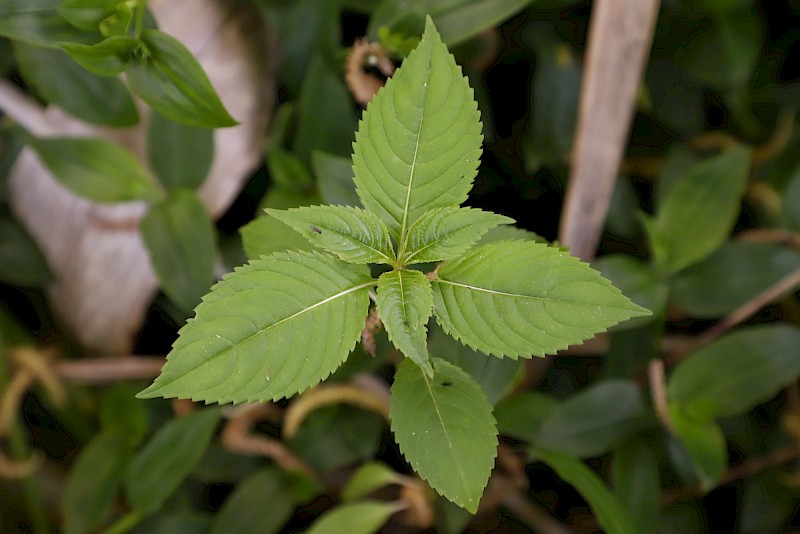
Annual, hairless herb with erect, thick branched main stem (<2.5 m tall) that is fleshy, hollow, ribbed, purple to reddish tinged and swollen at the junctions of leaves and branches. Leaves (10-20 cm long and 3-8 cm wide) with sharply serrated edges and depressed leaf veins above and raised below, taper to a fine point and have long, narrowly winged stalks (about 8 cm) that are pink above and scattered with purplish glands. Pink, white or purple flowers (Nov-Mar) are held on stalks growing near the ends of upper branches and have a backwards pointing hood (<37 mm long). Hairless, ribbed seed capsules (2-3 cm long) are usually purplish on exposed side and open when disturbed, explosively releasing shiny black seeds (3.5-5 mm long).
Are there any similar species?
Shrub balsam (I. sodenii) and garden balsam (I. balsamina) are similar.
Why is it weedy?
Tall and fast growing plant capable of producing up to 2500 seeds that are spread quickly by water and can be viable for 18 months or more. It competes with native plants for light, space and pollinators (bee) and spreads into river edges, gullies, wetlands, forest margins and other similar areas.
How does it spread?
Reproduction is by seed only. Seeds float and are spread by water movement.
What damage does it do?
Competes with native plants for light, space and pollinators (bees). It can dominate the vegetation on stream banks, leaving them bare over winter and prone to erosion.
Which habitats is it likely to invade?
River edges, riparian areas, gullies, wetlands, forest margins, roadsides and ditches. It prefers moist soil and full sun to light shade.
What can I do to get rid of it?
Contact your regional council to determine the status of this species and responsibility for control.
1. Physical removal - Hand pull seedlings and small patches before seeding (spring to summer). Dispose of at refuse transfer station.
2. Foliar Spray - Apply either glyphosate (360 g/L active ingredient at 20ml/L knapsack) plus organosilicone penetrant (2ml/L), to cover entire plant. Note: Glyphosate overspray will kill other (desirable) plants OR Apply Metsulfuron herbicide (600g/kg active ingredient at 0.5g/1L knapsack or 20g/100L gun and hose) plus organosilicone penetrant (3ml/L) Note: overspray will kill other (desirable) broadleaf plants and has residual activity in the soil which aids in killing below ground parts.
CAUTION: When using any herbicide or pesticide, PLEASE READ THE LABEL THOROUGHLY to ensure that all instructions and directions for the purchase, use and storage of the product, are followed and adhered to.
What can I do to stop it coming back?
Monitor the site for two years, treating any regrowth from stumps or seedlings.
Images