Ice plant
Botanical name
Carpobrotus edulis
Family
Aizoaceae (fig-marigold)
Also known as
Pigface, hottentot fig, Mesembryanthemum edule
Where is it originally from?
South Africa
What does it look like?
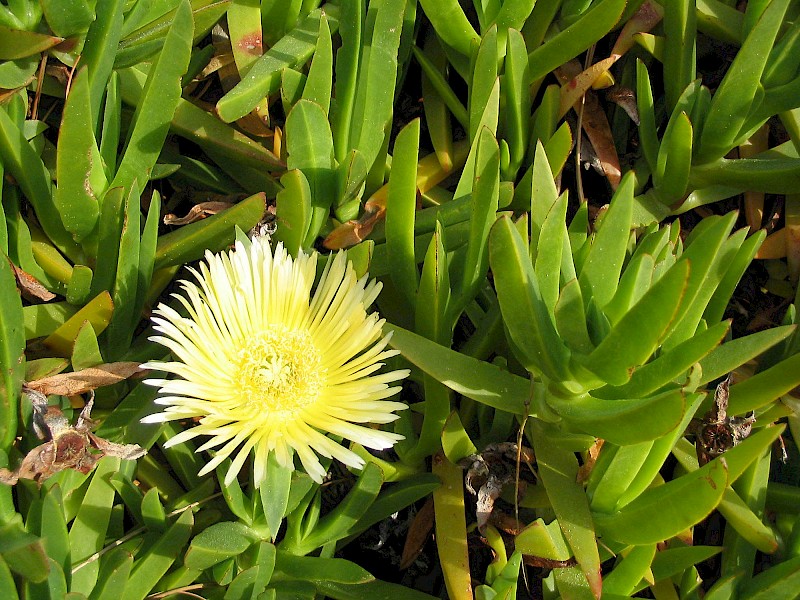
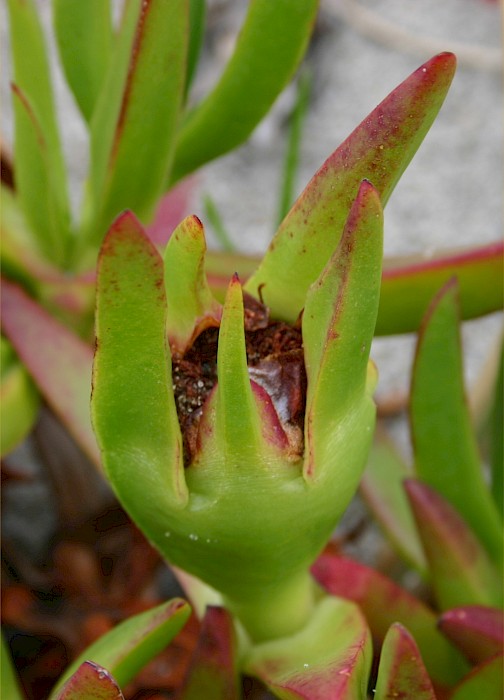
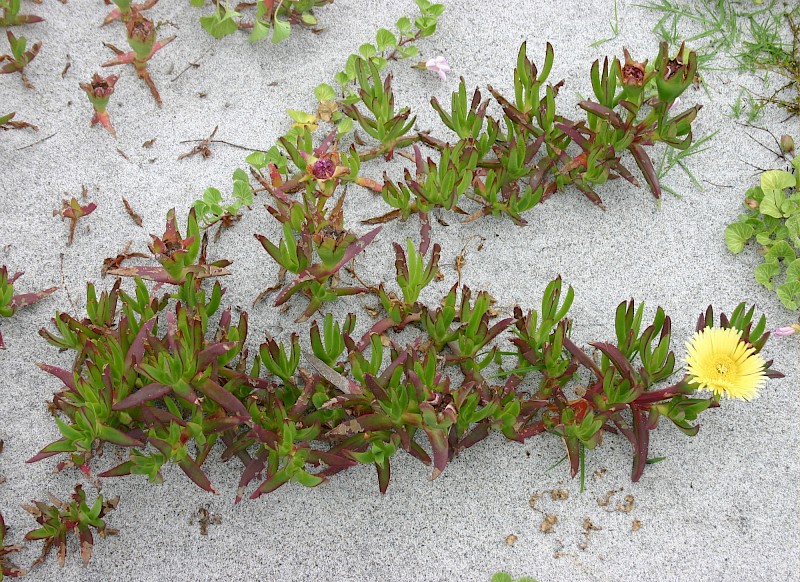
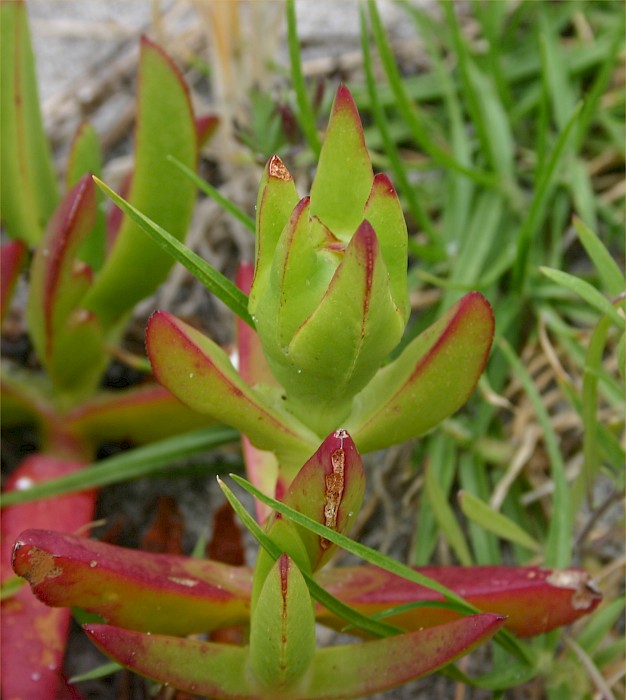
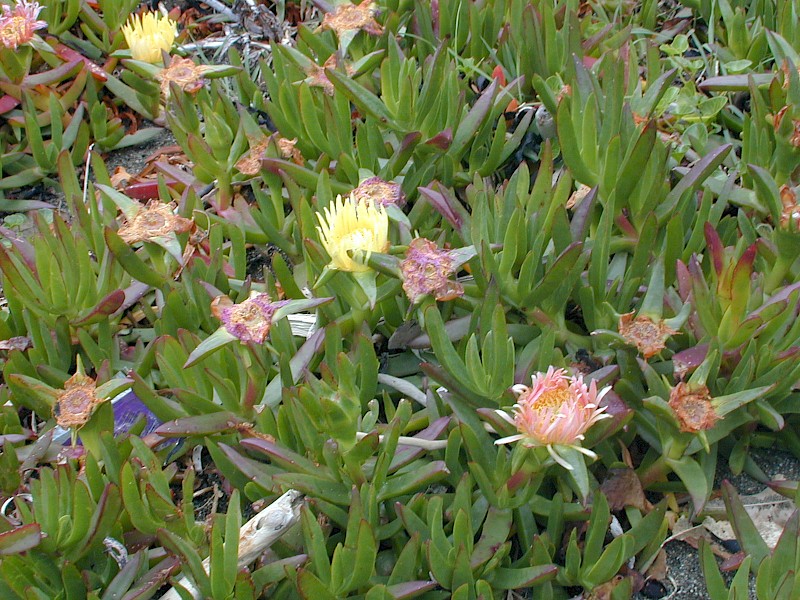
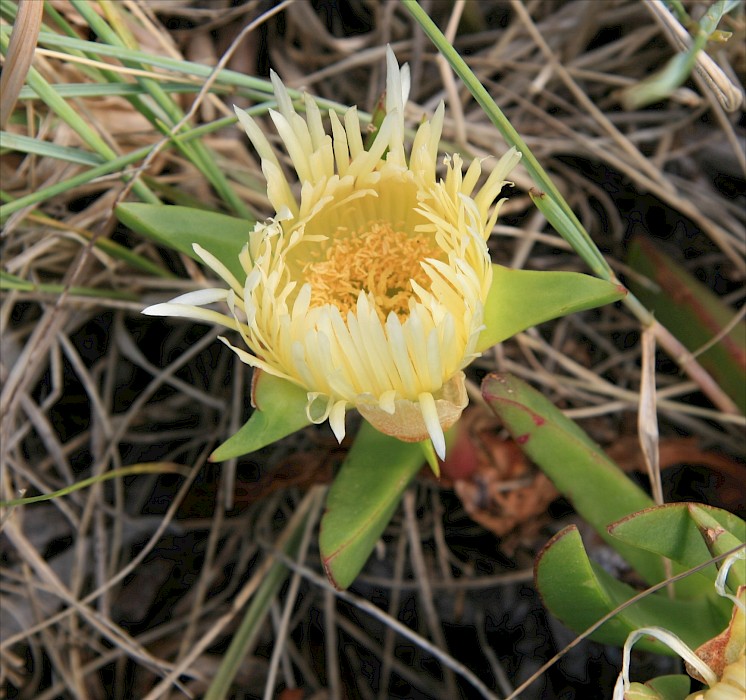
Low-growing, mat forming perennial with fleshy, succulent, 3-angled leaves (7-12 cm long) and 2-angled stems. Many-petalled yellow flowers (<10 cm diameter, mostly Oct-Feb) that turn pinkish-orange with age develop into fleshy fruit containing seed. Can hybridise with the native Disphyma australe to produce smaller plants (leaves 2-6 cm long) with orange-pink or yellow-whitish flowers (4.5-6cm diameter), turning pink with a yellow base with age. No fruit is formed.
Are there any similar species?
Carpobrotus aequilaterus (exotic) has purple flowers (6.5-8cm diameter). Disphyma austral (native) has smaller leaves (<4 cm long), round stems, and uniformly white to deep pink flowers (2-4cm diameter, all year round) displayed in rows and followed by fleshy fruits. D. papillatum (endemic) is similar to D. austral but has flattened, 2-angled stems, flowers Nov-Jan only. D. clavellatum (exotic) has round or weakly angled leaves up to 5 cm long and round stems. Purple flowers (2-4 cm diameter, Dec-Jan), petals white at base, followed by fruit (Dec-Apr).
Why is it weedy?
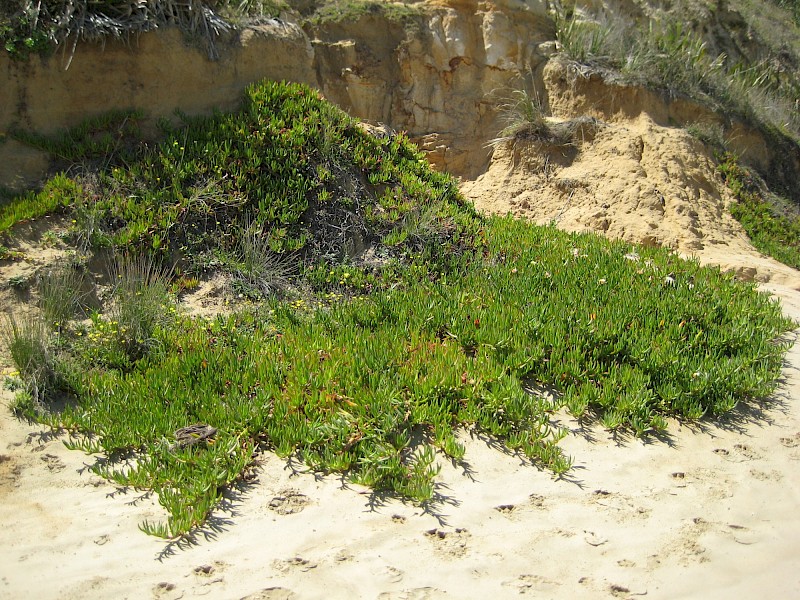
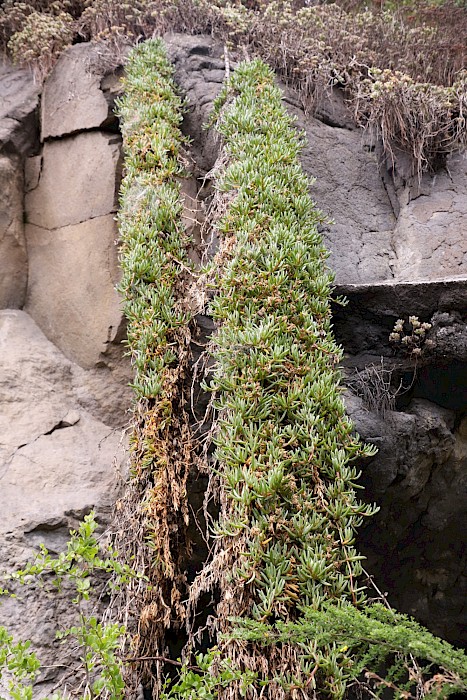
Can spread rapidly, forming impenetrable mats to 50m in diameter and over 50cm deep, competing aggressively with native species. C. edulis produces abundant seeds
How does it spread?
C. edulis spreads by seed and stem fragments. Hybrid plants do not form seeds but spread by stem fragments. The ability to root at each node (stem joint) allows it to spread rapidly.
What damage does it do?
Hybridises with and replaces the native ice plant (Disphyma australe). Forms mats over sand dunes and open areas, displacing other vegetation and changing the structure of sand dunes by preventing sand movement and hindering the natural processes of disturbance and change in dune environments. Reduces soil pH and influences soil nutrients, and can produce a build-up of organic matter in normally sandy soils, leading to other non-native species being able to establish.
Which habitats is it likely to invade?
Coastal cliffs and sand dunes, and open (but frost-free) areas such as roadsides.
What can I do to get rid of it?
1. Physical removal - Hand-pull individual plants and remove any buried stems (all year round): Large mats can be removed by rolling them up like a carpet. Remove vegetation from the site or elevate from contact with the ground by mulching
2. Foliar spray - Apply glyphosate (360 g/L active ingredient at 100ml/10L knapsack, 1L/100L gun and hose) plus organosilicone penetrant (3ml/L), to cover entire plant. Note: Glyphosate overspray will kill other (desirable) plants.
CAUTION: When using any herbicide or pesticide, PLEASE READ THE LABEL THOROUGHLY to ensure that all instructions and directions for the purchase, use and storage of the product, are followed and adhered to.
What can I do to stop it coming back?
Monitoring and follow-up control will be required to prevent seedling establishment. Revegetate dune area with native dune plants.
Images