Loquat
Botanical name
Eriobotrya japonica
Family
Rosaceae (rose)
Where is it originally from?
China, Japan
What does it look like?
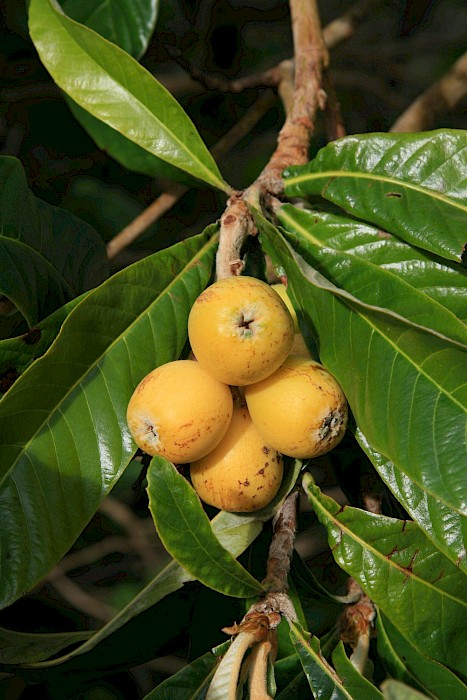
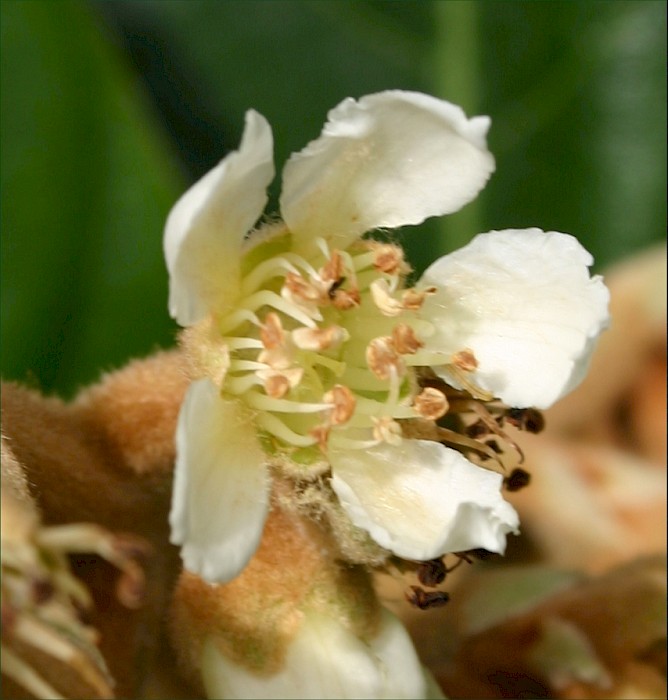
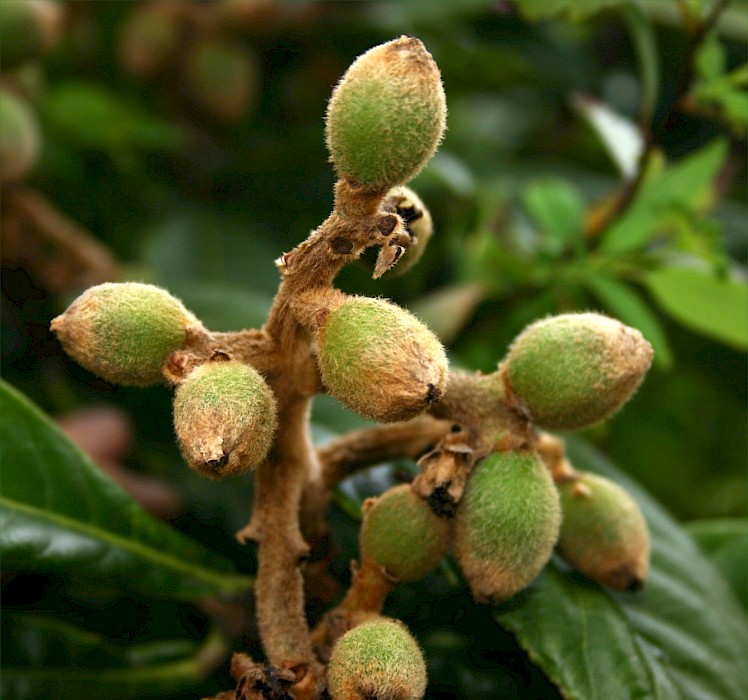
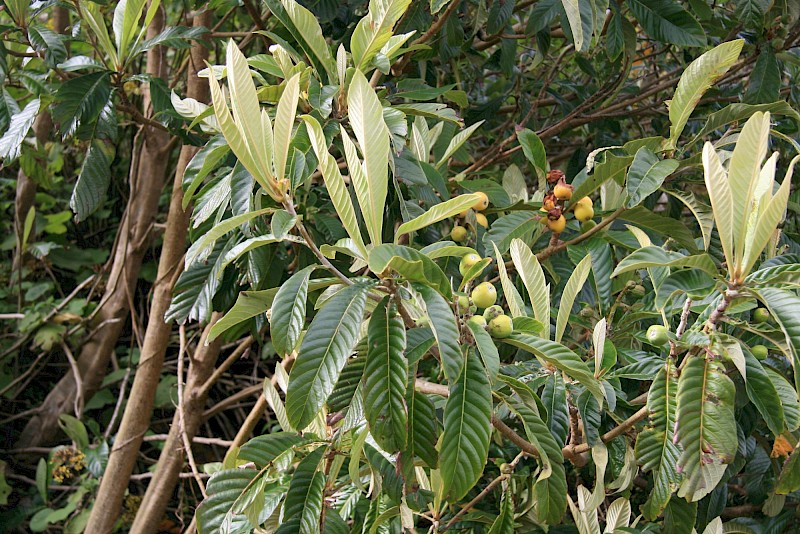
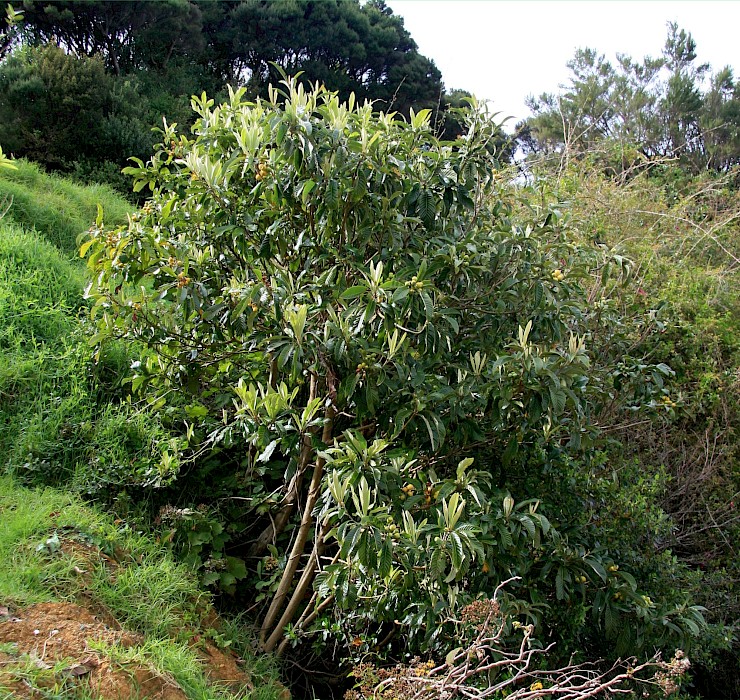
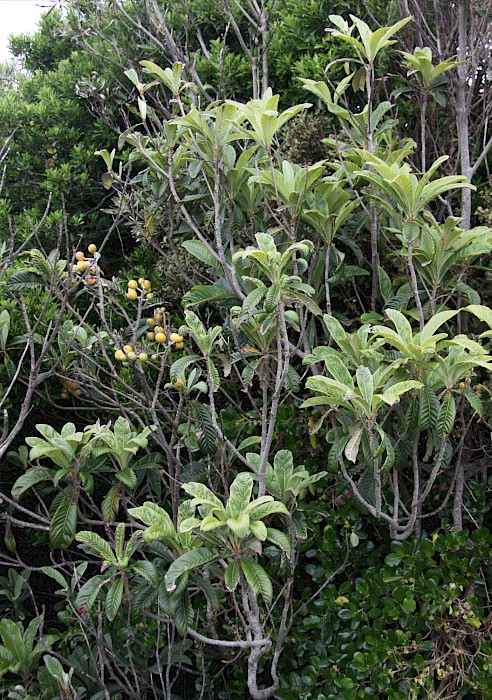
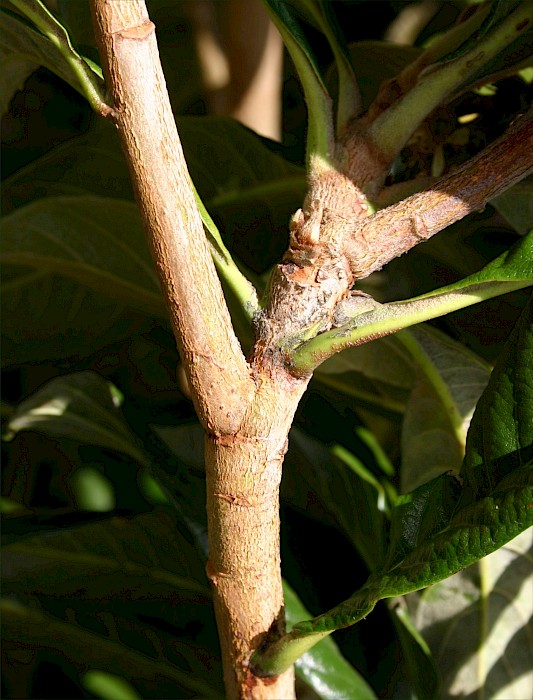
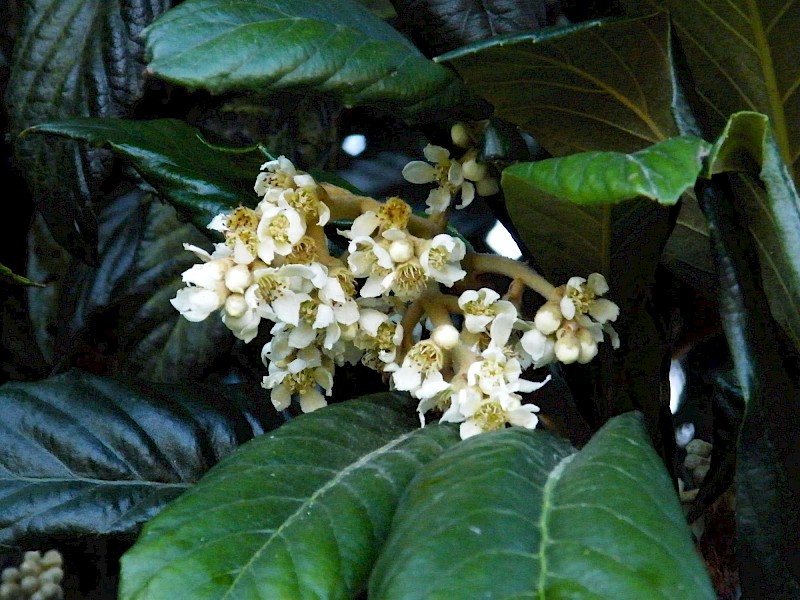
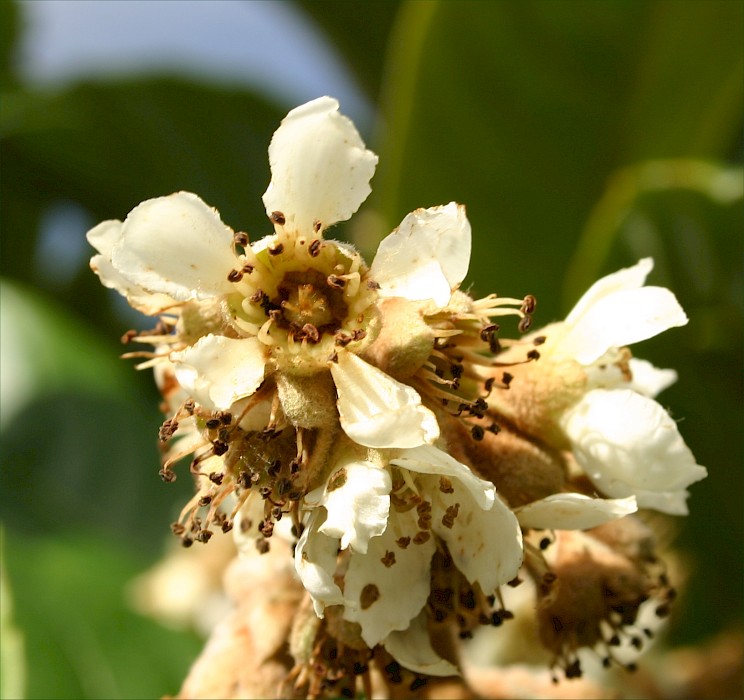
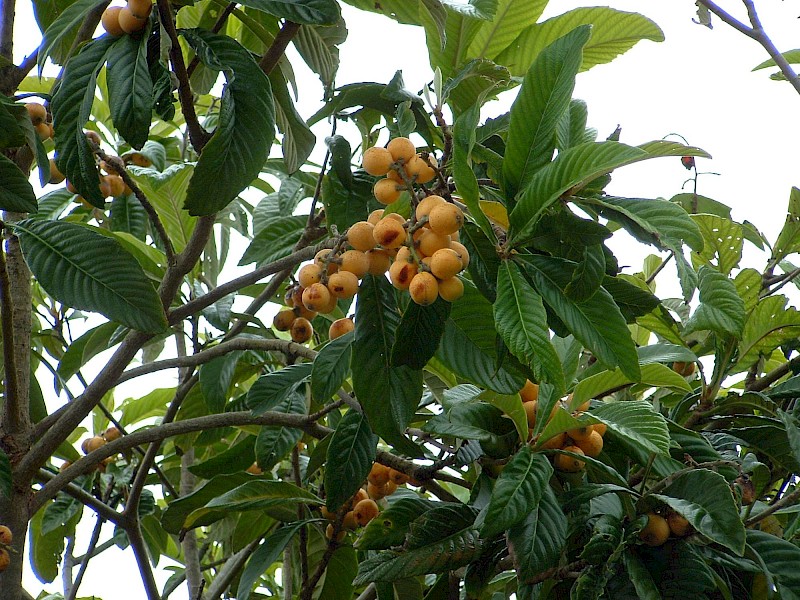
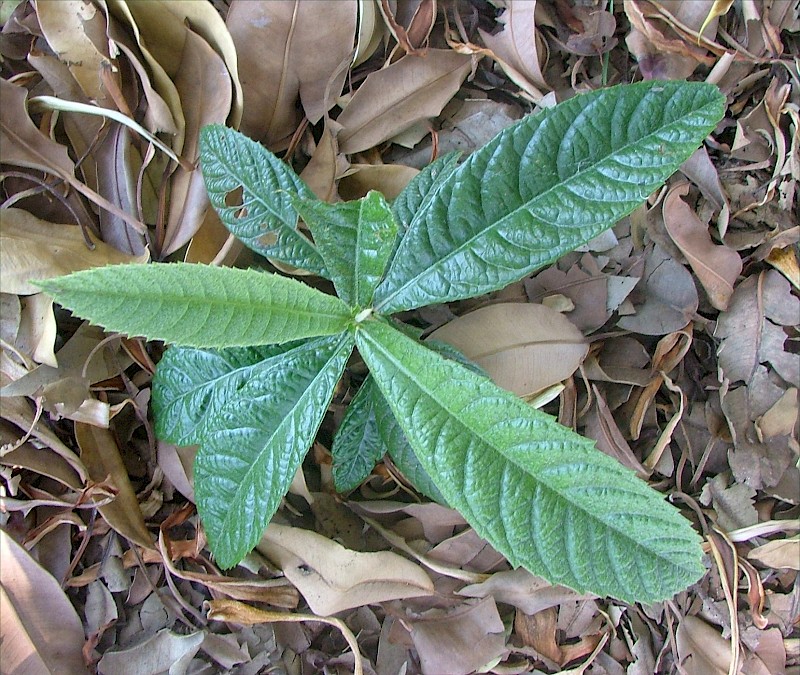
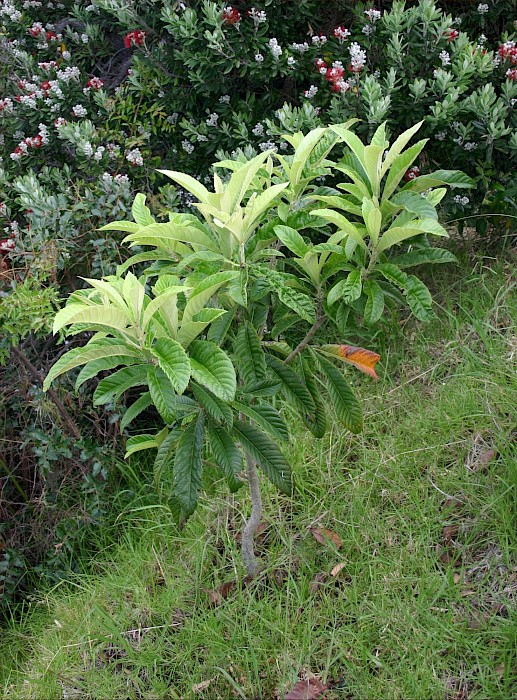
Evergreen tree (<8 m tall) with erect trunk and main branches, and spreading secondary branches. Young stems are stout and covered in a white down, while older stems have leaf scars and become grey-brown and calloused. Narrow ovalish, leathery leaves (15-35 x 7-10 cm) are clustered near branch tips and have a wrinkled surface that is dark green and glossy above, and thinly hairy below. Young leaves are totally brown and hairy. White or ivory 5-petalled flowers (8 x 4 mm, Apr-Aug) are followed by pear-shaped to roundish fruit (<50 x 35 mm, Oct-Dec) with yellow skin covered in downy hair. Seeds are large and brown.
Why is it weedy?
Produces many well dispersed, highly viable seeds, and grows rapidly. Tolerates wet to dry conditions, hot to moderately cool temperatures, most soils, and moderate shade.
How does it spread?
Spread by birds, especially kereru, and humans, and in dumped vegetation. Gardens, wastelands, and exotic plantations are common seed sources.
What damage does it do?
Forms tall stands, replaces native low canopy and mid-tier species.
Which habitats is it likely to invade?
Disturbed forest and shrubland, and inshore islands, mainly in northern North Island.
What can I do to get rid of it?
1. Physical removal - dig out small plants or excavate larger areas. Can be left on site to rot down.
2. Cut and paste (all year round) - Cut the stem/trunk as close to the ground as possible and cover the entire stump with herbicide as soon as possible after cutting. Apply metsulfuron gel (10g/l strength)
3. Basal spray stems up to 20cm diametre with X-Tree Basal. Ensure the base is thoroughly covered at ground level.
4. Foliar spray - Apply herbicide using a hand held sprayer/knapsack to plants <1m tall or gun and hose for larger infestations. Use the label recommended adjuvant. Apply metsulfuron herbicide (600g/kg active ingredient at 5g/10L knapsack or 20g/100L gun and hose) plus organosilicone penetrant (3ml/L) Note: Metsulfuron overspray will kill other (desirable) broadleaf plants and has residual activity in the soil which aids in killing below ground parts. Do not use over or near water bodies or wetlands and use only as directed on label.
CAUTION: When using any herbicide or pesticide, PLEASE READ THE LABEL THOROUGHLY to ensure that all instructions and directions for the purchase, use and storage of the product, are followed and adhered to.
What can I do to stop it coming back?
Cut stumps rarely resprout. Reseeds in bared areas. Plan for considerable seedling growth after control, dense planting can prevent this. Remove from gardens near to valuable habitats.
Images