Mile-a-minute
Botanical name
Dipogon lignosus
Family
Fabaceae (pea)
Also known as
Sweet pea vine, pea vine, Dolichos lignosus
Where is it originally from?
South Africa
What does it look like?
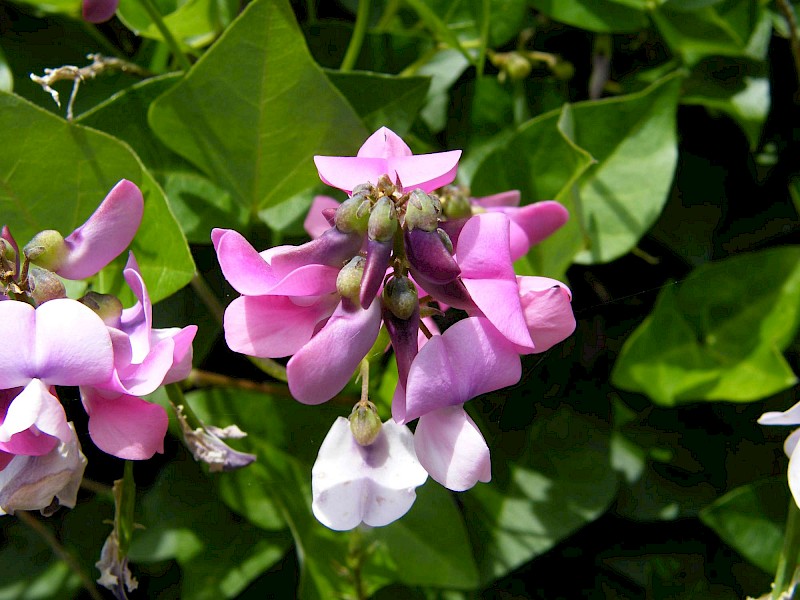
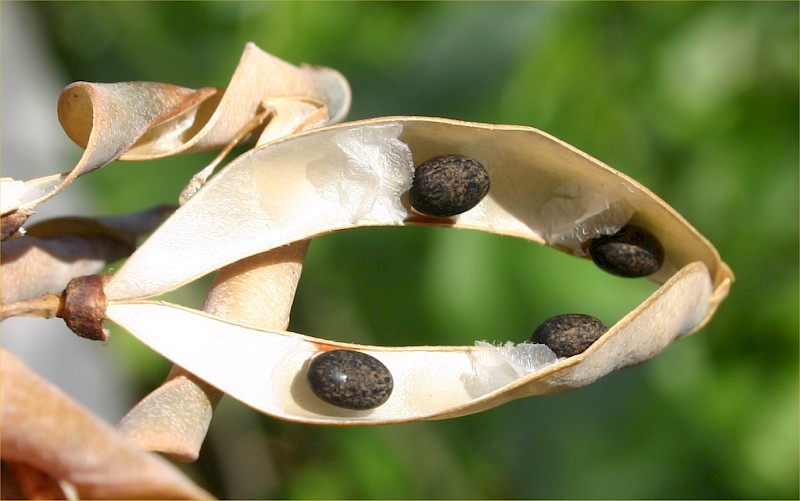
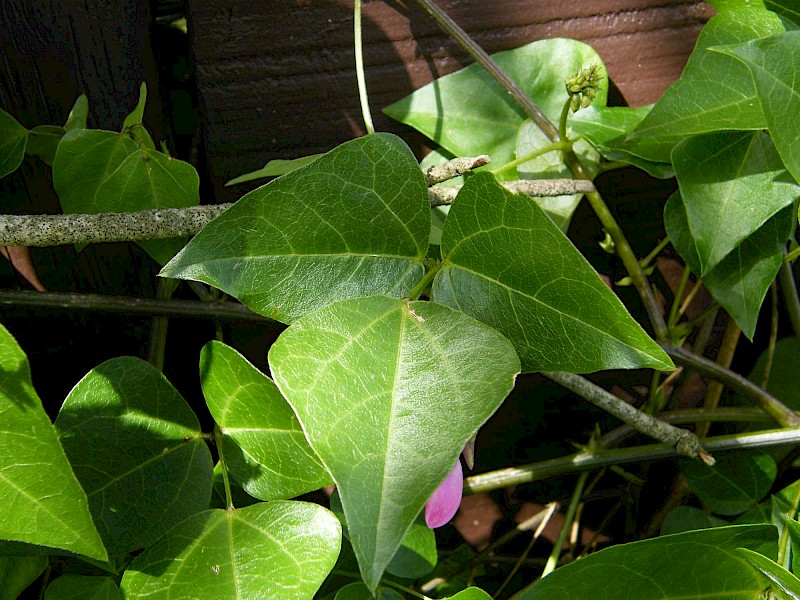
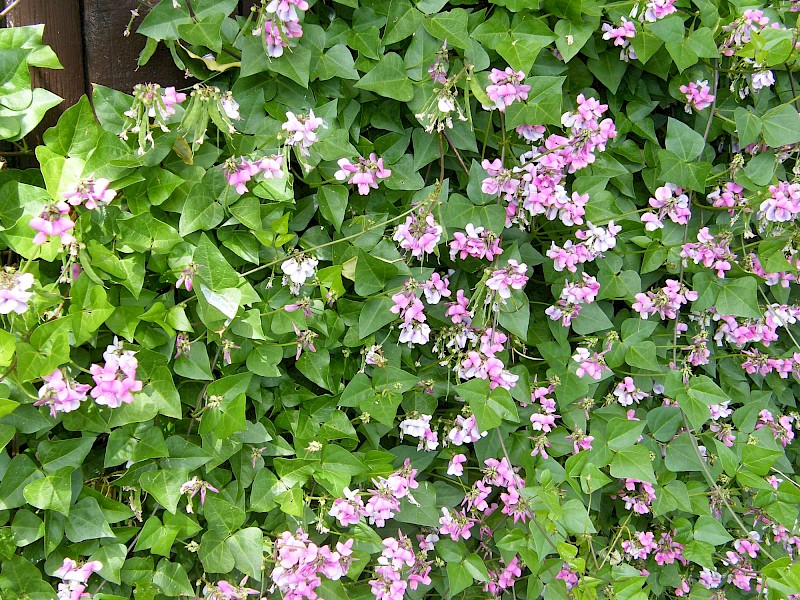
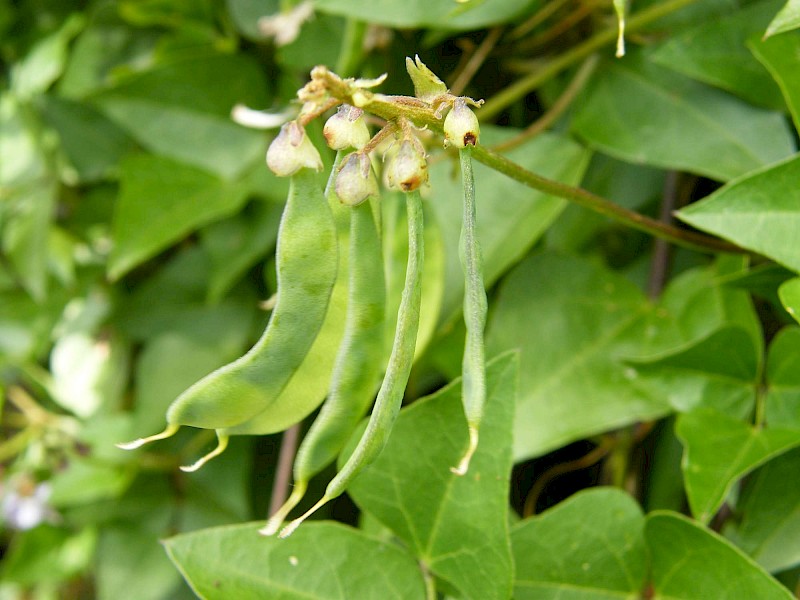
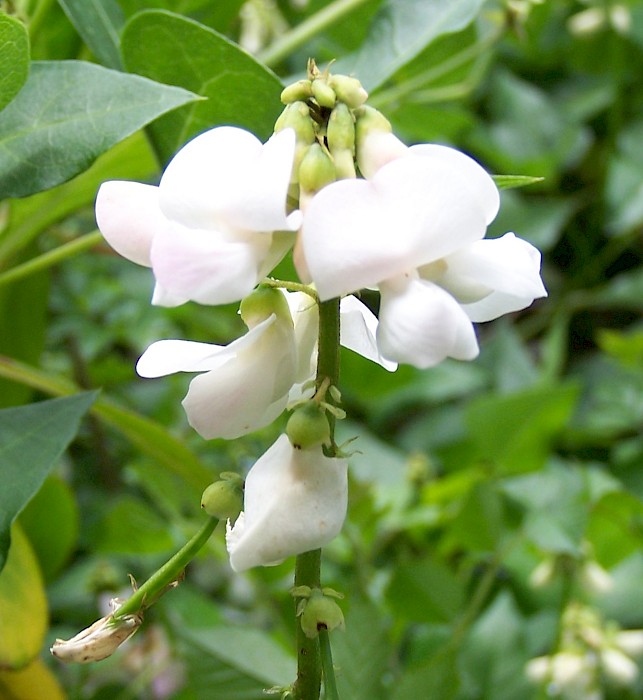
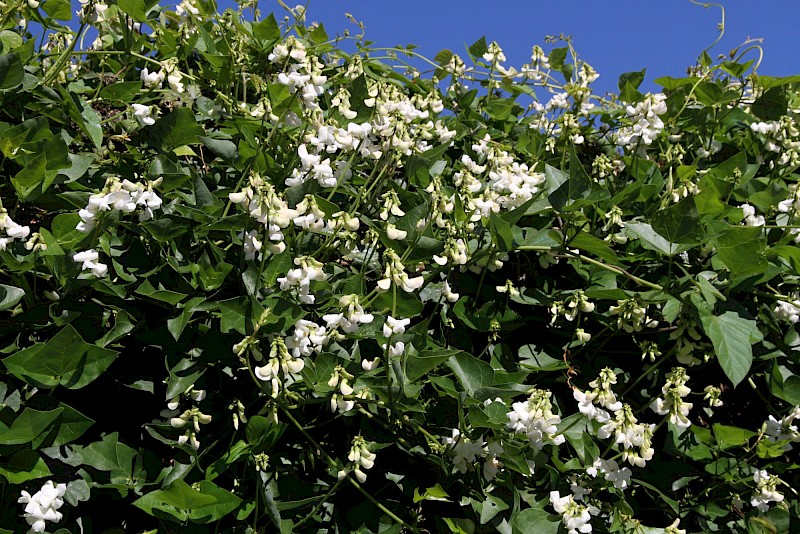
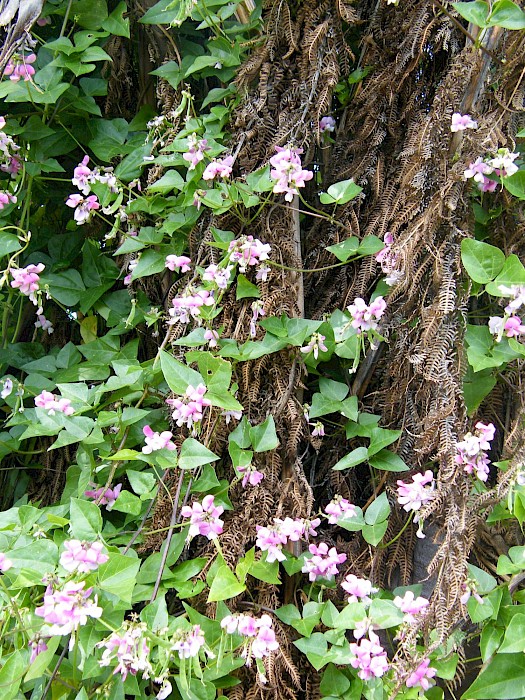
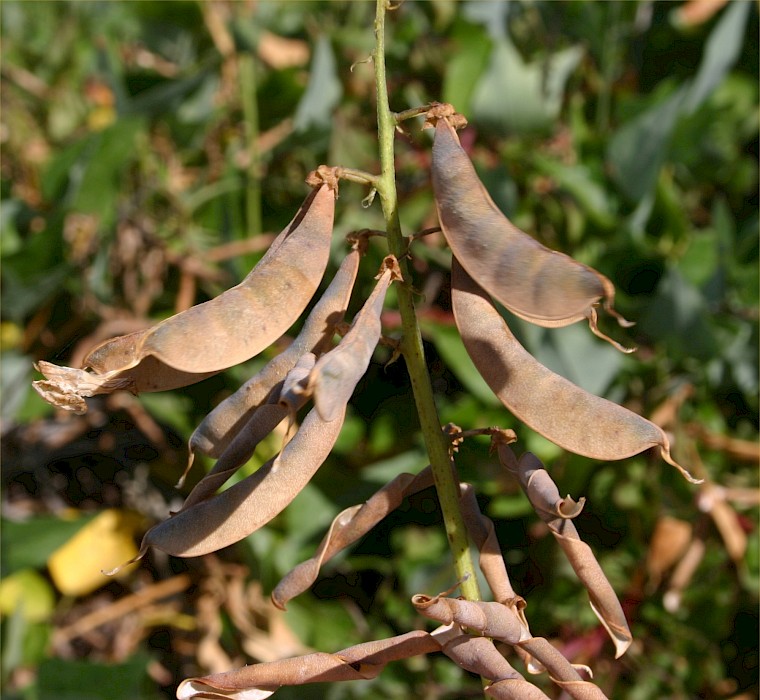
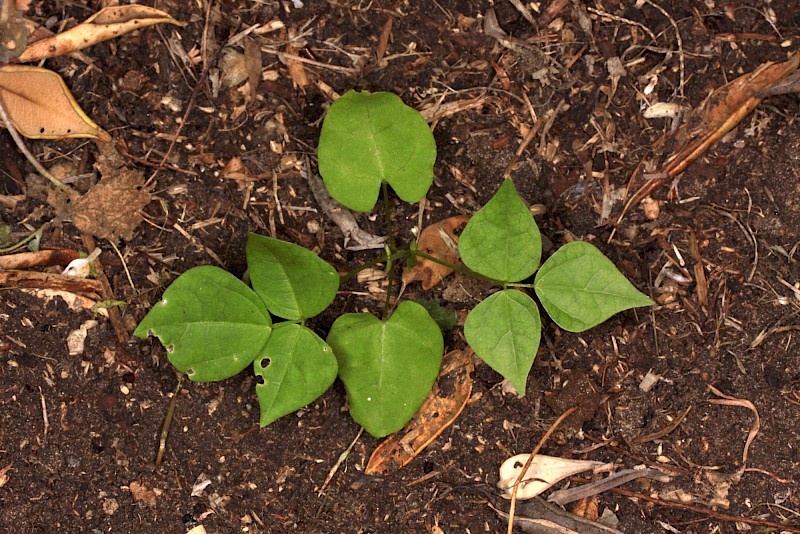
Evergreen, climbing vine with rounded, moderately hairy stems that are woody towards their base. Leaves are made up of three heart-shaped leaflets (25-55 mm long) that are not usually arranged in a flat plane. Pea-like white, lavender and white, or pink to reddish purple flowers (10-15 mm long) are produced from spring to summer, and develop into boat-shaped seed pods (30-40 mm long) that ripen and split to release the seeds.
Are there any similar species?
Only vine with pea-like flowers and trifoliate leaves.
Why is it weedy?
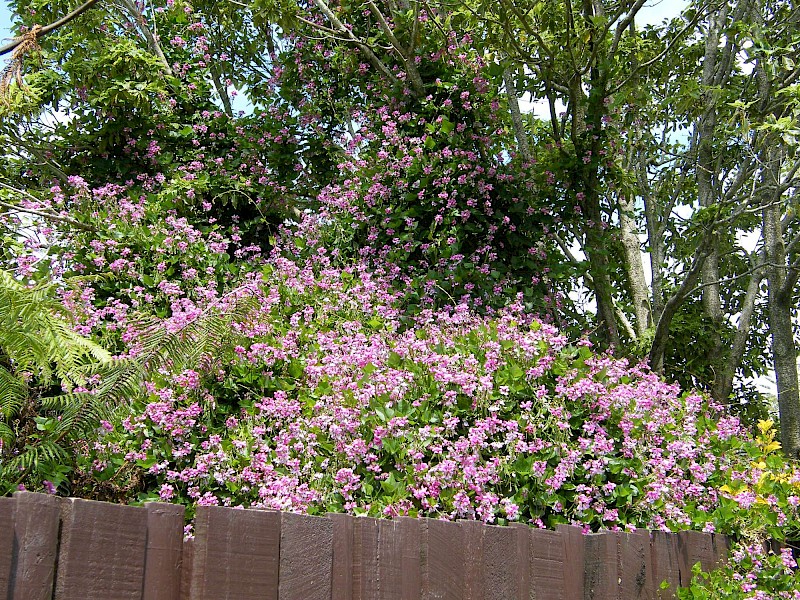
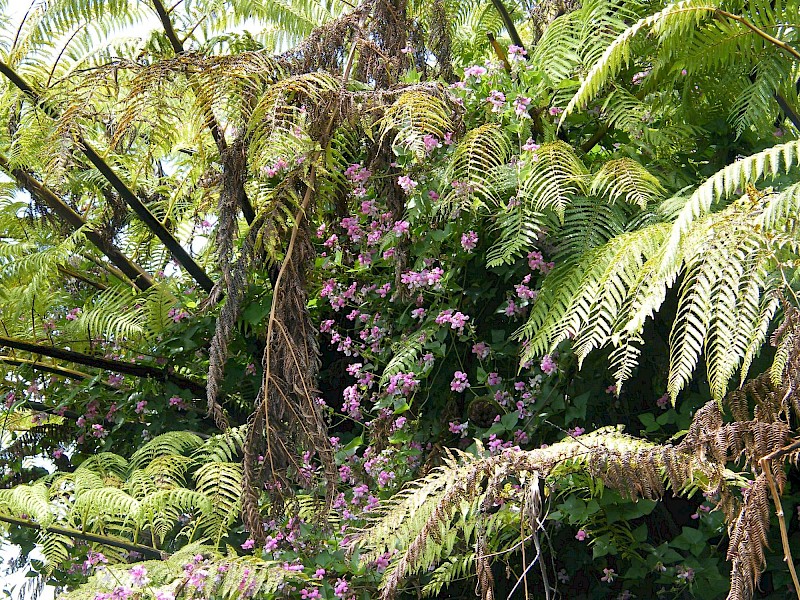
Rapidly smothers low growing shrubs and regenerating native forest canopy, and eventually takes over completely, shading out the plants underneath. Birds spread seeds when the plant is used as nesting material, and seed can also be carried by water. Tolerates drought or damp conditions, wind, salt, poor soils, and damage, but not shade.
How does it spread?
Seeds drop near parent plants, but most is spread in dumped vegetation or soil and also by sea or fresh water. Gardens, roadsides, vacant land and hedges are all common sources.
What damage does it do?
Smothers and kills most plants from ground level to medium canopy and prevents the establishment of native plant seedlings. Thrives in bare sites and increased nitrogen in impoverished soil types may change the species that can grow there to a high-fertility weed communitye, to the detriment of specialised plants eg. orchids, ferns, herbs, and so on.
Which habitats is it likely to invade?
Forest margins, coastline, cliffs, shrublands, and limestone areas.
What can I do to get rid of it?
Note: Check with your local regional council first. This is classed as a pest plant in some regions and the council may be responsible for its control.
1. Physical removal - Hand pull or dig out entire plant - Ensure all plant material is removed from site to prevent regrowth and dispose of to a refuse transfer station.
2. Cut and paste - Cut the stem as close to the ground as possible and cover the entire stump with herbicide as soon as possible after cutting. Apply either glyphosate gel (400g/l strength) OR metsulfuron gel (10g/l strength). Do not use metsulfuron near desirable plants or over wetlands.
3. Leaf paint - Brush neat glyphosate (360 g/l) on underside of individual leaves on each branch, gel may also be used
4. Foliar spray - Apply Glyphosate (360 g/L active ingredient) herbicide at 20ml/L to cover entire plant OR Apply metsulfuron herbicide at 0.5g/L using a hand held sprayer/knapsack + organosilicone penetrant (3ml/L). Note: Overspray will kill other (desirable) broadleaf plants. Metsulfuron based herbicides have residual activity in the soil which may leach through soil and kill other plants, do not use under and around other (desirable) broadleaf plants.
CAUTION: When using any herbicide or pesticide, PLEASE READ THE LABEL THOROUGHLY to ensure that all instructions and directions for the purchase, use and storage of the product, are followed and adhered to.
What can I do to stop it coming back?
Stumps resprout very quickly, cut stems root at nodes. Seeds produced in moderate quantities. Check at least 6-monthly for seedlings. Plant dense shading species immediately where possible.
Images