Monkey apple
Botanical name
Syzygium smithii
Family
Myrtaceae (myrtle)
Also known as
Lilly pilly, white monkey apple, acmena, Acmena smithii, Eugenia smithii
Where is it originally from?
Australia
What does it look like?
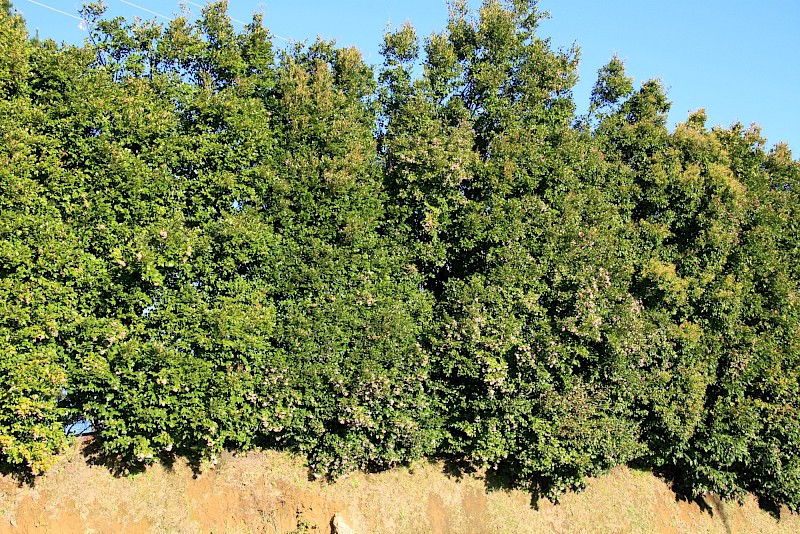
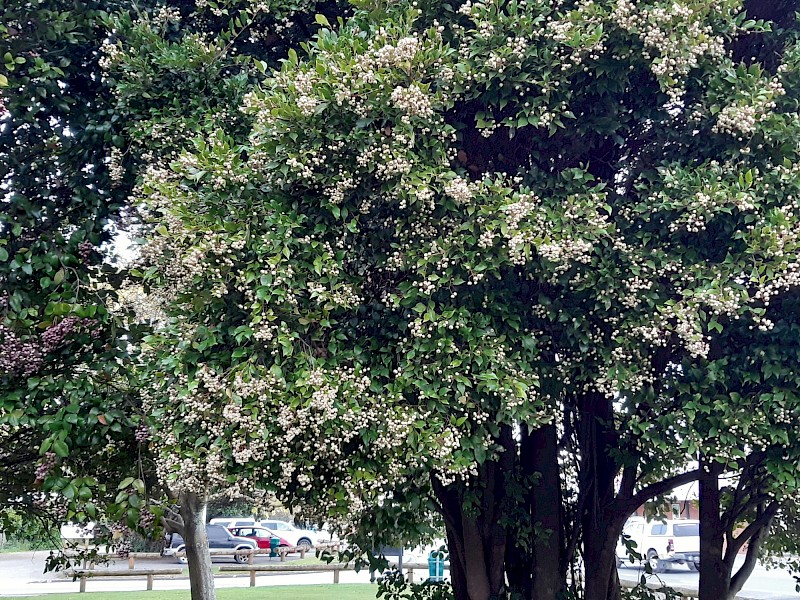
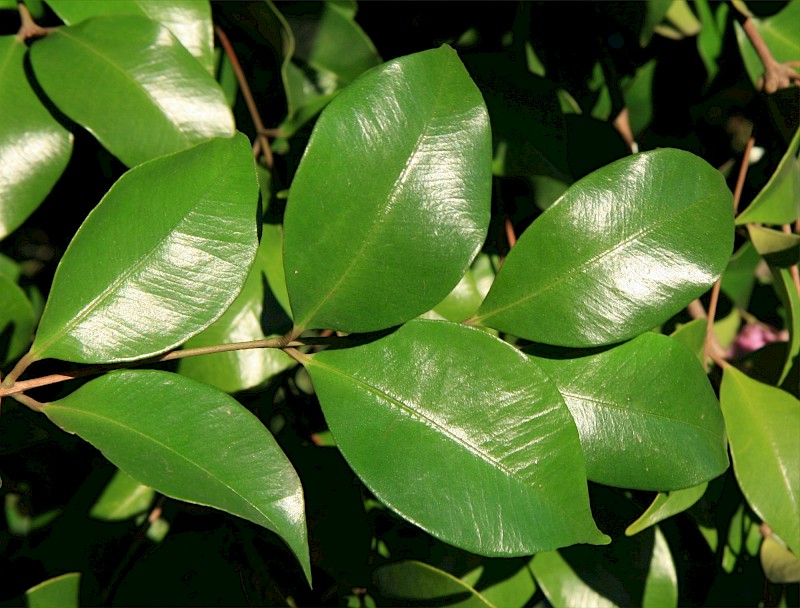
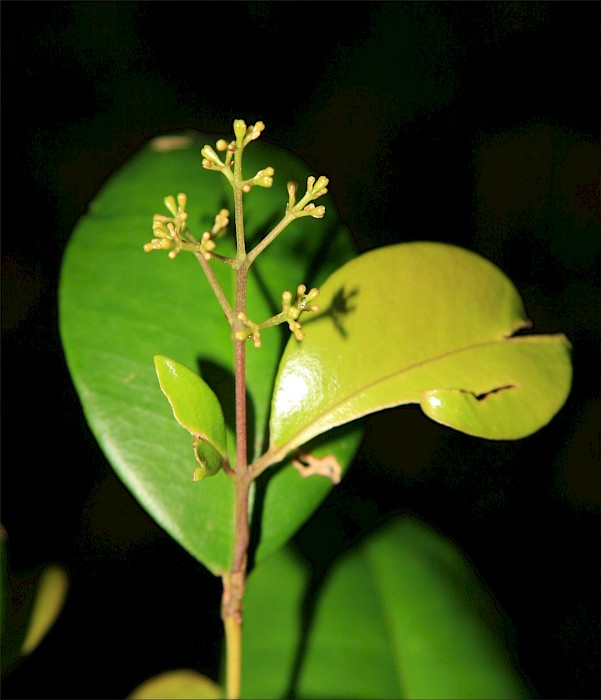
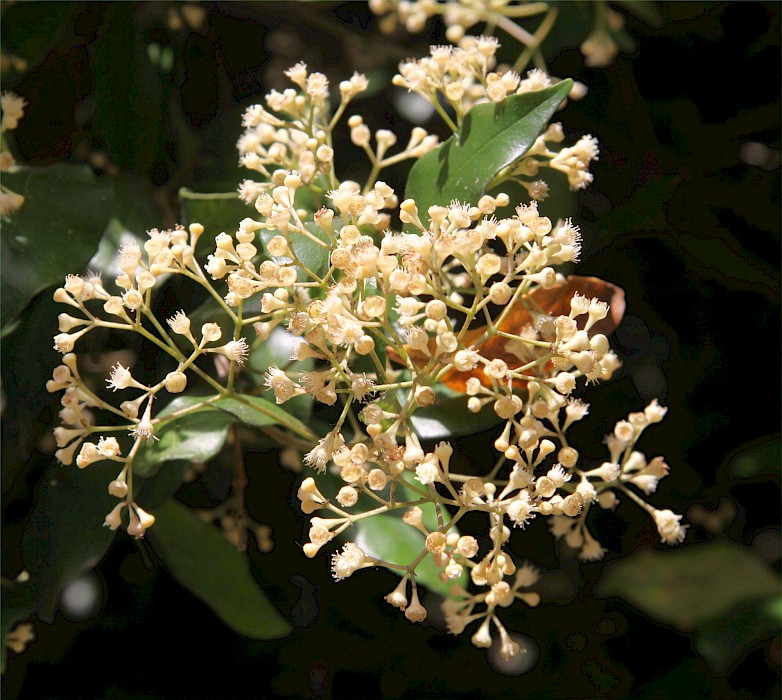
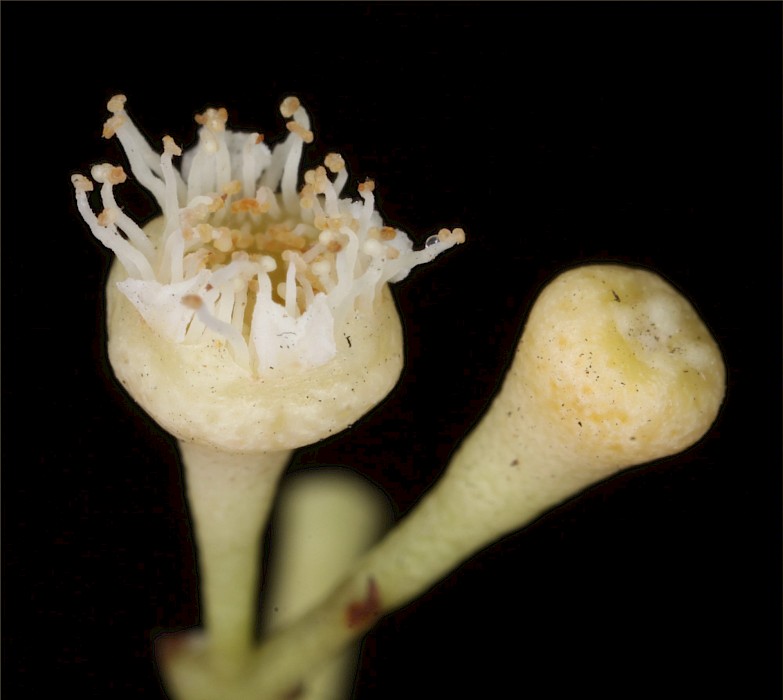
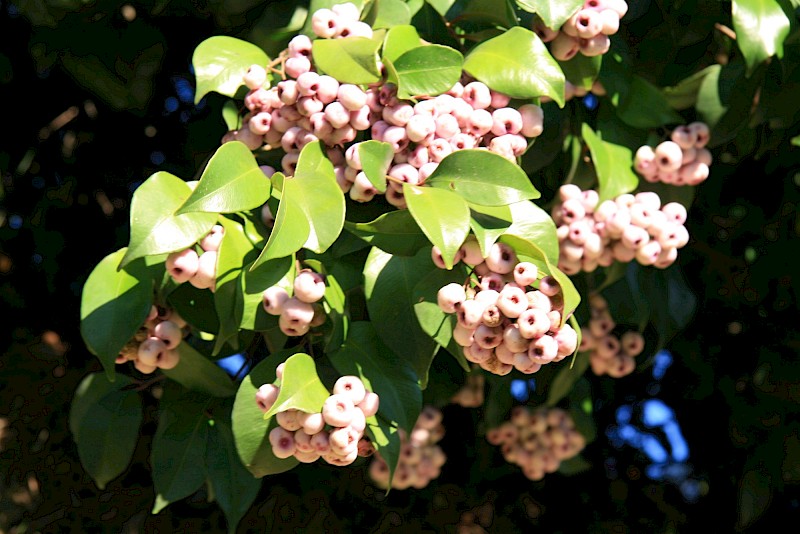
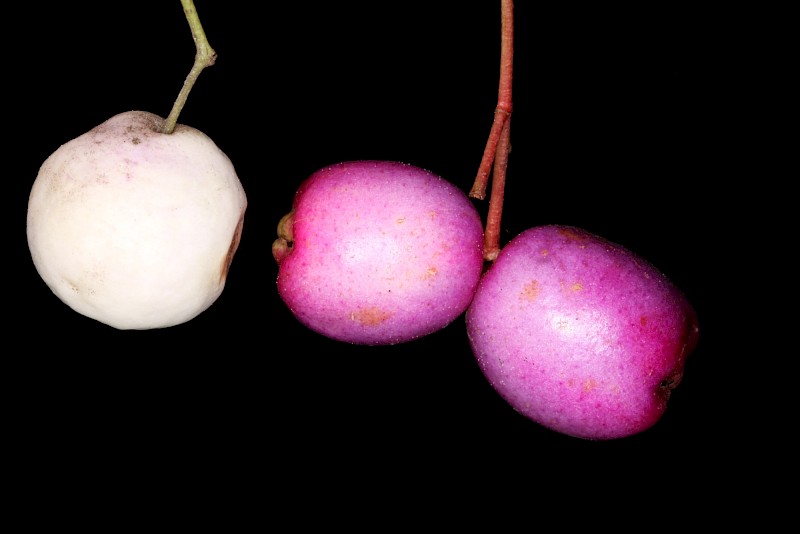
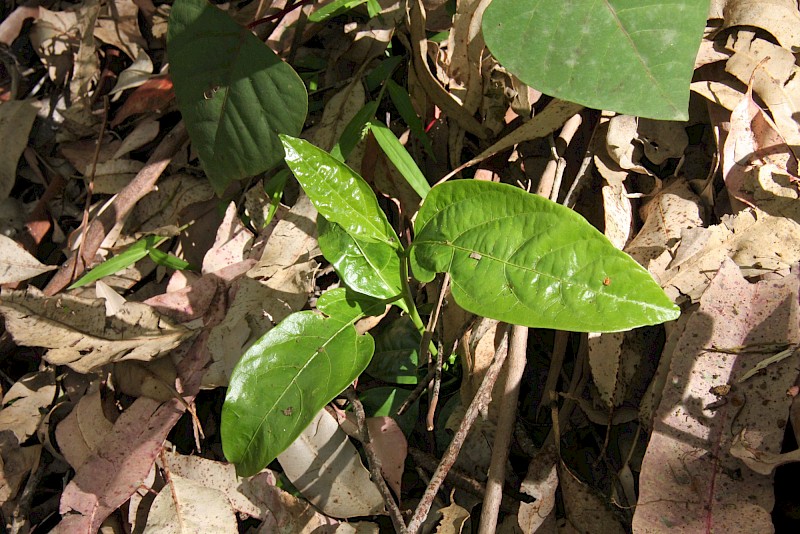
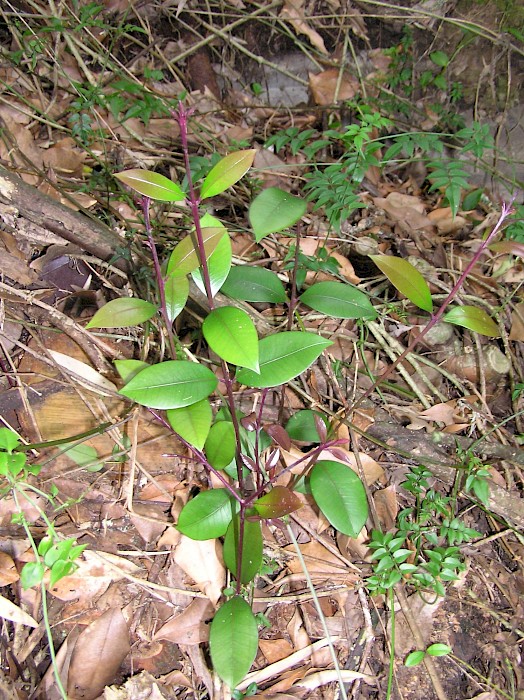
Tree (<6-15 m tall) with smooth bark and oval, leathery leaves (4-12 x 2-5 cm) which are in opposite pairs along the stems. The leaves are glossy on top and dotted underneath, and are very aromatic when crushed and often become scaly. Whitish flowers (Oct-Jan) are followed by bunches of pink-mauve or white berry-like fruit with large seeds.
Are there any similar species?
Syzygium australe looks almost identical.
Why is it weedy?
Long-lived (100 yrs +) and produces a lot of seed that is well dispersed. Birds (especially pigeons) spread the seed, and seedlings are shade-tolerant and form dense stands that crowd out other species. It grows much faster than native species, any gaps in the bush canopy that are created by older native trees dying are rapidly filled by any monkey apple seedlings that may be present. Prefers moderate to highly fertile, well-drained soil, but tolerates frost, salt, drought and wind. Grows faster than native hardwoods.
How does it spread?
Kereru eat the fruit and spread the seed, and it is also occasionally spread by soil movement. Hedges, shelterbelts, gardens, and roadsides are common seed sources.
What damage does it do?
Forms dense carpet of seedlings under canopy, which grow after a gap in the canopy is created by windfall or possum damage etc to become a permanent canopy species. Can form almost pure stands.
Which habitats is it likely to invade?
Disturbed (occasionally intact) forests, shrublands and fernland, usually under pigeon roosts.
What can I do to get rid of it?
1. Physical removal - dig out small plants or excavate larger areas. Can be left on site to rot down.
2. Cut and paste (all year round) - Cut the stem/trunk as close to the ground as possible and cover the entire stump with herbicide as soon as possible after cutting. Apply metsulfuron gel (10g/l strength)
3. Basal spray stems up to 20cm diametre with X-Tree Basal. Ensure the base is thoroughly covered at ground level.
4. Drill or frill - Drill downward sloping holes around the circumference of the trunk about 8-10 cm apart, or Frill (make deep cuts into the sapwood at regular intervals around the base of the tree, taking care not to ring-bark the plant). Fill the holes or saturate the cuts with metsulfuron-methyl 600 g/kg (20-50g/L + penetrant).
5. Foliar spray - Apply Metsulfuron herbicide (600g/kg active ingredient) (Knapsack 0.5g/L, or Gun and hose 20-35g/L) plus organosilicone penetrant (3ml/L) to thoroughly wet all parts of plant. Note: Metsulfuron overspray will kill other (desirable) broadleaf plants and has residual activity in the soil which aids in killing below ground parts
CAUTION: When using any herbicide or pesticide, PLEASE READ THE LABEL THOROUGHLY to ensure that all instructions and directions for the purchase, use and storage of the product, are followed and adhered to.
What can I do to stop it coming back?
Bared areas reseed profusely. Stumps coppice. Maintain rolling front, follow up at least 6-monthly to control seedlings. Replant densely, using pigeon-friendly species where possible, to minimise seedling growth.
Images