Queensland poplar
Botanical name
Homalanthus populifolius
Family
Euphorbiaceae (spurge)
Also known as
Bleeding heart tree, poplar leaved omalanthus
Where is it originally from?
Australia, Papua New Guinea
What does it look like?
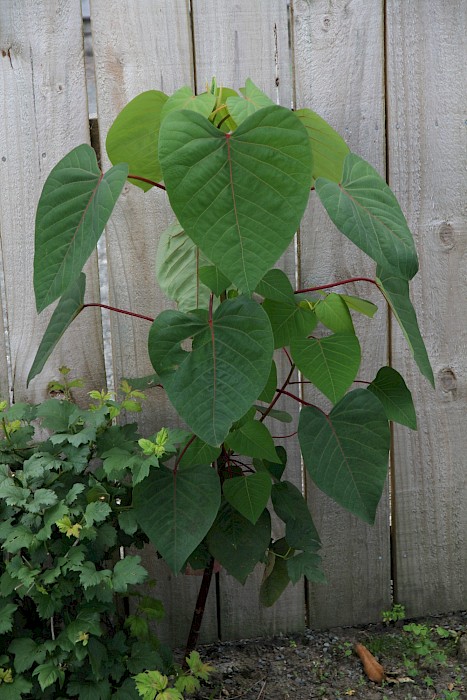
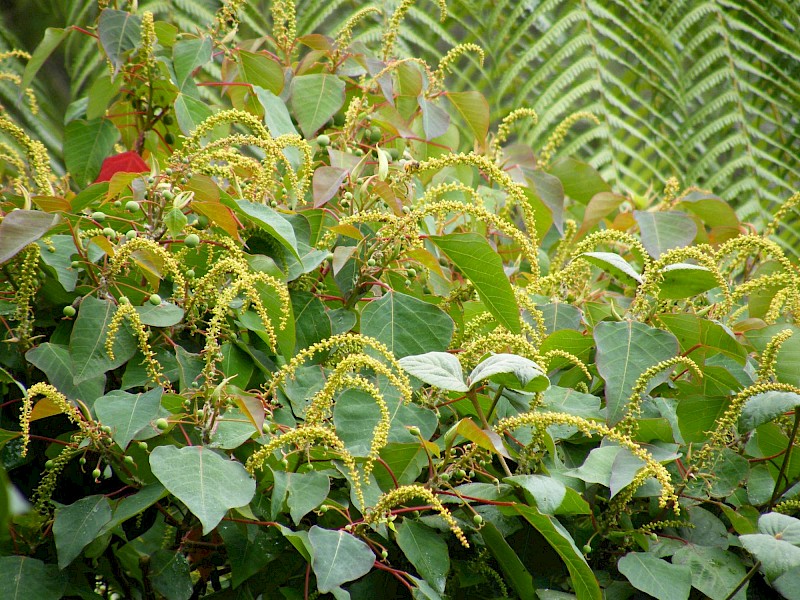
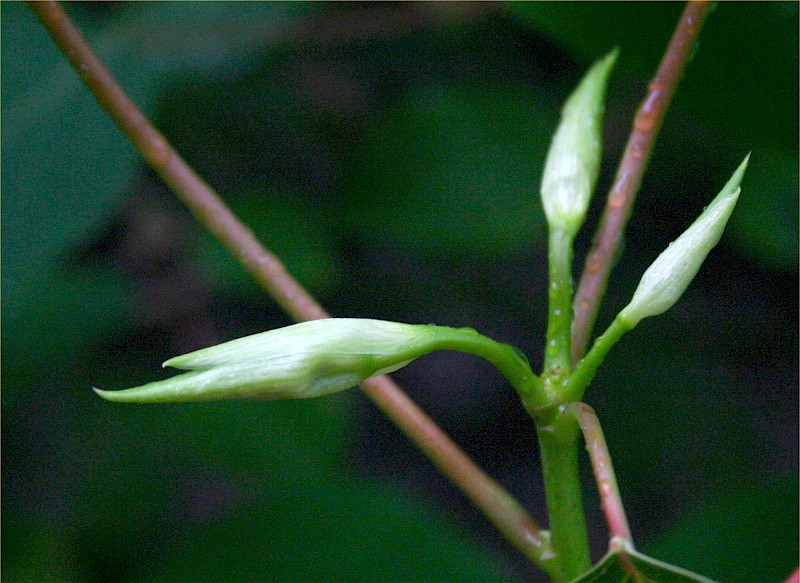
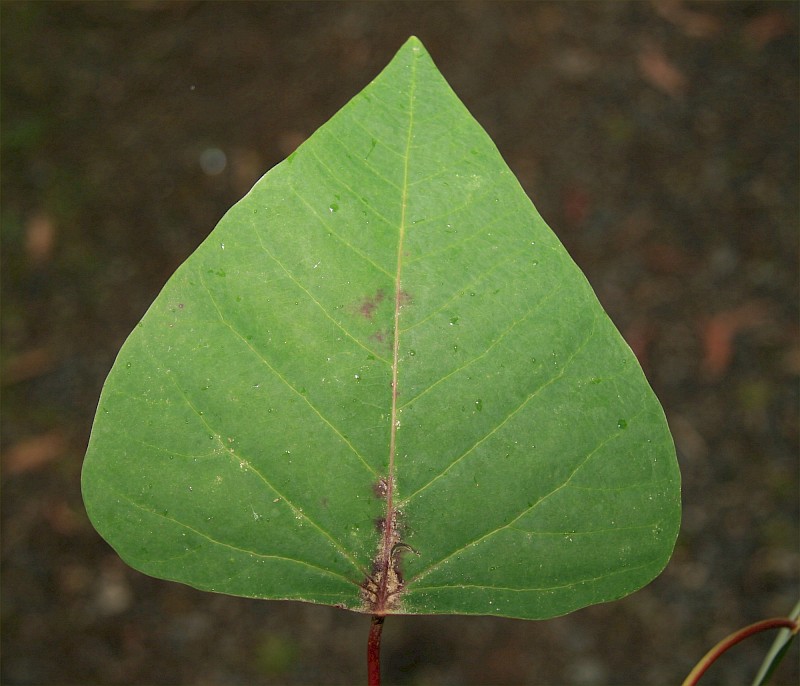
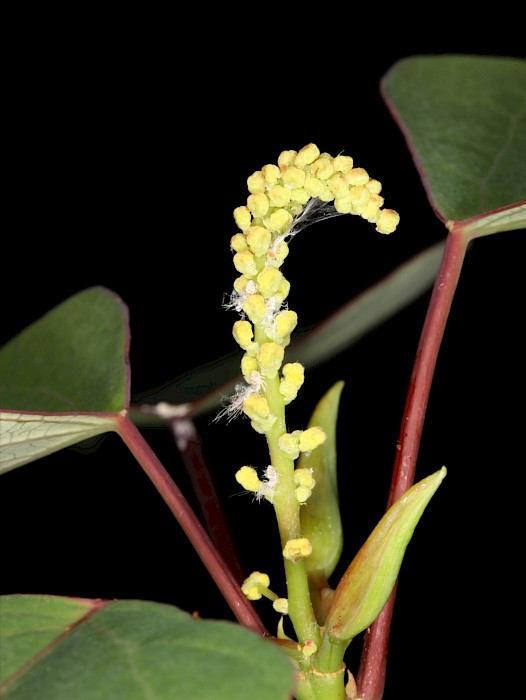
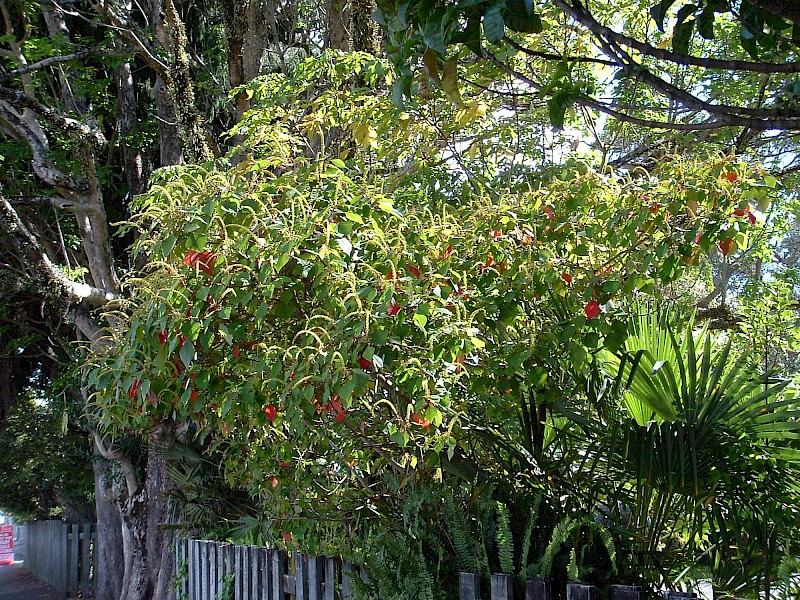
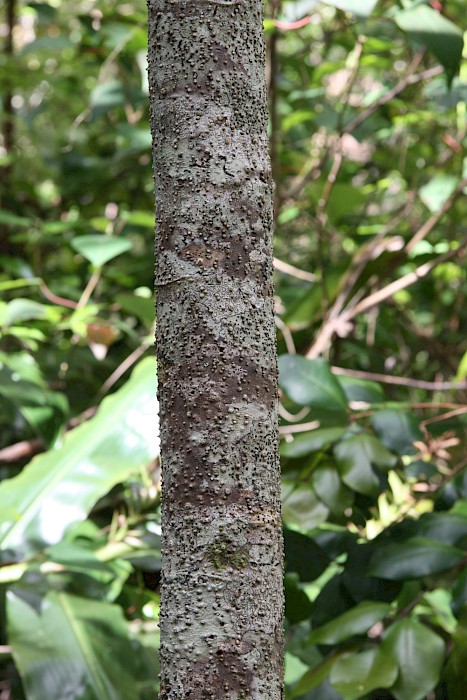
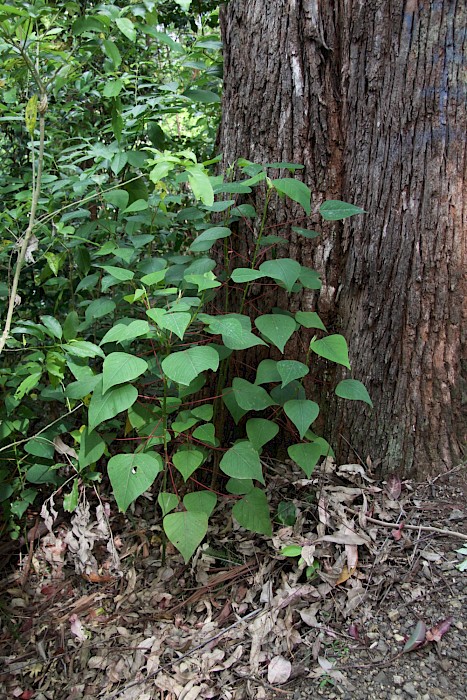
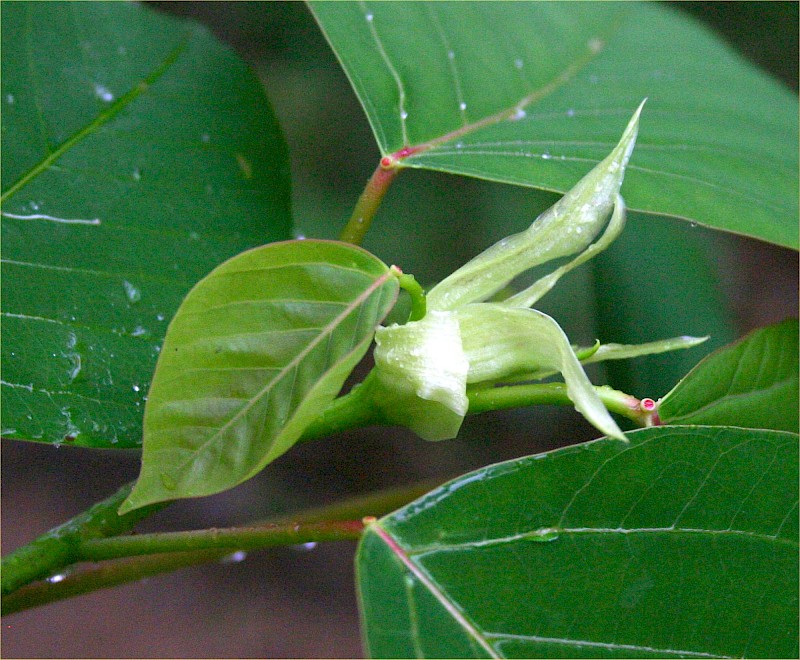
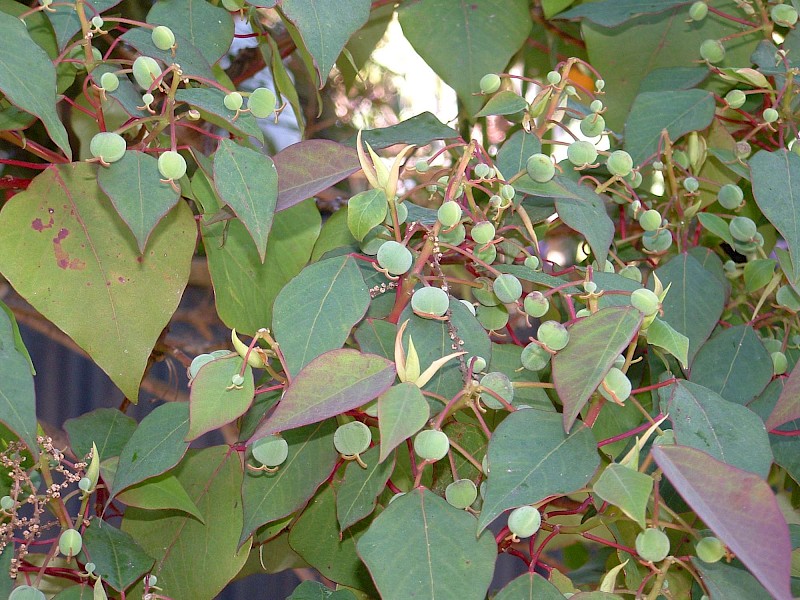
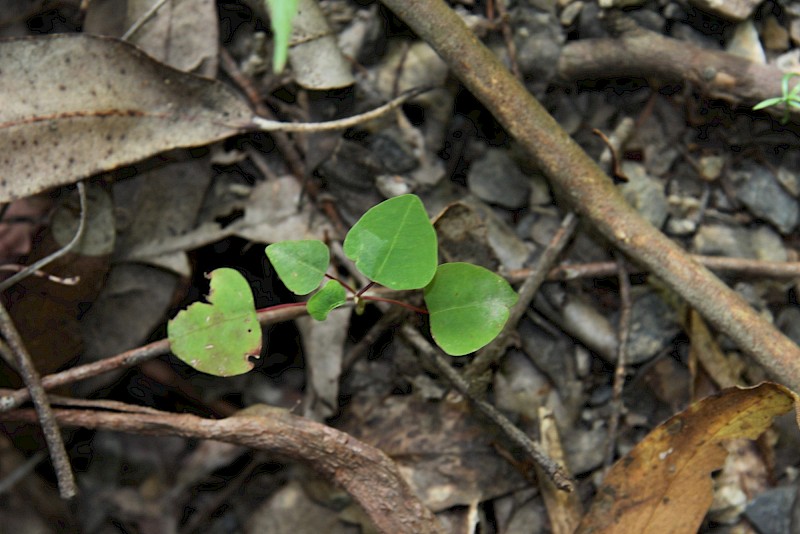
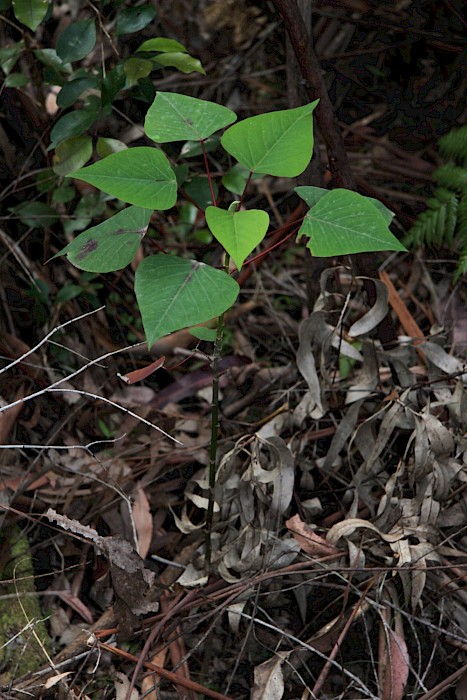
Shrub or small tree (<5 m) with smooth, heart-shaped leaves (3-20 cm long) that turn red with age. Small and inconspicuous individual flowers occur in clusters of spikes (<17 cm long, Sept-Nov) are followed by smooth fruits (<8-10 mm diameter) made up of two sections with a groove in between, and two small ‘antennae’ that stick out from the top.
Are there any similar species?
Homalanthus polyandrous has 3-angled, reddish fruit (10-12 mm diameter).
Why is it weedy?
Produces large amounts of seed and is shade-tolerant.
How does it spread?
Seed is spread by birds, water, and machinery, especially roadside mowers.
What damage does it do?
Forms a sub-canopy and can displace native species by competing for light, nutrients, water and space.
Which habitats is it likely to invade?
Regenerating bush, forest margins, roadsides and waste places.
What can I do to get rid of it?
1. Physical removal - Hand pull small plants, or grub out seedlings
2. Cut and paste (all year round) - Cut the stem/trunk as close to the ground as possible and cover the entire stump with herbicide as soon as possible after cutting. Apply either metsulfuron gel (10g/l strength) OR picloram gel (43g/l strength) to the entire cut stem.
4. Foliar spray (full leaf stage only) - Apply herbicide using a hand held sprayer/knapsack to plants <1m tall or gun and hose for larger infestations. Apply metsulfuron herbicide (600g/kg active ingredient at 0.5g/L knapsack or 20g/100L gun and hose) + organosilicone penetrant (3ml/L). Note: Metsulfuron overspray will kill other (desirable) broadleaf plants and has residual activity in the soil which aids in killing below ground parts.
CAUTION: When using any herbicide or pesticide, PLEASE READ THE LABEL THOROUGHLY to ensure that all instructions and directions for the purchase, use and storage of the product, are followed and adhered to.
What can I do to stop it coming back?
Replant site with native species to prevent re-establishment.
Images