Weedbusters

Working together to protect New Zealand

  • Home
  • Weedbusters
    • Who are Weedbusters?
  • What Are Weeds?
    • Weedy Words
    • Weed List
    • Controlling Weeds
    • Weed Biocontrols
    • Disposing of Weed Waste
    • Banned and notifiable plants
  • Get Involved
    • Become a Weedbuster
    • Weedbusters Near You
    • Weed Quiz
  • Resources
    • How to…
    • Weedbusting Guide
    • Plant Me Instead Booklet
    • Using Weedbuster photographs
    • Useful Links
    • Glossary
  • Contact Us
You Are Here:
  1. Home
  2. What Are Weeds?
  3. Weed List
  4. Rice-paper plant
What Are Weeds?

Weed Information Sheet

  • Weedy Words
  • Weed List
  • Controlling Weeds
    • Controlling Pest Shrubs & Trees
    • Controlling Pest Vines
    • Controlling Pest Herbs & Ground Covers
    • Controlling Pest Grasses
    • Controlling Pest Aquatic Weeds
    • Controlling Agricultural Weeds
  • Weed Biocontrols
  • Disposing of Weed Waste
  • Banned and notifiable plants

Popular Links

  • Weed List
  • Weedbusters Near You

Browse weeds by alphabet

a b c d e f g h i j k l m n o p q r s t u v w x y z

Rice-paper plant

Botanical name

Tetrapanax papyrifer

Family

Araliaceae (ivy)

Also known as

Aralia papyifera, Fatsia papyifera

Where is it originally from?

South China, Taiwan

What does it look like?

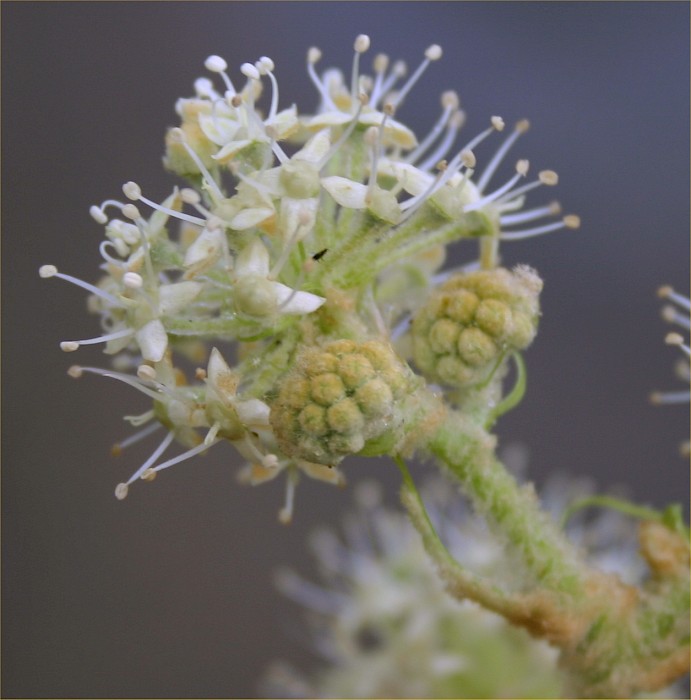
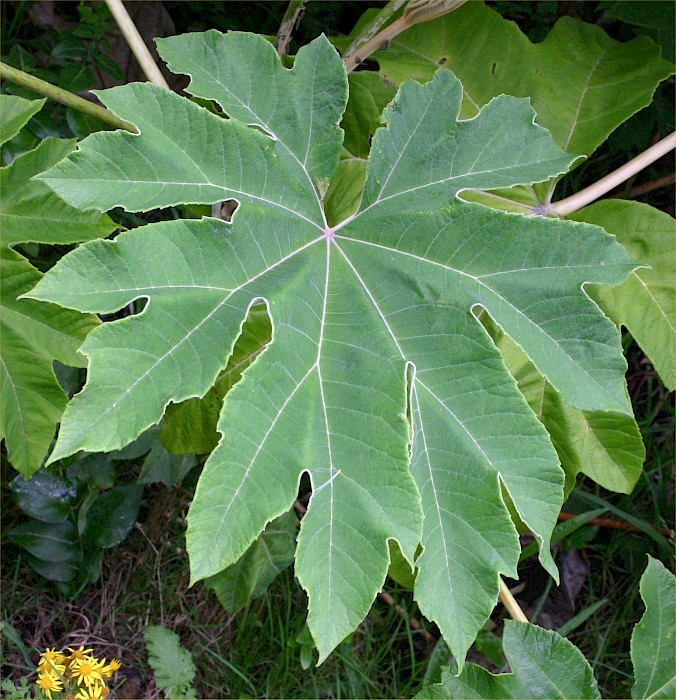
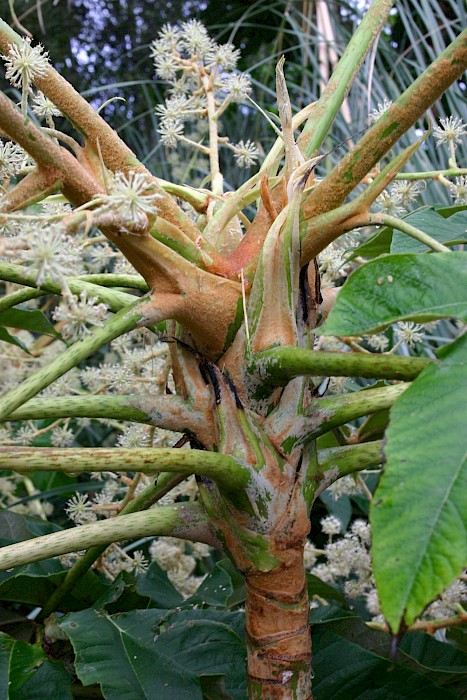
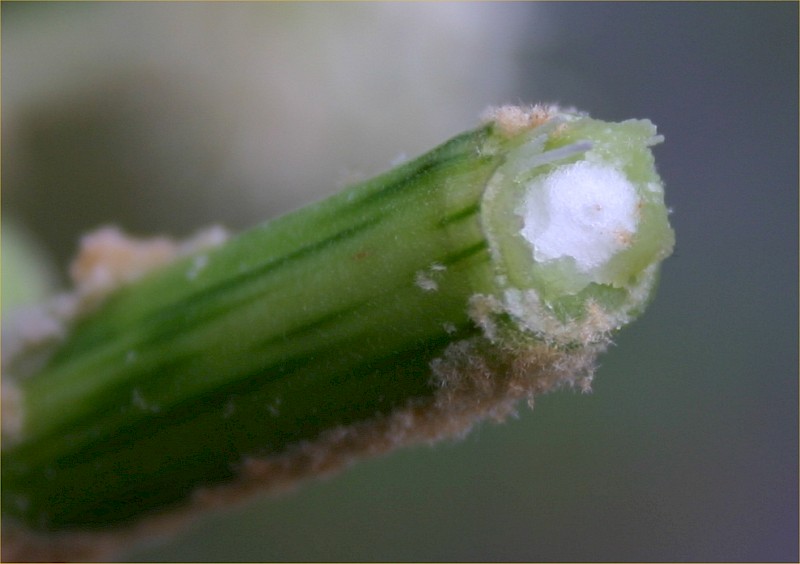
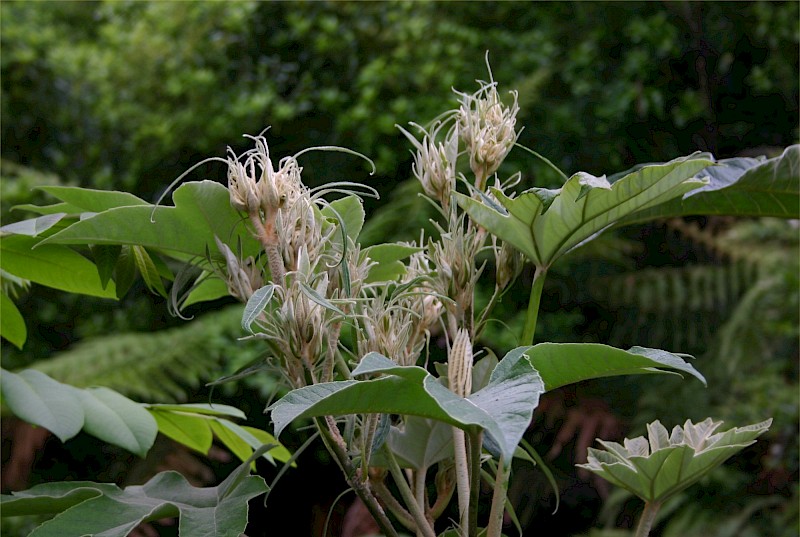
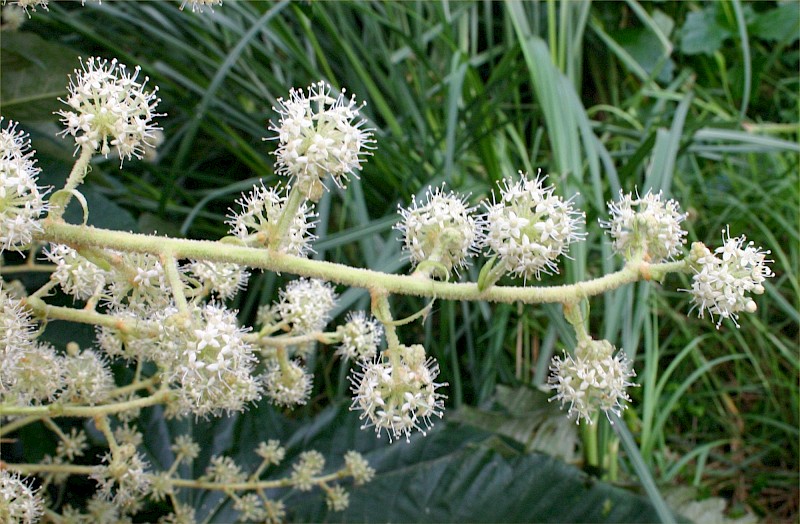
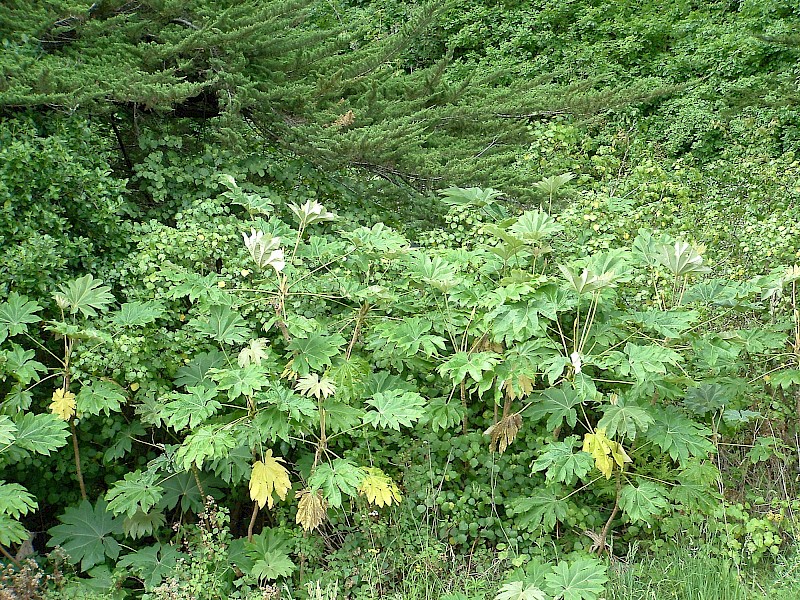
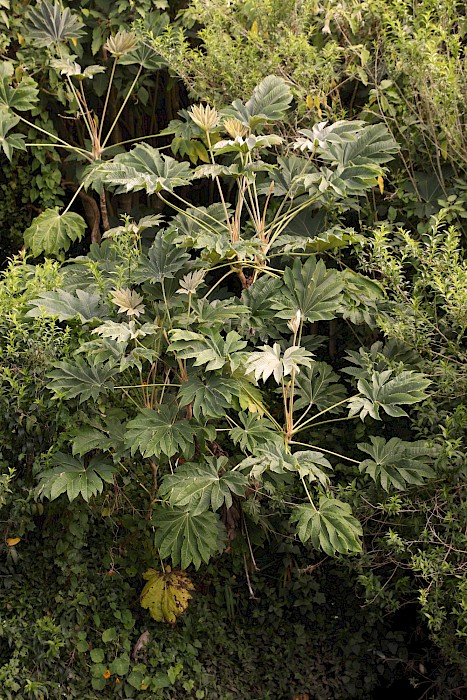
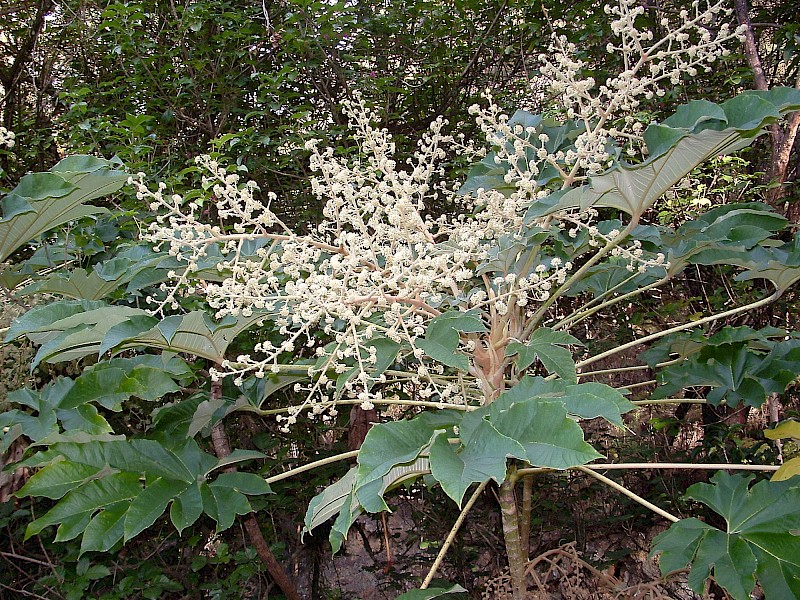
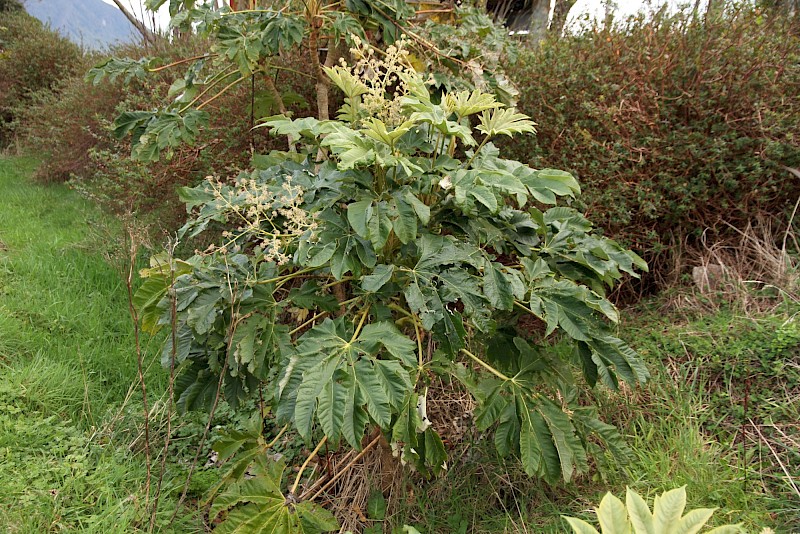
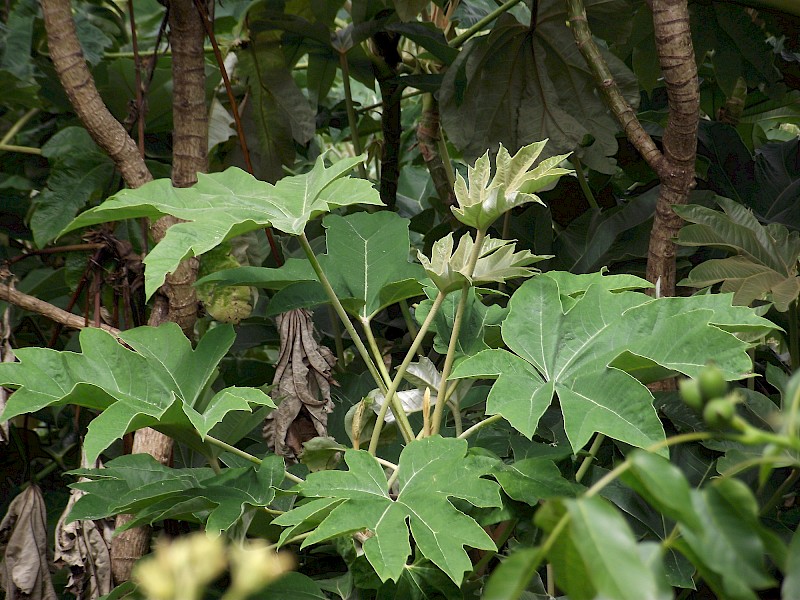
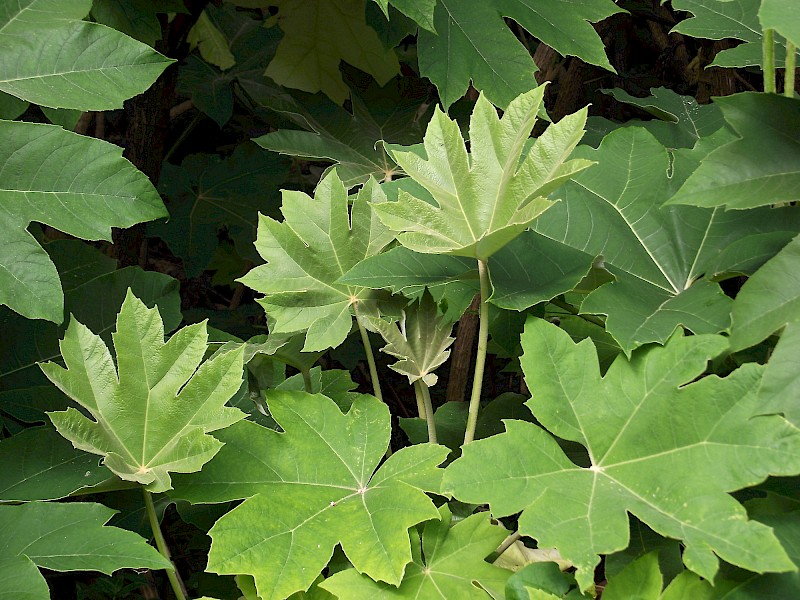
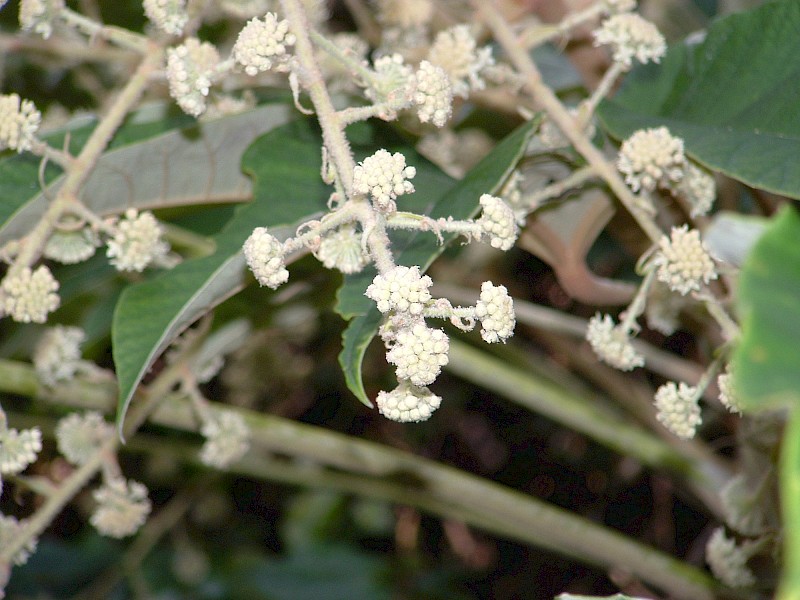
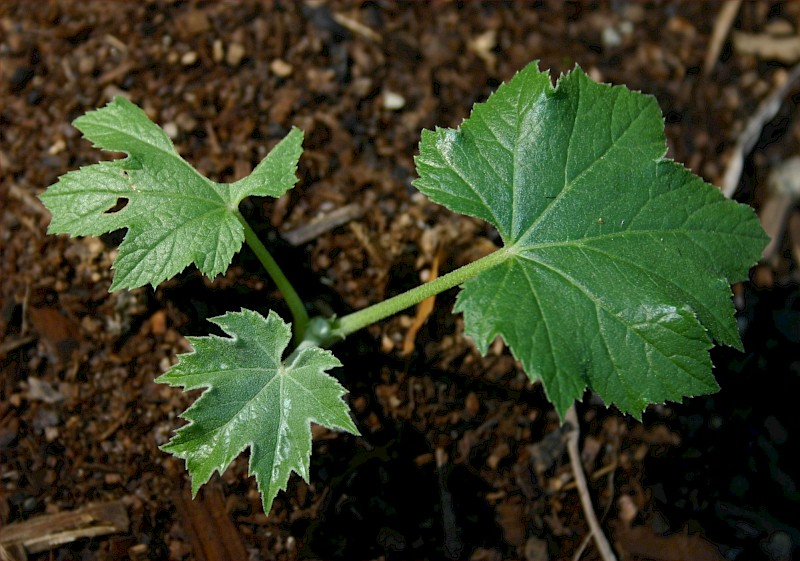
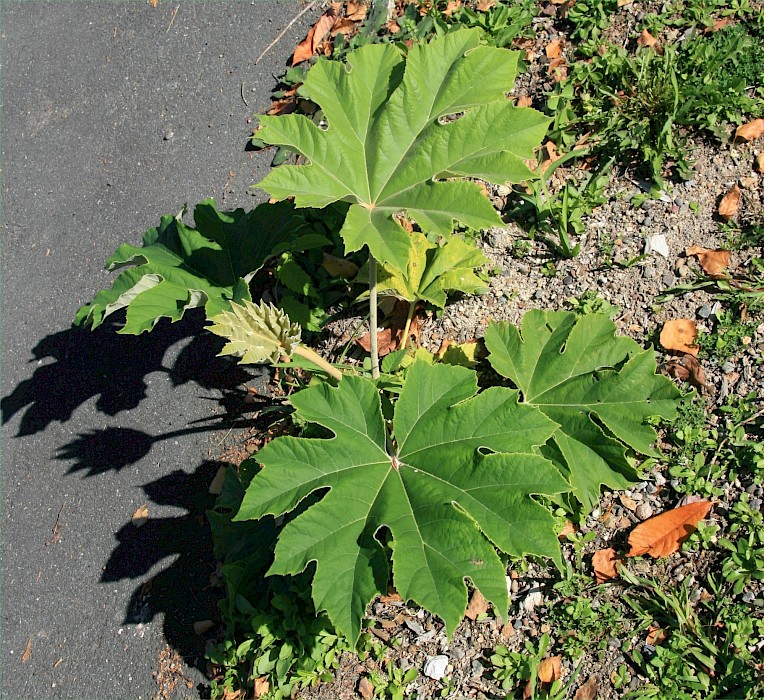
An evergreen, rounded shrub or small tree (<8 m tall). Stems are densely covered in hairs when young, becoming more or less hairless with prominent leaf scars when older. Leaves are large and rounded heart-shaped, with toothed margins and (3-12) deep lobes (indented 1/3-2/3 of leaf radius). They are densely hairy on both surfaces when young, becoming more or less hairless above when mature, and are held on long leaf stalks (10-50 cm). Tiny white flowers (Autumn) are held in white, woolly, ball-like clusters on a large, branched stem that extends beyond the foliage, and are followed by clusters of spherical black berries (3 mm diameter).

Are there any similar species?

Fatsia, Pseudopanax and Schefflera species are similar.

Why is it weedy?

Tolerates part shade. Vigorous growth rate. Grows into thickets by suckering.

How does it spread?

Spreads by suckers up to 2 m long.

What damage does it do?

Can shade out native plants. Contact with foliage can cause skin rash.

Which habitats is it likely to invade?

Disturbed forest and shrubland, forest margins, stream banks, urban areas, roadsides and wasteplaces.

What can I do to get rid of it?

1. Physical removal - Hand pull or dig out entire plant - Ensure all root material is removed to prevent regrowth. Burn or dispose of root material to refuse.

2. Cut and paste - Cut the stem/trunk as close to the ground as possible and cover the entire stump with herbicide as soon as possible after cutting. Apply glyphosate gel (120g/L strength) OR When a gel is inadequate apply commercial formulations (120g triclopyr/l of oil or product containing triclopyr and picloram 50ml/L water mix). Apply the mixture over the entire exposed surface of the cut stump, i.e. top and sides.

3. Drill or frill - Drill downward sloping holes around the circumference of the trunk about 8-10 cm apart, or Frill (make deep cuts into the sapwood at regular intervals around the base of the tree, taking care not to ring-bark the plant). Fill the holes with undiluted ‘neat’ glyphosate (360g/L active ingredient) or saturate the frill cuts with glyphosate (360g/L active ingredient) mixed at 250ml/L OR metsulfuron-methyl 600 g/kg (20-50g/L + penetrant)

CAUTION: When using any herbicide or pesticide, PLEASE READ THE LABEL THOROUGHLY to ensure that all instructions and directions for the purchase, use and storage of the product, are followed and adhered to.

What can I do to stop it coming back?

Monitor the site and treat any regrowth. Plant a cover of native trees or shrubs to produce shade.

Images
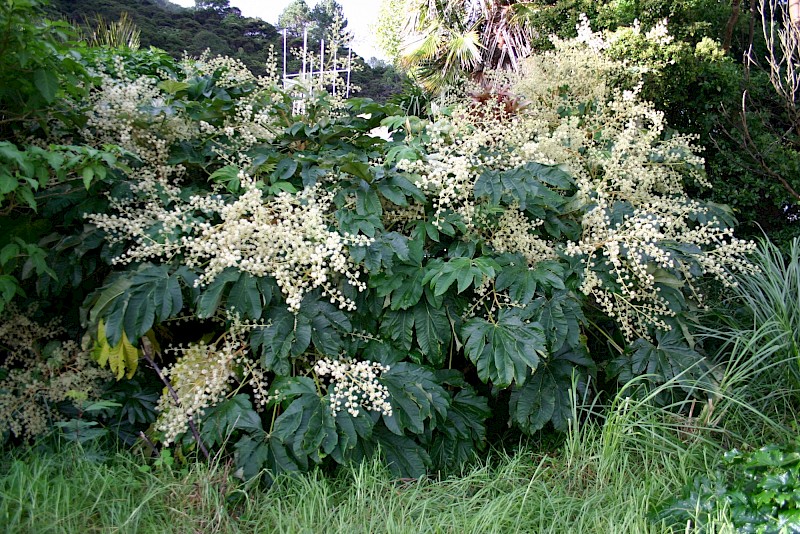
Photo: Trevor James
Photo: Trevor James
Photo: Trevor James
Photo: Trevor James
Photo: Trevor James
Photo: Trevor James
Photo: Trevor James
Photo: Carolyn Lewis
Photo: Trevor James
Photo: Carolyn Lewis
Photo: Trevor James
Photo: Carolyn Lewis
Photo: Trevor James
Photo: Trevor James

Download PDF Information Sheet

Browse/Search Weeds

Weedbusters

  • Who are Weedbusters?

What Are Weeds?

  • Weedy Words
  • Weed List
  • Controlling Weeds
  • Weed Biocontrols
  • Disposing of Weed Waste
  • Banned and notifiable plants

Get Involved

  • Become a Weedbuster
  • Weedbusters Near You
  • Weed Quiz

Resources

  • How to…
  • Weedbusting Guide
  • Plant Me Instead Booklet
  • Using Weedbuster photographs
  • Useful Links
  • Glossary

Contact Us

  • Home
  • Contact Us

© 2026 Weedbusters • Website by RS

  • Home
  • Weedbusters
    • Who are Weedbusters?
  • What Are Weeds?
    • Weedy Words
    • Weed List
    • Controlling Weeds
      • Controlling Pest Shrubs & Trees
      • Controlling Pest Vines
      • Controlling Pest Herbs & Ground Covers
      • Controlling Pest Grasses
      • Controlling Pest Aquatic Weeds
      • Controlling Agricultural Weeds
    • Weed Biocontrols
    • Disposing of Weed Waste
    • Banned and notifiable plants
  • Get Involved
    • Become a Weedbuster
    • Weedbusters Near You
    • Weed Quiz
  • Resources
    • How to…
      • Raise Weeds Awareness
      • Organise a Weedbusters Event
    • Weedbusting Guide
    • Plant Me Instead Booklet
    • Using Weedbuster photographs
    • Useful Links
    • Glossary
  • Contact Us
  • Find us on Facebook