Rough horsetail
Botanical name
Equisetum hyemale
Family
Equisetaceae (horsetail)
Also known as
Common horsetail, scouring rush, also sold under incorrect name Equisetum equitaceae
Where is it originally from?
Temperate northern hemisphere
What does it look like?
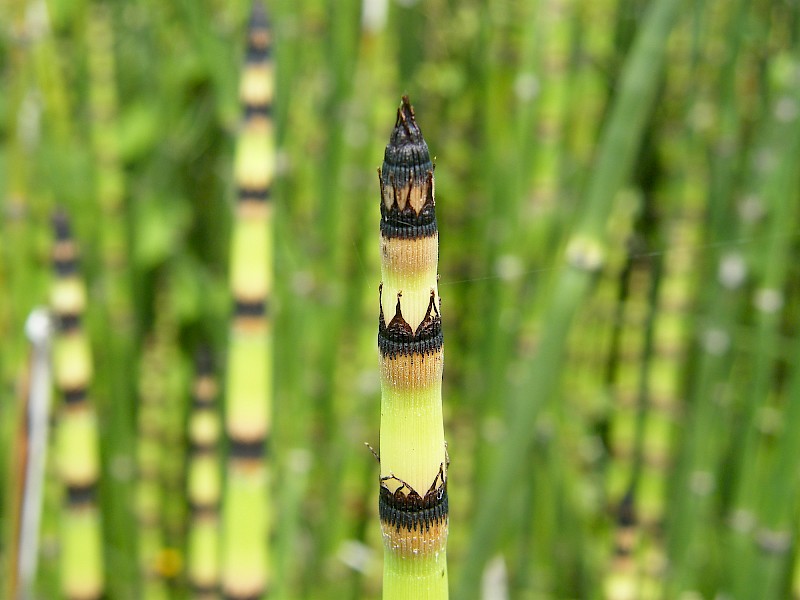
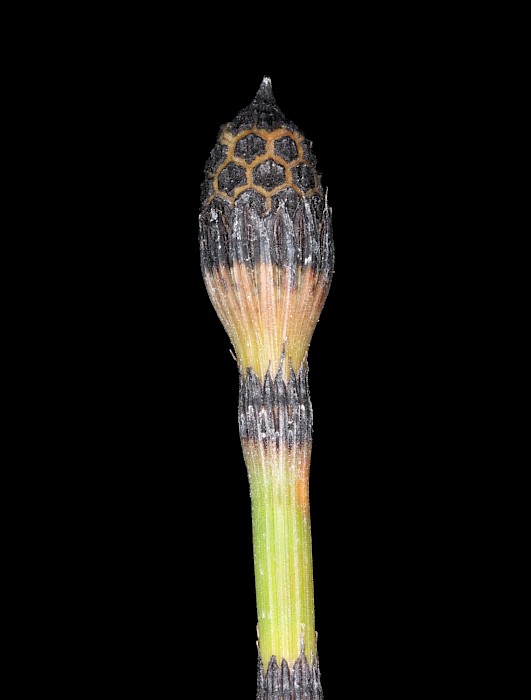
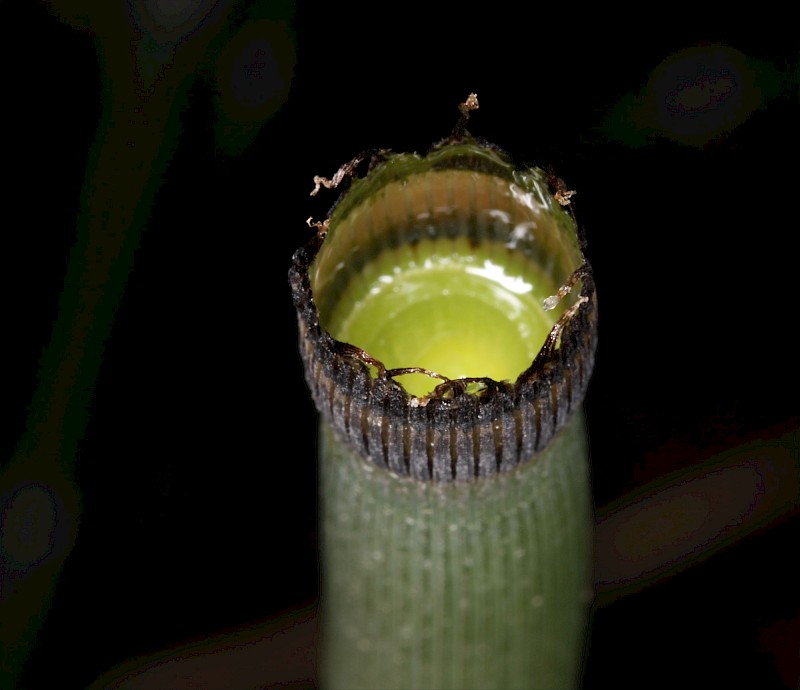
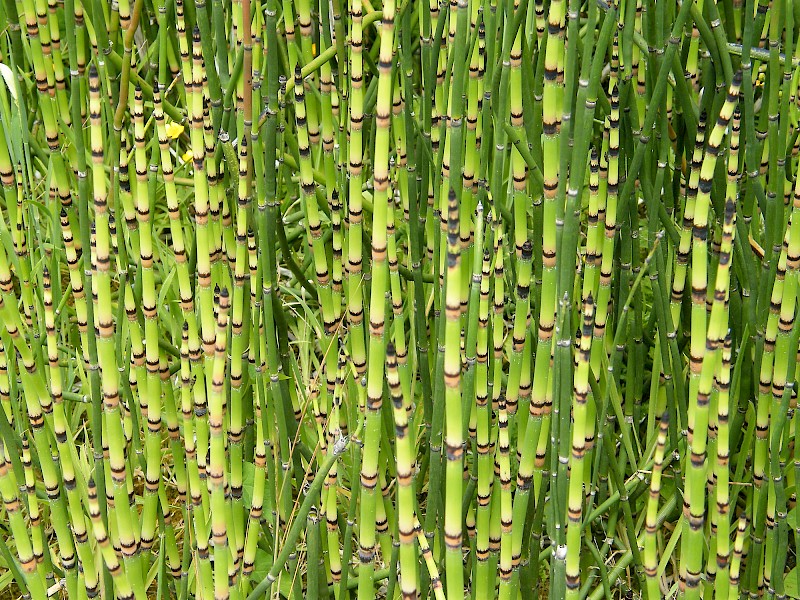
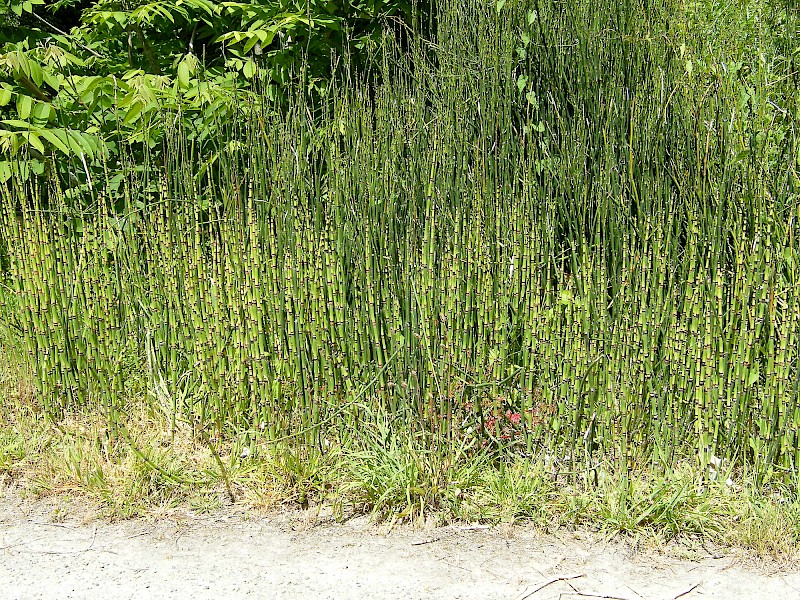
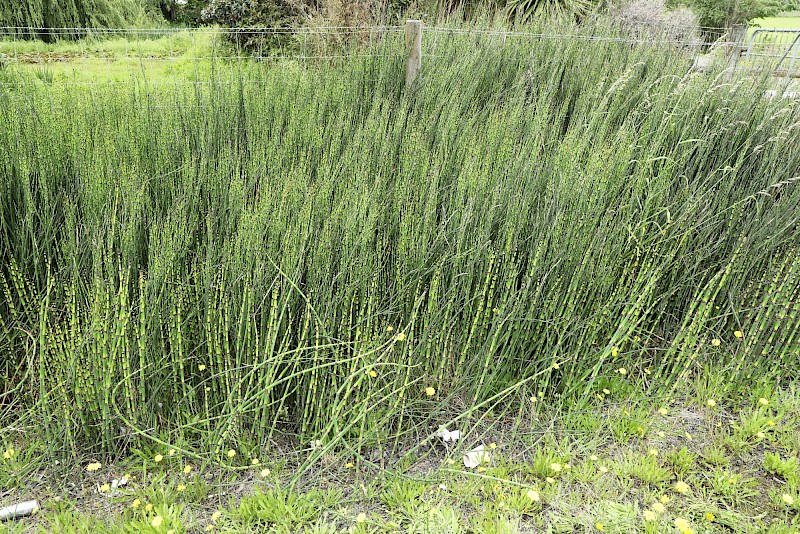
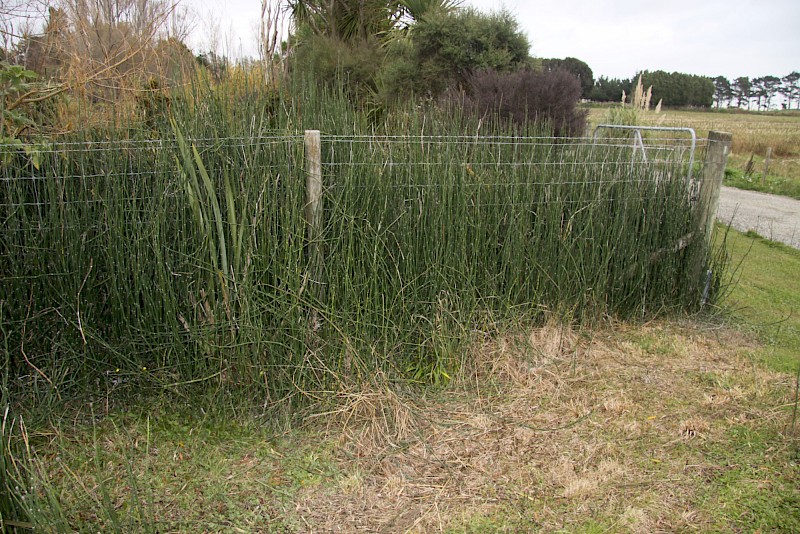
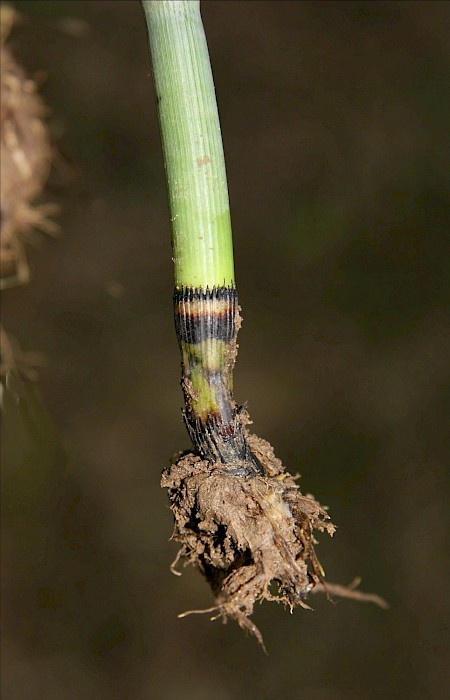
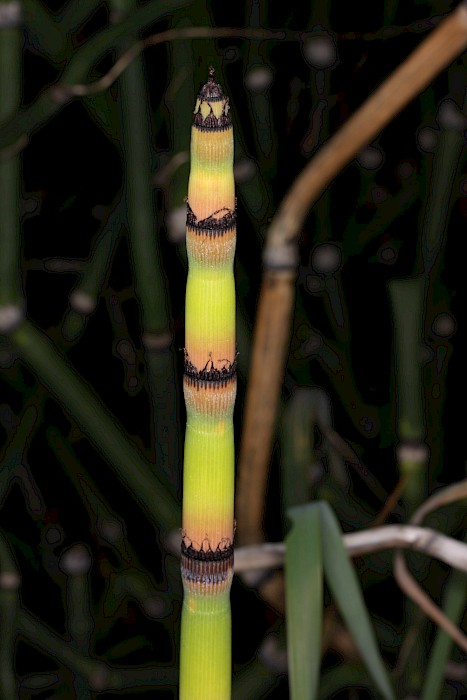
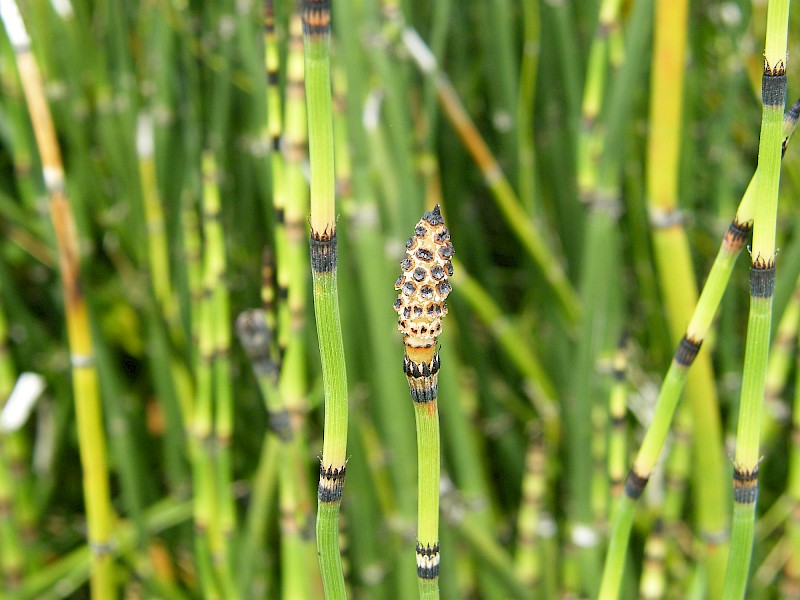
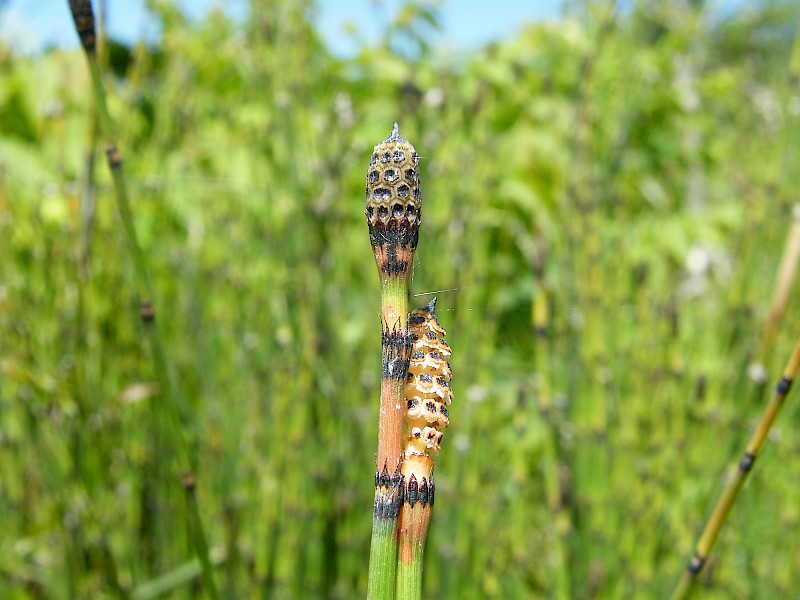
Erect, colony-forming, summer-green perennial, primitive fern-ally (<2 m tall) with extensive, deep, freely branching rhizomes. Ridged, hollow stems that occasionally branch and feel hard and rough. The stems are jointed and break easily at this point. Leaves are reduced to toothed sheaths that encircle the joints along the stems, with a black ring at the base. The stems have a distinctive black collar at the joints. Extensive underground rhizomes (underground stems). Spores produced in cone-like structures on fertile stems (rather than flowers and seed heads) ? looks like a strange asparagus spear. It is sometimes kept as an ornamental plant due to its unusual appearance.
Are there any similar species?
Field horsetail (Equisetum arvense) also has fertile stems that look asparagus-like, but they are shorter than ones produced by rough horsetail. Sterile stems of field horsetail resemble pine seedings.
Why is it weedy?
Spreads rapidly, re-sprouting from underground stems, and displacing desirable plant species once established in an area. It is resistant to most herbicides and underground rhizomes make it hard to control.
How does it spread?
Underground rhizomes are spread by movement of soil or through deliberate planting.
What damage does it do?
Forms pure stands in wide range of damp habitats, preventing the seedlings of native species from establishing. Blocks and alters watercourses, causing flooding.
Which habitats is it likely to invade?
Prefers moist areas such as gravel areas and pond/lake margins but once it is well established, it will adapt to a wide range of conditions. It can even be found growing through the cracks in concrete.
What can I do to get rid of it?
Note: You may be required to report this weed in some regions. Check the status on your regional council website prior to control. Report all findings on conservation land to the Department of Conservation.
1. Physical removal - Hand pull or dig out entire plant - Ensure all root material is removed to prevent regrowth. Burn or dispose of all plant material and contaminated soil to refuse. Ensure the material is properly contained/bagged and secured to avoid any potential plant material escaping and spreading.
2. Cut and paste: Cut the stem/trunk as close to the ground as possible and cover the entire stump with herbicide as soon as possible after cutting. Apply metsulfuron gel (10g/L strength).
3. Foliar spray - Apply metsulfuron herbicide (600g/kg active ingredient at 5g/10L knapsack or 20g/100L gun and hose) plus organosilicone penetrant (3ml/L) OR picloram/triclopyr herbicide (picloram 100g/l and triclopyr 300g/l active ingredient at 6ml/L) plus organosilicone penetrant (1ml/L) to thoroughly wet all parts of plant. Note: picloram/triclopyr herbicides are ‘grass friendly’ but overspray will kill other (desirable) broadleaf plants. Picloram and metsulfuron have residual activity in the soil which may leach and kill other plants. Do not use under and around other (desirable) broadleaf plants. NOTE: These herbicides are not for use over or near water bodies or wetlands
CAUTION: When using any herbicide or pesticide, PLEASE READ THE LABEL THOROUGHLY to ensure that all instructions and directions for the purchase, use and storage of the product, are followed and adhered to.
Images