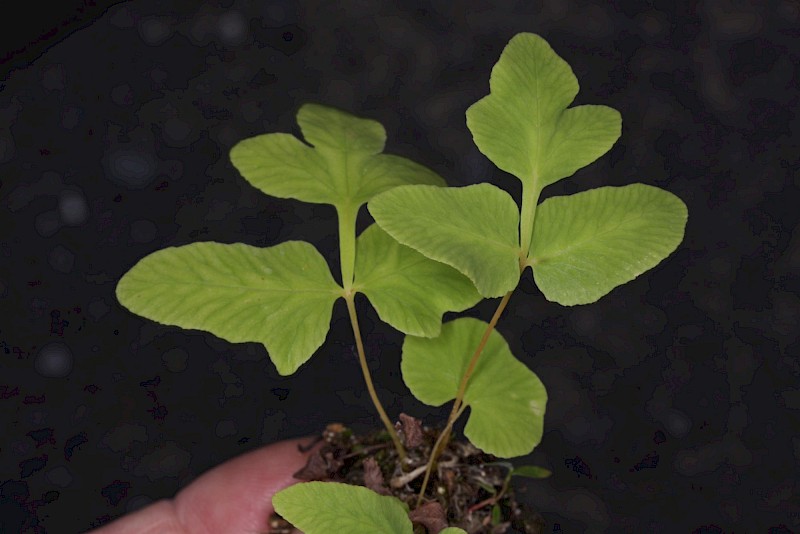
Royal fern
Botanical name
Osmunda regalis
Family
Osmundaceae (royal fern)
Where is it originally from?
Europe, West Asia, India, Africa, America.
What does it look like?
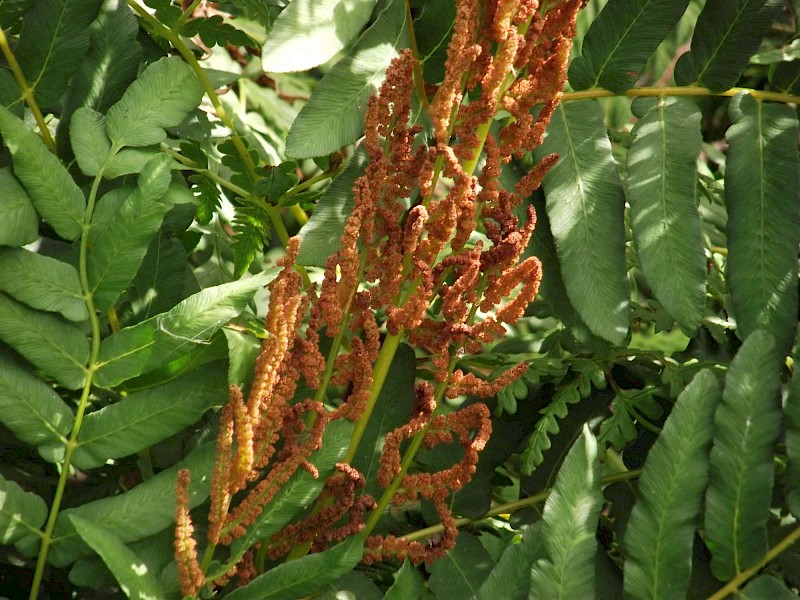
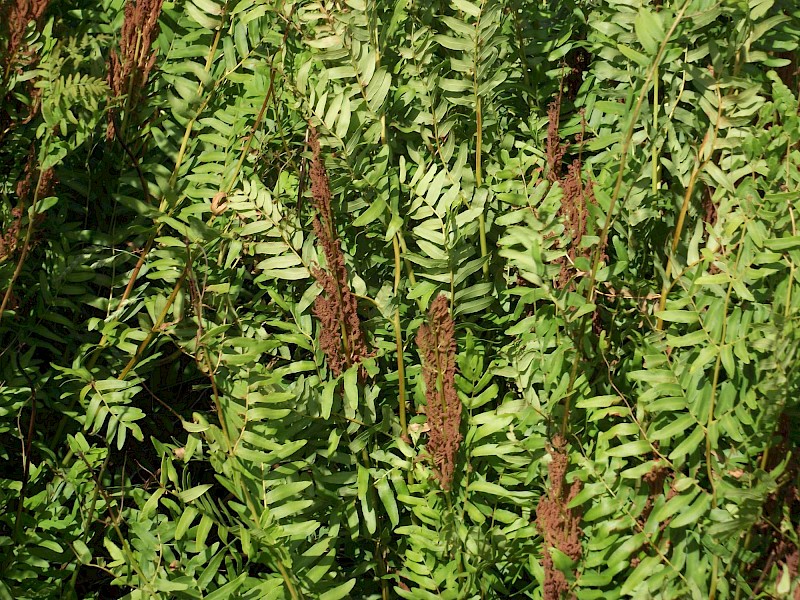
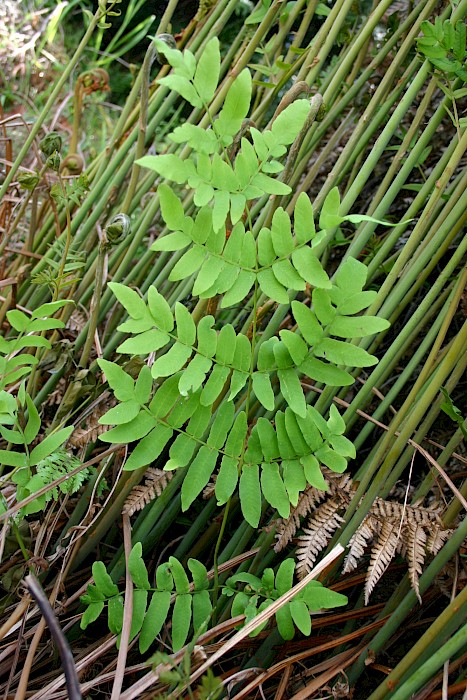
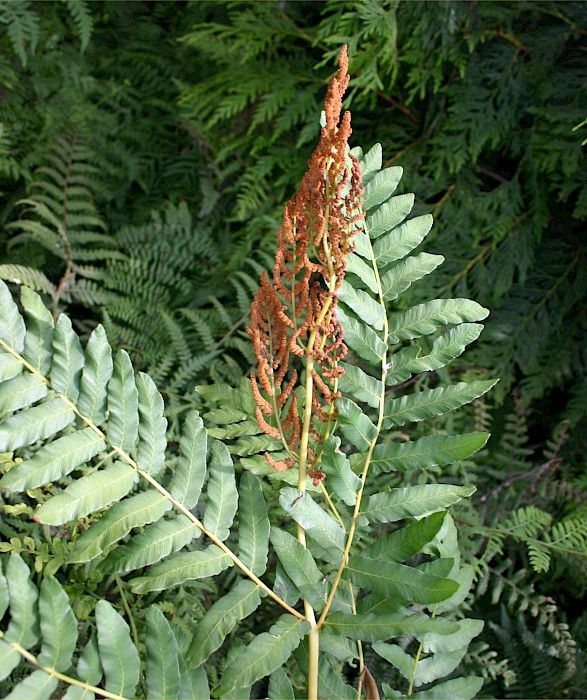
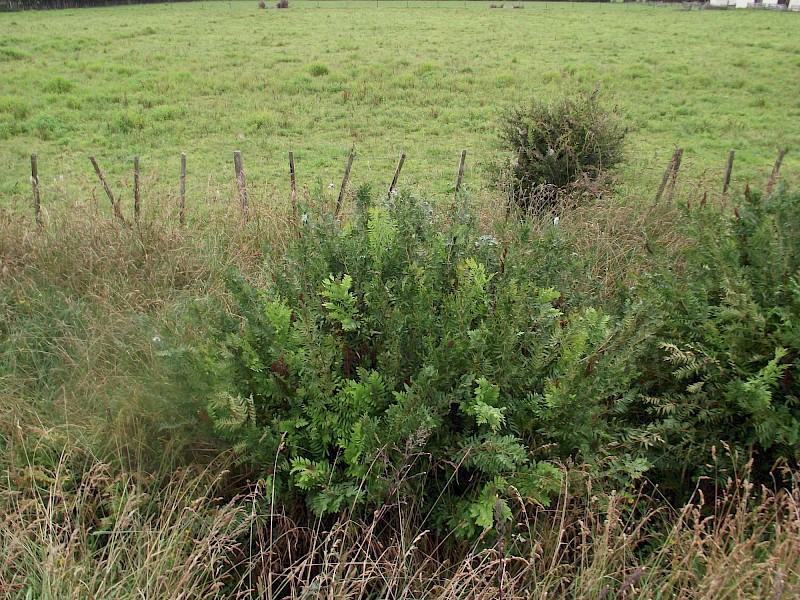
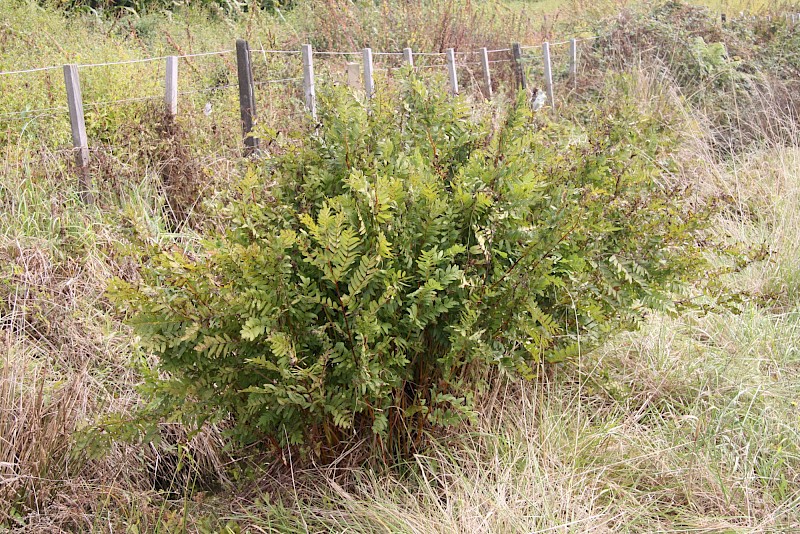
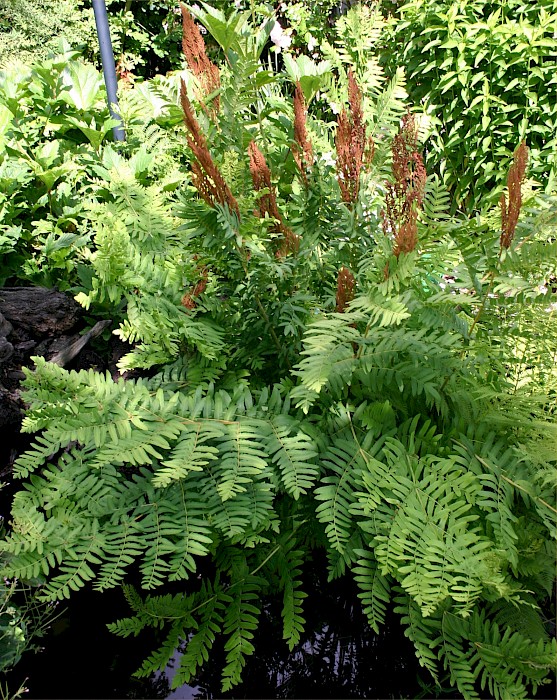
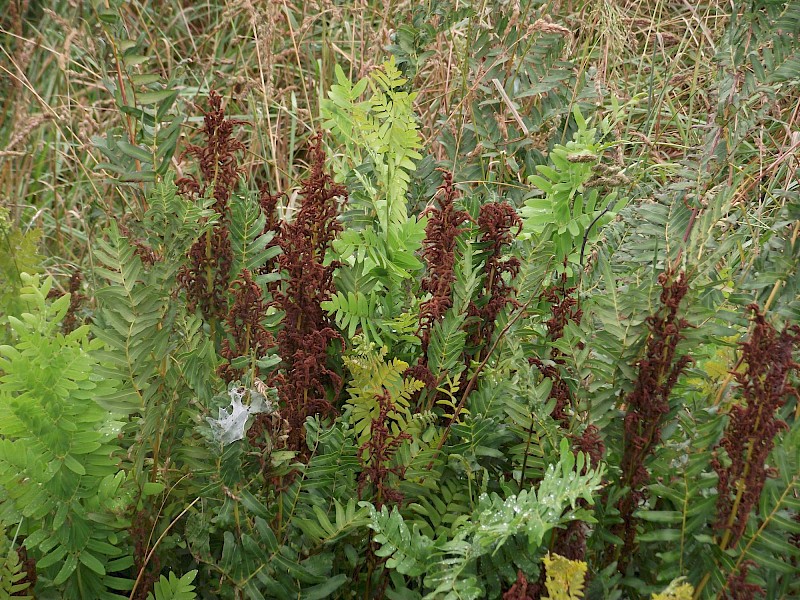
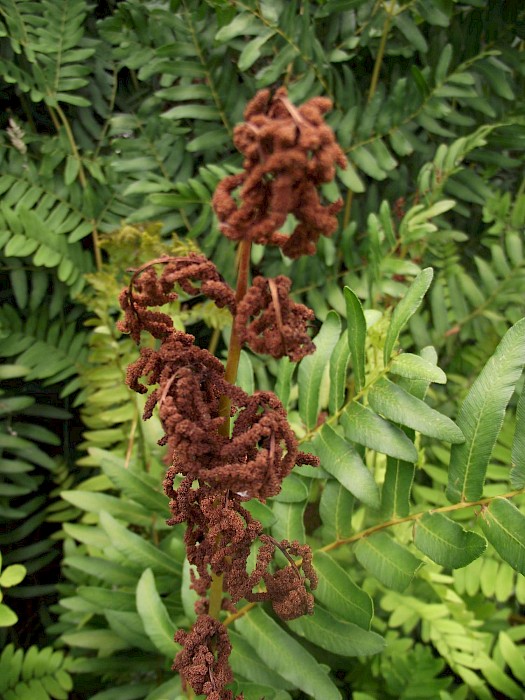
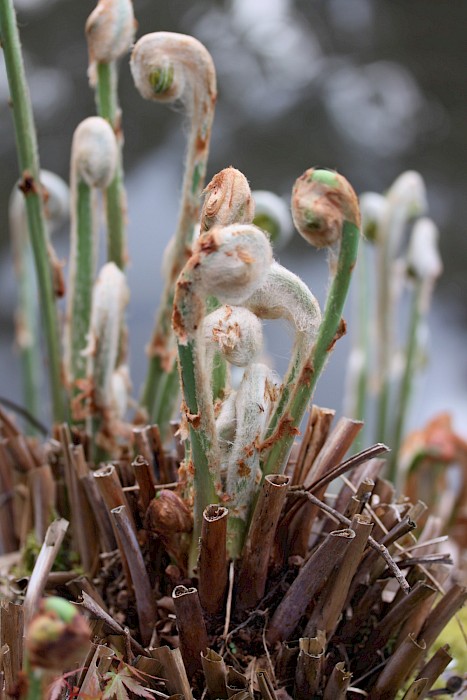
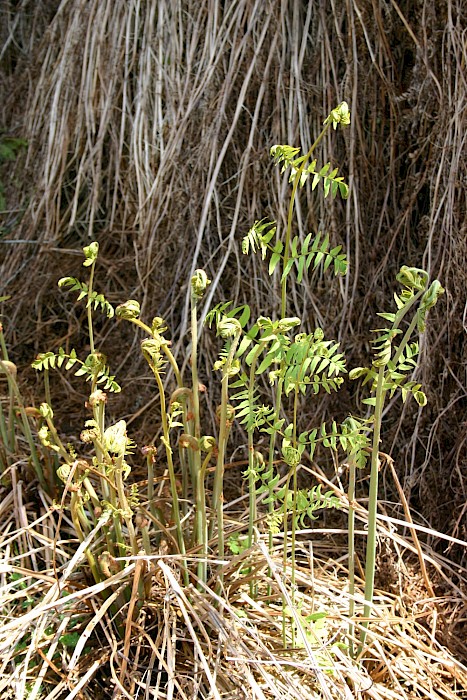
Terrestrial, deciduous fern with short, woody trunk (<1.5 m tall, <1+ m diameter). covered in persistent stalk bases. Yellow-brown leaf stalks have ear-like lobes at base and large, tough, leathery, yellow-green fronds (30-300 x 20-75 cm) divided twice with primary leaflets (pinnae) (up to 30 cm long) and secondary leaflets (20-70 x 8-18 mm), in up to 15 pairs. Inner fronds often have fertile secondary pinnae at their ends (each 30 x 4 mm), densely covered with clusters of light brown spore bodies.
Why is it weedy?
Tolerates frost, wet, moderate shade, poor and acidic soils.
How does it spread?
Spores are widely distributed by wind.
What damage does it do?
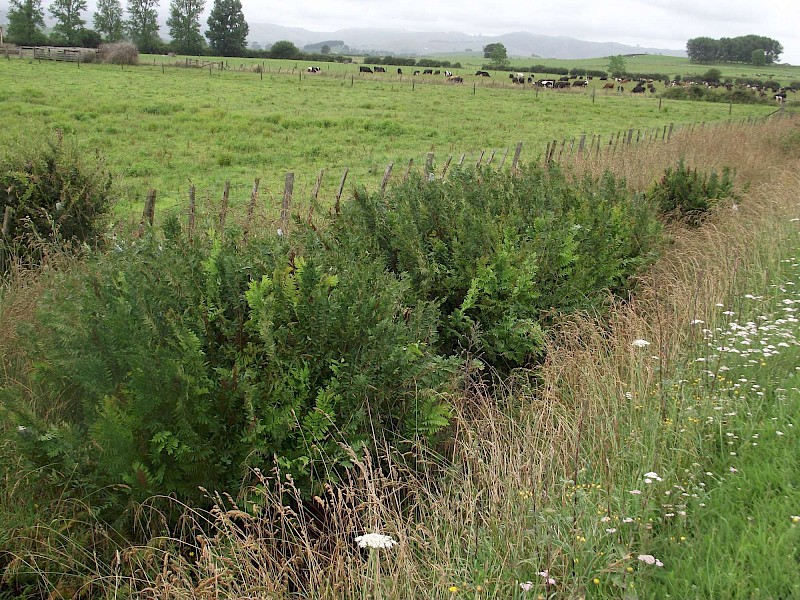
One of the very few weeds of bogs, royal fern competes with native species for space in specialised niches.
Which habitats is it likely to invade?
Wetlands, swamps, streamsides, and damp bare (especially acidic) land.
What can I do to get rid of it?
Note: You may be required to report this weed in some regions. Contact your local regional council or check the status on your regional council website prior to control.
1. Physical removal - dig out entire plant including roots (all year round)
2. Cut and paste - Cut the stem/trunk as close to the ground as possible and cover the entire stump with herbicide as soon as possible after cutting. Apply either glyphosate gel (120g/L strength) or metsulfuron gel (10g/l strength) to the entire cut stem.
3. Foliar spray - Apply metsulfuron herbicide (600g/kg active ingredient at 0.5g/L knapsack or 20g/100L gun and hose) + organosilicone penetrant (3ml/L). Note: Metsulfuron overspray will kill other (desirable) broadleaf plants and has residual activity in the soil which aids in killing below ground parts.
CAUTION: When using any herbicide or pesticide, PLEASE READ THE LABEL THOROUGHLY to ensure that all instructions and directions for the purchase, use and storage of the product, are followed and adhered to.
What can I do to stop it coming back?
Bared areas occasionally re-establish. Check for new plants annually.
Images