Sweet briar
Botanical Name
Rosa rubiginosa
Family
Rosaceae (rose) family
Also known as
sweet briar, eglantine, briar rose, Rosa eglanteria
Where is it originally from?
Europe, North Africa
What does it look like?
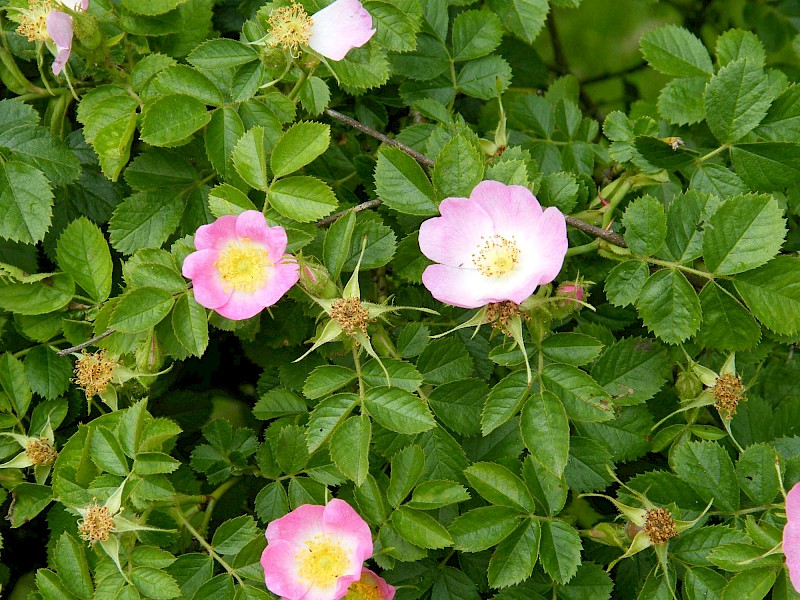
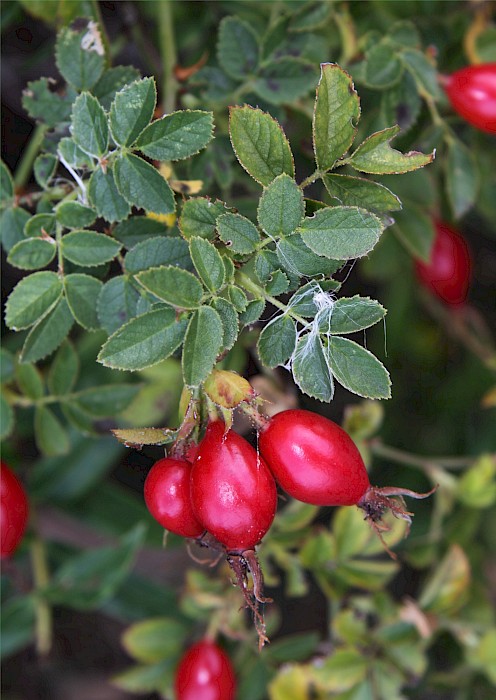
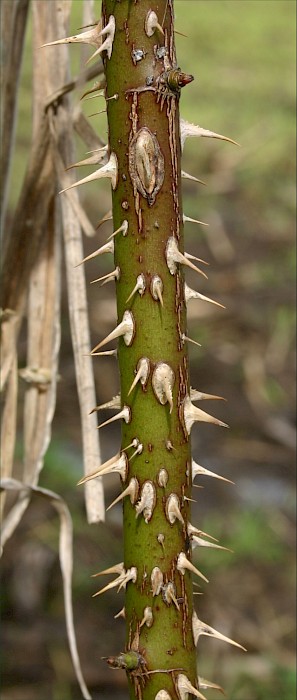
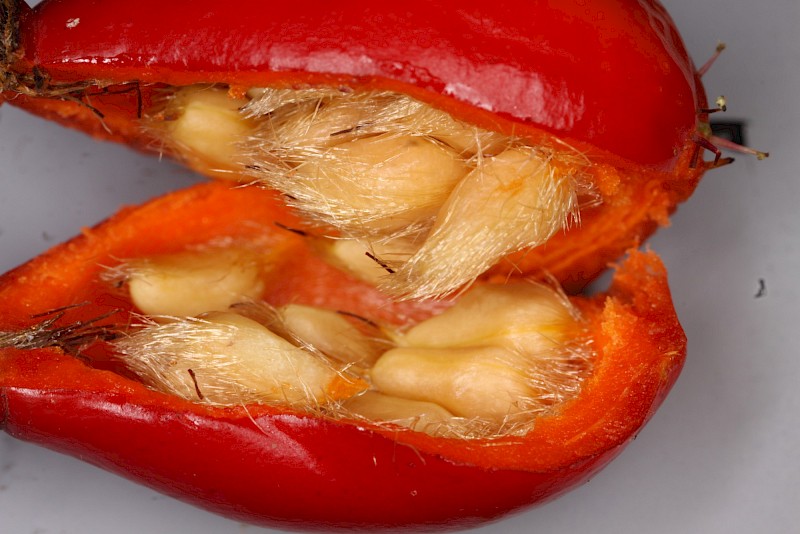
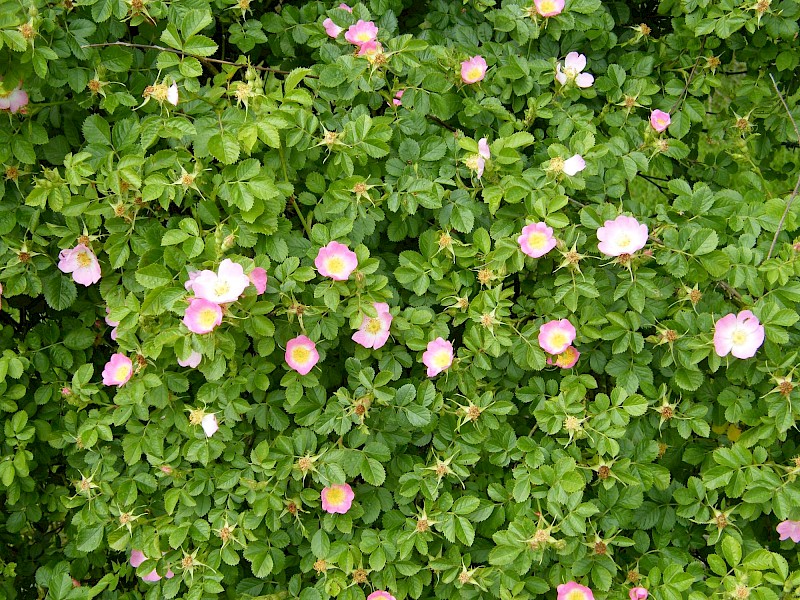
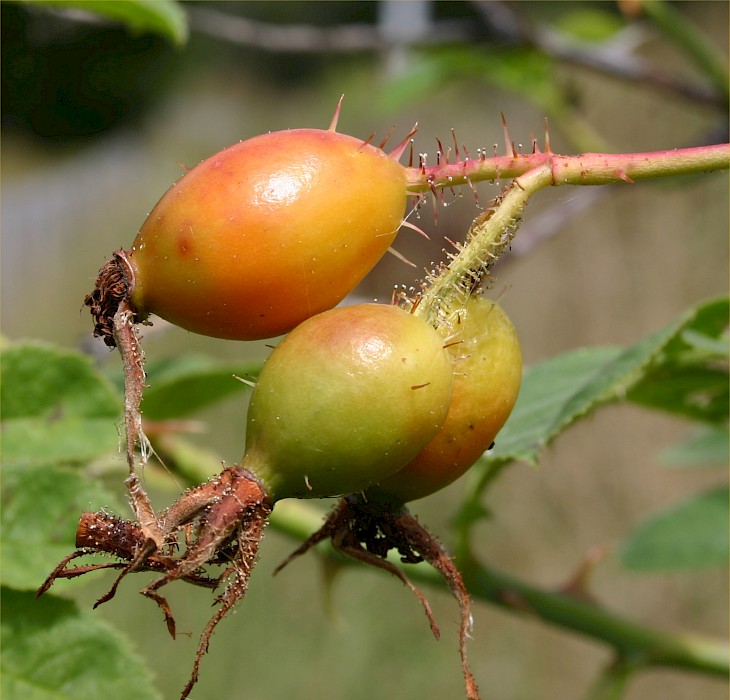
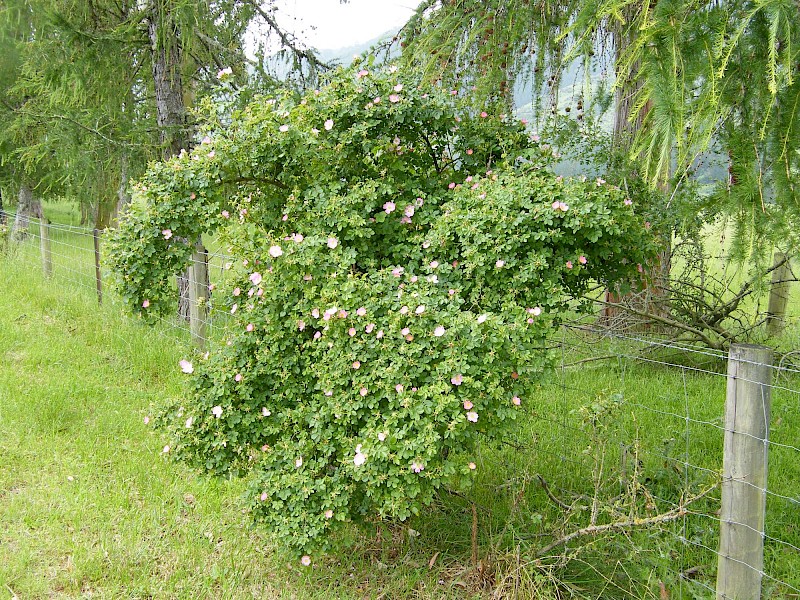
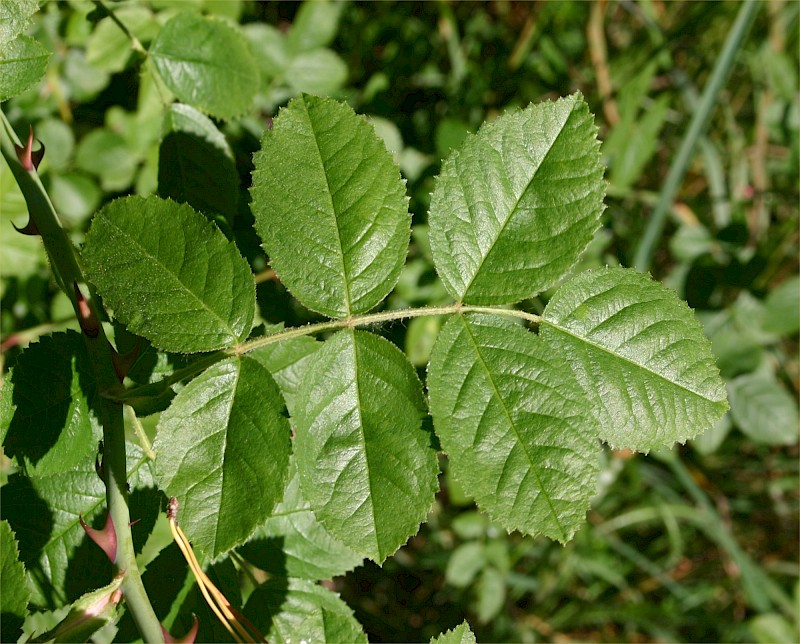
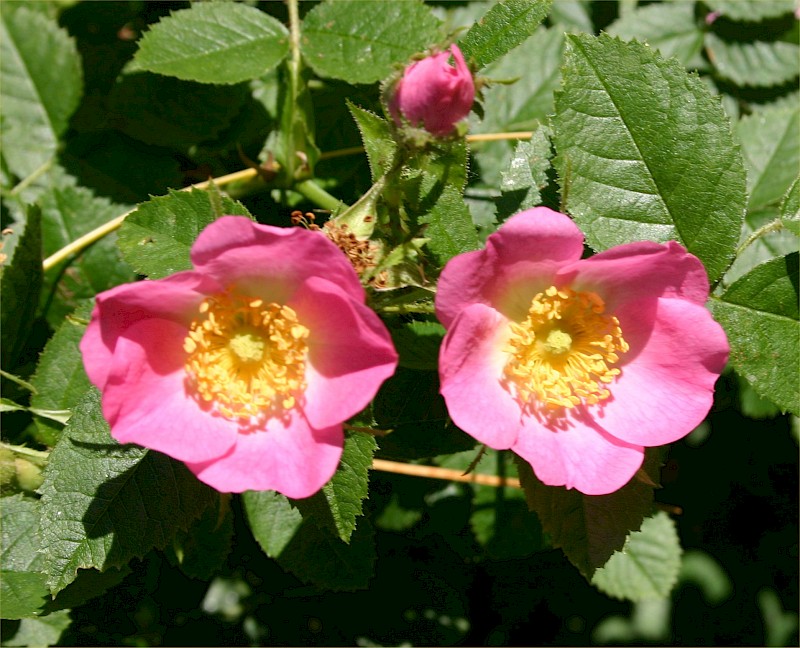
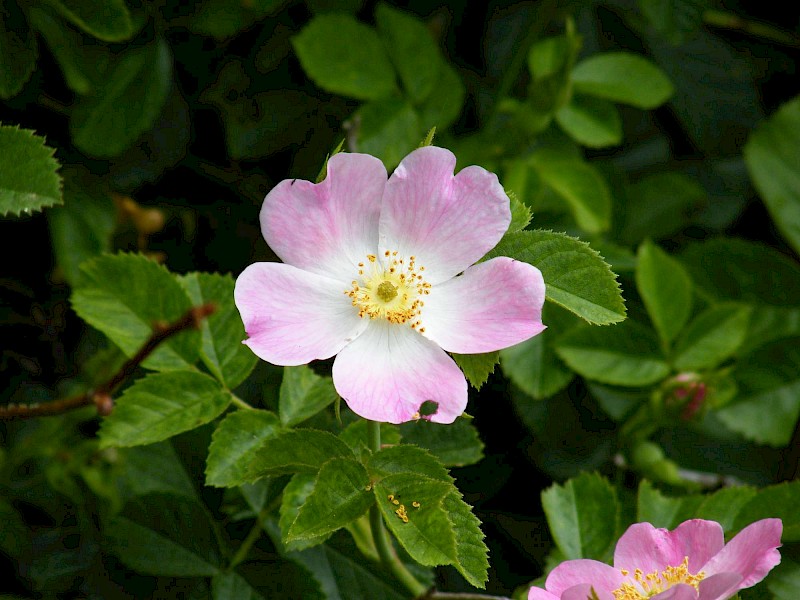
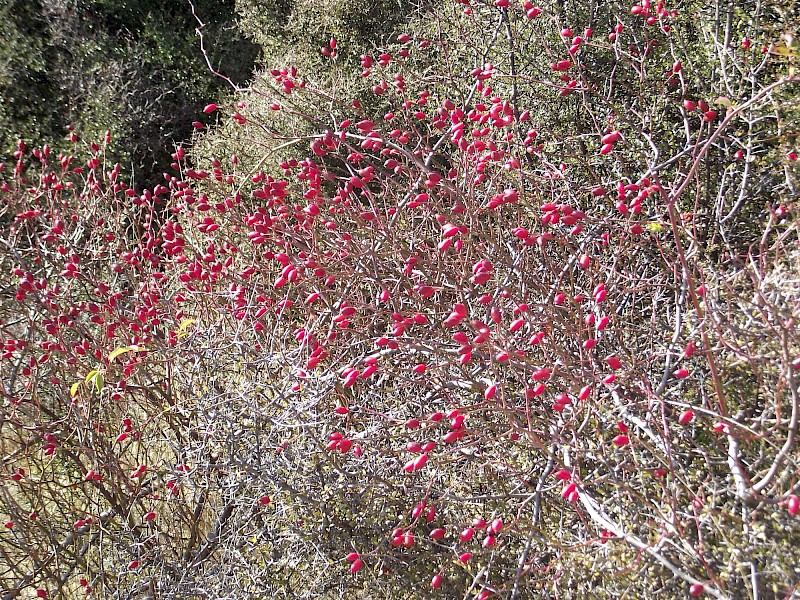
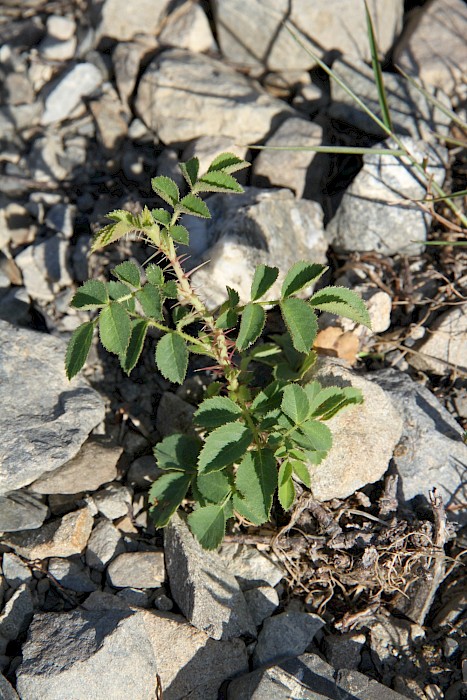
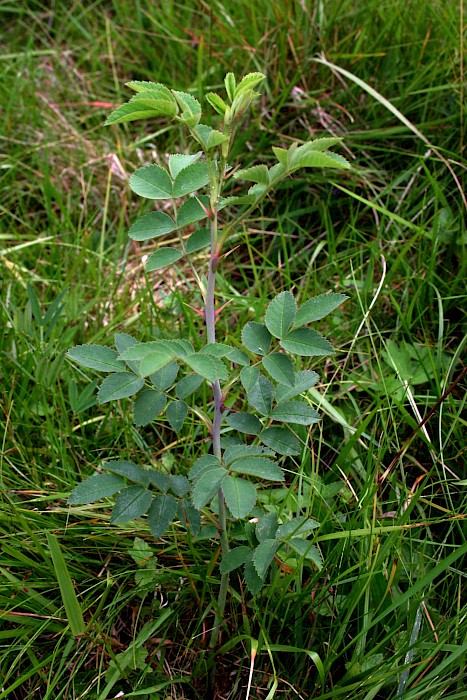
Deciduous, erect, occasionally dense, woody shrub to 3 m (occasionally 5 m) tall with stout branched roots that often sucker. Many arching stems grow from the base, with few to many, unequal, flattened, downward- pointing, curved thorns. Apple-smelling leaves are hairless dull-green above, hairy below, and divided into 5-9 narrow-oval leaflets (12-40 x 8-28 mm). Clusters of 1-3 pink (or bright pink with whitish base) rose-like, 5-petalled flowers (25-40 mm diameter) appear from November to January, followed by prominent, egg-shaped, shiny red or orange-red rose hips (12-22 x 10-18 mm) from February to May.
Are there any similar species?
Dog rose (Rosa canina) has even-sized thorns and is also weedy, especially in damp areas.
Why is it weedy?
Long-lived seed is occasionally well dispersed and spread is also by suckers. Tolerates drought, hot to very cold temperatures, wind, low fertility, most well-drained soils and damage (little grazed). Can dominate the canopy.
How does it spread?
Mostly via suckers and also by bird-dispersed seed. Abandoned gardens, poor and drought-prone pasture, roadsides, and river flats are all common sources.
What damage does it do?
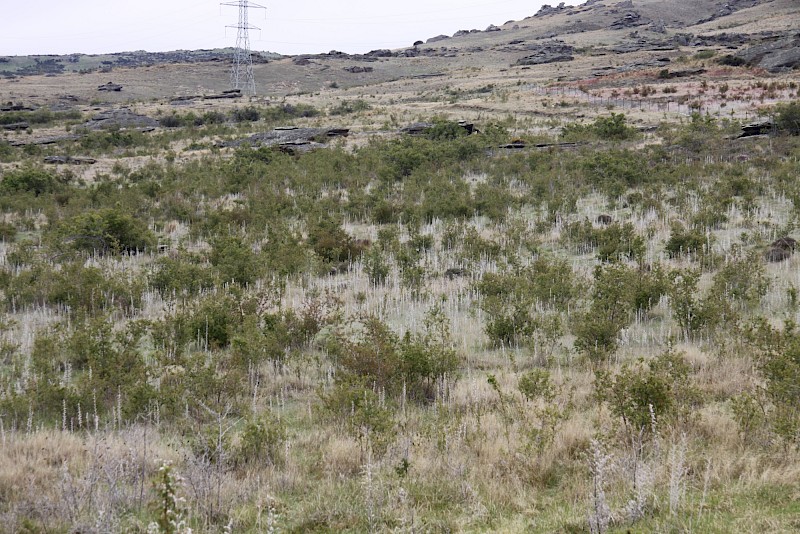
Forms dense, long-lived stands in tough, open habitats, inhibiting or preventing the seedlings of native species from establishing. Can alter riverbeds, causing flooding. Requires moderate to high light levels, and invades only open sites or badly degraded forest.
Which habitats is it likely to invade?
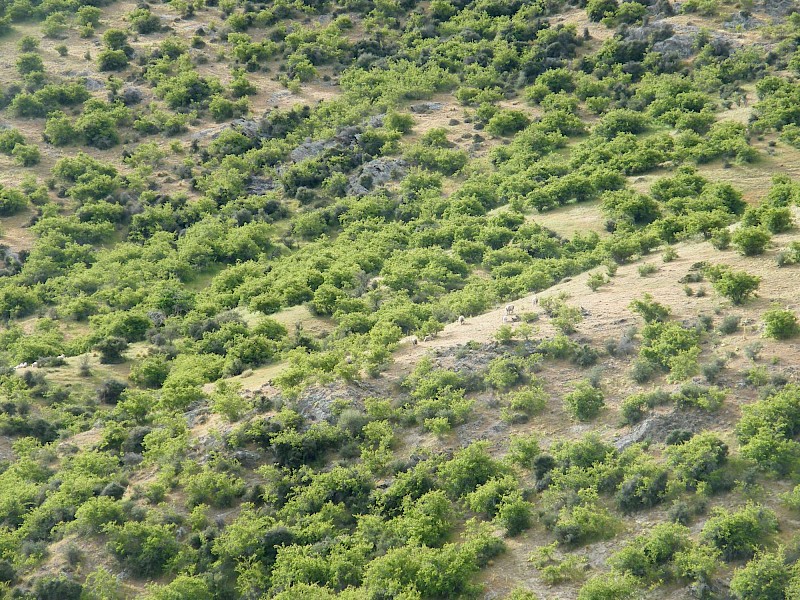
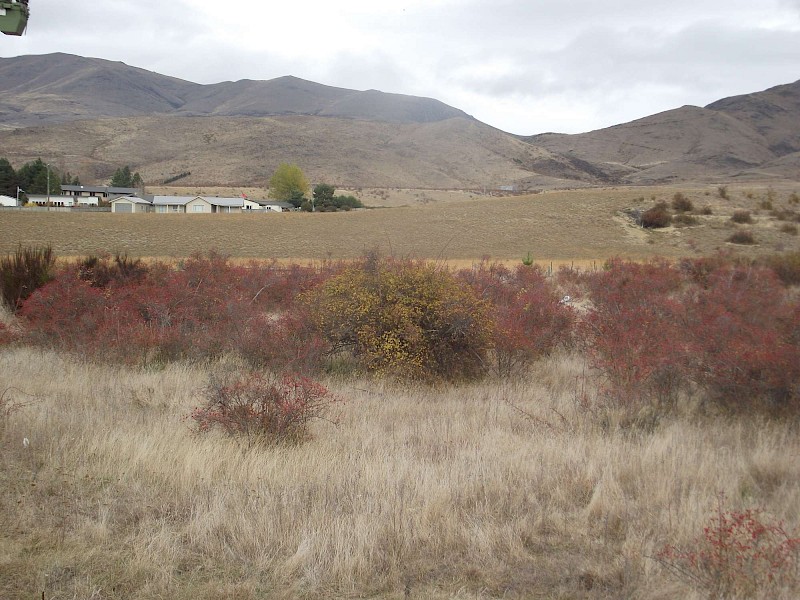
Tall and short tussockland, shrubland, riverbeds, stabilised screes, steep open slopes, well drained sites, dunes, and bare land, mainly in drier eastern areas.
What can I do to get rid of it?
1. Physical removal - Hand pull seedlings, or dig out entire plant including roots (all year round): Remove all plant material from site and burn, bury deeply or dispose of to refuse.
2. Cut and paste (all year round) - Beware of thorns on stem, wear protective gloves and long sleeves. Cut the main stem/trunk as close to the ground as possible and cover the entire stump with herbicide as soon as possible after cutting. Apply metsulfuron gel (10g/l strength).
3. Basal spray - Basal spray stems up to 20cm diametre with X-Tree Basal. Apply from the ground to a height of 6 times the diameter of the plant, ensure the base is thoroughly covered at ground level.
4. Foliar spray - Apply Glyphosate (360 g/L active ingredient) herbicide (20ml/L) plus organosilicone penetrant (2ml/L) to cover entire plant Note: Non selective. Avoid overspray onto desirable plants OR Apply Metsulfuron herbicide (600g/kg active ingredient) (Knapsack 0.5g/L, or Gun and hose 20-35g/100L) plus organosilicone penetrant (3ml/L) to thoroughly wet all parts of plant. Note: Metsulfuron overspray will kill other (desirable) broadleaf plants and has residual activity in the soil which aids in killing below ground parts.
CAUTION: When using any herbicide or pesticide, PLEASE READ THE LABEL THOROUGHLY to ensure that all instructions and directions for the purchase, use and storage of the product, are followed and adhered to.
What can I do to stop it coming back?
Suckering roots and crowns resprout after spraying and cut stumps resprout. Grazing does not control plant, merely eliminates plant competition. Exclude livestock, maintain control of rabbits and other browsing pests. Planting sites can minimise seedling regrowth. Do not replant for at least 4 months after spraying.
Images