Sweet pea shrub
Botanical name
Polygala myrtifolia
Family
Polygalaceae (milkwort)
Where is it originally from?
South Africa
What does it look like?
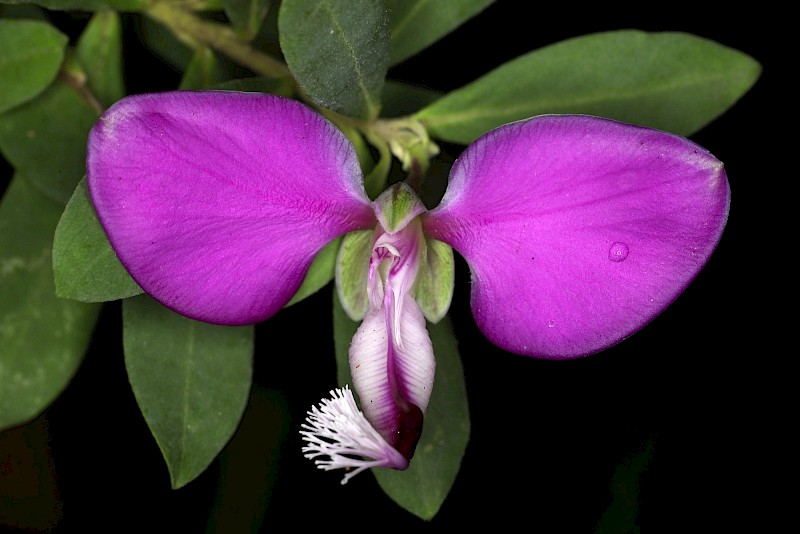
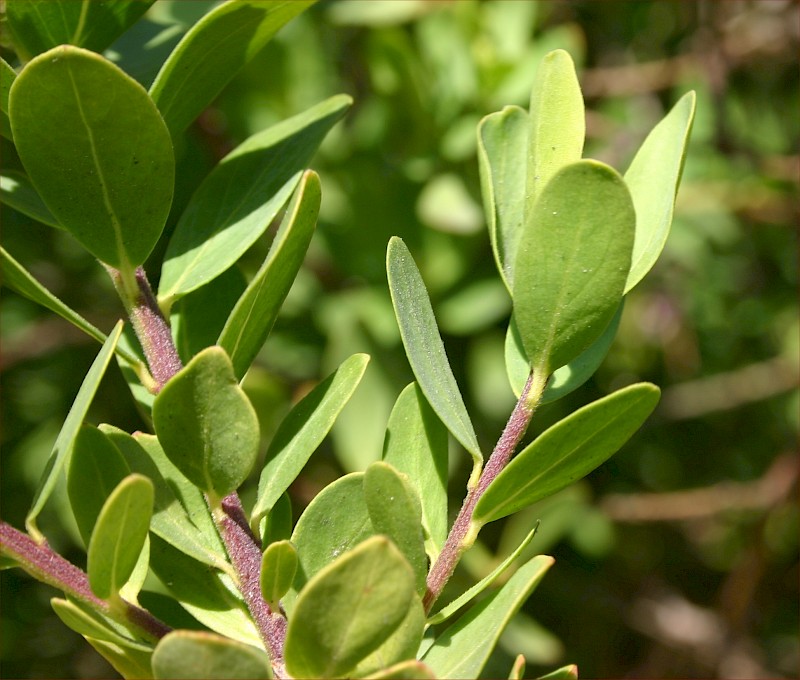
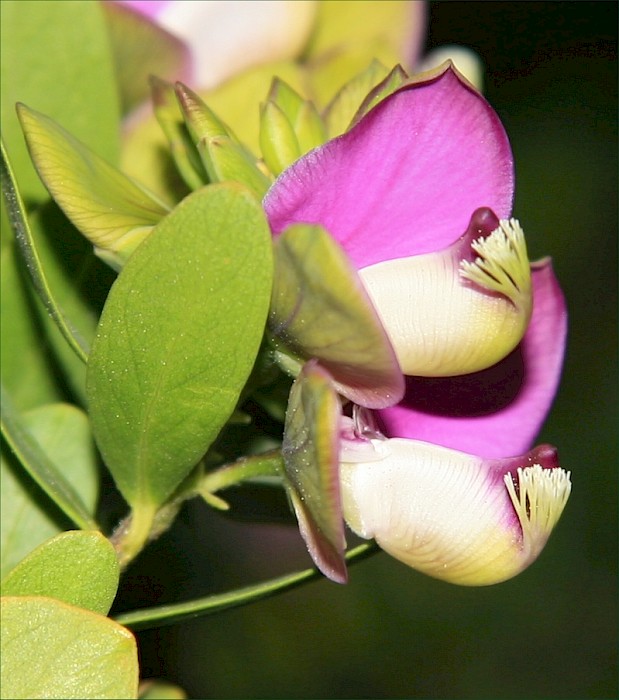
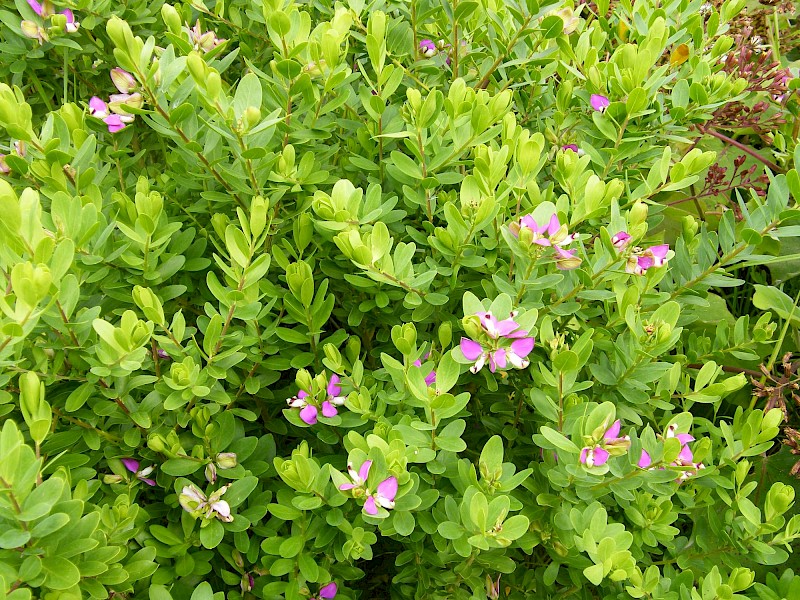
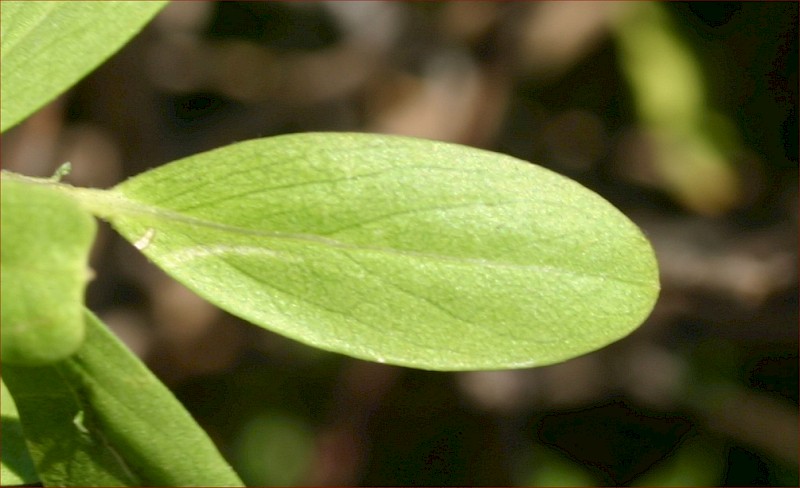
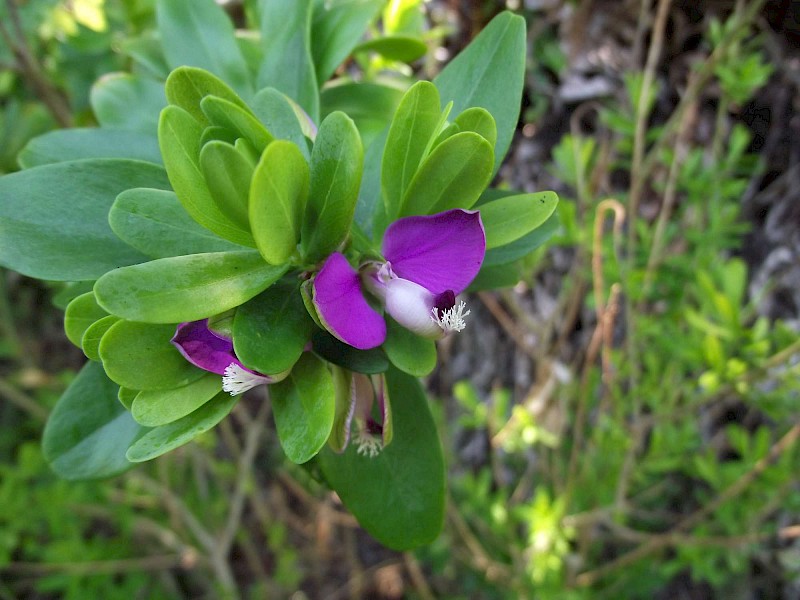
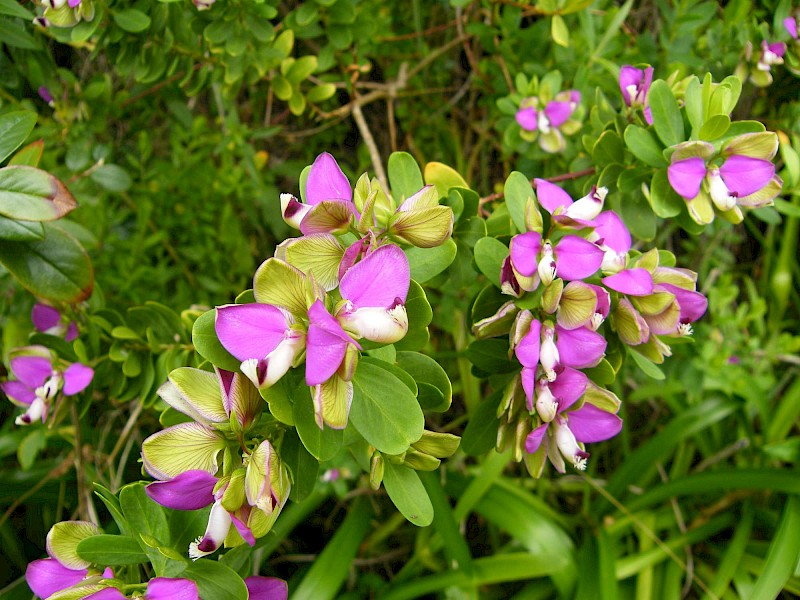
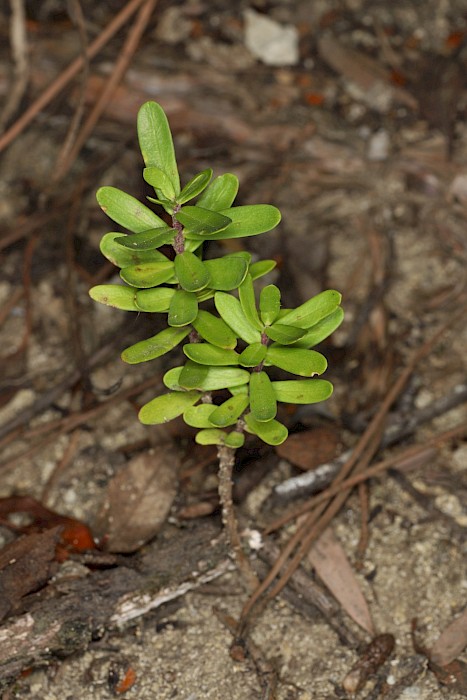
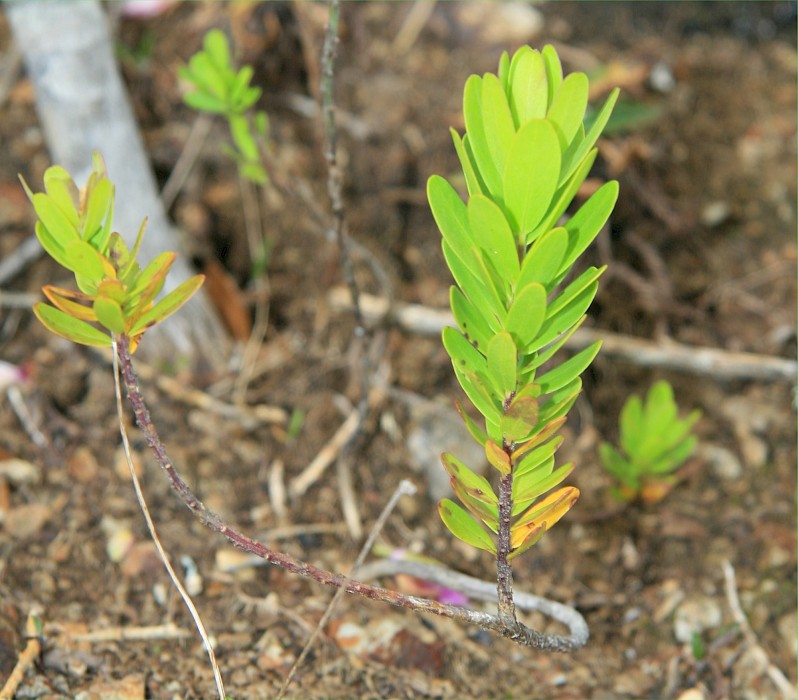
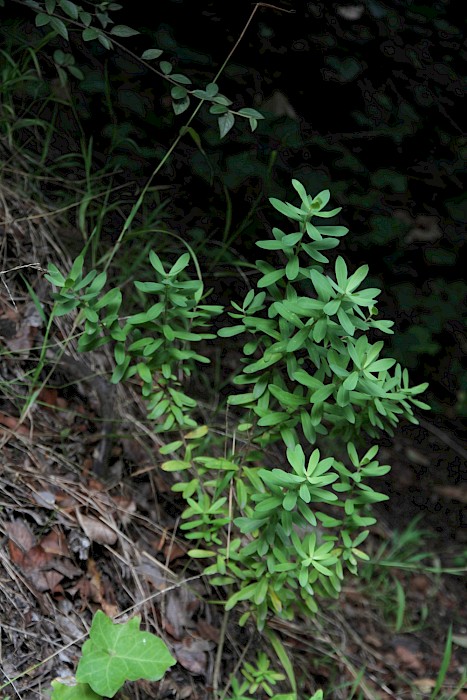
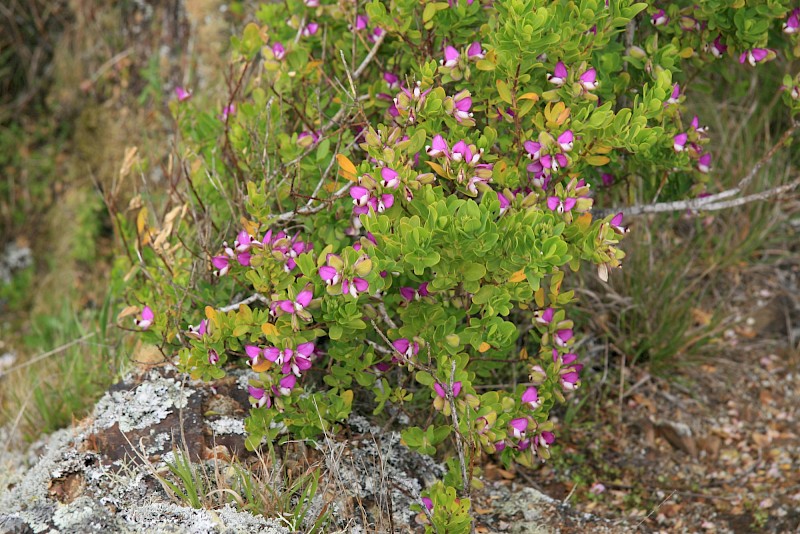
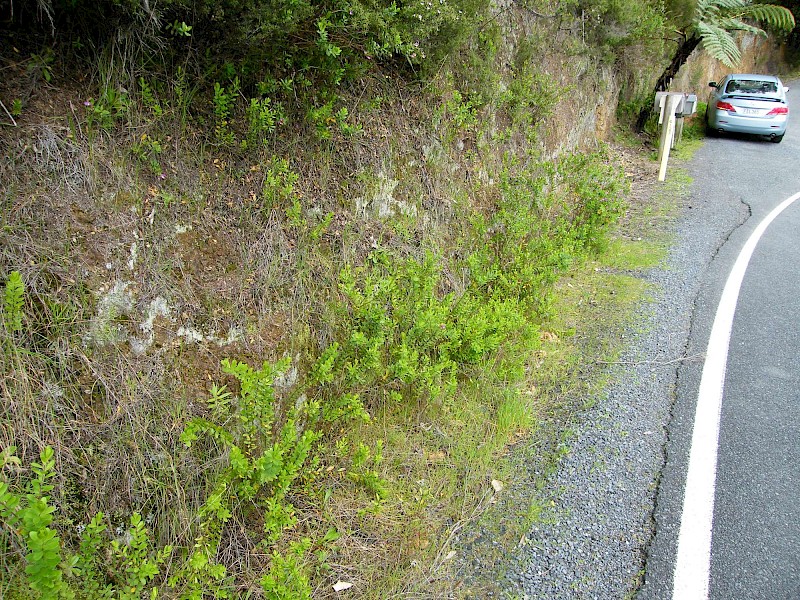
Evergreen legume-like shrub (<2 m tall) with young shoots that have short curly hairs, otherwise the plant is hairless. Smooth, woody, stems are much branched, and oval leaves (15-30 mm long) are arranged alternately on the stem. Three-petalled purple and green (on outside of side petals) sweet-pea like flowers (15-17 mm long, Jan-Dec) in short clusters at the end of stems are followed by flat, heart-shaped seed capsules (10 mm long) containing hairy, dark brown seeds (5 mm long).
Are there any similar species?
Polygala myrtifolia cultivar ‘Grandiflora’ is commonly sold, has many, larger flowers, all parts of which are purple, and does not set seed.
Why is it weedy?
Fast growing, shades out low-growing coastal shrubs, and produces many, very long-lived seeds. Tolerates salt, wind, drought, hot to moderately cool temperatures, poor and rocky soil, fire, and damage, but intolerant of moderate shade and frost.
How does it spread?
Seed is spread in soil and water movement.
What damage does it do?
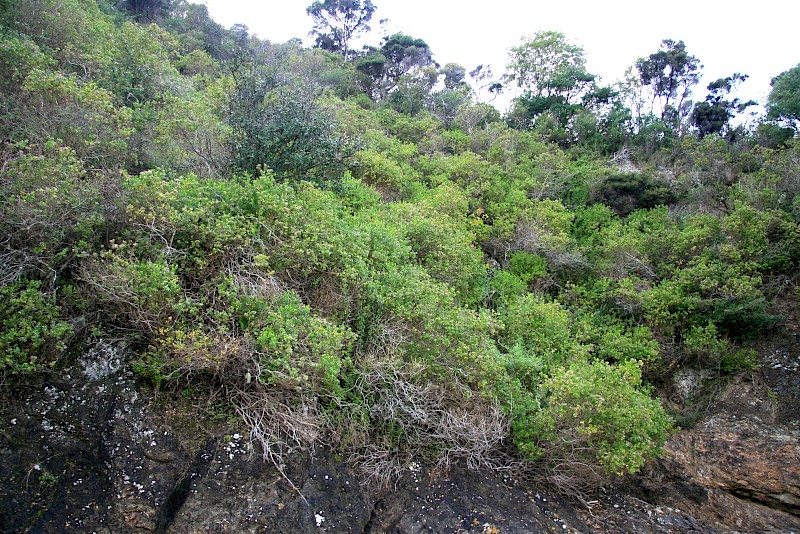
Forms dense stands, discouraging the establishment of native species. Short-lived but replaced continuously from seedbanks.
Which habitats is it likely to invade?
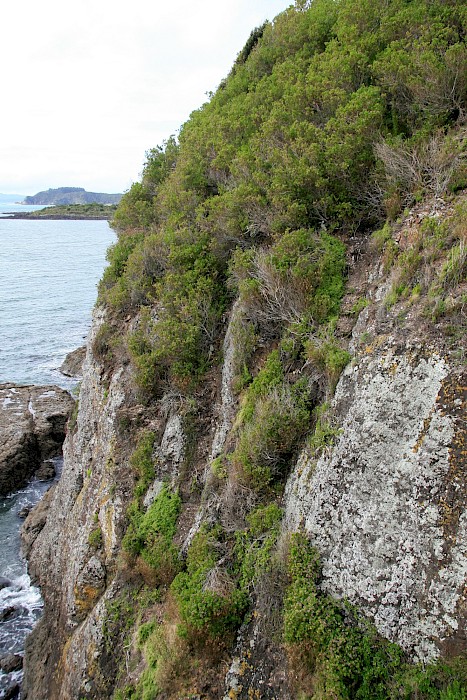
Shrubland, bluffs, short tussockland, bare and rocky land, all on coastal areas, seldom weedy inland.
What can I do to get rid of it?
1. Physical removal - pull seedlings, dig out small plants or excavate larger areas.
2. Cut and paste (all year round) - Cut the stem/trunk as close to the ground as possible and cover the entire stump with herbicide as soon as possible after cutting. Apply metsulfuron gel (10g/l strength)
3. Foliar spray - Apply Glyphosate (360 g/L active ingredient) herbicide (20ml/L) plus organosilicone penetrant (2ml/L) to cover entire plant Note: Non selective. Avoid overspray onto desirable plants OR Apply Metsulfuron herbicide (600g/kg active ingredient) (Knapsack 0.5g/L, or Gun and hose 20-35g/100L) plus organosilicone penetrant (3ml/L) to thoroughly wet all parts of plant. Note: Metsulfuron overspray will kill other (desirable) broadleaf plants and has residual activity in the soil which aids in killing below ground parts.
CAUTION: When using any herbicide or pesticide, PLEASE READ THE LABEL THOROUGHLY to ensure that all instructions and directions for the purchase, use and storage of the product, are followed and adhered to.
What can I do to stop it coming back?
Cut stumps occasionally resprout. Seed germinates in bare areas, especially after fires. Easy to kill, however seedling regrowth is usually extensive, so budget for ongoing follow up. Eradicate systematically, working downhill or in blocks along coastline. Replant where possible.
Images