Tasmanian ngaio
Botanical name
Myoporum insulare
Family
Myoporaceae (myoporum)
Also known as
Australian ngaio, boobialla
Where is it originally from?
Tasmania, Australia
What does it look like?
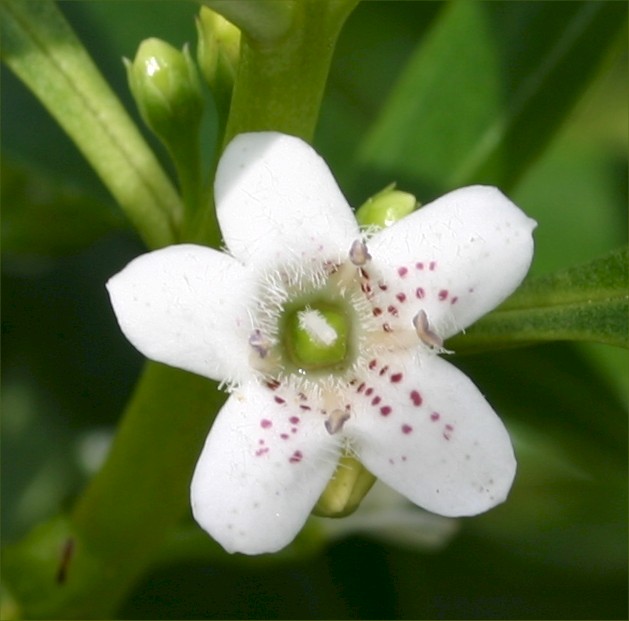
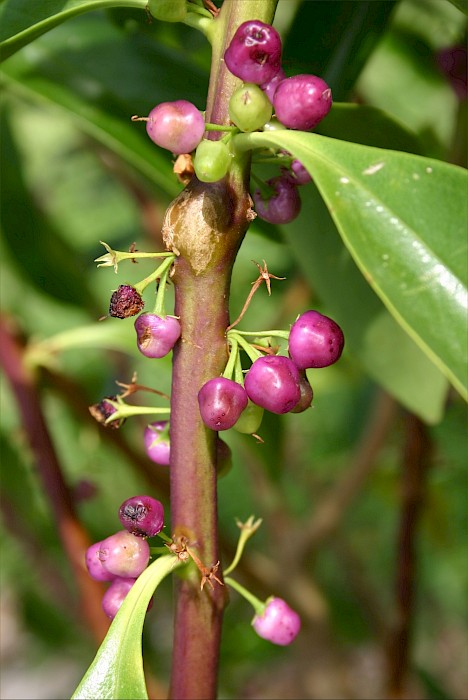
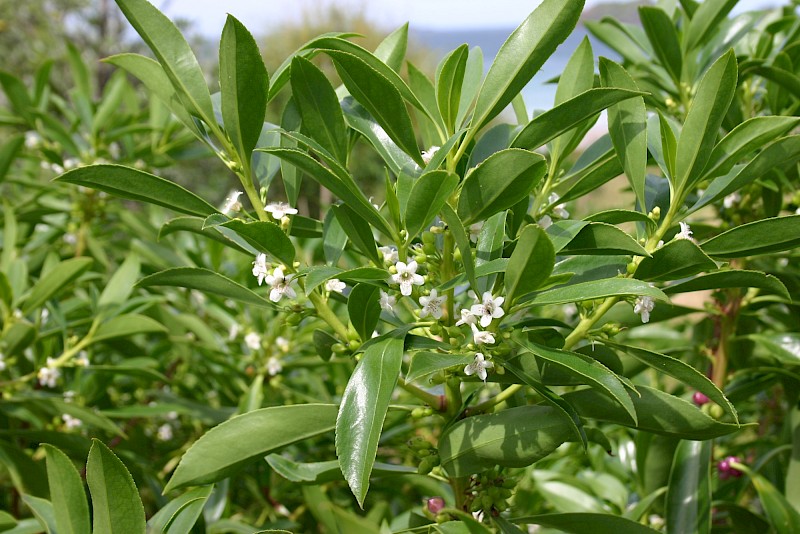
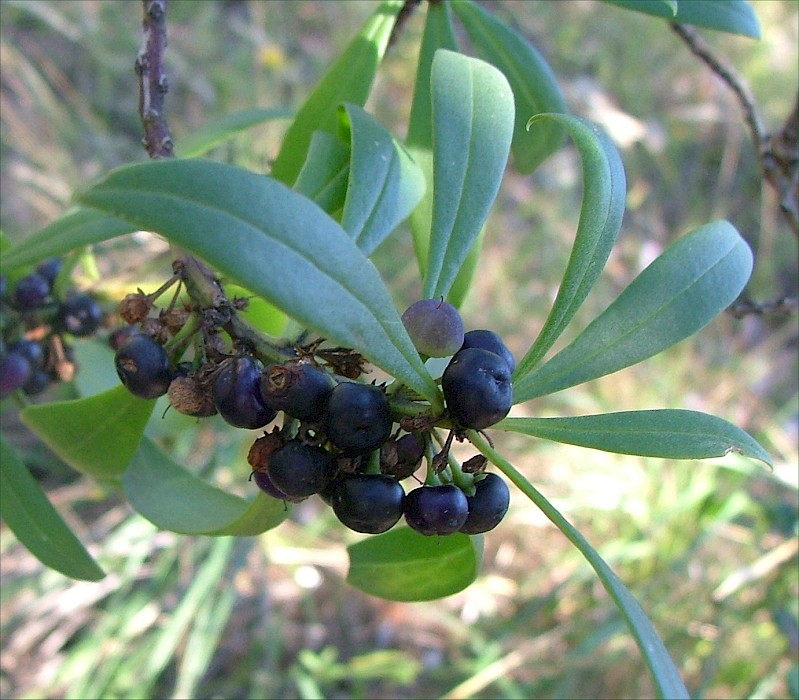
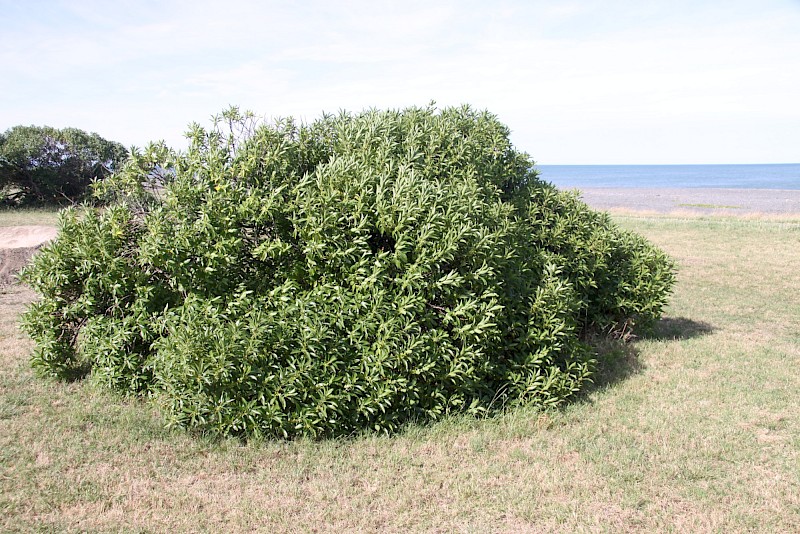
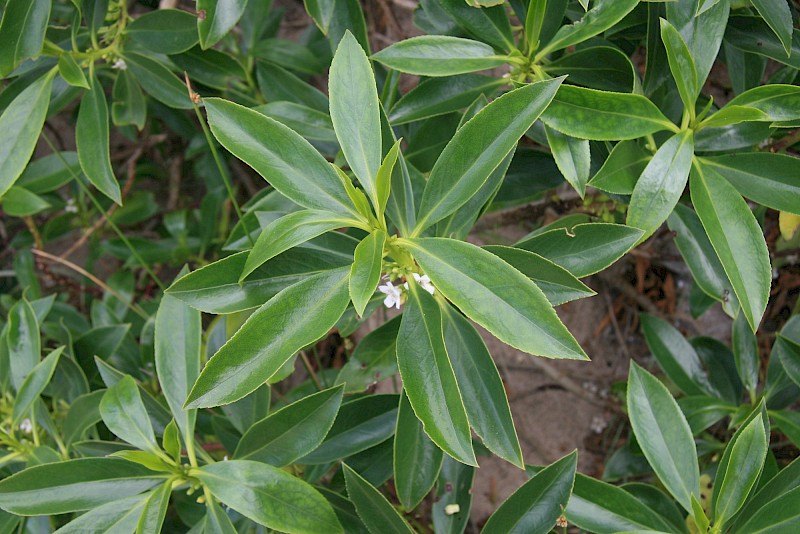
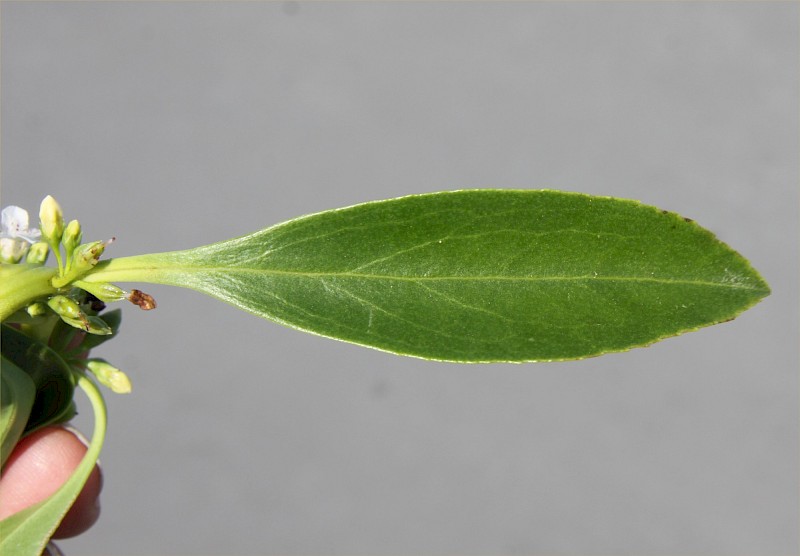
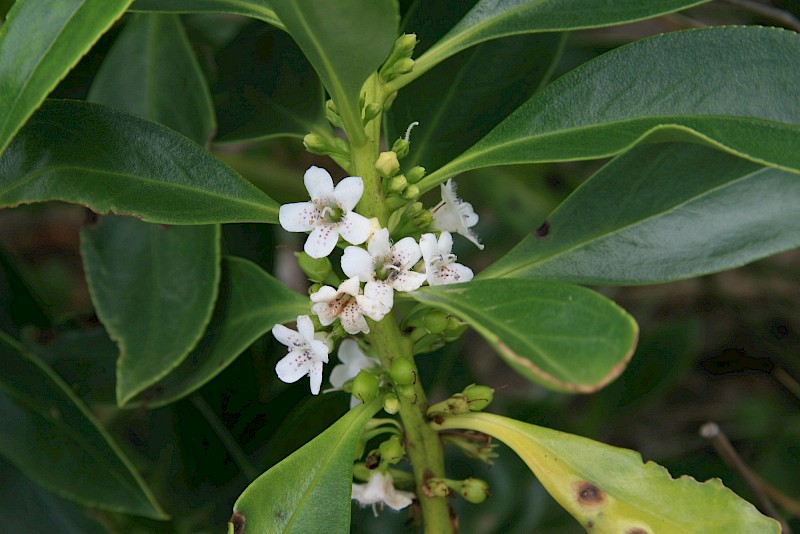
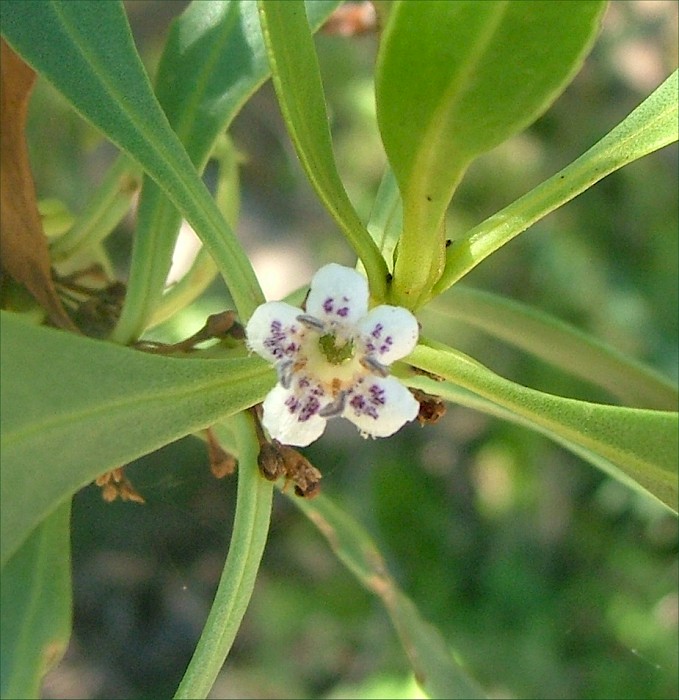
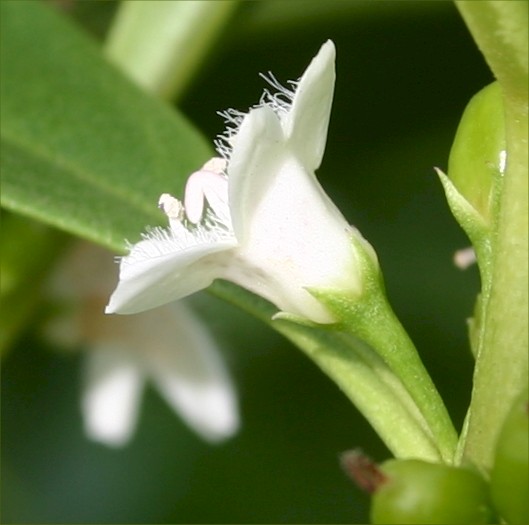
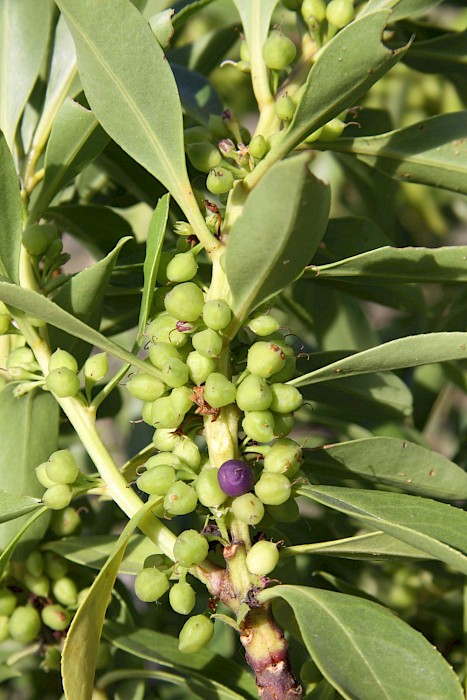
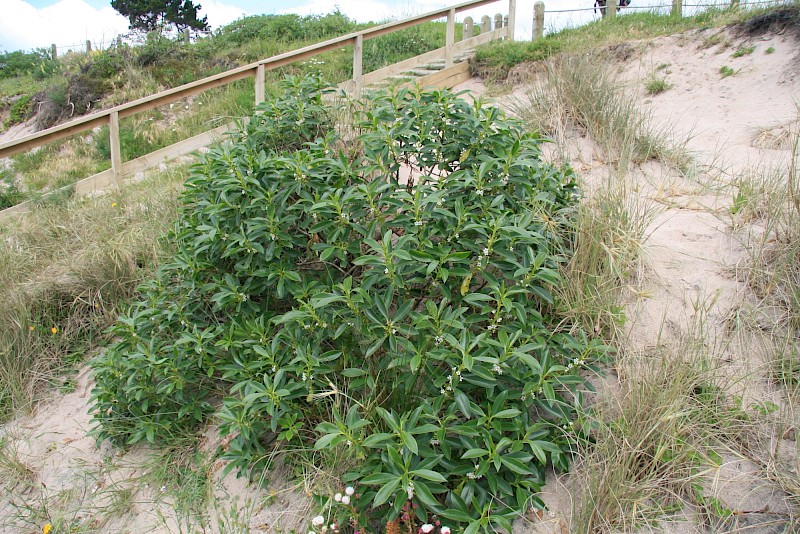
Large smooth-barked shrub or small tree with numerous branches from the base forming a dense rounded bushy shape. Leaf buds are green and sticky when fresh, and leaves (to 12 x 3 cm) are thick (semi succulent), finely dotted with glands and serrated towards the ends. White 5-petalled flowers (7-8mm diameter) with fine purple dots (Sep-Jun) are tubular at the base, and the deep purple fruit is slightly longer than wide (6 mm diameter).
Are there any similar species?
New Zealand ngaio (Myoporum laetum) and Kermadec ngaio (M. kermadecense) both have rough furrowed bark.
Why is it weedy?
Hybridizes and competes with New Zealand’s native ngaio.
How does it spread?
Seed, or commonly planted, as mistaken for New Zealand ngaio.
What damage does it do?
Hybridized plants spread by seed and compete with New Zealand ngaio in coastal areas.
Which habitats is it likely to invade?
Coastal areas, sandy sites behind beaches.
What can I do to get rid of it?
1. Physical removal - Pull or dig out small plants (all year round). Slash tall plants close to the ground. Leave on site to rot down.
2. Cut and paste - Cut the stem/trunk as close to the ground as possible and cover the entire stump with herbicide as soon as possible after cutting. Apply glyphosate gel (120g/L strength)
3. Foliar spray - Apply Glyphosate (360 g/L active ingredient) herbicide (20ml/L) plus organosilicone penetrant (2ml/L) to cover entire plant Note: Non selective. Avoid overspray onto desirable plants.
CAUTION: When using any herbicide or pesticide, PLEASE READ THE LABEL THOROUGHLY to ensure that all instructions and directions for the purchase, use and storage of the product, are followed and adhered to.
Images