Tree lupin
Botanical Name
Lupinus arboreus
Family
Fabaceae (pea)
Where is it originally from?
California
What does it look like?
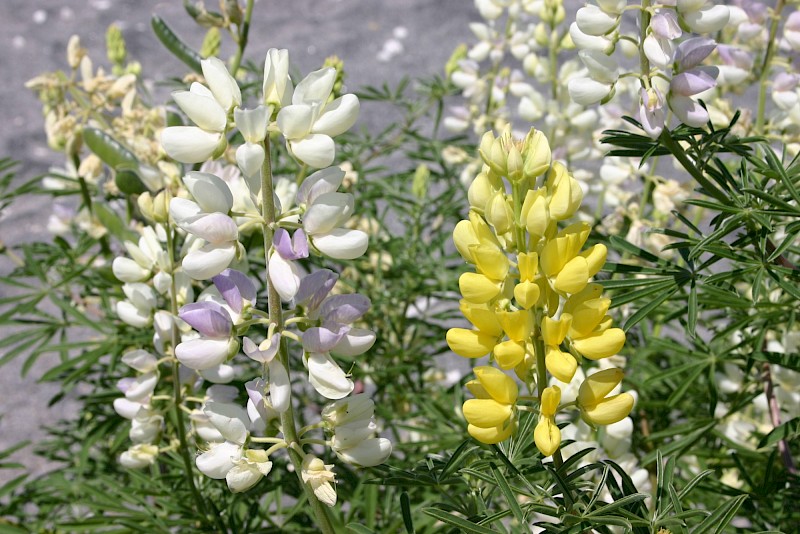
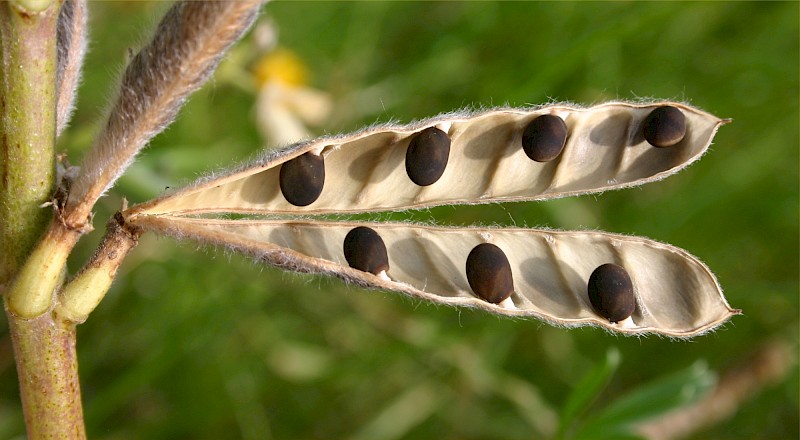
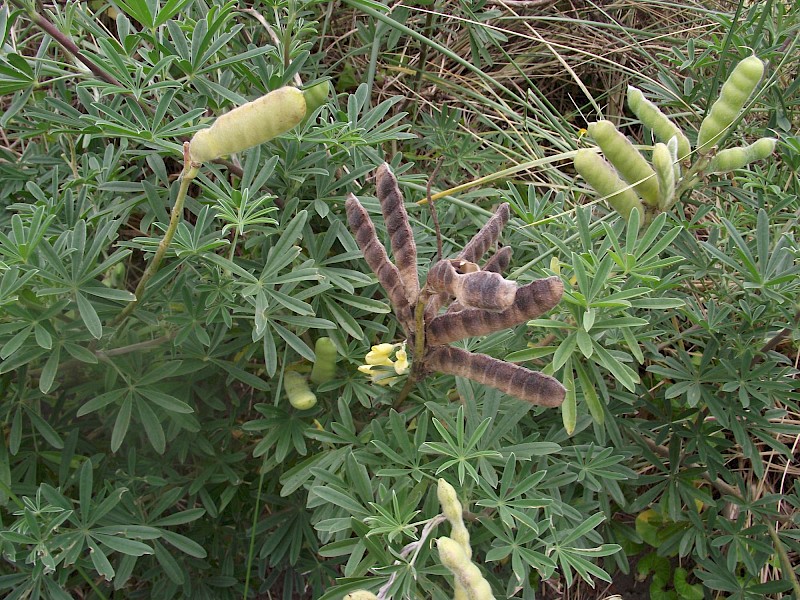
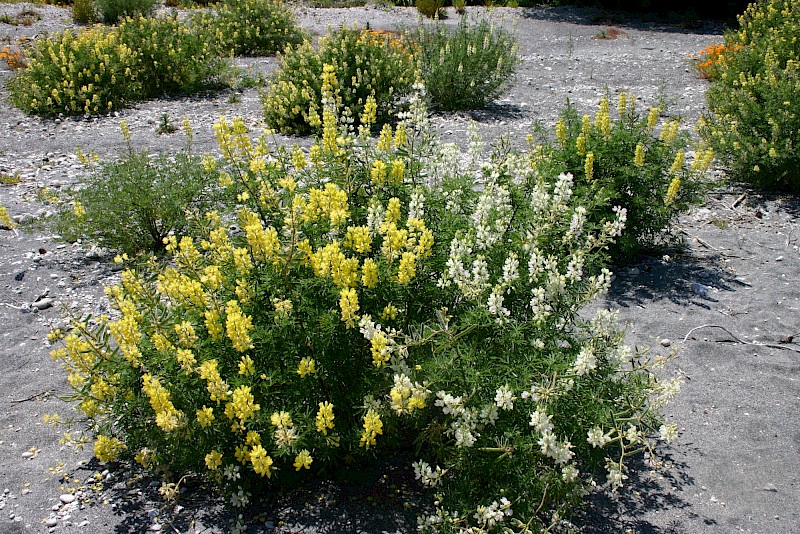
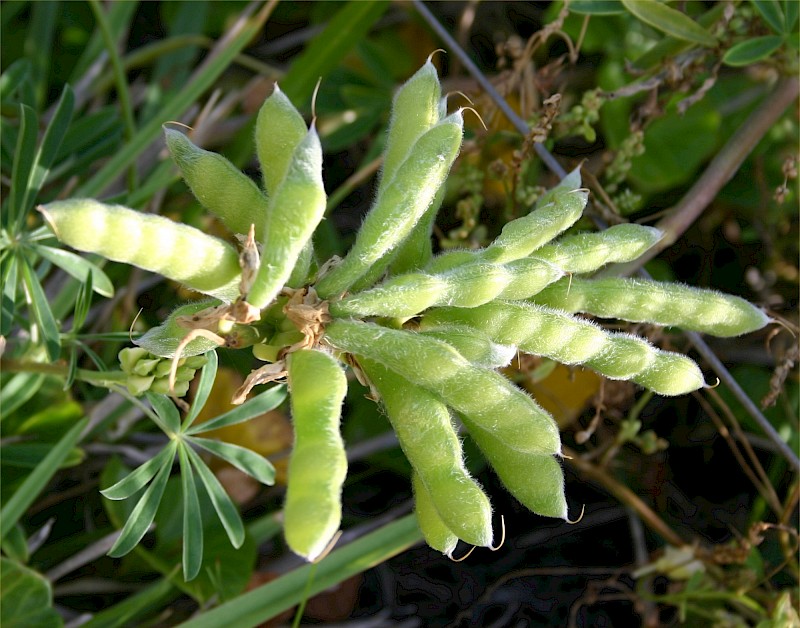
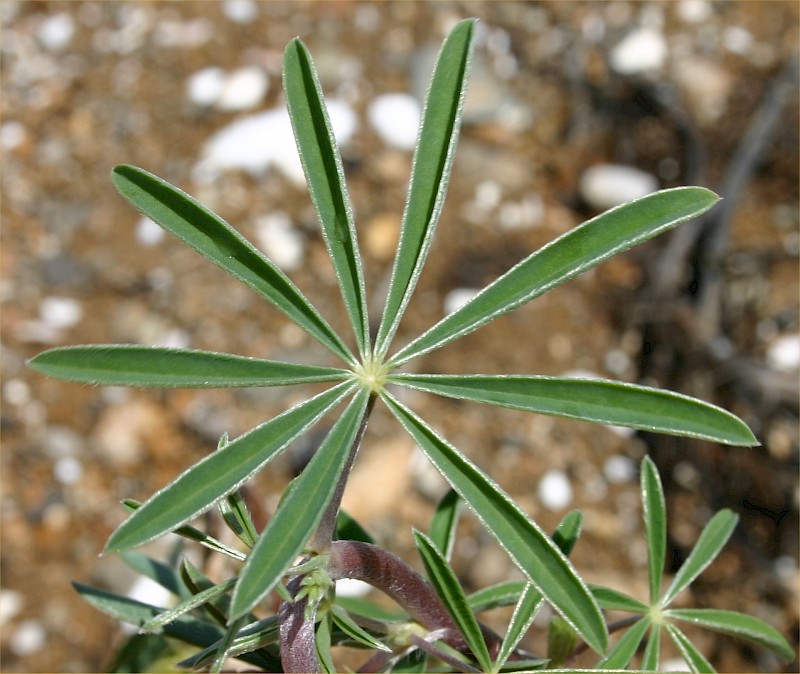
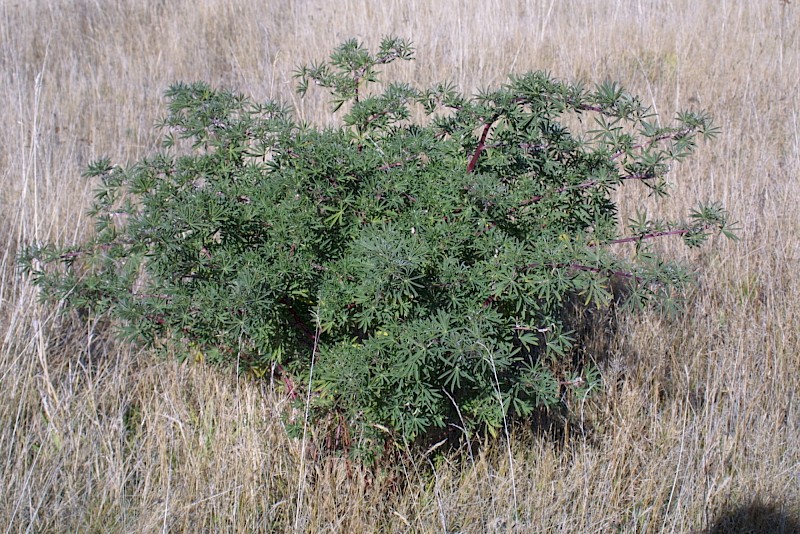
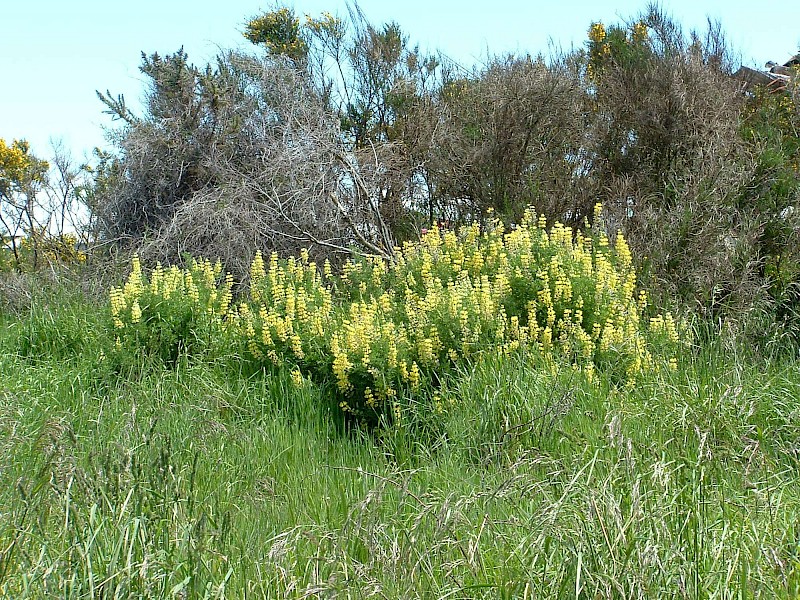
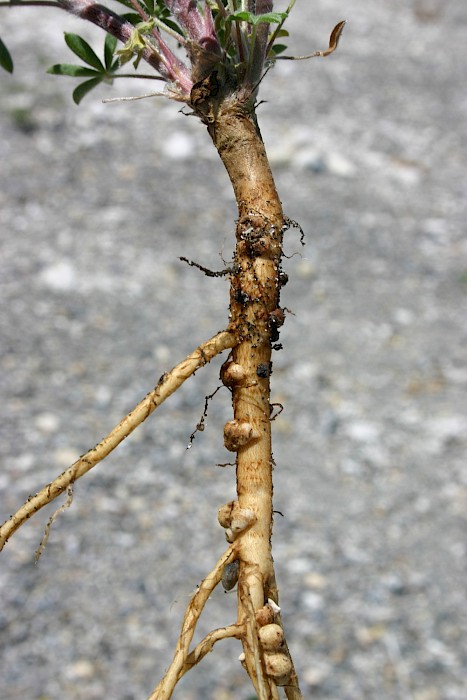
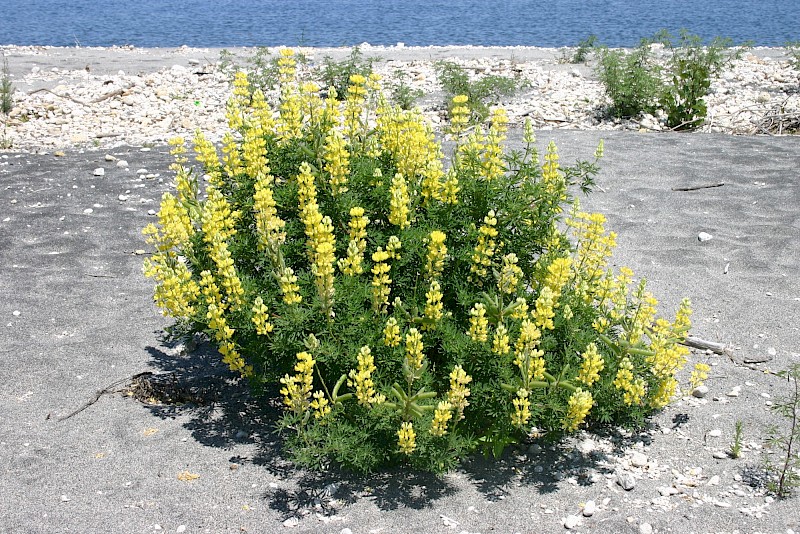
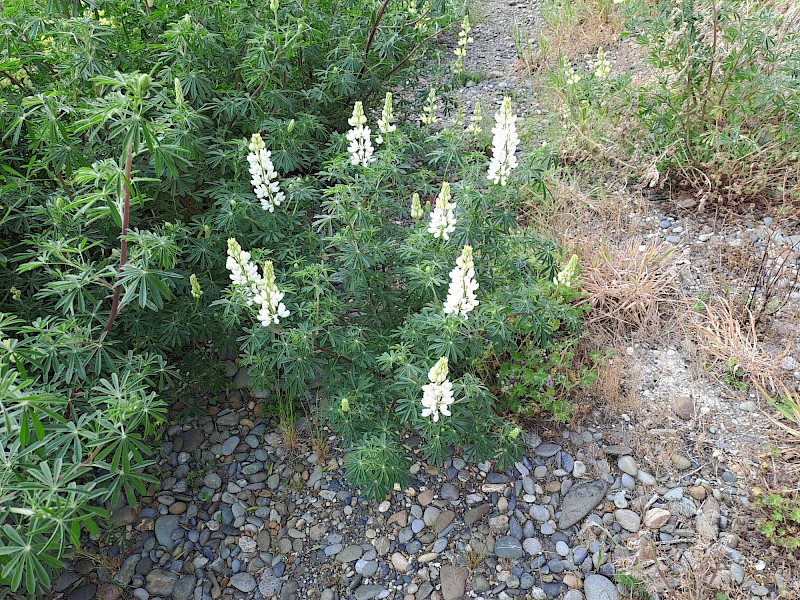
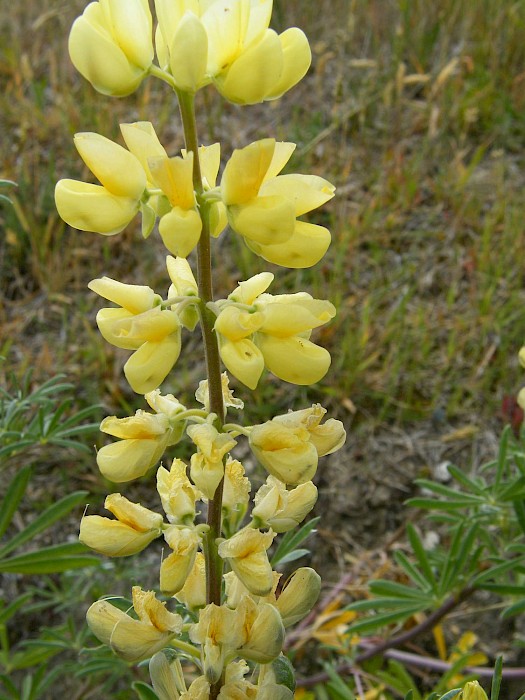
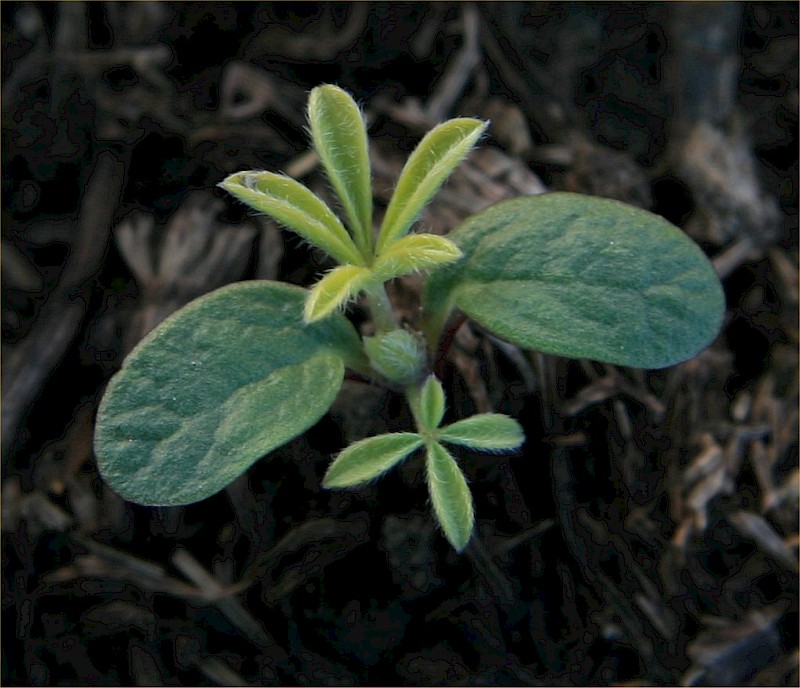
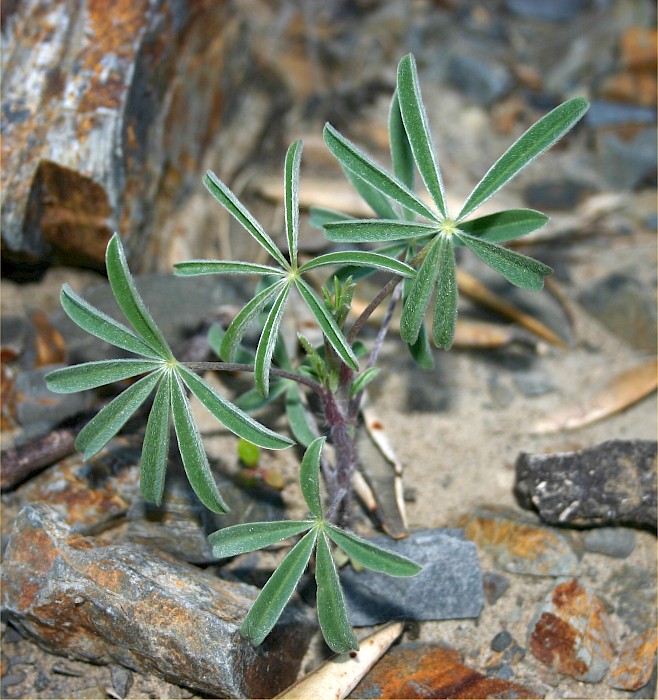
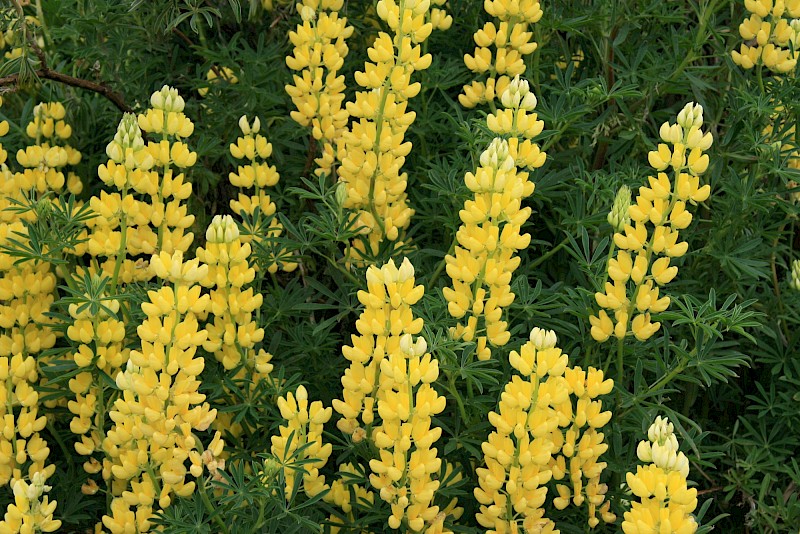
Short-lived, perennial shrub (<2-3 m tall) with deep taproot and tough, branching stems that are densely silky-hairy when young and become soft-woody as they mature. Grey-green leaves are hairless on top, silky underneath, and divided into 5-11 leaflets (15-40 x 3-10 mm) spreading out finger-like from one point. Pale yellow (rarely bluish or white) sweetly scented pea-like flowers (15-18 mm long, Oct-May) are followed by stout, softly hairy seed pods (40-80 mm long) that are firmly attached to the plant and split explosively to disperse mottled, dark-brown seeds (4-6 mm long).
Are there any similar species?
Blue lupin (Lupinus angustifolius) is a semi-woody annual with blue flowers (Aug-Apr) and is occasionally weedy. L. polyphyllus is also similar. Hybrid L. arboreus x polyphyllus has larger and more leaflets, flowers are yellow with blue or purple streaks and it is rarely weedy.
Why is it weedy?
Grows and matures quickly, producing many long-lived seeds. Taller than competing coastal species, so can form a canopy. Tolerates wind, salt, hot to cold temperatures, damage and grazing (not readily eaten), drought, low fertility (fixes nitrogen), and fire but is intolerant of moderate shade and waterlogged soils.
How does it spread?
Seeds are spread by explosive pods, water and soil movement. Sown for sand consolidation and erosion control and as a nursery crop. Common seed sources are riverbeds and plantation forests.
What damage does it do?
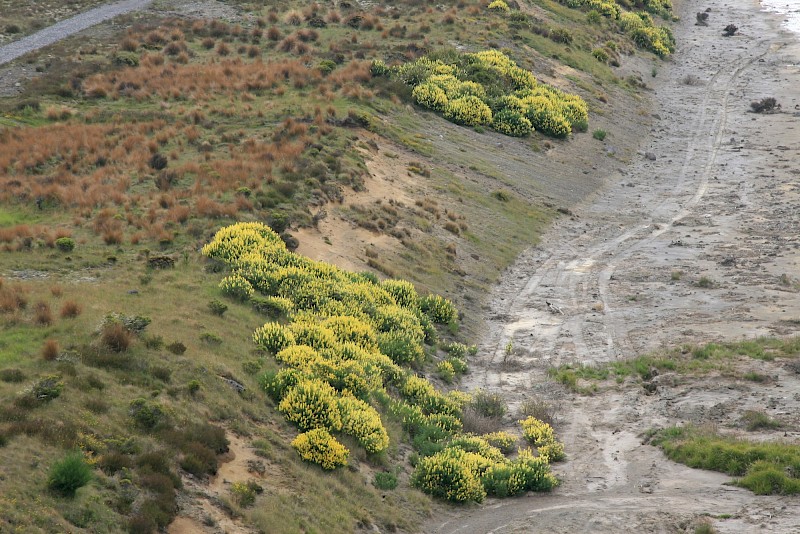
Lowers light levels in open habitats, causing subsequent invasion by weedy shrubs, vines, wilding pines, etc. Increased soil nitrogen may induce changes in the species making up the plant communities from low fertility species to exotic grass or other weed species. Causes sand and gravel to build up, altering the shape of coastlines or rivers and causing erosion elsewhere. Increased cover prevents some birds (eg dotterels, wrybills) nesting and increases predation of birds that do by cats and mustelids.
Which habitats is it likely to invade?
Short tussockland, bare land, riverbeds, coastal, sandy and well-drained areas.
What can I do to get rid of it?
1. Physical removal - Pull or dig out small plants (all year round). Slash tall plants close to the ground. Leave on site to rot down.
2. Cut and paste - Cut the stem/trunk as close to the ground as possible and cover the entire stump with herbicide as soon as possible after cutting. Apply glyphosate gel (120g/L strength)
3. Drill or frill - Drill downward sloping holes around the circumference of the trunk about 8-10 cm apart, or Frill (make deep cuts into the sapwood at regular intervals around the base of the tree, taking care not to ring-bark the plant). Fill the holes or saturate the cuts with metsulfuron-methyl 600 g/kg (20-50g/L + penetrant)
4. Foliar spray - Apply Glyphosate (360 g/L active ingredient) herbicide (20ml/L) plus organosilicone penetrant (2ml/L) to cover entire plant Note: Non selective. Avoid overspray onto desirable plants OR Apply Triclopyr herbicide (600g/L active ingredient) at 6ml/L plus penetrant 1ml/L to thoroughly wet all parts of plant. Note: Tricolopyr herbicide is ‘grass friendly’ but overspray will kill other (desirable) broadleaf plants OR apply Clopyralid herbicide (300g/l active ingredient) at a rate of 12.5ml/L. Clopyralid is a herbicide for selective control on plants in the daisy family and some broadleaf weeds. Do not use over or near water bodies or wetlands
CAUTION: When using any herbicide or pesticide, PLEASE READ THE LABEL THOROUGHLY to ensure that all instructions and directions for the purchase, use and storage of the product, are followed and adhered to.
What can I do to stop it coming back?
Cut stumps occasionally resprout. Persistent seedbank. Recent fungal attack has lowered this plants vigour. Sites with strong tall regeneration can usually be left for falling light levels to eliminate. This process can be assisted by slashing and/or interplanting.
Images