Tutsan
Botanical name
Hypericum androsaemum
Family
Clusiaceae (St John’s wort) family
Also known as
Sweet amber
Where is it originally from?
South and Western Europe
What does it look like?
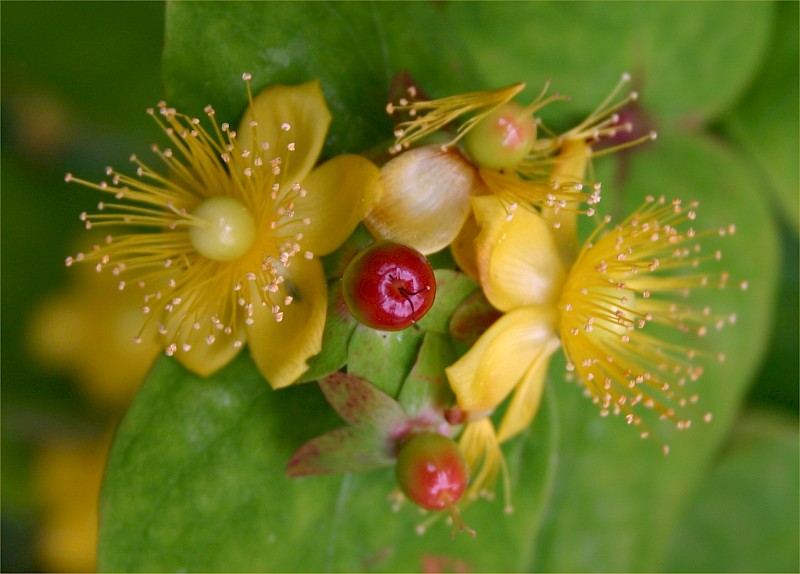
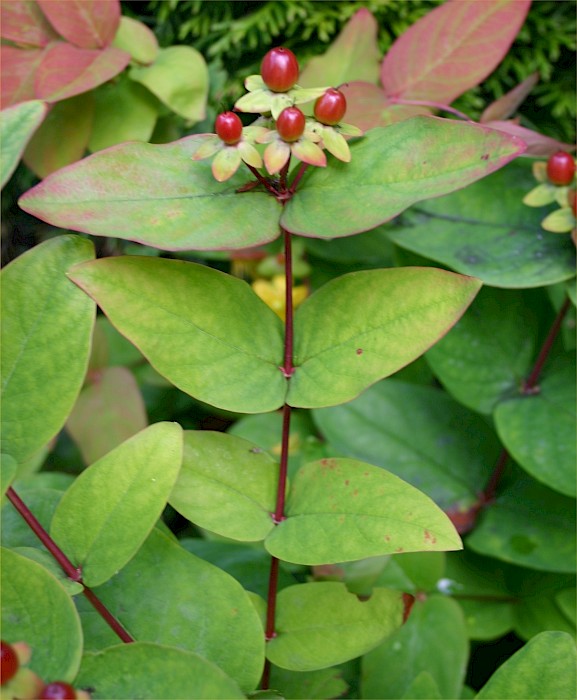
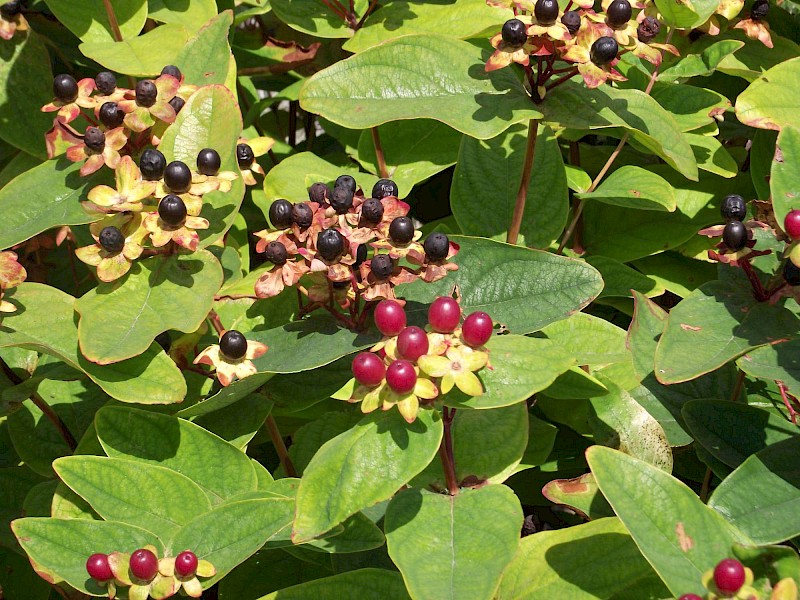
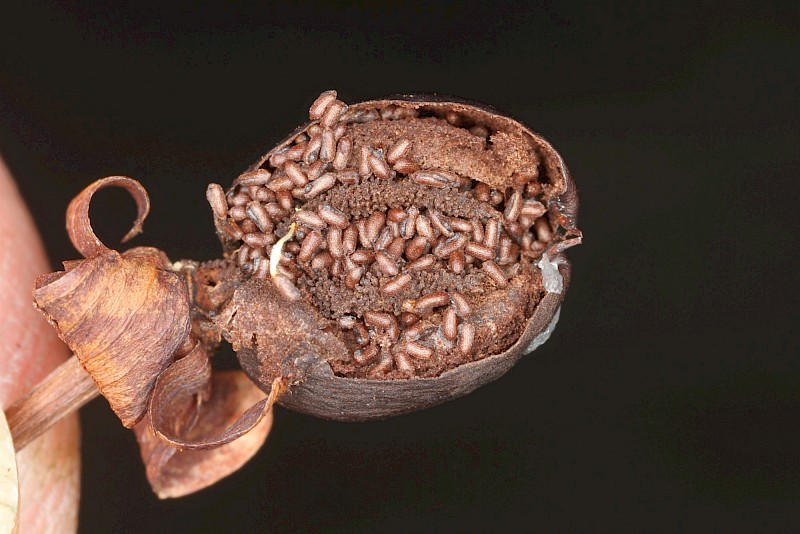
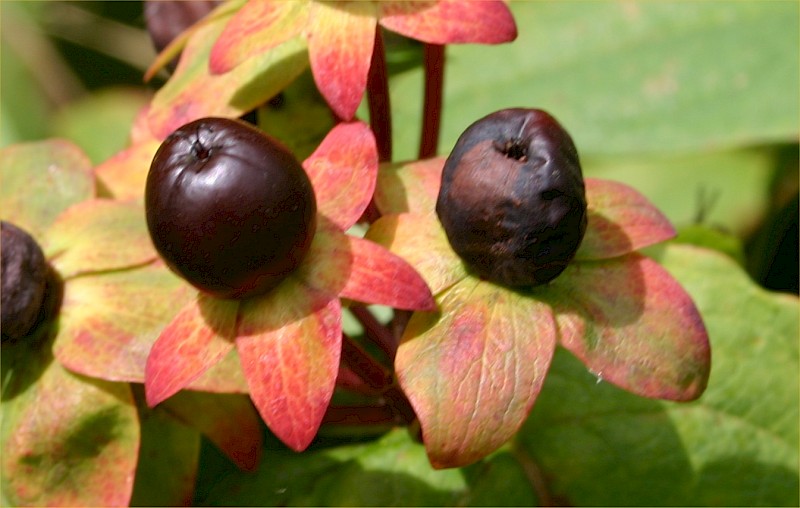
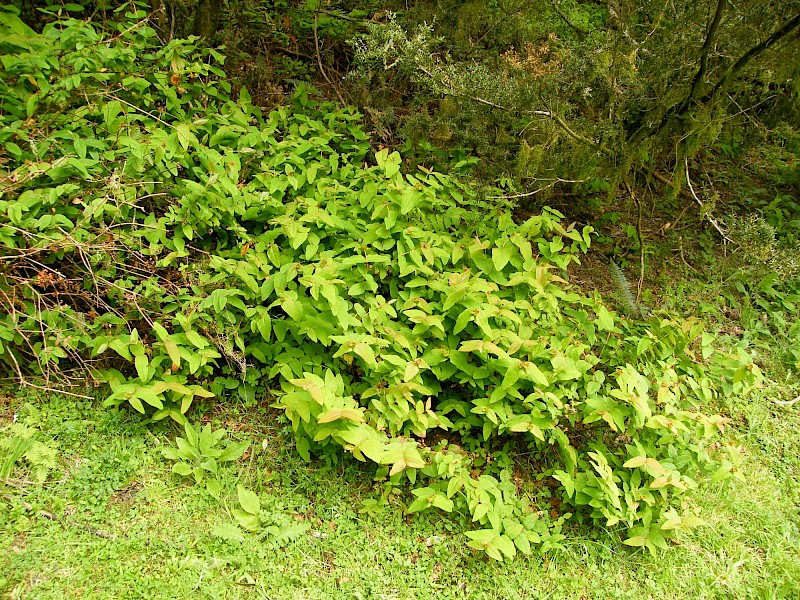
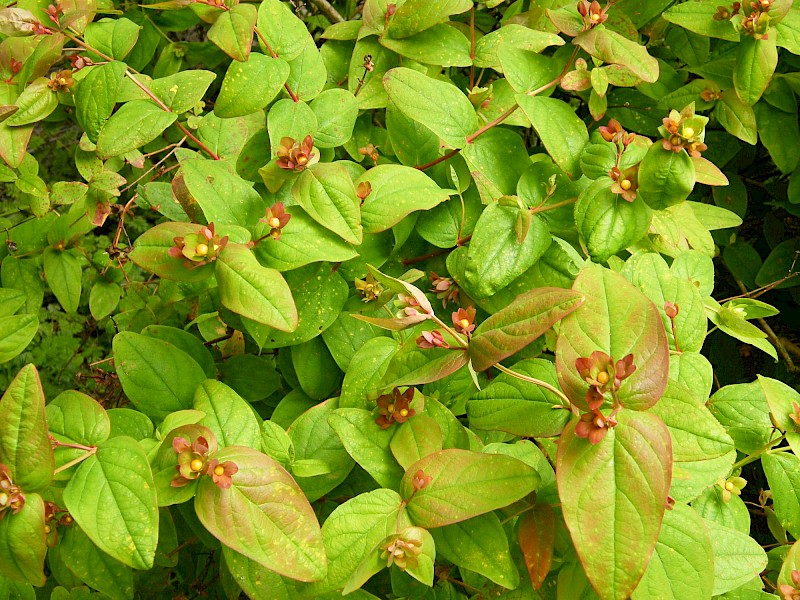
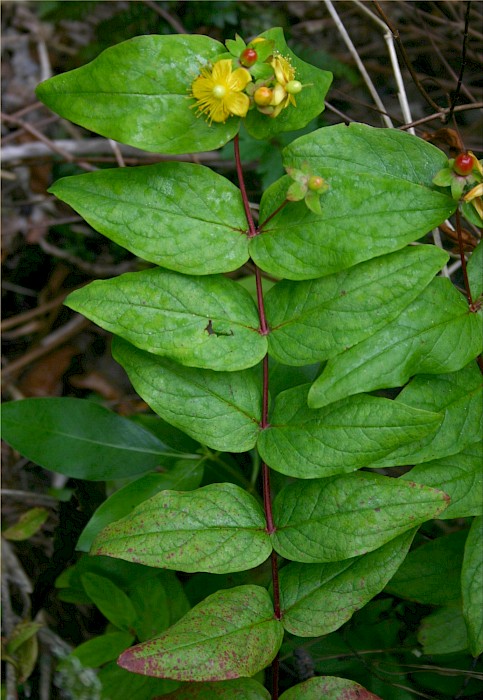
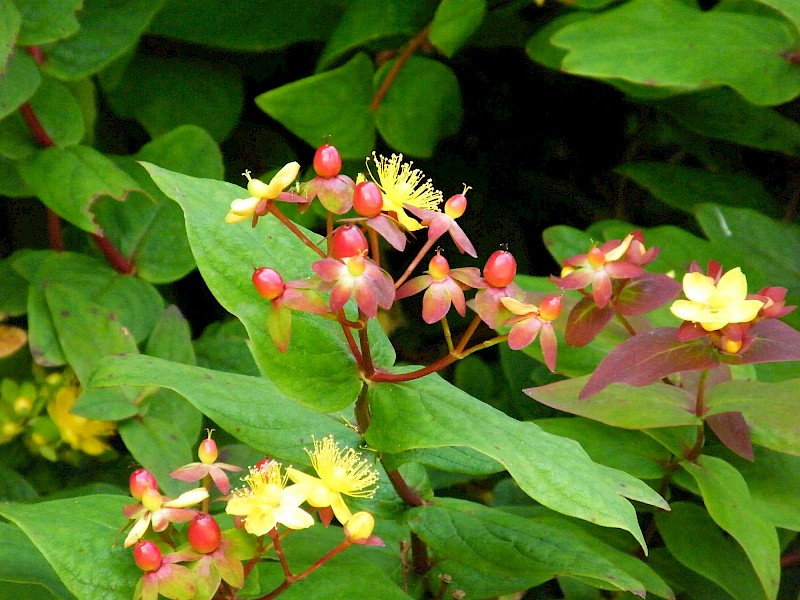
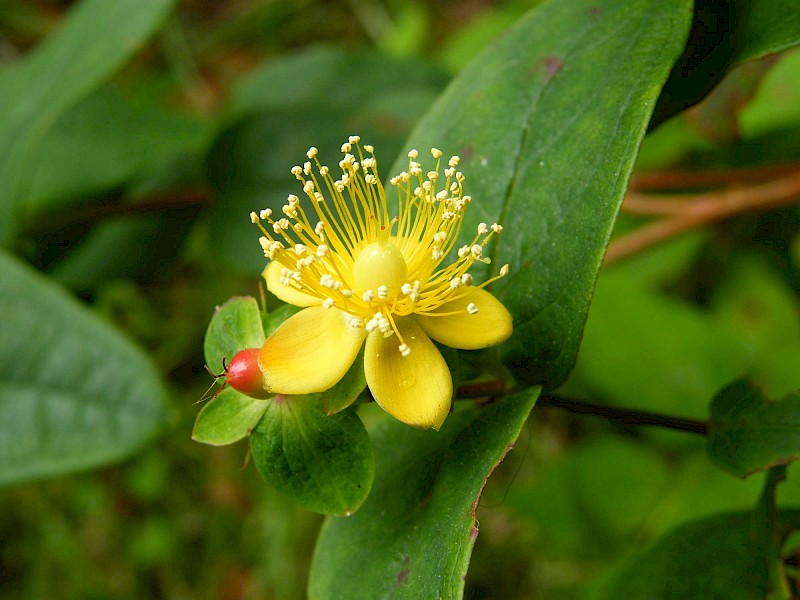
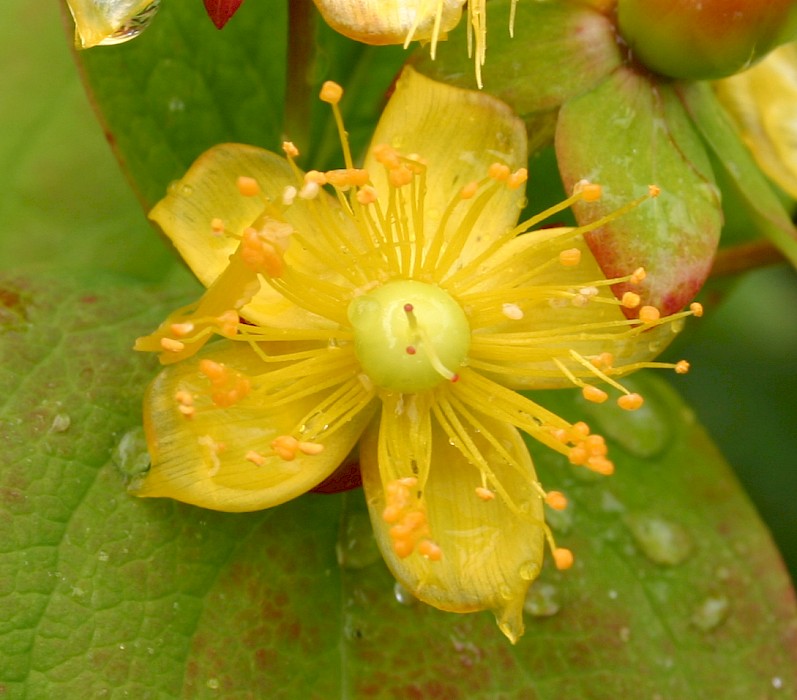
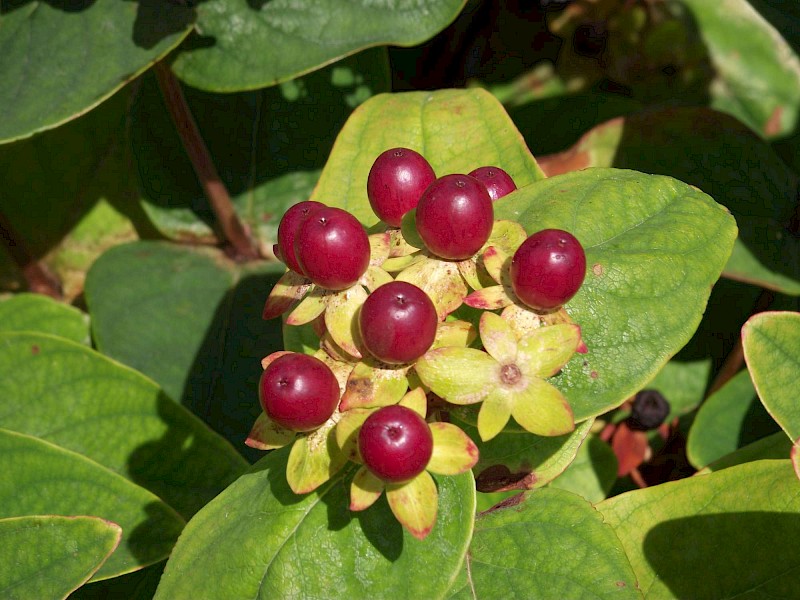
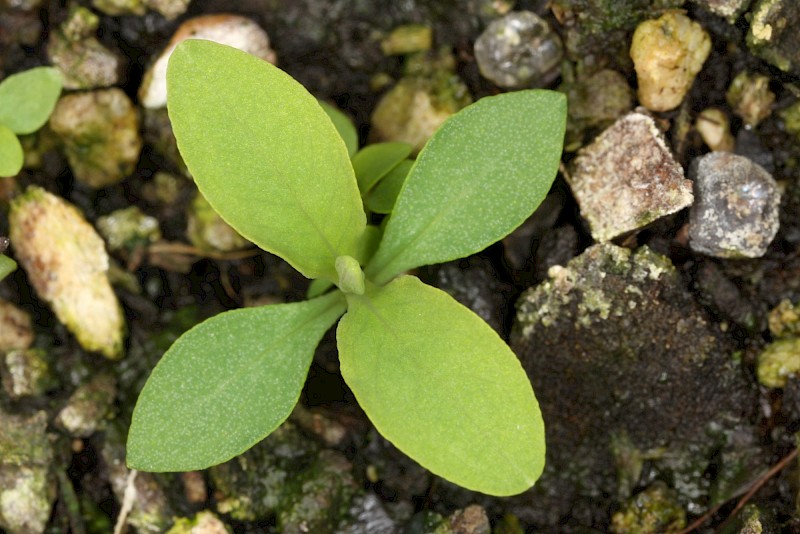
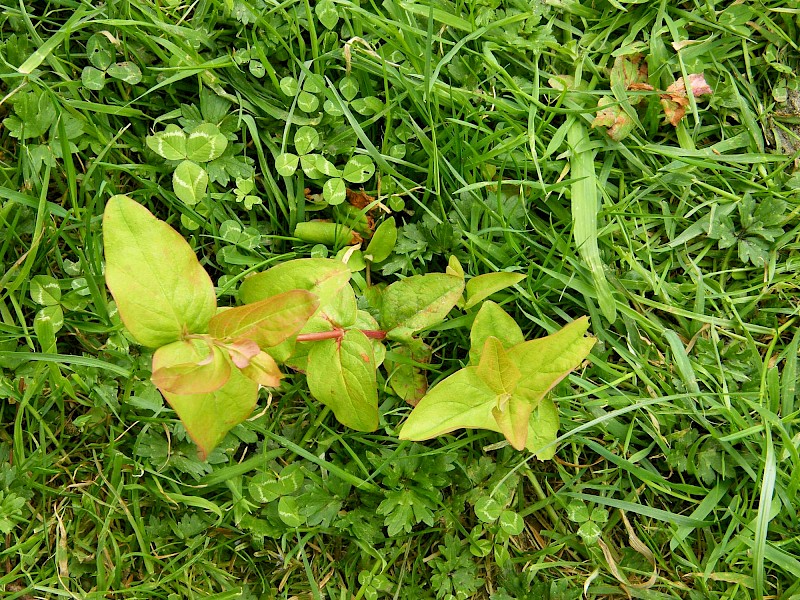
Small, perennial, hairless, semi-evergreen shrub (<1.5 m) with fibrous roots and no rhizomes. Stems are semi-woody, winged, usually reddish, and often lax. Fragrant stalkless ovalish leaves (35-100 x 25-50 mm) are opposite, usually bluish underneath and usually turn red in autumn. Yellow, 5-petalled flowers (15-25 mm diameter, Nov-Feb) with long stamens are followed by round red berries (1 cm diameter) that ripen to black and contain cylindrical or curved seeds (9-10 mm long).
Are there any similar species?
Rose of Sharon (Hypericum calycinum) has 7-9 cm diameter flowers, dry fruits, 4-angled stems and rhizomes. H x inodorum has fleshy fruit.
Why is it weedy?
Produces many, long-lived, well dispersed seed. Tolerates semi-shade, hot or cold temperatures, high to moderate rainfall, damage and grazing (rare).
How does it spread?
Birds and possibly possums, and soil and water movement. Common seed sources include roadsides, farms, waste land, old gardens and cemeteries.
What damage does it do?
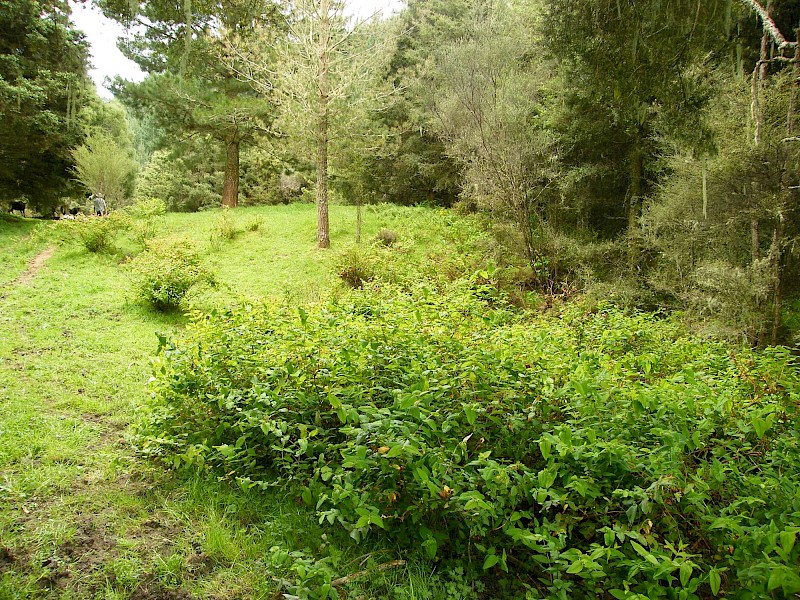
Invades regenerating sites, forms dense stands, and prevents establishment of native plant seedlings. Usually succeeded by taller vegetation, but is persistent in shorter habitats.
Which habitats is it likely to invade?
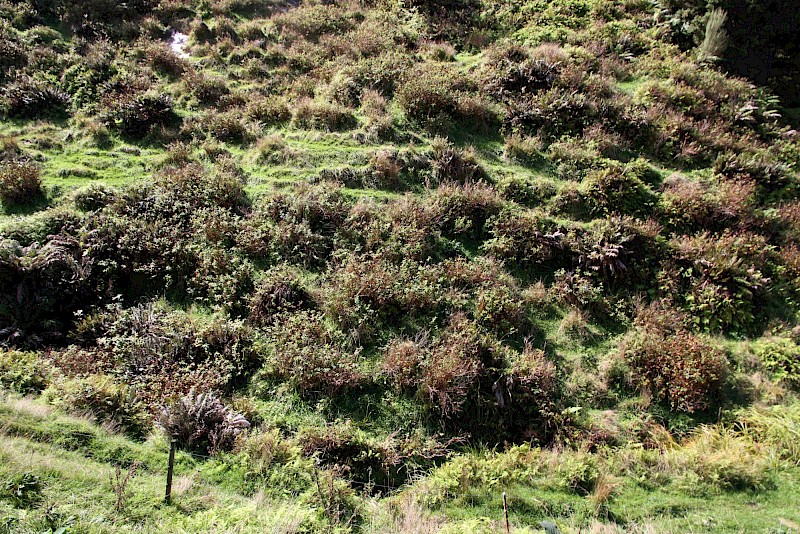
Disturbed forest and shrubland, low-growing habitats, tussockland, bare land, and rocklands. Usually high rainfall areas.
What can I do to get rid of it?
1. Physical removal - Hand pull small plants, or dig out entire plant including roots (all year round): Dispose of plants with seeds at a refuse transfer station, burn, or bury deeply.
2. Cut and paste (all year round) - Cut the stem/trunk as close to the ground as possible and cover the entire stump with herbicide as soon as possible after cutting. Apply either glyphosate gel (120g/L strength) or metsulfuron gel (10g/l strength) to the entire cut stem.
5. Foliar spray - Apply herbicide using a hand held sprayer/knapsack to plants <1m tall or gun and hose for larger infestations. Use the label recommended adjuvant. Apply glyphosate (360 g/L active ingredient) herbicide at 20ml/L plus organosilicone penetrant (2ml/L) to cover entire plant. Note: Glyphosate overspray will kill other (desirable) plants. OR apply metsulfuron herbicide (600g/kg active ingredient at 5g/10L knapsack or 20g/100L gun and hose) plus organosilicone penetrant (3ml/L) Note: Metsulfuron overspray will kill other (desirable) broadleaf plants and has residual activity in the soil which aids in killing below ground parts OR picloram/triclopyr herbicide (picloram 100g/l and triclopyr 300g/l active ingredient at 6ml/L) plus organosilicone penetrant (1ml/L) to thoroughly wet all parts of plant. Note: Triclopyr and picloram herbicides are ‘grass friendly’ but overspray will kill other (desirable) broadleaf plants. Picloram has residual activity in the soil which may leach and kill other plants. Do not use under and around other (desirable) broadleaf plants.
CAUTION: When using any herbicide or pesticide, PLEASE READ THE LABEL THOROUGHLY to ensure that all instructions and directions for the purchase, use and storage of the product, are followed and adhered to.
What can I do to stop it coming back?
Reseeds onto bared sites. Occasionally resprouts from roots after poor spray kill. Difficult to kill, herbicide timing important. In regenerating tall forest, may be left to natural succession. Replant bared sites densely to minimise seedlings.
Images