White poplar
Botanical name
Populus alba
Family
Salicaceae (willow)
Also known as
Silver poplar
Where is it originally from?
Europe, Western Asia
What does it look like?
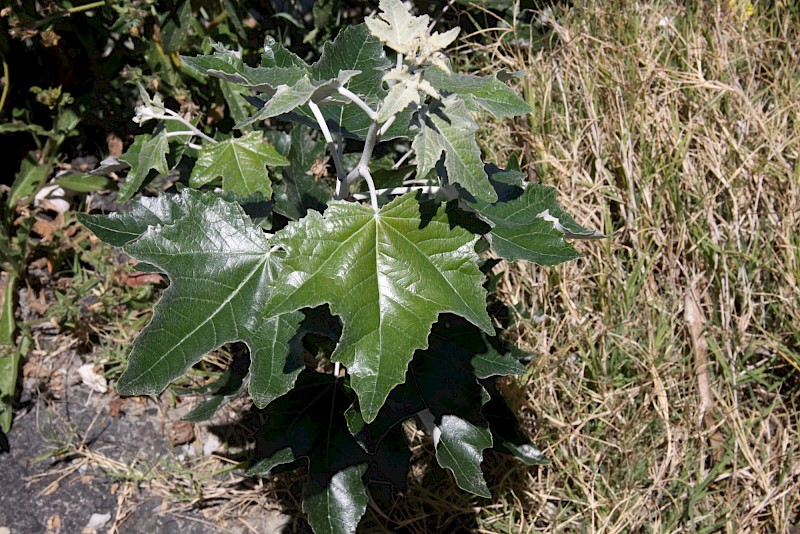
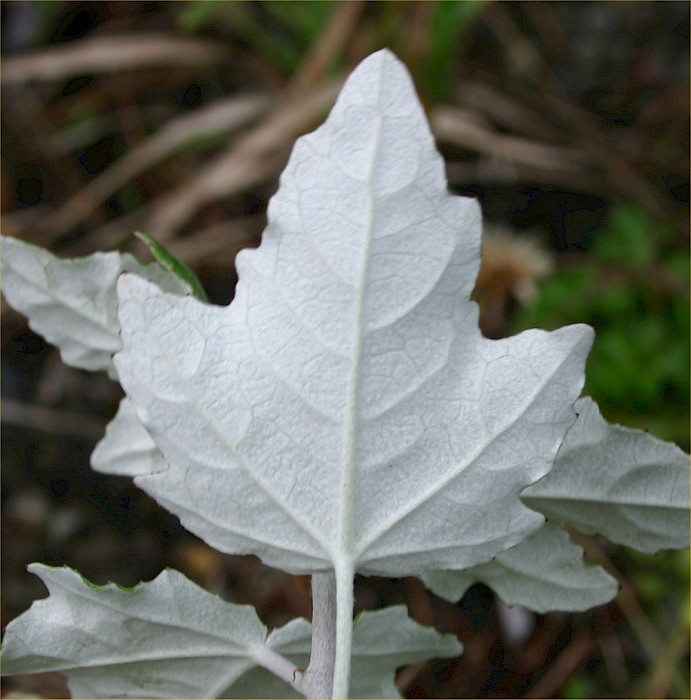
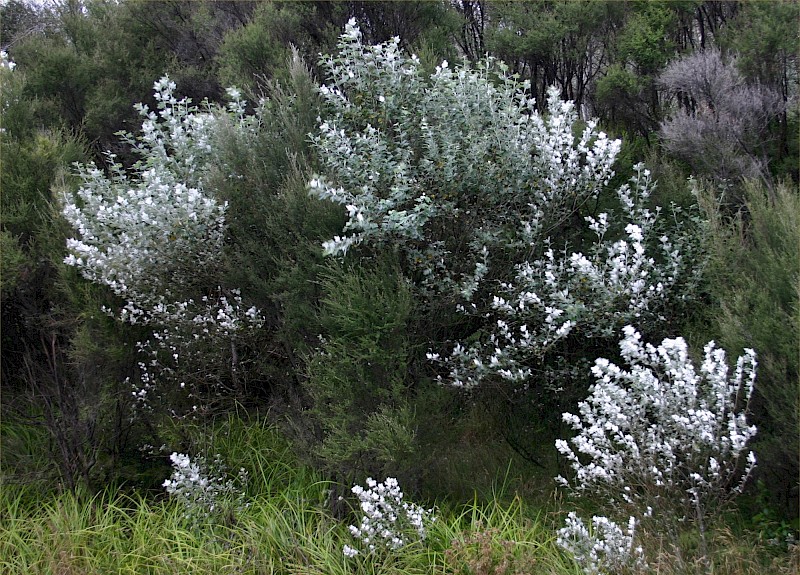
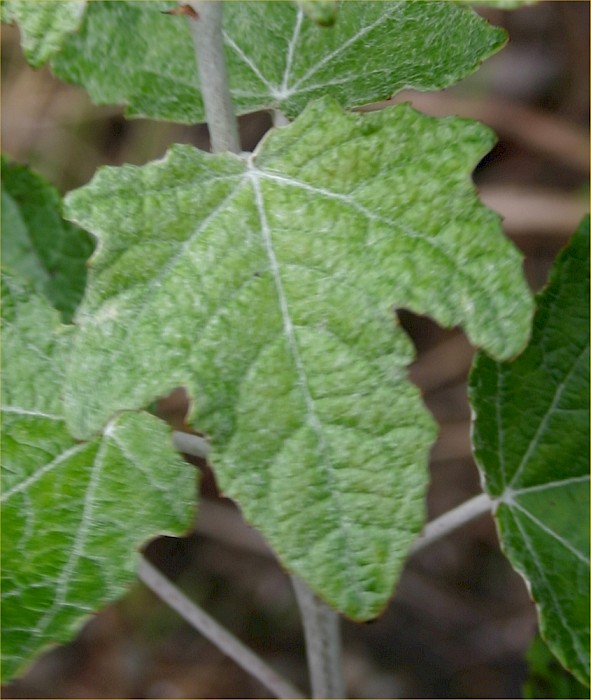
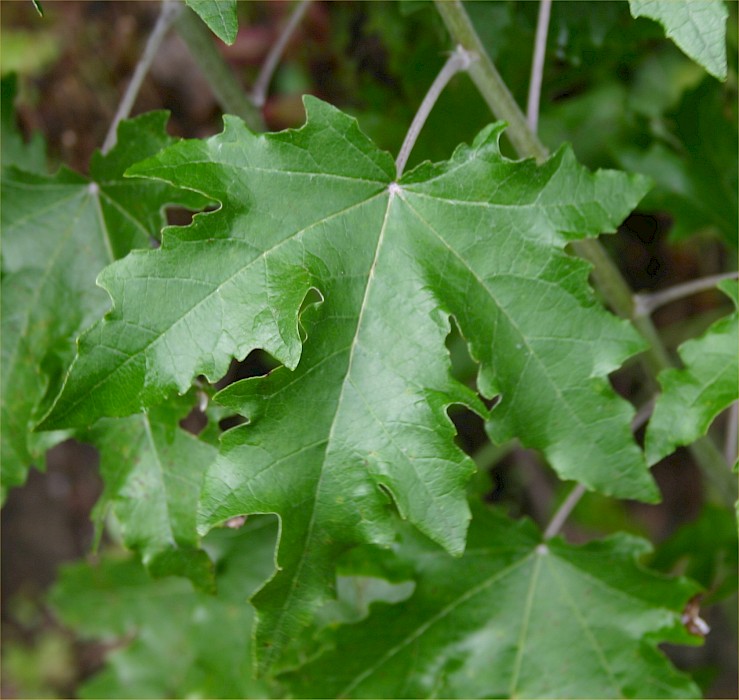
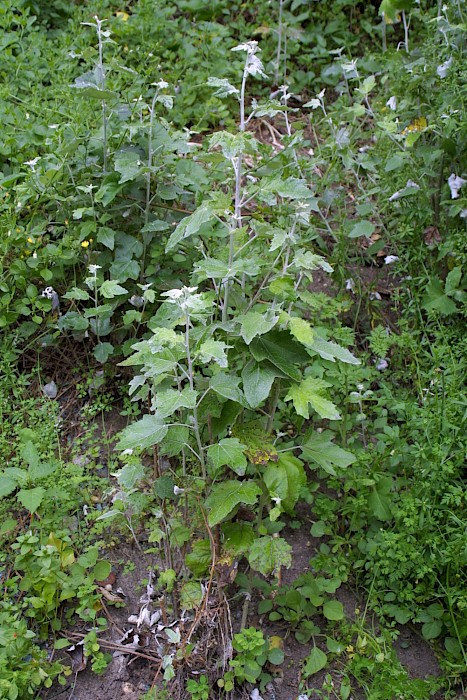
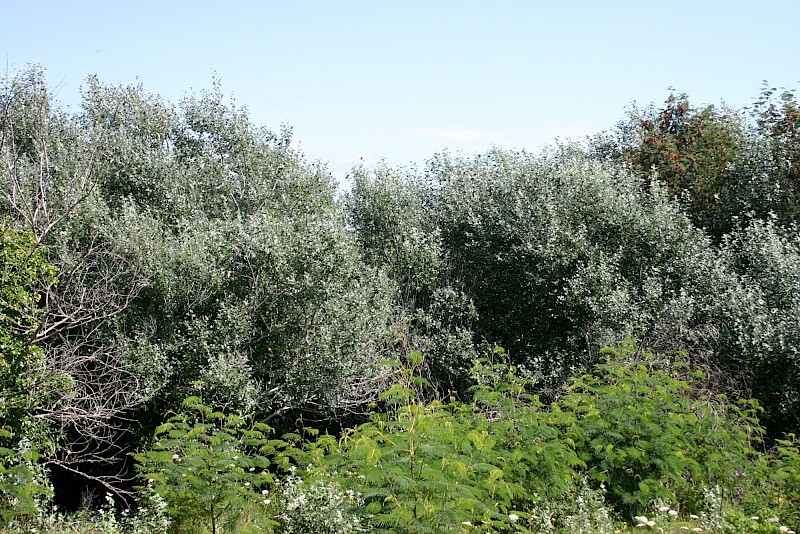
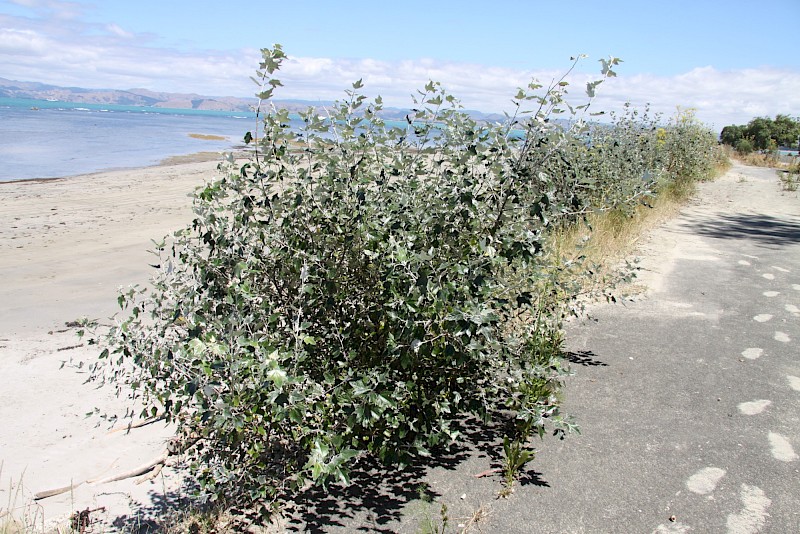
Deciduous tree (<25m tall) usually spreading with roots that sucker where it is ungrazed. Grey bark is smooth to shallowly fissured, white shoots are covered in down, and white buds are downy but not sticky. Leaves (3-10 x 2-9 cm) on young shoots broadly triangular, with 3-5 lobes; leaves on adult shoots are smaller, oval or circular, lobed or strongly toothed. Leaves alternate on stems, and are always white and downy below, white turning shiny green above. Flowers (September) are hanging female-only catkins (2-8 cm long), and the resulting capsules split (around October), releasing white cottony hairs that en masse resemble a snow storm.
Why is it weedy?
Prolific suckering habit ensures stands remain dense. Tall, long-lived, becomes dominant species in canopy. Tolerates drought, poor soils, mod hot to cold, little shade. Intolerant of poor drainage.
How does it spread?
No viable seed is produced, but suckers are spread by soil movement, intentional planting, and dumped greenwaste.
What damage does it do?
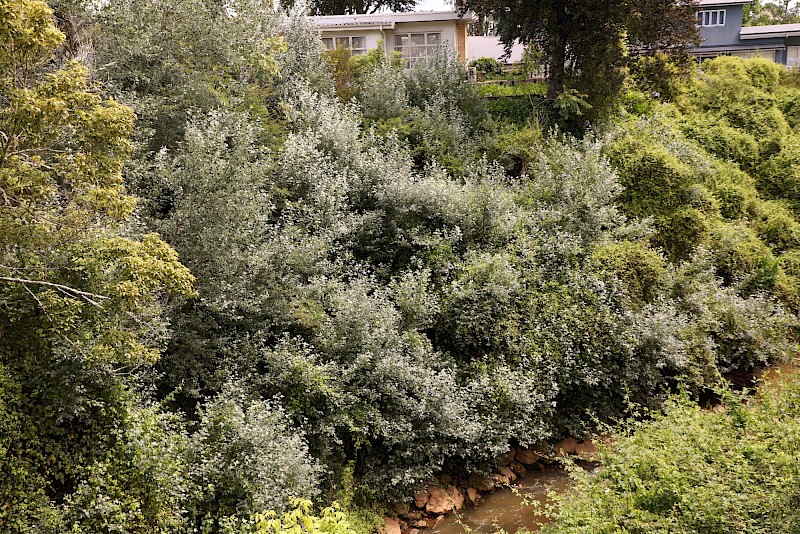
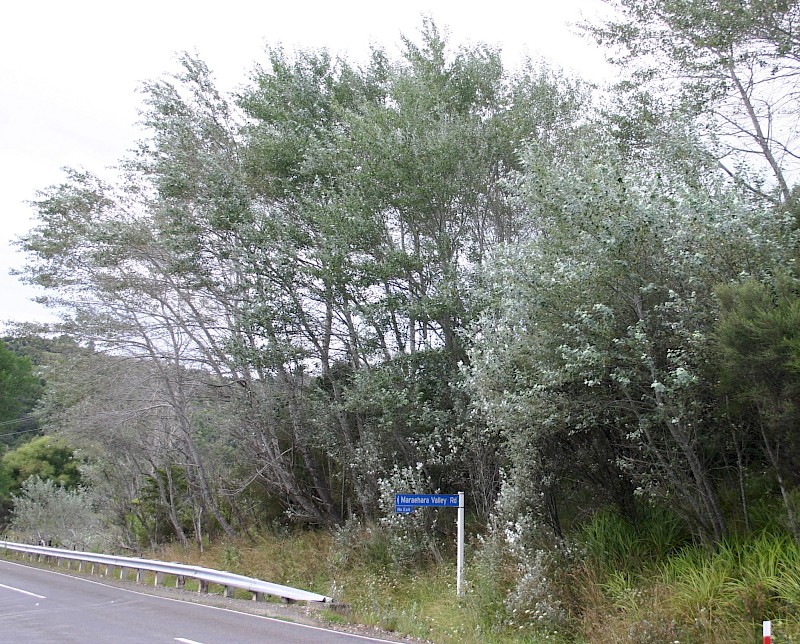
Forms huge stands, preventing native species establishing. Drains damp spots, roots clog watercourses.
Which habitats is it likely to invade?
Disturbed forest and shrubland, short tussockland, bare land, river systems.
What can I do to get rid of it?
1. Physical removal - Hand pull small plants, or dig out/excavate entire plant including roots (all year round)
2. Cut and paste (all year round) - Cut the stem/trunk as close to the ground as possible and cover the entire stump with herbicide as soon as possible after cutting. Apply either glyphosate gel (120g/L strength) or metsulfuron gel (10g/l strength) to the entire cut stem.
3. Basal spray stems up to 20cm diametre with X-Tree Basal. Ensure the base is thoroughly covered at ground level.
4. Drill or frill - Drill downward sloping holes around the circumference of the trunk about 8-10 cm apart, or Frill (make deep cuts into the sapwood at regular intervals around the base of the tree, taking care not to ring-bark the plant). Fill the holes or saturate the cuts with metsulfuron-methyl 600 g/kg at a rate of 20-50g/L.
5. Foliar spray - Apply Glyphosate (360 g/L active ingredient) herbicide (20ml/L) plus organosilicone penetrant (2ml/L) to cover entire plant Note: Non selective. Avoid overspray onto desirable plants OR Apply Metsulfuron herbicide (600g/kg active ingredient) (Knapsack 0.5g/L, or Gun and hose 20-35g/100L) plus organosilicone penetrant (3ml/L) to thoroughly wet all parts of plant. Note: Metsulfuron overspray will kill other (desirable) broadleaf plants and has residual activity in the soil which aids in killing below ground parts.
CAUTION: When using any herbicide or pesticide, PLEASE READ THE LABEL THOROUGHLY to ensure that all instructions and directions for the purchase, use and storage of the product, are followed and adhered to.
What can I do to stop it coming back?
Exclude livestock, maintain pest control. Follow up on suckers 3-monthly until eliminated. Alternatively, treat large trees standing, spray small sprouts and plant densely to shade out suckering regrowth.
Images