Yellow ginger
Botanical name
Hedychium flavescens
Family
Zingiberaceae (ginger)
Also known as
Wild ginger, ginger lily
Where is it originally from?
Himalayas
What does it look like?
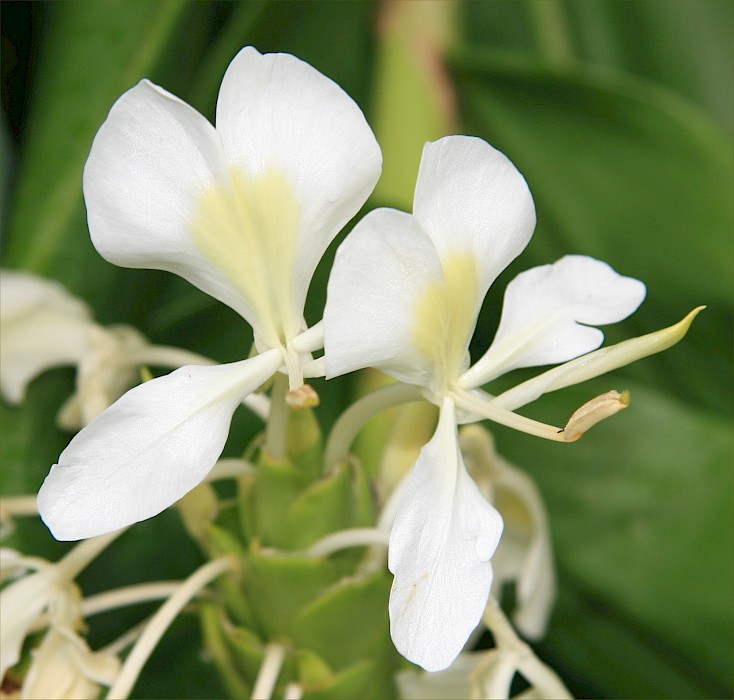
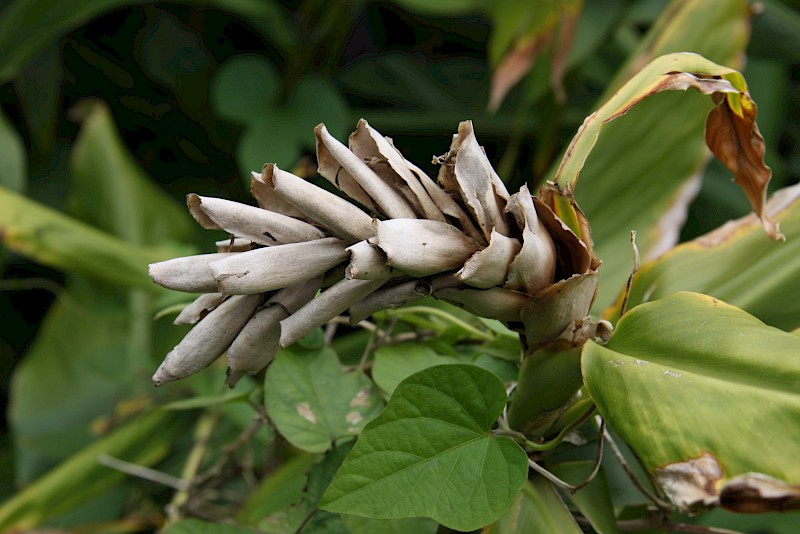
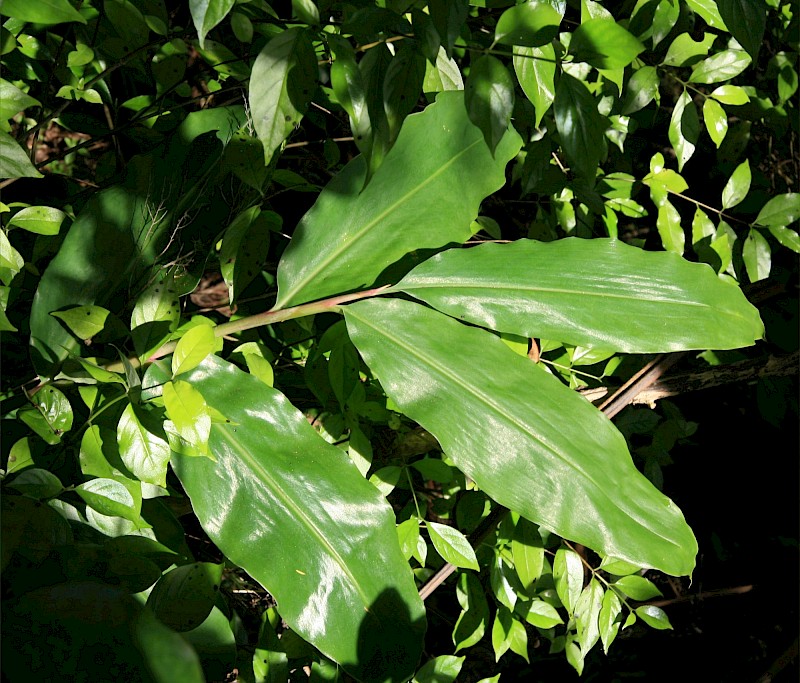
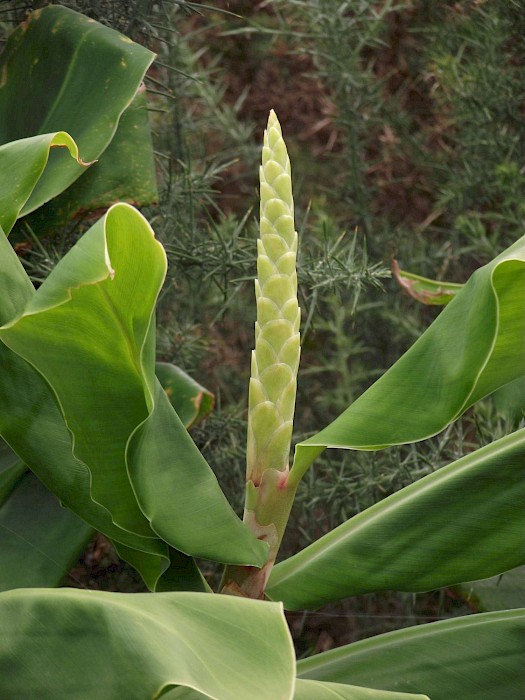
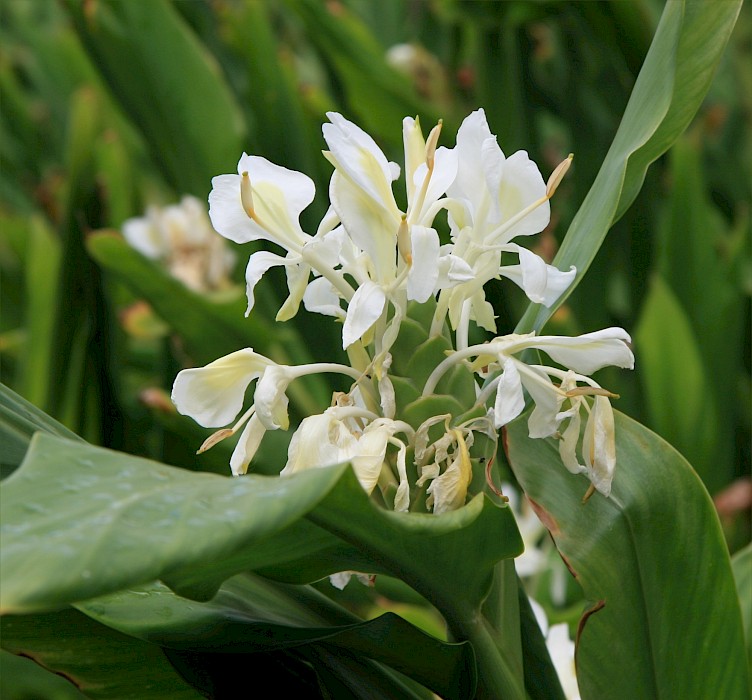
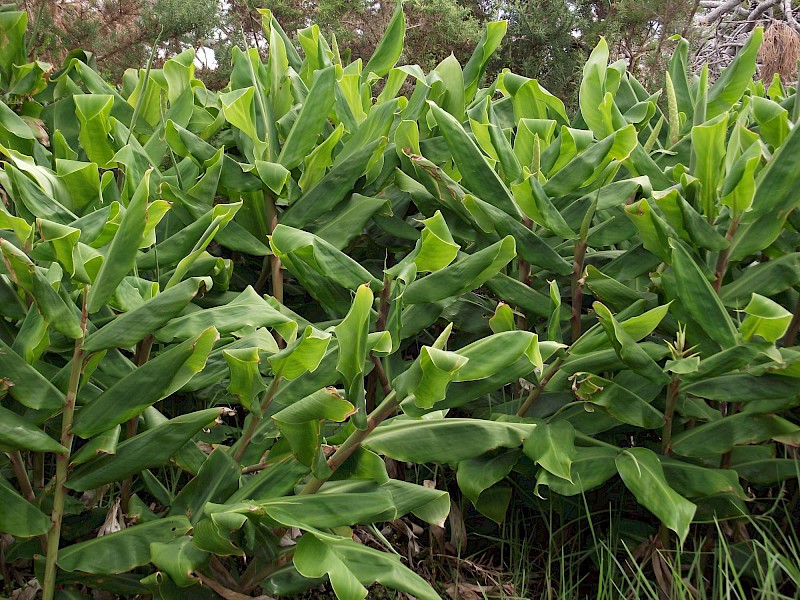
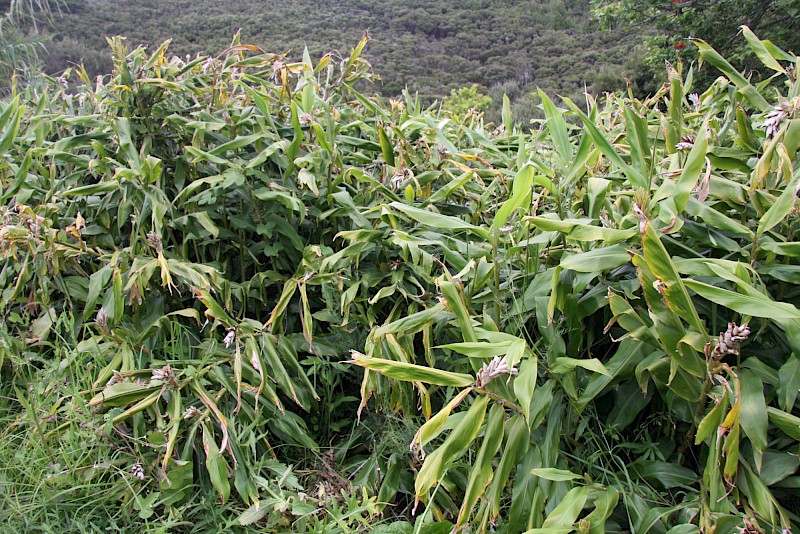
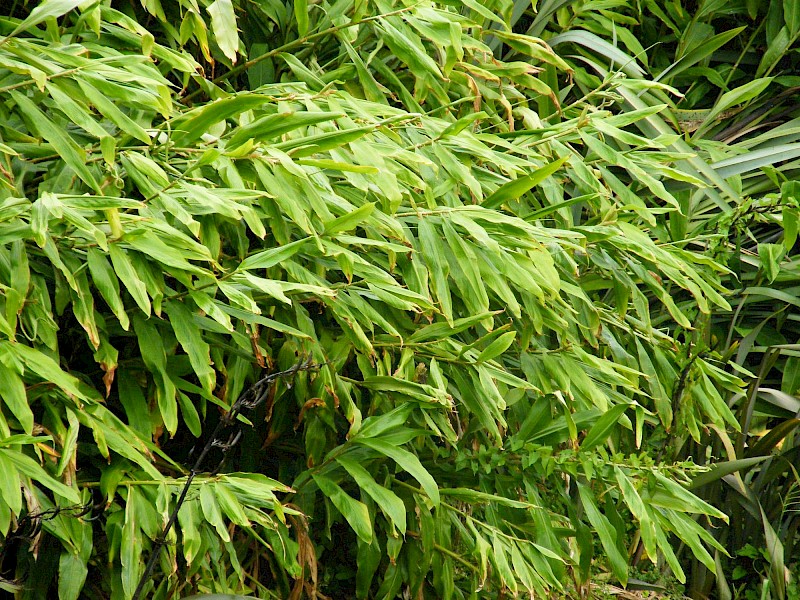
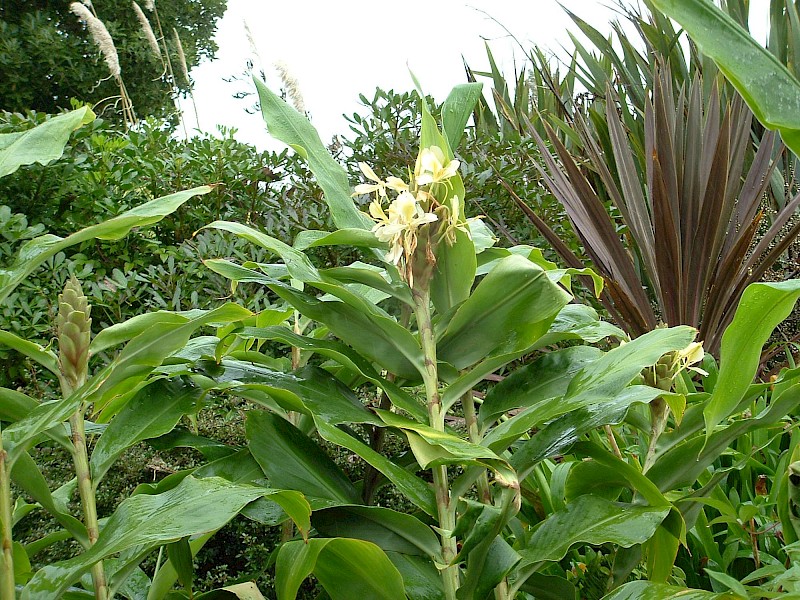
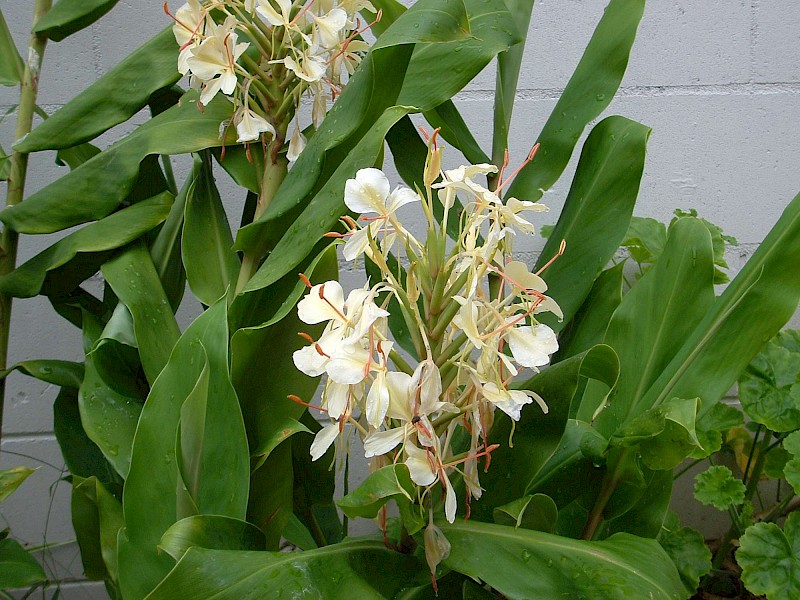
Non-woody, ginger-scented perennial (<2.5 m tall) with massive taro-like rhizomes close to the surface that are long, shallow rooted, much branched, and grow over each other to form deep beds. Each rhizome segment (4 x 10 cm) usually produces an aerial stem each year. Stems grow to 2.5 m, and are erect, soft, unbranched, and thickening to a short pinkish ‘collar’ at the base. Leaves (50 x 10 cm) are alternate, shiny and point upwards. Flowerheads (15 x 10 cm) with cream coloured flowers overlapping in cone-like clusters (May-Jun) are not followed by any fruit.
Are there any similar species?
Hedychium gardnerianum, Canna species and Zingiber spectabile are all similar.
Why is it weedy?
Extremely shade-tolerant, and tolerates most soil types, good or poor drainage, and any fertility. It is also drought and frost tolerant once established. Long-lived, fast growing and forms deep rhizome beds. Rhizomes resprout from any fragment, and can survive years away from soil, crushing, and immersion in sea. No seed produced in New Zealand.
How does it spread?
Rhizomes spread outwards slowly, and fragments are spread by dumped vegetation, fill, soil movement, flooding, and contaminated machinery. Commonly found in gardens, tips, and on roadsides.
What damage does it do?
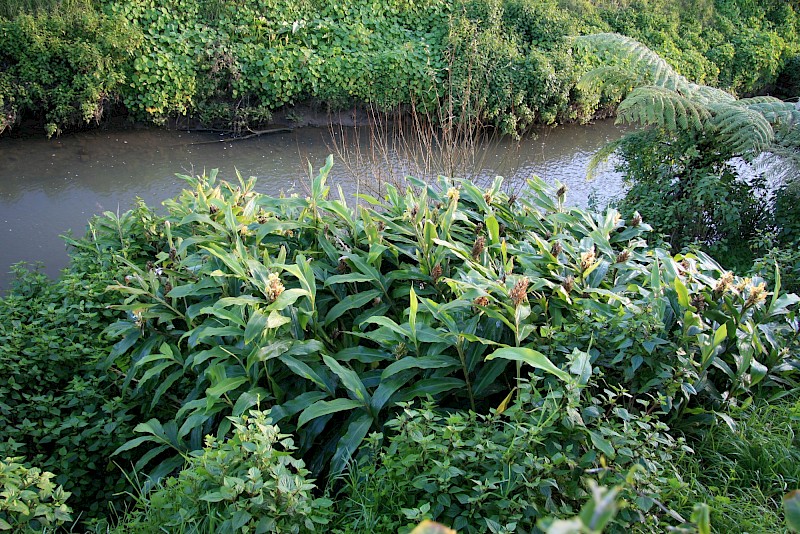
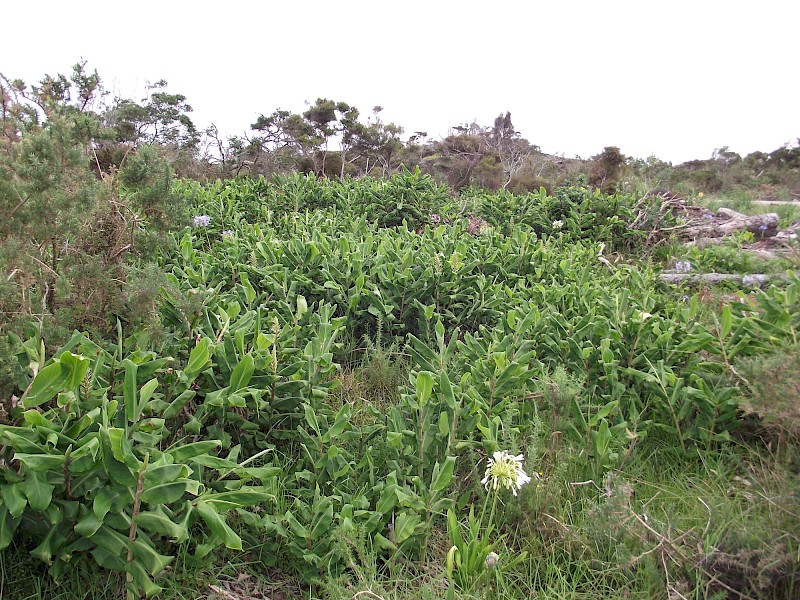
Dense rhizome beds form massive ‘meadows’, replacing all other species, and are shallow-rooted, so when they become heavy with rain they can cause slips on steep sites and streambanks. Succeeded only by weedy vines.
Which habitats is it likely to invade?
Most habitats (except dry rocky areas) downstream or adjacent to existing infestations, damp forest and margins, streamsides, river systems, shrublands, and fernland. Frost-tender but grows under canopy in cool forests.
What can I do to get rid of it?
Contact your regional council to determine the status of this species and responsibility for control.
1. Physical removal - Dig or pull out small plants (all year round). Don’t compost, leave on site to rot down or hang rhizomes in trees, as they survive indefinitely. Dispose of rhizomes at a refuse transfer station or by drying out and burning or mulching small with a lawn or flail mower.
2. Cut and paste stump (all year round) - Cut above pink ‘collar’ at base and metsulfuron-methyl 600g/kg (1g /L) or metsulfuron gel. Leave stems and leaves on site to rot down.
3. Spray (all year round) - Apply metsulfuron-methyl 600g/kg (5g/10L knapsack) plus organosilicone penetrant as per label recommendation.
Note: Overspray will kill other (desirable) broadleaf plants and has residual activity in the soil which aids in killing below ground parts. For dense patches keep spray away from roots of vulnerable plants. Don’t replant sprayed sites for 6 months. Do not use over or near water bodies or wetlands and use only as directed on label.
CAUTION: When using any herbicide or pesticide, PLEASE READ THE LABEL THOROUGHLY to ensure that all instructions and directions for the purchase, use and storage of the product, are followed and adhered to.
What can I do to stop it coming back?
Maintain rolling front. Eradication can be easily achieved.
Images