Castor oil plant
Botanical name
Ricinus communis
Family
Euphorbiaceae (spurge)
Also known as
Castor bean plant
Where is it originally from?
Africa and Eurasia
What does it look like?
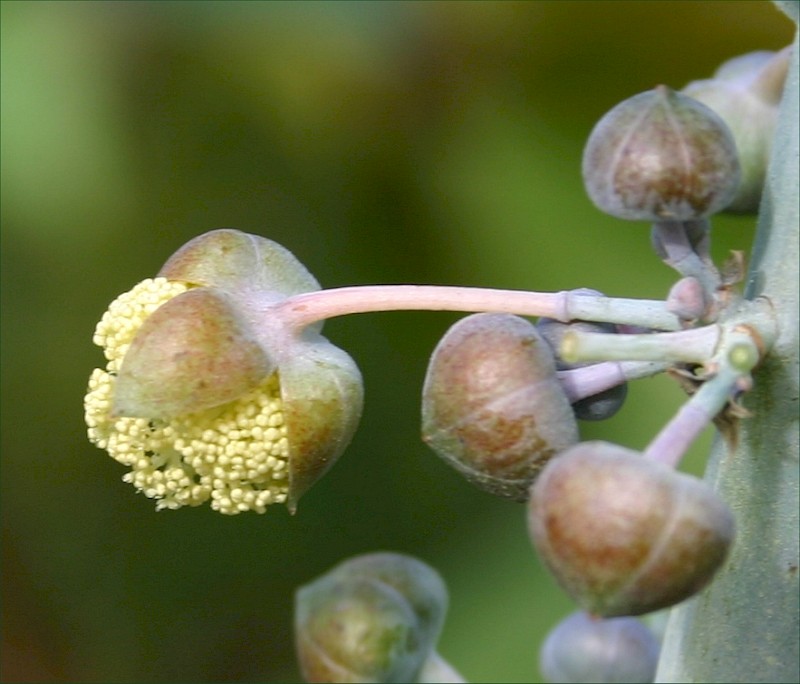
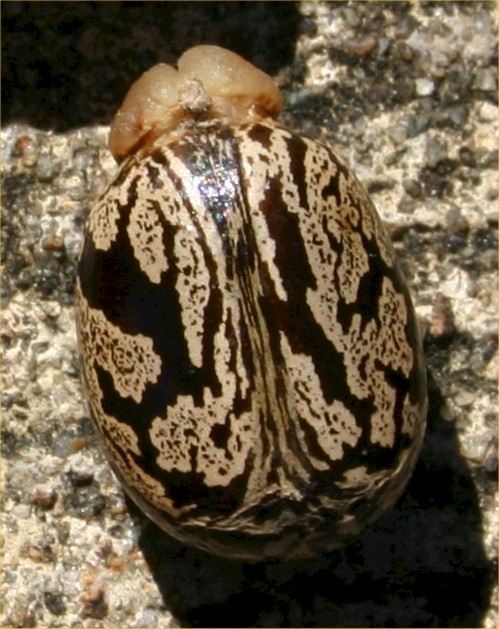
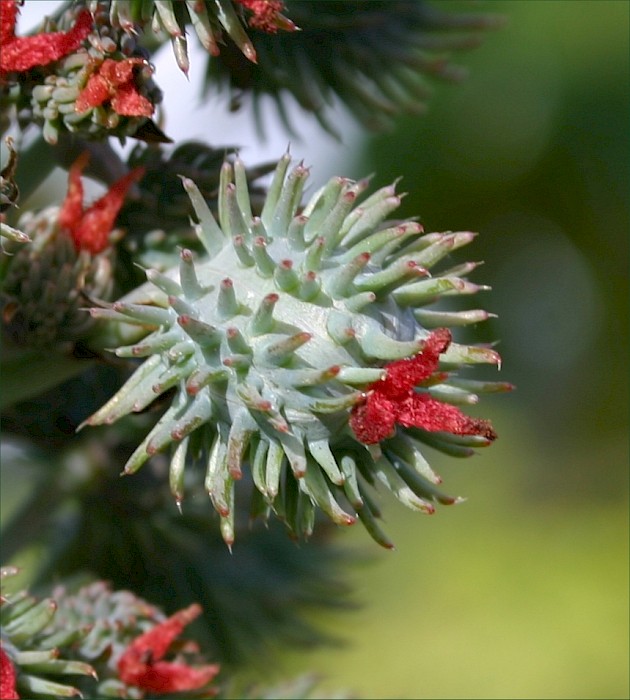
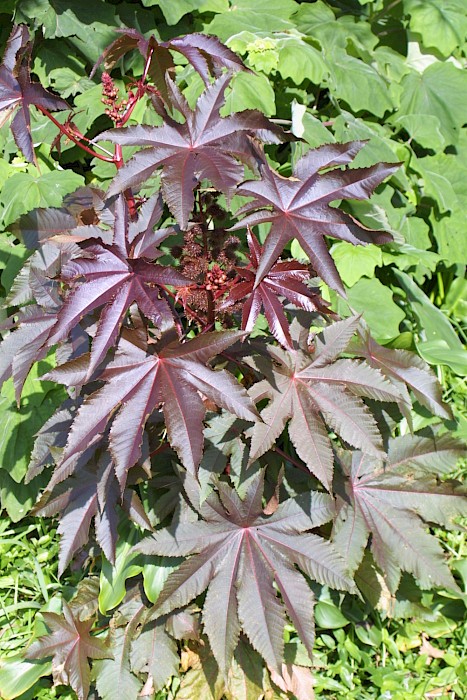
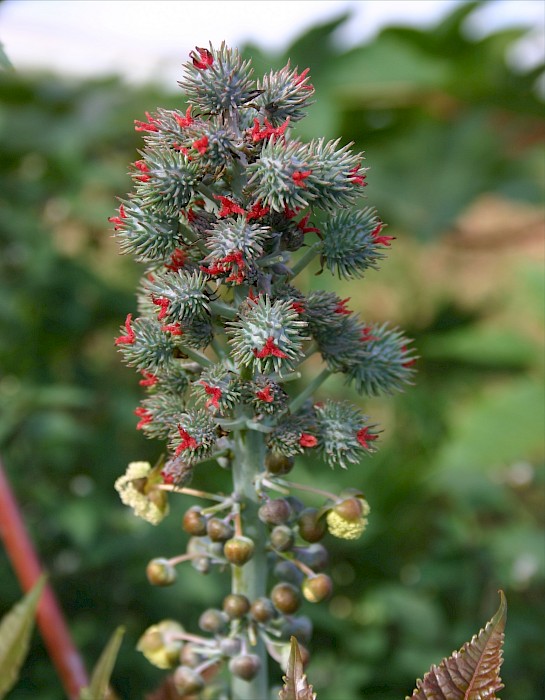
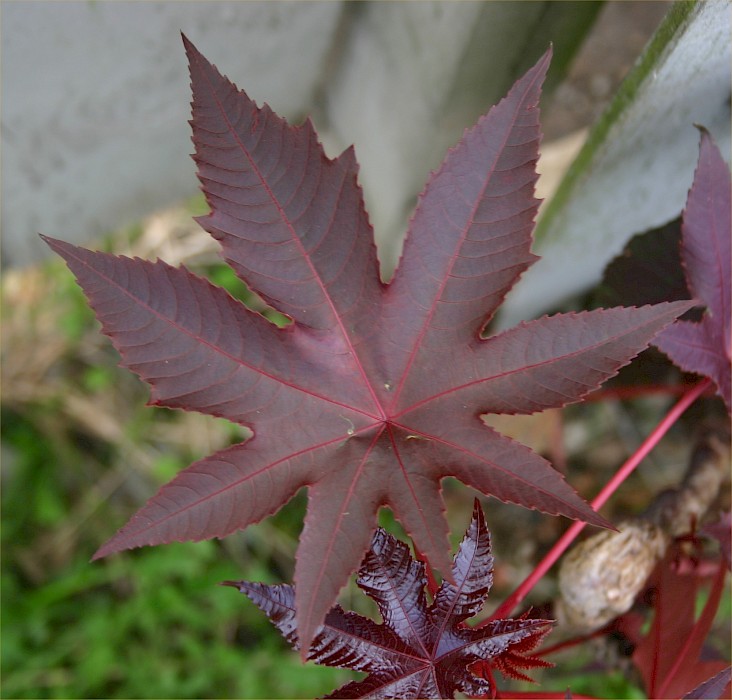
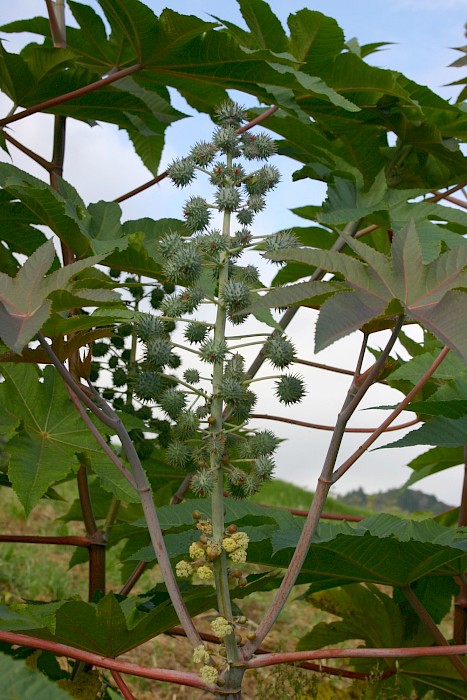
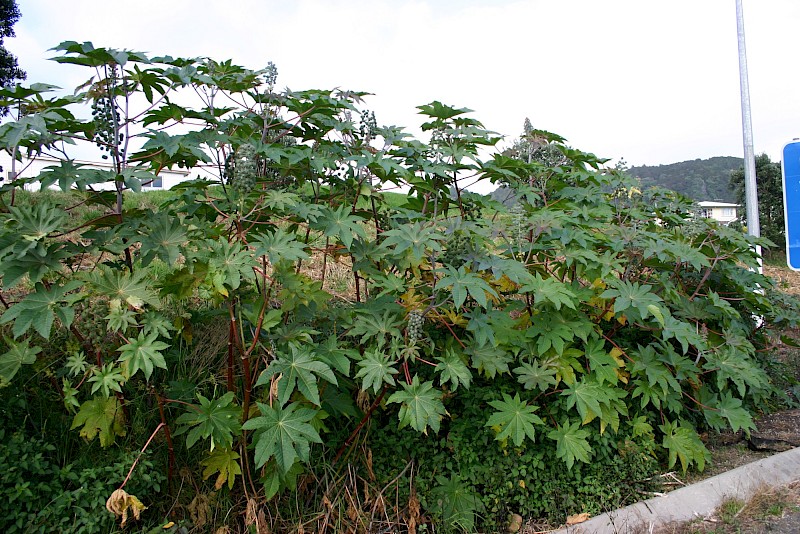
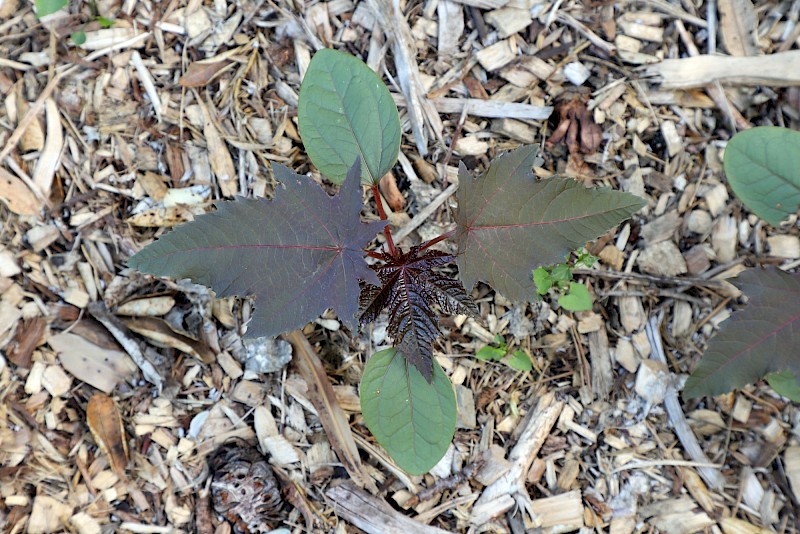
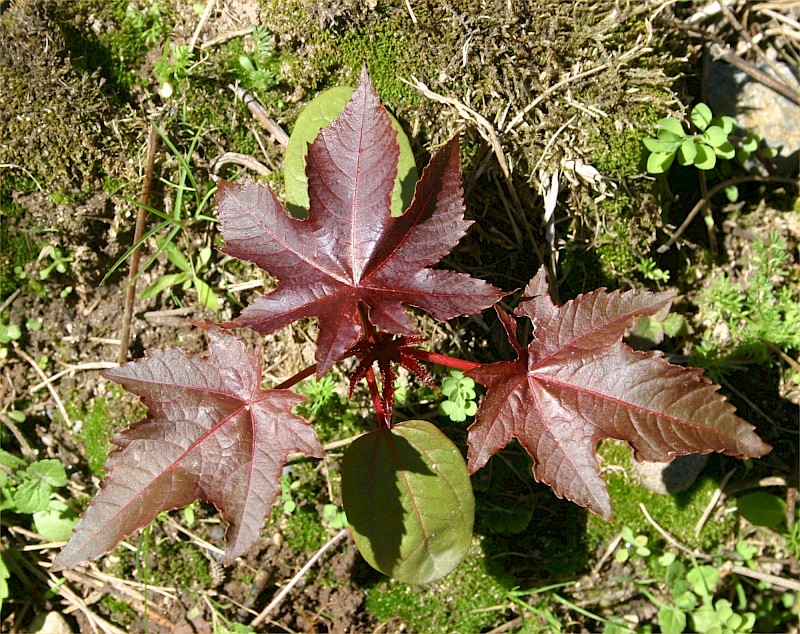
Smelly, clump forming shrub (<2+ m) with glossy long-stalked, five-finger-like leaves (15-45 cm long) that start off dark reddish purple or bronze and gradually changing to a dark green, sometimes with a reddish tinge, as they mature. Spikes of green or reddish flowers develop into spiny greenish (to reddish-purple) capsules which split to release large, oval, shiny, bean-like seeds that are very poisonous.
Why is it weedy?
Grows vigorously in disturbed areas and spreads easily and quickly.
How does it spread?
Capsules split open to eject seeds explosively.
What damage does it do?
Out-compete native species for resources.
Which habitats is it likely to invade?
Disturbed sites.
What can I do to get rid of it?
1. Physical removal - Poisonous plant, ensure gloves are worn. Dig out small plants or excavate larger areas. Dispose or burn all plant material.
2. Cut and paste - Cut the stem/trunk as close to the ground as possible and cover the entire stump with herbicide as soon as possible after cutting. Apply glyphosate gel (120g/L strength).
3. Foliar spray - Apply Glyphosate (360 g/L active ingredient) herbicide (20ml/L) plus organosilicone penetrant (2ml/L) to cover entire plant Note: Non-selective. Avoid overspray onto desirable plants.
CAUTION: When using any herbicide or pesticide, PLEASE READ THE LABEL THOROUGHLY to ensure that all instructions and directions for the purchase, use and storage of the product, are followed and adhered to.
What can I do to stop it coming back?
Check controlled sites regularly for any new seedlings.
Images